
The difference between forex and futures comes down to one structural fact. Forex trades over the counter with your broker. Futures trade on a central exchange through a clearing house. Everything else follows from that: pricing, volume data, contract sizes, costs and hours. This guide covers what each structure means in practice and which suits which trader.
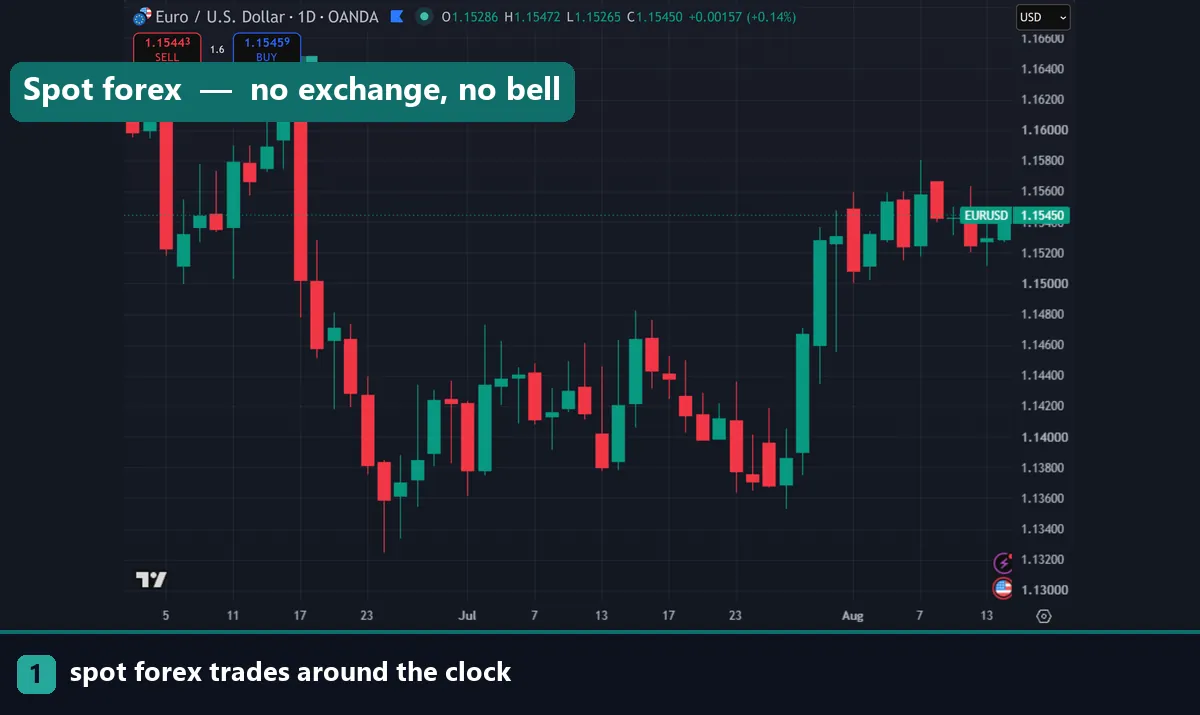
The difference between forex and futures is structural
Spot forex has no exchange. Buy EURUSD and your broker is the other side. It may pass the risk to a liquidity provider or keep it in house. There is no central venue and no single price feed.
Currency futures trade on an exchange such as the CME. Contracts follow one standard, the clearing house sits between buyer and seller, and every trade prints to a public tape.
That difference produces the rest. Forex has no centre, so price varies between brokers. Volume figures are local, and your broker sets how well orders fill. Futures have one centre, so everyone sees the same price and volume, and the exchange sets execution quality.
Side by side
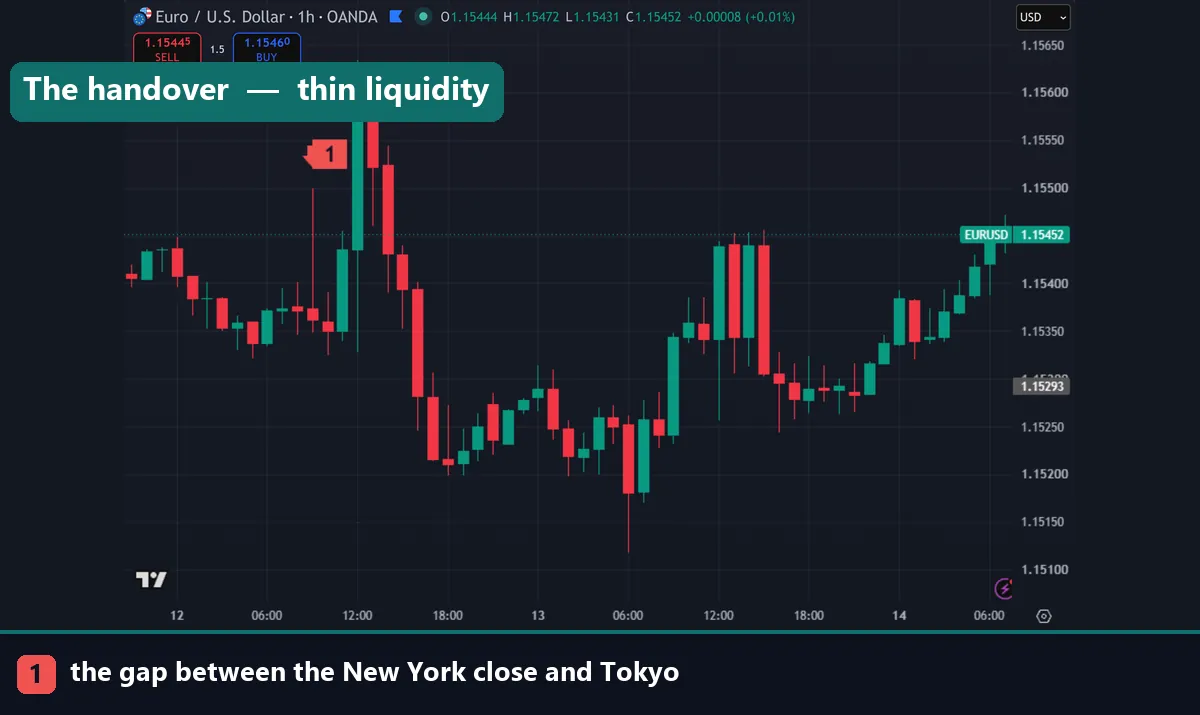
| Aspect | Spot forex | Currency futures |
|---|---|---|
| Structure | Over the counter, broker is counterparty | Exchange traded, clearing house counterparty |
| Price feed | Broker specific, varies slightly | One public price for everyone |
| Volume | Tick volume from your broker only | Real contract volume, published |
| Hours | 24/5, Sunday evening to Friday evening | Nearly 24 hours with a daily maintenance break |
| Contract size | Flexible, from micro lots up | Fixed, e.g. 125,000 euro per EUR contract |
| Expiry | None, positions roll indefinitely | Quarterly, positions must be rolled |
| Cost | Spread, sometimes commission | Commission plus exchange fees, tight spread |
| Overnight cost | Swap, charged or paid daily | Built into the contract price |
| Minimum capital | Low, micro lots need very little | Higher, set by exchange margin |
| Regulation | Varies enormously by jurisdiction | Exchange and regulator oversight |
The volume question
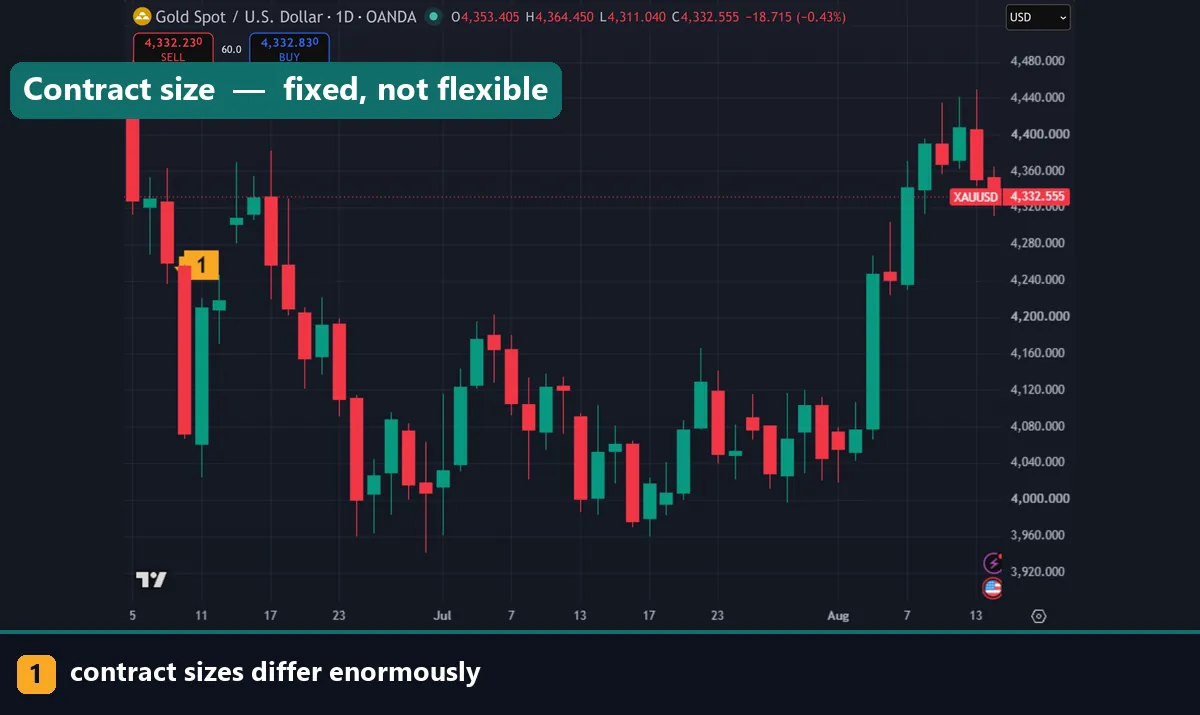
This matters most for anyone using volume, and most comparisons skip it.
Forex platforms display tick volume: the number of price changes during a bar, taken from your broker’s own feed. It is not the number of contracts traded, and two brokers show different histograms for the same hour.
Futures publish real volume: actual contracts changing hands, the same for everyone. Depth of market shows resting orders at each price.
If your method depends on volume, that is a substantial argument for futures. Our volume spread analysis guide covers the tick-volume caveat in more depth. Some forex traders use the CME euro contract as a volume proxy while trading spot EURUSD, which is a reasonable compromise.
Contract size and capital
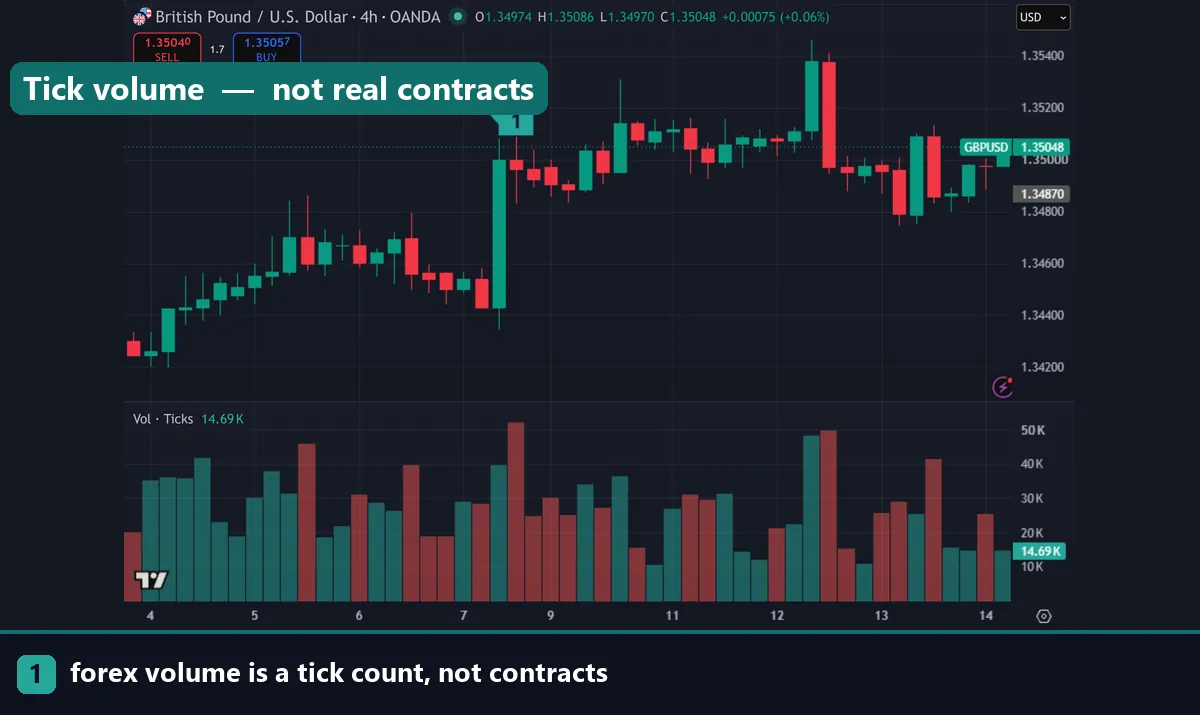
Forex is far more flexible here, and for smaller accounts it is decisive.
A standard forex lot is 100,000 units, but brokers offer mini lots at 10,000 and micro lots at 1,000. That lets a trader with a few hundred dollars size a position properly against a sensible stop, as covered in our forex trading lot sizes guide.
Futures contracts come in fixed sizes. A full CME euro contract is 125,000 euro, and the micro version is 12,500. You cannot trade a fraction of one, so the smallest meaningful position is set by the exchange rather than by your risk tolerance.
Margin follows the same pattern. Forex margin follows leverage, which swings a lot by country. The exchange sets futures margin per contract, and it runs higher.
Download the complete indicator database
Put these concepts on your charts. One email unlocks the full library of 1,380+ indicators with compiled MT4 and MT5 files, plus my TradingView scripts. No paywall, no spam, unsubscribe any time.
Get free access to my indicator database
One email unlocks 1,380+ free MT4, MT5 and TradingView indicators — the complete library. No single-tool download; you get the whole database.
Expiry, rollover and cost
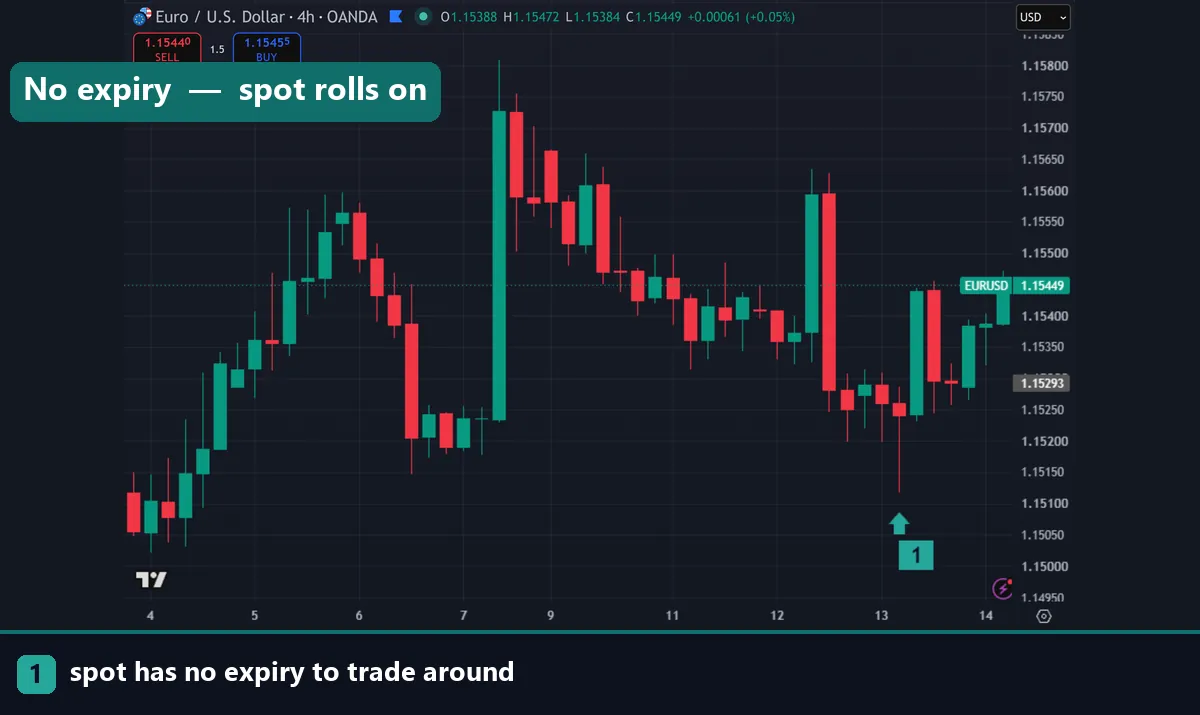
Spot forex positions have no expiry. Hold as long as you like, paying or receiving swap each night depending on the interest differential between the two currencies. Our bid ask spread calculation guide covers the entry cost.
Futures expire. Contracts run quarterly, and holding beyond expiry means rolling into the next contract, which is a separate transaction with its own cost. Charts show a price jump at each roll unless the platform stitches them into a continuous series.
The cost structures differ in shape as well as size. Forex bundles most of the cost into the spread, which widens when liquidity thins. Futures charge a set commission and exchange fee on a tighter spread. You can see the cost and plan around it.
For short-term traders that predictability matters. A scalping method that works on a fixed futures commission can fail on a forex spread that triples around news.
Which suits which trader
Forex suits smaller accounts and traders who want flexible sizing. It also suits anyone trading around the clock with no expiry to watch.
Futures suit traders who need real volume and depth of market. They also suit anyone who wants one transparent price, prefers a fixed commission, and has the capital for exchange margin.
Regulation is worth weighing too. Futures exchanges answer to consistent oversight. Forex broker rules run from strict to nominal depending on where the broker registers. That is about who holds your money, not about trading. Check it before you fund an account.
Common mistakes
Four repeat. Treating forex tick volume as real volume tops the list, and it undermines any analysis built on it. Treating futures sizes as flexible comes second, and it leads to positions far larger than planned. Third, traders forget futures expiry and face an unexpected roll or close. Fourth, they compare costs on spread alone without adding futures commission or forex swap.
Where to go next
Structure shapes everything downstream. Read forex trading lot sizes for position sizing and bid ask spread calculation for the real cost of a forex trade. For the volume issue, see volume spread analysis, and the forex time zone converter for how the 24-hour cycle works. For further reading, see futures market basics at the CFTC. The currency future article on Wikipedia covers contract specifications.
FAQ
What is the main difference between forex and futures?
Forex trades over the counter with your broker as counterparty, while futures trade on a central exchange through a clearing house. Pricing transparency, volume data, contract sizes and costs all follow from that.
Is forex volume real volume?
No. Forex platforms show tick volume, meaning the number of price changes from your broker’s own feed. Futures show real contract volume, the same for everyone.
Which needs less capital to start?
Forex. Micro lots of 1,000 units let a small account size against a stop. The exchange fixes futures sizes, so the smallest position is larger.
Do forex positions expire?
No. Spot positions roll indefinitely with a swap charged or paid each night. Futures expire quarterly and must be rolled into the next contract, which costs an extra transaction.
Which has lower trading costs?
It depends on style. Forex hides most cost in a spread that widens when liquidity thins. Futures charge visible commission on a tighter spread, which is easier to plan around.
Which should I choose?
Forex for flexible sizing and a small account, futures for real volume, depth of market and transparent pricing. Trading involves risk, results are not guaranteed, and past performance is not indicative of future results.

About the author
Written by Dominic Walsh, a Forex trader and MT4/MT5 indicator, Expert Advisor and script developer. Every tool on forexmt4systems.com is tested on live charts before release and ships with ready-to-use compiled MT4 (.ex4) and MT5 (.ex5) files. Learn more about the trader and developer behind this site.
How we build, test and correct every tool: Editorial & Testing Policy. Trading carries risk; see the disclaimer.