
Forex low spread pairs are the instruments where the gap between bid and ask stays tightest, which matters because that gap is a cost you pay on every single trade. The ranking barely changes from year to year, and the reason behind it is simple enough to reason about rather than memorise. This guide covers which pairs cost least, why they do, and when the cheapest pair is still the wrong choice.
Which pairs cost the least
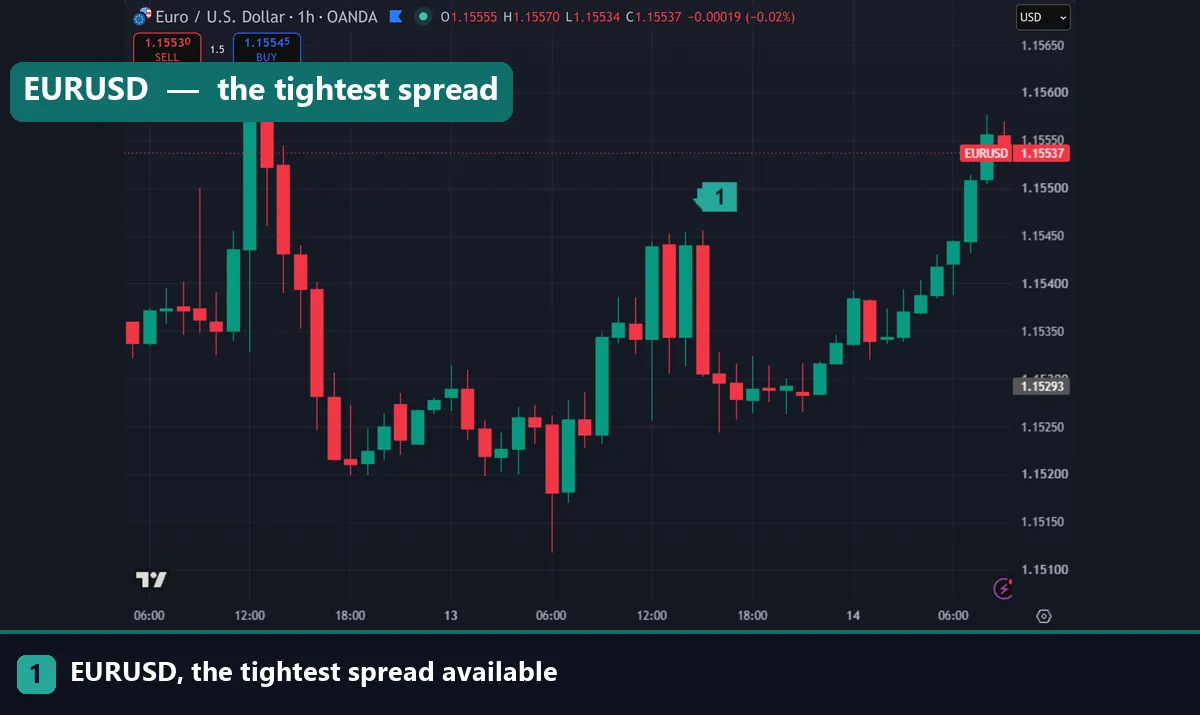
Spread tracks liquidity. The more participants quoting a pair, the finer the increment at which they compete, so the majors sit at the top of every list.
| Pair | Typical raw spread | Typical retail spread |
|---|---|---|
| EURUSD | 0.1 to 0.3 pips | 0.8 to 1.5 pips |
| USDJPY | 0.2 to 0.4 pips | 0.9 to 1.6 pips |
| GBPUSD | 0.3 to 0.6 pips | 1.2 to 2.0 pips |
| USDCHF | 0.4 to 0.8 pips | 1.4 to 2.2 pips |
| AUDUSD | 0.4 to 0.8 pips | 1.2 to 2.0 pips |
| USDCAD | 0.5 to 1.0 pips | 1.5 to 2.5 pips |
| EURGBP | 0.6 to 1.2 pips | 1.8 to 2.8 pips |
EURUSD leads by a clear margin and has for decades. It is the most heavily traded instrument in the market, and the competition to quote it compresses the spread further than anywhere else.
The two columns matter. Raw figures come from commission-charging accounts, so the true cost includes that commission, as covered in our spread only vs raw pricing guide.
Why forex low spread pairs stay cheap
Three forces set the spread, and understanding them predicts the ranking without looking it up.
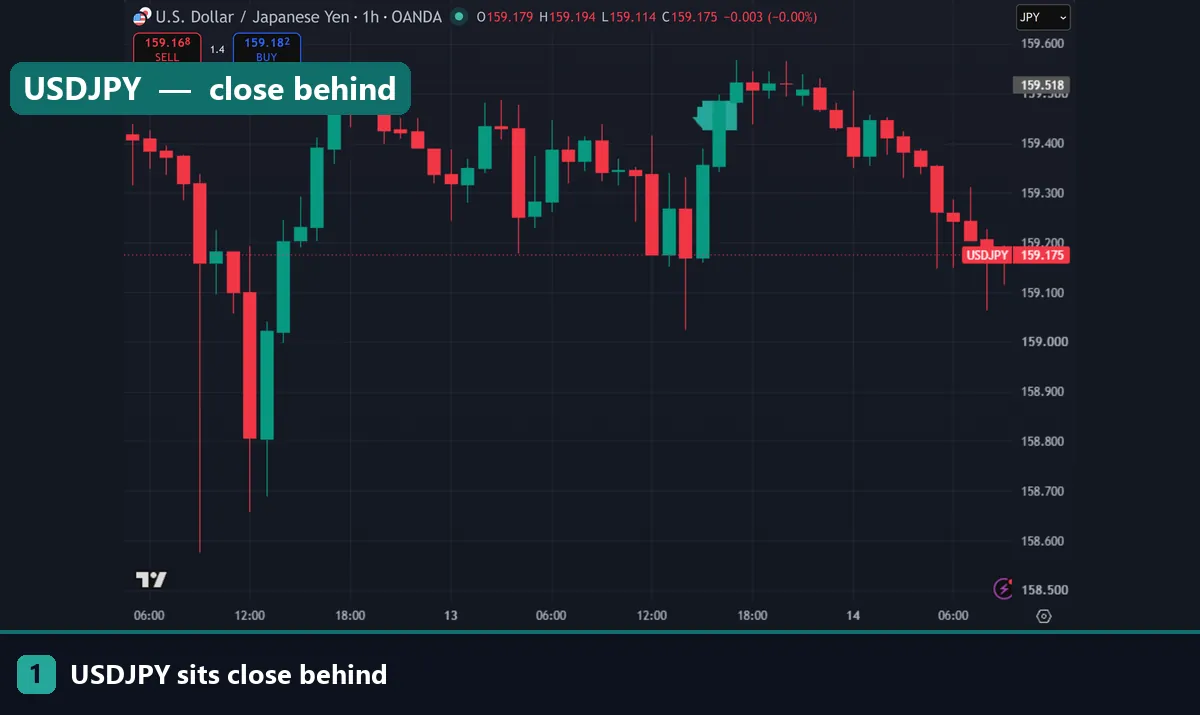
Volume. Every major involves the US dollar, which sits on one side of most transactions worldwide. Constant two-way flow means a market maker can offset a position quickly and charges less for the risk of holding it.
Volatility. A pair that moves violently is riskier to quote, so the market maker widens to protect itself. Stable pairs stay tight.
Time of day. Spreads are tightest during the London and New York overlap and widest in the thin hours after the New York close. Our trading sessions guide maps the windows.
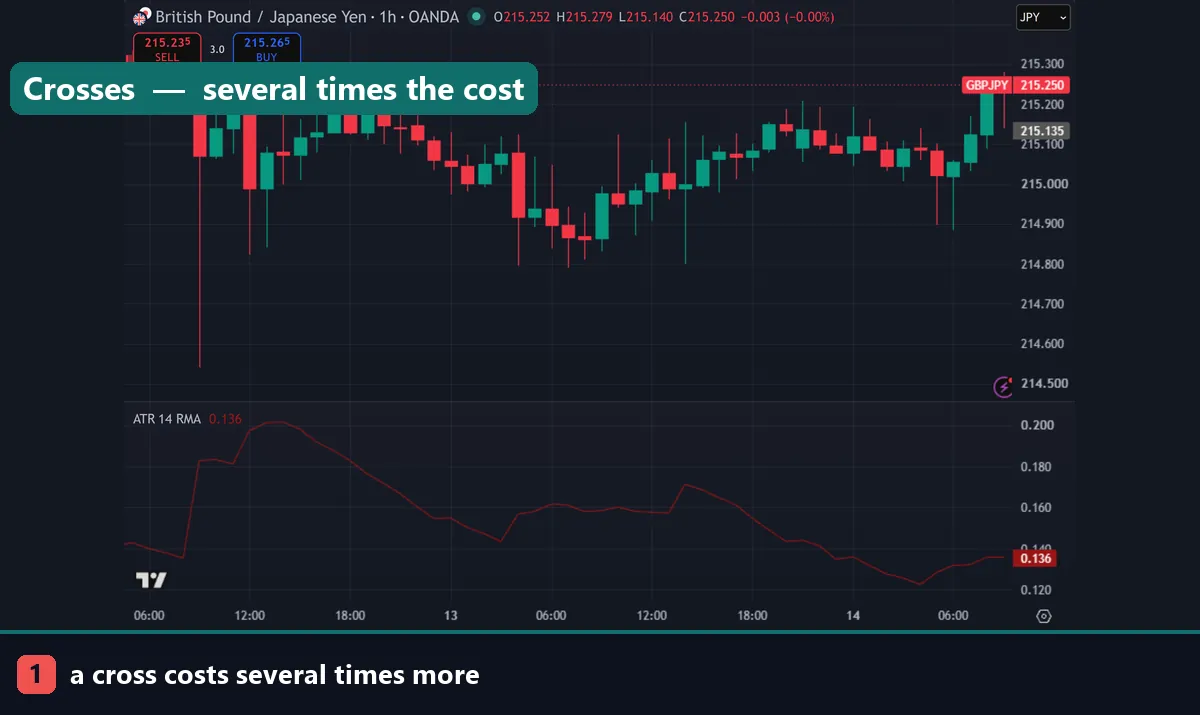
Crosses cost more because they are constructed. A market maker quoting GBPJPY is effectively pricing GBPUSD and USDJPY together, so both spreads and both risks fold into one quote.
Where the cost actually lands
Comparing pairs on pips alone is misleading. Convert to money.
On a standard lot, one pip of a dollar-quoted pair is 10 dollars. A 1.2-pip spread on EURUSD costs 12 dollars per round turn.
GBPJPY at 3.5 pips costs roughly 24 dollars on the same size, because the yen pip value differs and the spread is wider. Exotic pairs run into the hundreds.
Spread cost = spread in pips × pip value × lots
Now weigh it against your target. Twelve dollars against a 200-pip swing target is trivial. The same twelve dollars against a 5-pip scalp is two-fifths of the trade, and that ratio is what decides whether spread matters to you at all.
When the cheapest pair is the wrong one
Three situations where chasing the tightest spread costs you money.
The pair does not move. A tight spread on a pair sitting in a 20-pip range gives you nothing to trade. Compare spread against average daily range rather than in isolation — a 3-pip spread on a pair moving 150 pips is better value than 1 pip on a pair moving 40.
Your strategy needs volatility. Breakout and momentum systems need range to work. Our volatile forex pairs guide covers the other end of the scale.
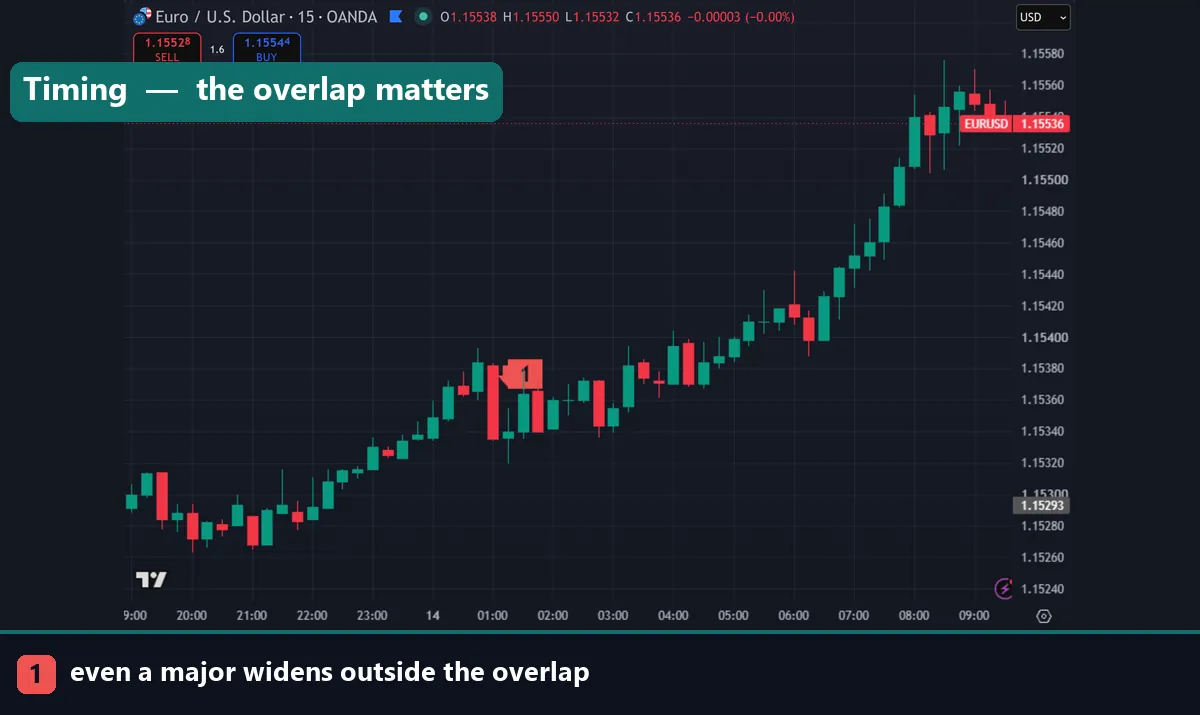
You trade outside the overlap. The advertised spread on EURUSD applies during London and New York hours. At 03:00 UK time it can be several times wider, and the ranking shifts toward whichever pairs have an active session.
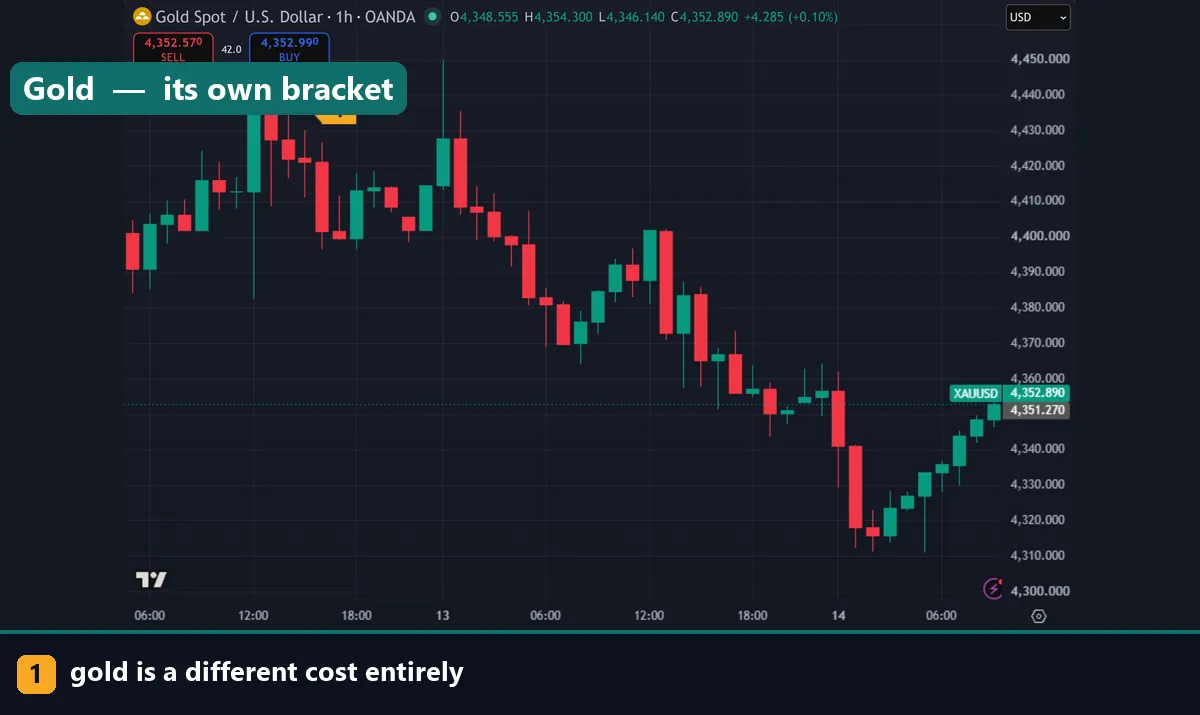
Gold deserves its own note. XAUUSD attracts traders for its range and carries a spread many times a currency pair’s, so position sizing has to account for both.
Download the complete indicator database
Put these concepts on your charts. One email unlocks the full library of 1,380+ indicators with compiled MT4 and MT5 files, plus my TradingView scripts. No paywall, no spam, unsubscribe any time.
Get free access to my indicator database
One email unlocks 1,380+ free MT4, MT5 and TradingView indicators — the complete library. No single-tool download; you get the whole database.
Reducing what you pay
Four practical steps, in order of effect.
Trade during the overlap. Free, immediate, and larger than any broker difference. Roughly 13:00 to 16:00 UK time covers it.
Avoid the minutes around scheduled news. Spreads widen sharply before and during major releases, and a position opened in that window pays for it. Our forex news factory guide covers the calendar.
Compare brokers on total cost. Add commission to the raw spread before deciding, and use typical figures rather than advertised minimums.
Hold longer. The most reliable way to make spread irrelevant is to stop paying it so often. A trader taking two swing trades a week pays a fraction of what a scalper pays for the same account.
Check your own numbers rather than trusting a comparison table. Open the Market Watch window during your usual trading hours and record what your broker actually quotes on the pairs you trade.
Common mistakes
Four repeat. Comparing raw spreads against retail spreads tops the list, since the raw figure excludes commission. Trusting advertised minimums comes second, because they describe the best moment of the day. Third, traders pick a pair on spread alone without checking whether it moves enough to trade. Fourth, they compare pairs in pips rather than money, which hides the yen and gold pip-value difference.
Where to go next
Cost and movement have to be weighed together. Read bid ask spread calculation for the arithmetic, then volatile forex pairs for the other side of the trade-off. For account structure, see spread only vs raw pricing, and forex trading sessions covers timing. For further reading, Investopedia explains the bid-ask spread at Investopedia, and the FX turnover statistics at the BIS show why the majors dominate.
FAQ
Which forex pair has the lowest spread?
EURUSD, typically 0.1 to 0.3 pips on a raw account and under 1.5 pips retail. It is the most heavily traded instrument, and competition to quote it compresses the spread.
Why do crosses cost more than majors?
A cross such as GBPJPY is priced through two dollar pairs, so the market maker carries both spreads and both risks. Lower direct volume adds to the cost.
When are spreads tightest?
During the London and New York overlap, roughly 13:00 to 16:00 UK time. They widen after the New York close and around scheduled news releases.
Should I always trade the tightest pair?
No. Compare spread against average daily range. A pair with a tight spread that barely moves offers less than a wider pair with room to run.
How do I calculate what the spread costs me?
Multiply the spread in pips by the pip value and your lot size. On a standard lot of a dollar pair, one pip is 10 dollars.
Does gold have a low spread?
No. XAUUSD carries a spread many times a currency pair’s, and its range attracts traders anyway. Trading involves risk, results are not guaranteed, and past performance is not indicative of future results.

About the author
Written by Dominic Walsh, a Forex trader and MT4/MT5 indicator, Expert Advisor and script developer. Every tool on forexmt4systems.com is tested on live charts before release and ships with ready-to-use compiled MT4 (.ex4) and MT5 (.ex5) files. Learn more about the trader and developer behind this site.
How we build, test and correct every tool: Editorial & Testing Policy. Trading carries risk; see the disclaimer.