
Traders searching for forex news factory are usually after one thing: the economic calendar that tells them when the market is about to move. The calendar lists scheduled releases, ranks them by expected impact, and shows the forecast against the previous figure. This guide explains how to read it, which releases actually matter, and how to build a plan around them rather than getting run over.
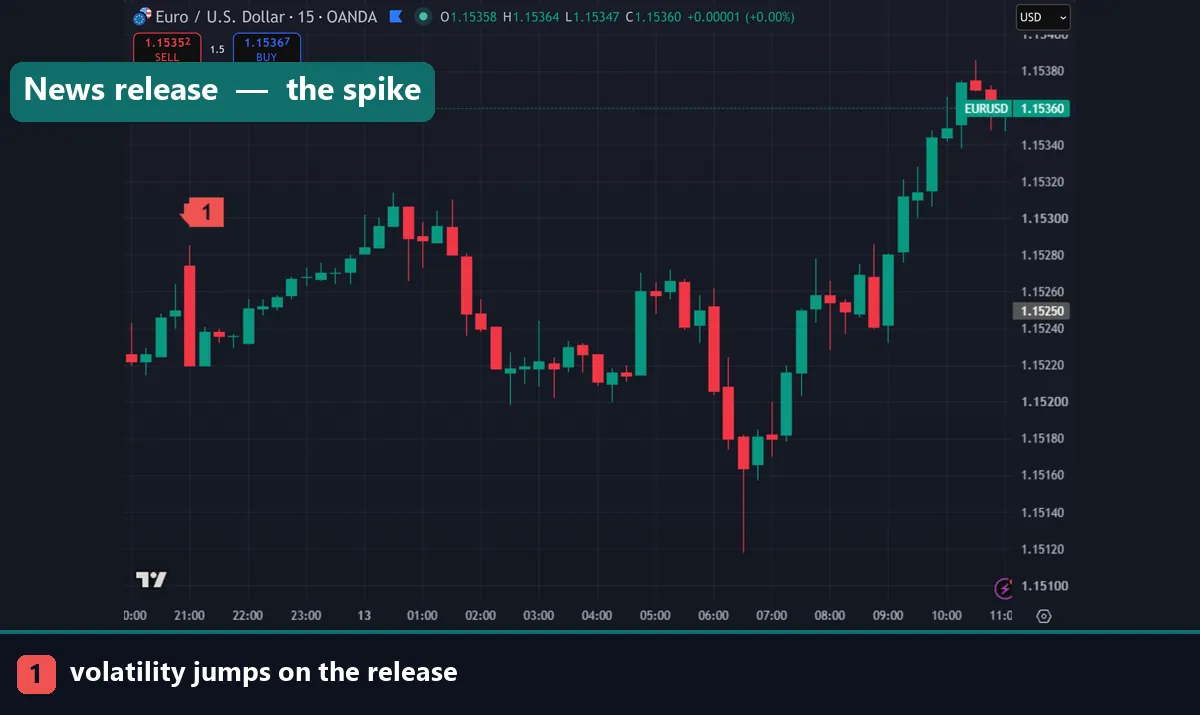
What the forex news factory calendar shows you
An economic calendar is a timetable of scheduled data releases and central bank events. Each row carries a handful of fields, and every one of them changes how you should treat the release.
| Field | What it tells you | How to use it |
|---|---|---|
| Time | Exact release moment in your timezone | Set the calendar to local time once, then trust it |
| Currency | Which economy the number covers | Only affects pairs containing that currency |
| Impact | Expected market reaction, usually colour coded | Treat high impact as a trading decision, not a footnote |
| Actual | The number just released | Blank until the moment it prints |
| Forecast | Consensus of surveyed economists | This is what price already reflects |
| Previous | Last period’s reading | Shows the trend and any revision |
The critical column is Forecast. Markets price expectations in advance, so a strong number that merely matches consensus often produces no move at all. The reaction comes from the gap between actual and forecast, which traders call the surprise.
Which releases actually move price

Dozens of items appear each week and most are noise. A short list does the damage.
Central bank rate decisions sit at the top. The Federal Reserve, ECB, Bank of England and Bank of Japan set the cost of money, and the accompanying statement often moves price more than the rate itself. Non-farm payrolls lands on the first Friday of each month and remains the single most volatile scheduled event for dollar pairs.
Inflation data follows closely, since CPI readings drive expectations for the next rate move. GDP matters less than it should, because it is backward looking and heavily trailed. PMI surveys are forward looking and can surprise, particularly the services component.
Unscheduled remarks from a central bank governor can outrank every one of them. No calendar predicts those, which is the honest limit of planning around news.
What happens to price at the release
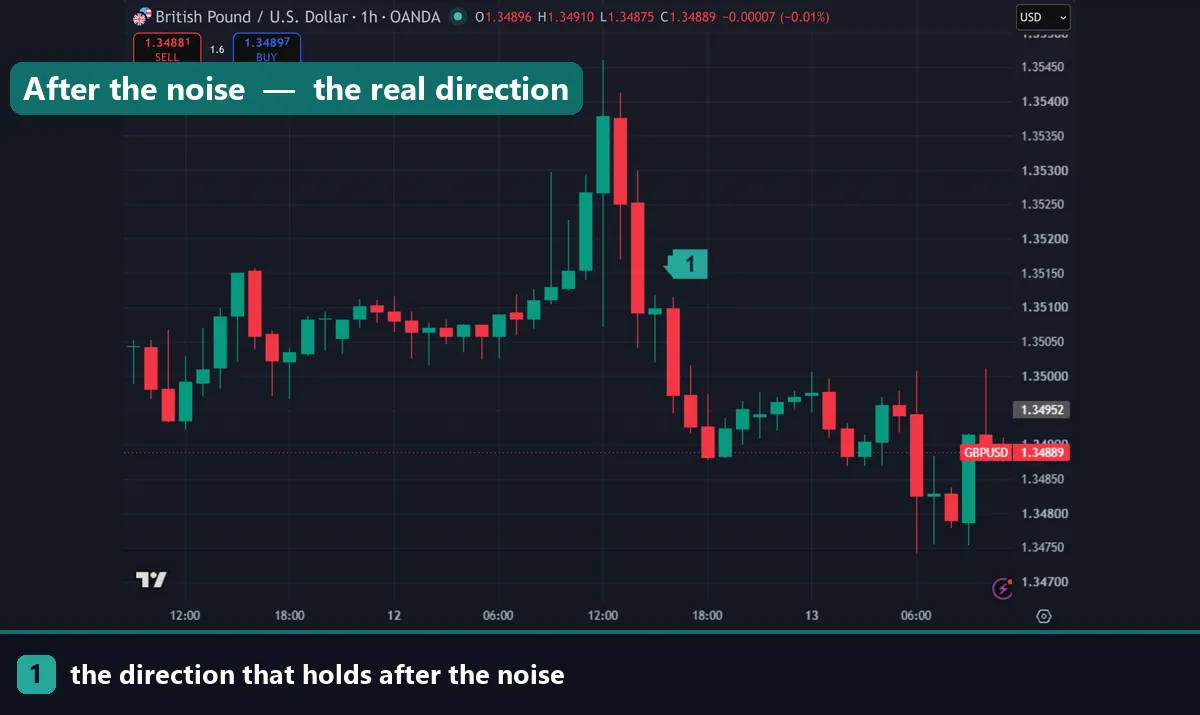
Three things happen at once, and only one of them is direction. First, the spread widens. A pair sitting at 1.6 pips can jump to 8 or more for several seconds. Second, liquidity thins out, so orders fill at prices well away from the quote you clicked. Third, price often spikes both ways before settling.
That first spike traps people. Price runs 30 pips one way, triggers stops, then reverses through the original level. Anyone who entered on the initial move is now offside with a widened spread against them. The move that holds usually establishes itself several minutes later, once the full release and any revisions have been digested.
Slippage is the practical consequence. A stop order placed at a specific level fills at the next available price, which during a release can be far worse. Guaranteed stops, where a broker offers them, cost a premium for exactly this reason.
Three workable approaches
Stand aside. The simplest plan and the one most consistently profitable traders use. Close or reduce exposure before a high impact release, then return once the spread normalises. You give up nothing but a few minutes.
Trade the settled move. Wait for the release, let the initial spike resolve, then trade the direction that holds once the spread returns to normal. Volatility stays elevated for a while, so the follow-through can be substantial without the fill risk of the first seconds.
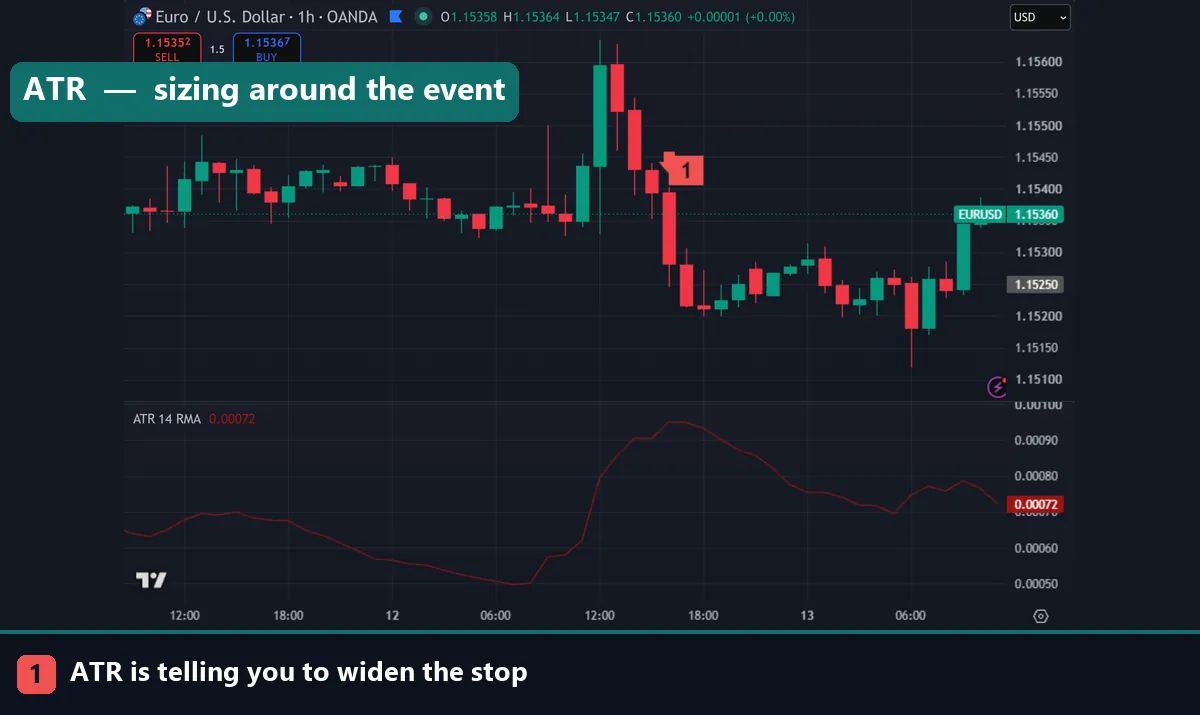
Position before it with reduced size. Only sensible when you already hold a directional view for other reasons. Cut the position so the widened spread and the possible gap cannot do real damage. Our ATR stop loss guide gives a volatility-based way to widen stops ahead of an event.
What does not work is placing pending orders either side of the price and hoping to catch the break. Both sides frequently trigger, and the spread eats the difference.
Download the complete indicator database
Put these concepts on your charts. One email unlocks the full library of 1,380+ indicators with compiled MT4 and MT5 files, plus my TradingView scripts. No paywall, no spam, unsubscribe any time.
Get free access to my indicator database
One email unlocks 1,380+ free MT4, MT5 and TradingView indicators — the complete library. No single-tool download; you get the whole database.
Building a weekly routine

Open the calendar on Sunday evening and filter it down. Select only the currencies you trade and only medium and high impact rows. That usually leaves five to ten events for the week, which is a list you can actually hold in your head.
Write those times into your trading plan the way you would write a session start. Then decide in advance what you will do at each one. Deciding while a number prints is how traders end up chasing a spike. If you trade specific sessions, cross-reference the calendar against our notes on when the forex market opens, since a release landing in a thin session hits harder.
Check for revisions as well. A previous figure quietly revised down can flip the meaning of an in-line reading, and the calendar shows it only if you look.
Common mistakes around news
Four errors repeat. Trading the first spike is the most expensive, because slippage and the widened spread work against you at the same moment. Ignoring the forecast column comes next: traders see a strong number, buy, and lose when the market had already priced it. Third, people forget the timezone, so their calendar sits an hour out through a daylight-saving change. Fourth, they hold a normal-sized position through a rate decision, which turns an ordinary trade into a coin flip.
None of those requires a complicated fix. Filter the calendar, check the timezone, read the forecast, and decide before the number lands.
Where to go next
News sits alongside the rest of your method rather than replacing it. Our forex currency trading strategies give complete rule sets you can pause around releases. To measure how much a pair typically moves before you judge a news reaction, read forex pair volatility. If you want the release to size your position rather than surprise it, the forex position sizing calculator handles the maths. For background, BabyPips defines the economic calendar at BabyPips. The non-farm payrolls article on Wikipedia covers that release in depth.
FAQ
What is a forex news factory calendar?
It is an economic calendar listing scheduled data releases and central bank events by time, currency and expected impact. Each row shows the consensus forecast and the previous reading, so you can judge whether the actual number is a surprise.
Which news releases move forex the most?
Central bank rate decisions and their statements lead, followed by non-farm payrolls and inflation data. PMI surveys can surprise because they are forward looking. Unscheduled central bank remarks sometimes outrank all of them.
Should I trade during high impact news?
Many consistent traders stand aside and return once spreads normalise. If you do trade it, wait for the initial spike to resolve rather than entering in the first seconds, when slippage and a widened spread work against you.
Why did price barely move on a strong number?
Because the market had already priced it. Reaction comes from the gap between the actual figure and the forecast, so a strong number matching consensus often produces nothing. Always read the forecast column first.
What is slippage during a news release?
Slippage is the difference between the price you asked for and the price you received. Liquidity thins during a release, so stops and market orders fill at the next available price, which can sit well away from your level.
Can I build a system that trades news reliably?
Some traders do, though execution quality and spread control matter more than the signal itself. Test any approach on live spreads rather than backtest assumptions. Trading involves risk, results are not guaranteed, and past performance is not indicative of future results.

About the author
Written by Dominic Walsh, a Forex trader and MT4/MT5 indicator, Expert Advisor and script developer. Every tool on forexmt4systems.com is tested on live charts before release and ships with ready-to-use compiled MT4 (.ex4) and MT5 (.ex5) files. Learn more about the trader and developer behind this site.
How we build, test and correct every tool: Editorial & Testing Policy. Trading carries risk; see the disclaimer.