
When does the forex market open? Trading begins at the Sydney open on Sunday evening, around 21:00–22:00 GMT, and runs without a break until the New York close on Friday at roughly 21:00–22:00 GMT. That is 24 hours a day, five days a week. No single opening bell exists, because the market is a relay of four regional sessions — Sydney, Tokyo, London and New York — that hand liquidity to each other around the clock. This guide sets out the forex session times in GMT, explains what time the forex market opens and closes in each centre, and shows how to read your broker’s server time.
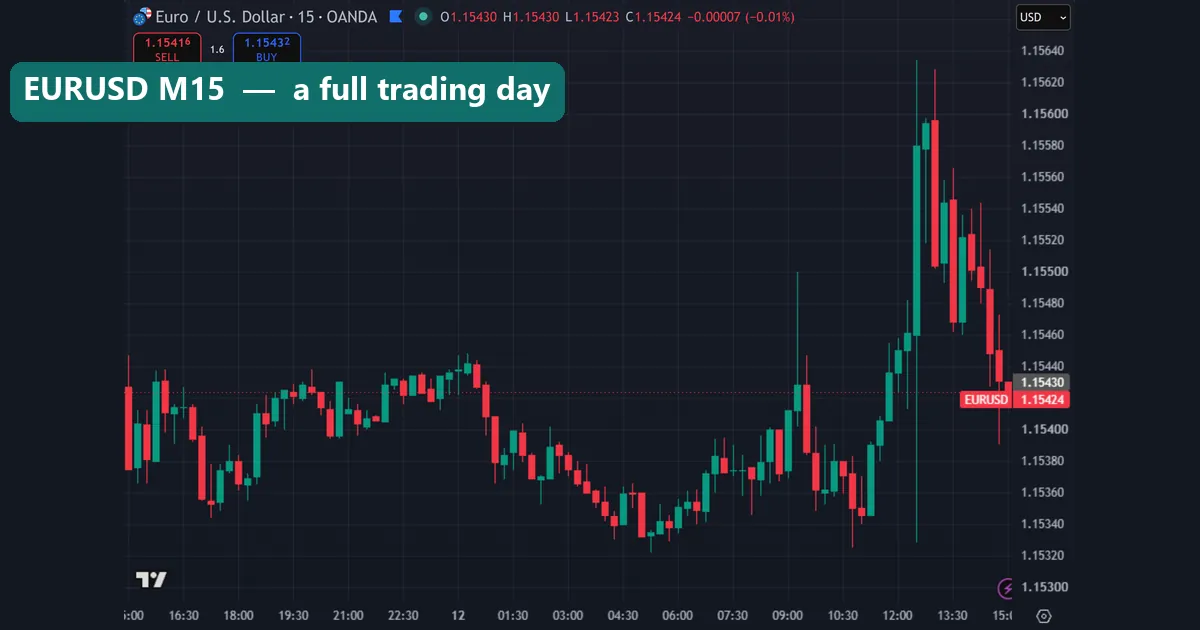
Forex market hours: a 24/5 relay, not a single bell
Stock exchanges have a building and a bell. Forex has neither. Trades settle between banks, brokers and funds spread across every timezone, so the market pauses only when the last major centre shuts on Friday and the first one reopens on Sunday. That is why forex market hours confuse traders arriving from equities.
Think of it as a baton pass. Sydney starts the week. Tokyo joins a couple of hours later and carries Asia. Then London takes over with the largest share of daily turnover, and New York overlaps London before closing the week out. Each handover changes which currencies move, and how far they move.
Forex session times in GMT
Every time below is GMT/UTC. Treat that as your reference clock, because local times shift with daylight saving and the shifts are not synchronised. Britain, the United States and Australia change on different dates. Japan does not change at all. So the gap between London and New York runs four hours one week and five the next.
| Session | GMT open–close | Most active pairs | Character |
|---|---|---|---|
| Sydney | 21:00–06:00 (22:00–07:00 outside AU daylight time) | AUDUSD, NZDUSD, AUDJPY | Thin, slow, wider spreads |
| Tokyo | 00:00–09:00 (no DST in Japan) | USDJPY, AUDJPY, EURJPY | Ranging, respects levels |
| London | 08:00–17:00 (07:00–16:00 during BST) | EURUSD, GBPUSD, EURGBP | Highest volume, strong trends |
| New York | 13:00–22:00 (12:00–21:00 during EDT) | EURUSD, USDCAD, XAUUSD | News-driven, sharp reversals |
Do not convert these into one fixed local hour and write it on a sticky note. Instead, recheck your own GMT offset whenever the clocks change, or work straight from your platform’s clock.
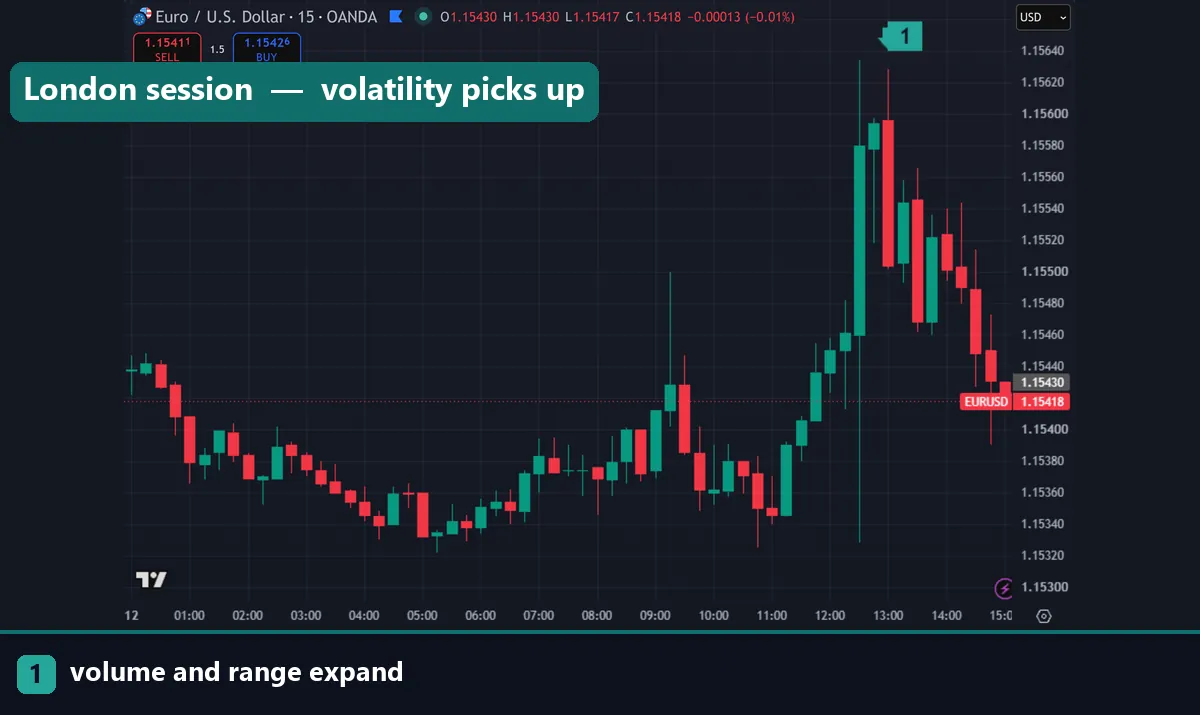
The Asian session: Sydney open and Tokyo
Sydney opens the week first, yet it stays the quietest window of the five days. Volume is low, spreads sit wider than usual, and moves are small. Many traders simply skip it.
Tokyo changes that. Japan is the third-largest forex centre, so yen pairs come alive from 00:00 GMT onward. The Asian session also has a distinct personality: it tends to range rather than trend, and it often builds the day’s first clean support and resistance box. Breakout traders mark that box and wait for London to break it. For a refresher on reading those structures bar by bar, our guide on how to read candlestick charts covers the patterns that matter here.
The limitation is obvious. Range conditions punish trend-following systems, and thin liquidity means one large order can spike price further than the move deserves.
London session time: the volume engine
London is the largest forex centre on earth. The London session time — 08:00 to 17:00 GMT, an hour earlier under British Summer Time — carries the biggest share of daily turnover. Trends that hold for hours usually start here, and European data releases land in this window too.
Because of that volume, spreads on EURUSD and GBPUSD are typically at their tightest. Traders who need a real range often build their routine around the first three hours after the open.
The catch: London also produces the fastest false breaks of the day. Price sweeps the Asian range, traps early entries, then reverses. Sizing your stop to actual volatility helps, and our walkthrough on how to use ATR as a stop loss shows one way to do it.
New York session, and what time do forex markets close
New York runs 13:00 to 22:00 GMT, shifting to 12:00–21:00 during US daylight time. American data — employment figures, inflation prints, central bank statements — lands mostly in the first two hours. Expect sharp moves and occasional whipsaws around those releases.
So what time do forex markets close? The week ends when New York closes on Friday, at roughly 21:00–22:00 GMT. Liquidity drains through Friday afternoon, so the final hour rarely suits a fresh position. Spreads widen, and anything left open faces the weekend gap.
The London–New York overlap
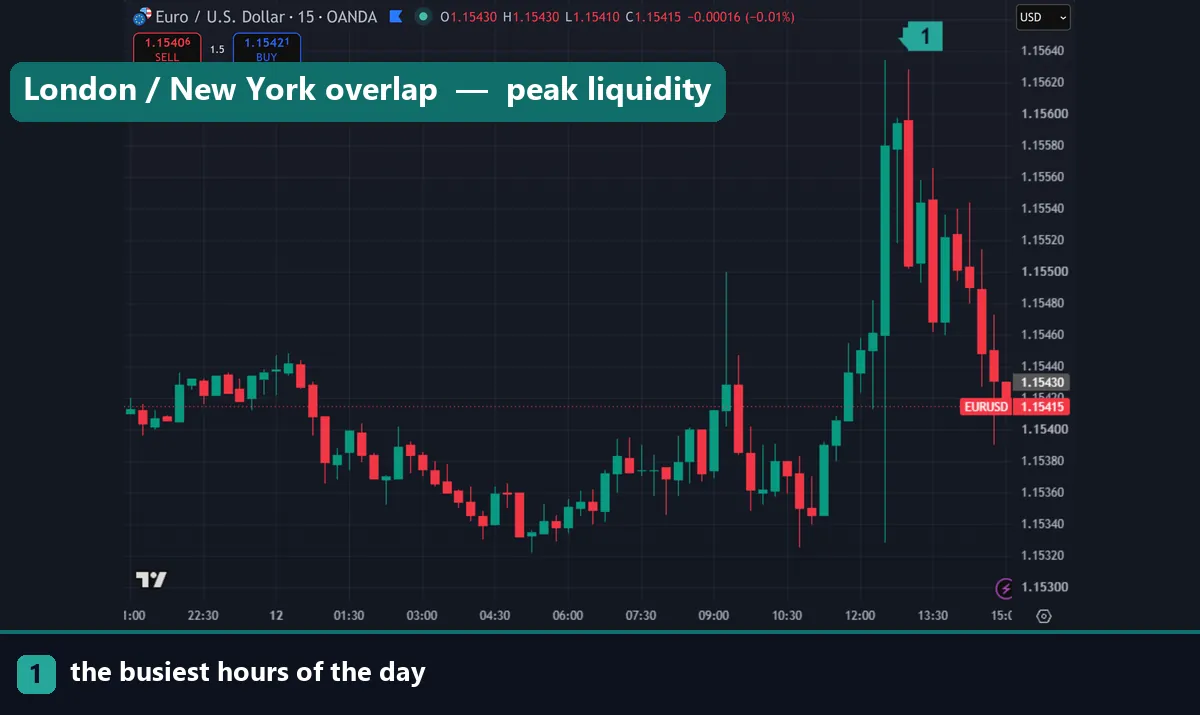
The overlap is the single most important window in the trading day. For roughly four hours — about 13:00–17:00 GMT in winter and 12:00–16:00 GMT in summer — the two largest centres trade together. Volume peaks, spreads reach their daily lows, and the majors produce their widest ranges.
Day traders and scalpers concentrate here for good reason. More liquidity means better fills and less slippage.
That said, the overlap is no free ride. Volatility cuts both ways, and a stop placed for quiet Asian conditions gets hit routinely in this window. Widen your risk parameters to match the session, or trade smaller. For tools that suit these conditions, see our roundup of the best day trading technical indicators.
When does the forex market open on Sunday?
Forex opens on Sunday evening GMT with the Sydney session — typically 21:00 or 22:00 GMT, depending on Australian daylight time. Your broker may start slightly earlier or later, and a few open at 00:00 server time on Monday instead. Check their published schedule rather than assuming.
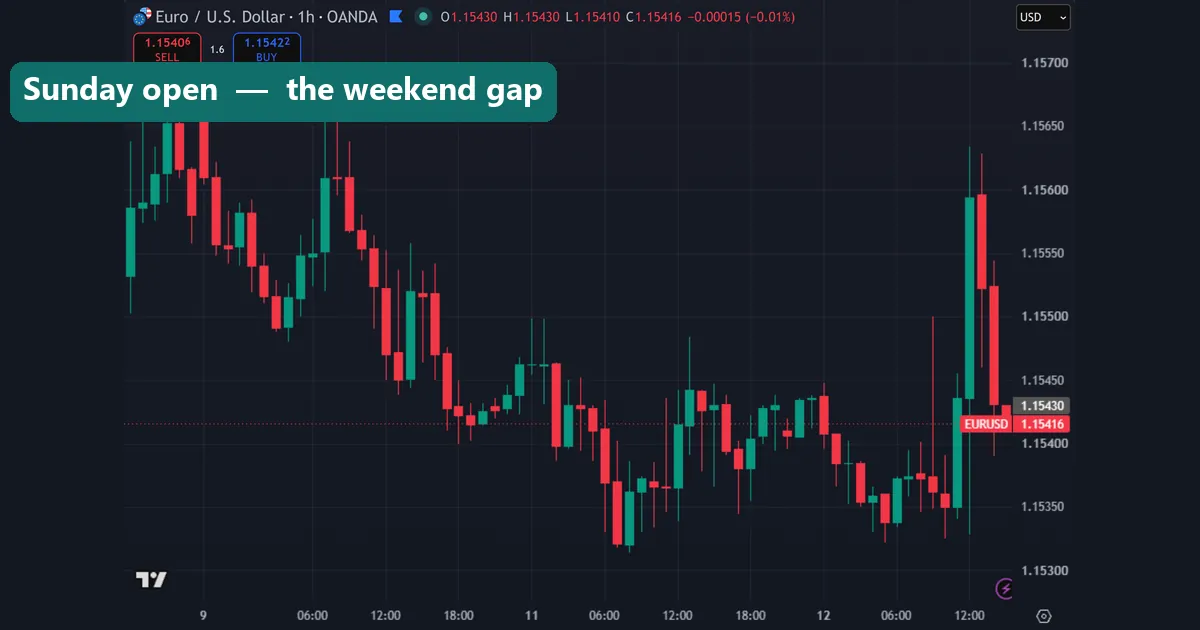
Weekend news does not disappear because the market is shut. Elections, central bank statements and geopolitical events get priced in at once when quoting resumes. The result is a gap: Sunday’s opening price differs from Friday’s close, sometimes sharply.
Gaps matter for risk. A stop loss cannot fill inside a gap, so price can jump straight past it and close you out at a worse level. Traders who dislike that exposure either flatten before Friday’s close or cut size into the weekend. Neither approach removes the risk; both only limit it.
Why session timing moves spreads and volatility
Spread is a function of how many participants are quoting. During the London–New York overlap, dozens of liquidity providers compete and the spread on EURUSD tightens accordingly. At 03:00 GMT that competition thins out, and the same pair costs more to trade.
Volatility follows the same curve. A strategy tuned to overlap-sized swings will bleed small losses in the Asian session, because its targets sit too far away for the available range. So match the tool to the hour. Momentum settings behave differently by session too, which is why our page on the best RSI indicator settings recommends different parameters for different conditions.
Download the complete indicator database
Put these concepts on your charts. One email unlocks the full library of 1,380+ indicators with compiled MT4 and MT5 files, plus my TradingView scripts. No paywall, no spam, unsubscribe any time.
Get free access to my indicator database
One email unlocks 1,380+ free MT4, MT5 and TradingView indicators — the complete library. No single-tool download; you get the whole database.
How to check broker server time on MT4 and MT5
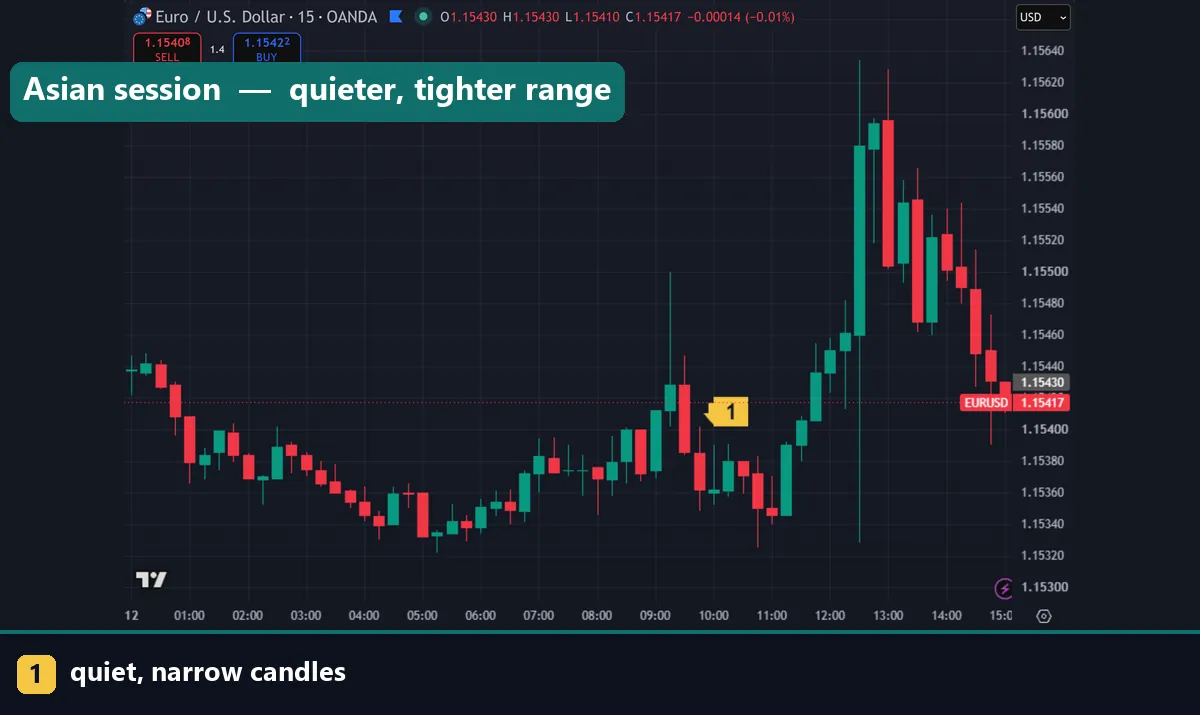
Your charts are drawn in server time, not local time and not GMT. Most brokers run servers on GMT+2 or GMT+3, so their daily candle closes at 00:00 server time — usually the New York close. Get this wrong and every session box you draw sits in the wrong place.
Finding it takes seconds. Open the Market Watch window with Ctrl+M in MT4 or MT5. The clock at the top of that panel is server time.
Then work out the offset between server time and GMT once, and note it down. Repeat the check after each daylight saving change, because many brokers move their server offset with US clocks. Session indicators that draw London and New York boxes read the offset automatically, and our guide on how to install MT4 and MT5 indicators covers adding one.
Common mistakes with forex market hours
Three errors show up constantly. The first is treating a fixed local time as permanent, since clocks change four times a year across the major centres and a hardcoded 9am entry drifts out of the London open twice annually. Second comes trading every hour the market is open. Being open is not the same as being worth trading, and the dead zone between the New York close and the Tokyo open rarely rewards attention. Third, ignoring the economic calendar. Session structure tells you when liquidity exists; the calendar tells you when that liquidity gets violently rearranged.
Where to go next
Session timing works best alongside solid execution habits. Start with our roundup of the best day trading technical indicators, then tighten your risk with ATR-based stop placement, and sharpen entries using candlestick chart reading. For a neutral reference, Investopedia explains the the foreign exchange market article on Wikipedia, and the structure of the market itself appears in the foreign exchange market article on Wikipedia.
FAQ
What time does the forex market open on Sunday?
Trading resumes with the Sydney session on Sunday evening, around 21:00 or 22:00 GMT depending on Australian daylight time. Brokers set their own opening minute, so confirm it on your broker’s trading-hours page.
What time does the forex market close on Friday?
The week ends at the New York close, roughly 21:00–22:00 GMT on Friday. Liquidity thins beforehand, and spreads widen as market makers step back ahead of the weekend.
Which forex session is the most active?
London carries the largest volume overall, and the London–New York overlap is the busiest window of the day. Spreads on the majors are usually tightest during those overlapping hours.
Is forex open 24 hours a day?
Yes, from Sunday evening to Friday evening GMT. It closes over the weekend, and some brokers add a short daily maintenance break at server rollover.
Why do my MT4 charts show a different time to my clock?
MetaTrader draws bars in broker server time, commonly GMT+2 or GMT+3. Open Market Watch with Ctrl+M to read the server clock, then calculate the offset from GMT and recheck it after each daylight saving change.
Does trading a specific session guarantee better results?
No. Session timing improves your conditions — tighter spreads, more movement — but it never decides the outcome of a trade. Trading involves risk, results are not guaranteed, and past performance is not indicative of future results.

About the author
Written by Dominic Walsh, a Forex trader and MT4/MT5 indicator, Expert Advisor and script developer. Every tool on forexmt4systems.com is tested on live charts before release and ships with ready-to-use compiled MT4 (.ex4) and MT5 (.ex5) files. Learn more about the trader and developer behind this site.
How we build, test and correct every tool: Editorial & Testing Policy. Trading carries risk; see the disclaimer.