
Picking the best signal provider forex traders can rely on is mostly a matter of ruling out the ones you should not use. The category attracts marketing that no regulated industry would allow. The checks that tell a real service from a sales funnel are simple once you know them. This guide covers how signals work, the standards that matter, and the claims that should end your evaluation on the spot.
What a signal service actually sells
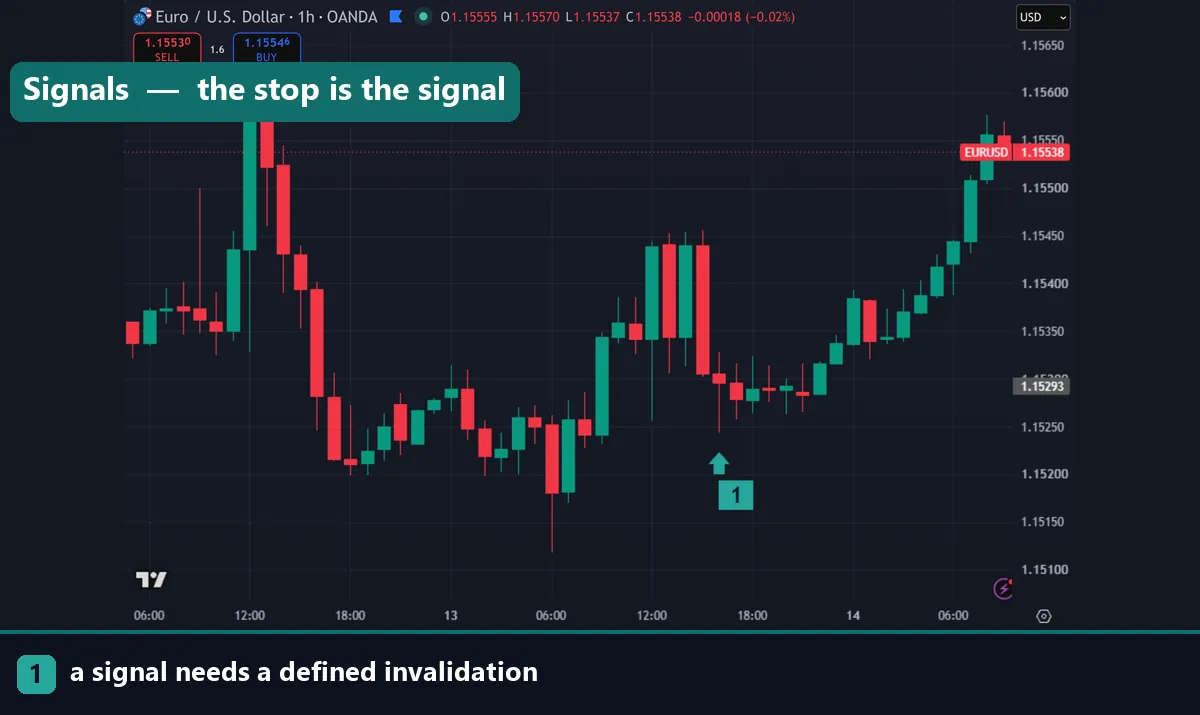
A signal is a trade instruction: instrument, direction, entry price, stop loss and target. Delivery is usually by Telegram, email, a mobile app, or directly into your platform through a copy-trading link.
Three models exist and they differ more than the marketing suggests.
Manual signals come from a person reading charts. Quality rests on that one person, and you can rarely check who they are. Algorithmic signals come from a system, so at least the rules stay consistent. Copy trading links your account to someone else’s and mirrors their trades. It removes the delay, and it removes your judgement with it.
All three have the same structural problem: you are outsourcing decisions to someone whose incentives may not match yours.
The best signal provider forex verification standard
This is the single most useful filter, and most services fail it.
Ask for a verified track record on an independent platform — Myfxbook, FXBlue or a broker-verified statement. Verified means the platform reads a live account through the broker’s own API. The provider cannot edit what it prints.
Then check what the record actually shows. A screenshot is not evidence. A spreadsheet is not evidence. A results page hosted on the provider’s own website is not evidence.
| What to check | Why it matters | Warning sign |
|---|---|---|
| Account age | Short histories hide drawdowns | Under 12 months |
| Live or demo | Demo has no slippage or real fills | Demo results presented as live |
| Maximum drawdown | Shows what you must sit through | Not disclosed, or above 30% |
| Number of trades | Small samples prove nothing | Under 200 |
| Lot sizing | Reveals martingale or grid recovery | Sizes increasing after losses |
| Trade duration | Very long holds may hide losers | Positions open for months |
The lot sizing check catches the most dangerous pattern. A provider who doubles size after each loss can show a long run of winners, then lose the whole account in one sequence.
The claims that end the evaluation
Some marketing language tells you enough on its own.
Any promise of certain profit or a fixed monthly return is either dishonest or describes something other than trading. Markets do not produce certain outcomes, and a provider claiming otherwise is telling you they will say anything.
Extremely high advertised strike rates deserve doubt rather than excitement. Letting losers run and cutting winners short produces a very high strike rate, a lovely percentage and a shrinking account. Ask for the average win against the average loss instead.
Screenshots of profits prove nothing. Anyone can fake one, and even a genuine screenshot shows only the trade they chose to share.
Pressure tactics — countdown timers, limited places, prices rising tomorrow — signal a sales operation rather than a trading one.
Whatever the record shows, past performance does not indicate future results. That is not a footnote. It is the central fact about any track record you read.
Costs that are not in the price
The subscription is rarely the largest cost.
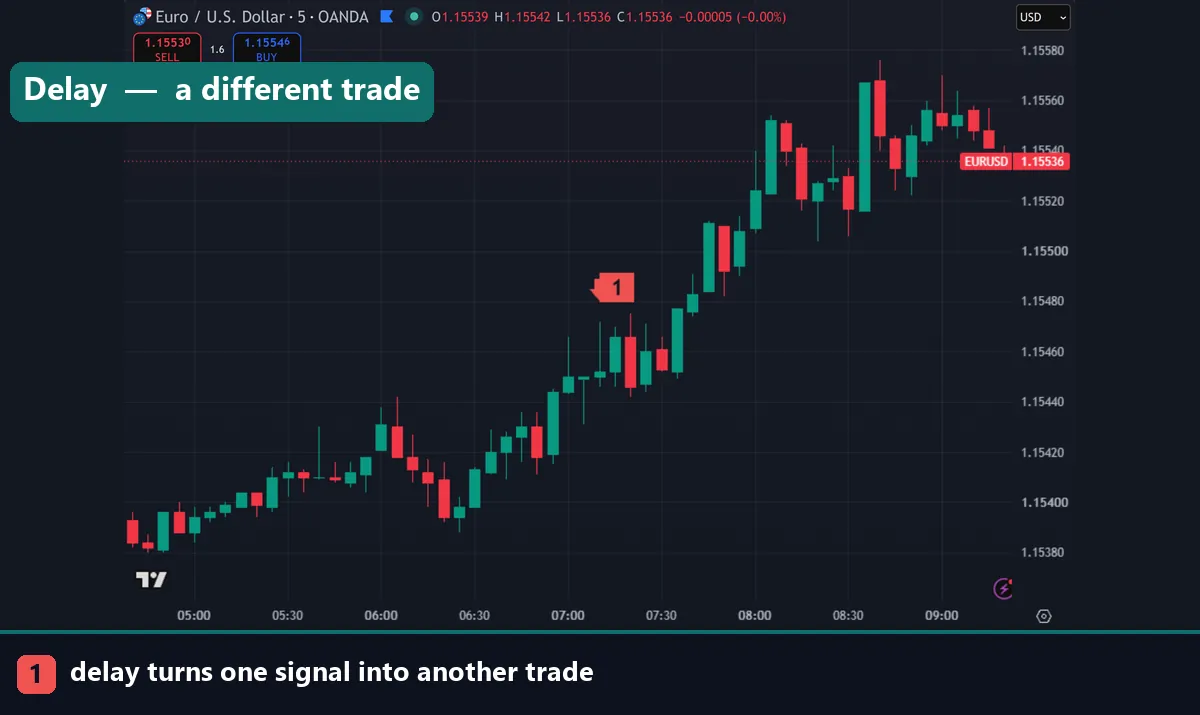
Spread and slippage. Signals reach every subscriber at once, so a crowd enters together and fills drift past the quoted entry. On a short-target signal that gap matters, as covered in our bid ask spread calculation guide.
Delay. A Telegram signal you act on ten minutes late is a different trade. Copy trading removes the delay and your control with it.
Broker requirements. Some providers name a broker and earn commission on your volume. That is a conflict of interest. The provider earns whether you profit or not, and earns more when you trade more.
Check that last point carefully. A service that names a broker and rewards trade frequency has incentives pointing away from your balance.
Download the complete indicator database
Put these concepts on your charts. One email unlocks the full library of 1,380+ indicators with compiled MT4 and MT5 files, plus my TradingView scripts. No paywall, no spam, unsubscribe any time.
Get free access to my indicator database
One email unlocks 1,380+ free MT4, MT5 and TradingView indicators — the complete library. No single-tool download; you get the whole database.
Sizing signals for your own account
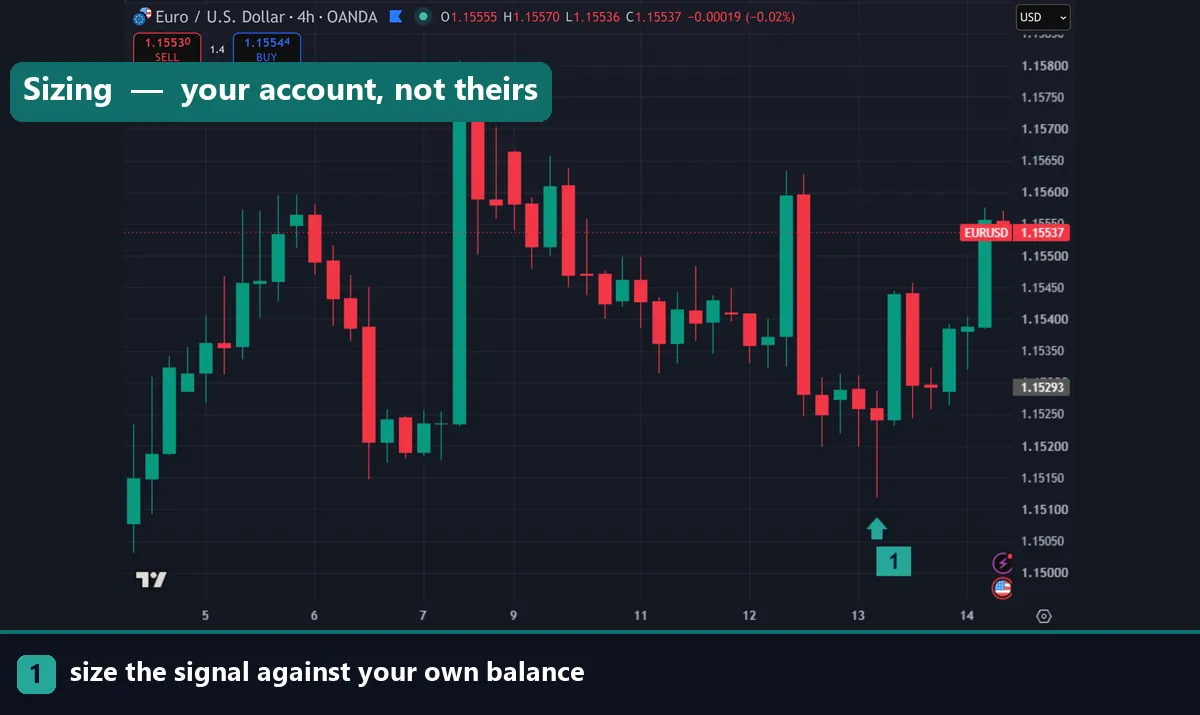
This is where most subscribers lose money even with a decent provider.
Signals arrive with an entry and a stop, and often a suggested lot size. They worked that size out for their own account, not yours. Copy it and you take whatever risk their balance implies.
Recalculate every time. Take your own balance, your own risk percentage, and the signal’s stop distance, then work out your lot size. Our position sizing calculator handles the arithmetic and forex trading lot sizes covers the mechanics.
Refuse any signal that arrives without a stop loss. A trade instruction with no defined invalidation is not a signal; it is a guess with your money.
The alternative worth considering
Signals outsource the decision but not the risk. You carry every loss and learn nothing you can reuse. If the service closes, you start again from scratch.
Learning to read the setups yourself takes longer and compounds. Our forex currency trading strategies cover complete rule sets, and best entry and exit indicators covers the tools behind them.
If you do subscribe, treat it as education rather than automation. Log every signal, check whether the reasoning holds up, and size it yourself.
Common mistakes
Four repeat. Trusting screenshots instead of a verified live record tops the list. Copying the provider’s lot size comes second, which imports their risk tolerance into your account. Third, subscribers ignore the broker requirement and the conflict it creates. Fourth, they judge a service on its strike rate rather than on average win against average loss and maximum drawdown.
Where to go next
Whatever you decide, the risk controls are yours. Read the position sizing calculator and forex trading lot sizes first. For the costs a signal has to overcome, see bid ask spread calculation. To build the skill instead, start with forex trading for beginners. For further reading, the investor advisories at the CFTC cover common trading frauds, and the investor resources at the NFA let you check who you are dealing with.
FAQ
How do I evaluate a forex signal provider?
Ask for a verified live track record on an independent platform such as Myfxbook. Then check account age, maximum drawdown, trade count, and whether lot sizes grow after losses.
What track record length is meaningful?
At least twelve months and several hundred trades on a live account. Shorter histories and small samples cannot distinguish a genuine edge from a favourable run.
Why is a high strike rate a warning sign?
Letting losers run and cutting winners short produces one easily. Ask for average win against average loss and maximum drawdown, which show the risk the percentage hides.
Should I use the provider’s lot size?
No. They sized it for their own balance. Work yours out from your balance, your risk percentage and the signal’s stop distance, every time.
What if a provider names a specific broker?
Ask whether they take commission on your trading volume. If they do, they earn whether you profit or not, and earn more when you trade more.
Are forex signals worth paying for?
They outsource the decision while leaving you the risk, and teach nothing transferable. Trading involves risk, results are not guaranteed, and past performance is not indicative of future results.

About the author
Written by Dominic Walsh, a Forex trader and MT4/MT5 indicator, Expert Advisor and script developer. Every tool on forexmt4systems.com is tested on live charts before release and ships with ready-to-use compiled MT4 (.ex4) and MT5 (.ex5) files. Learn more about the trader and developer behind this site.
How we build, test and correct every tool: Editorial & Testing Policy. Trading carries risk; see the disclaimer.