
A forex micro account trades in 1,000-unit lots, which makes each pip worth about ten cents rather than ten dollars. That single fact is what lets a small balance take a sensible stop without risking a large share of the account. This guide covers what a micro account actually is, the arithmetic that makes it work, and the honest limits of trading one.
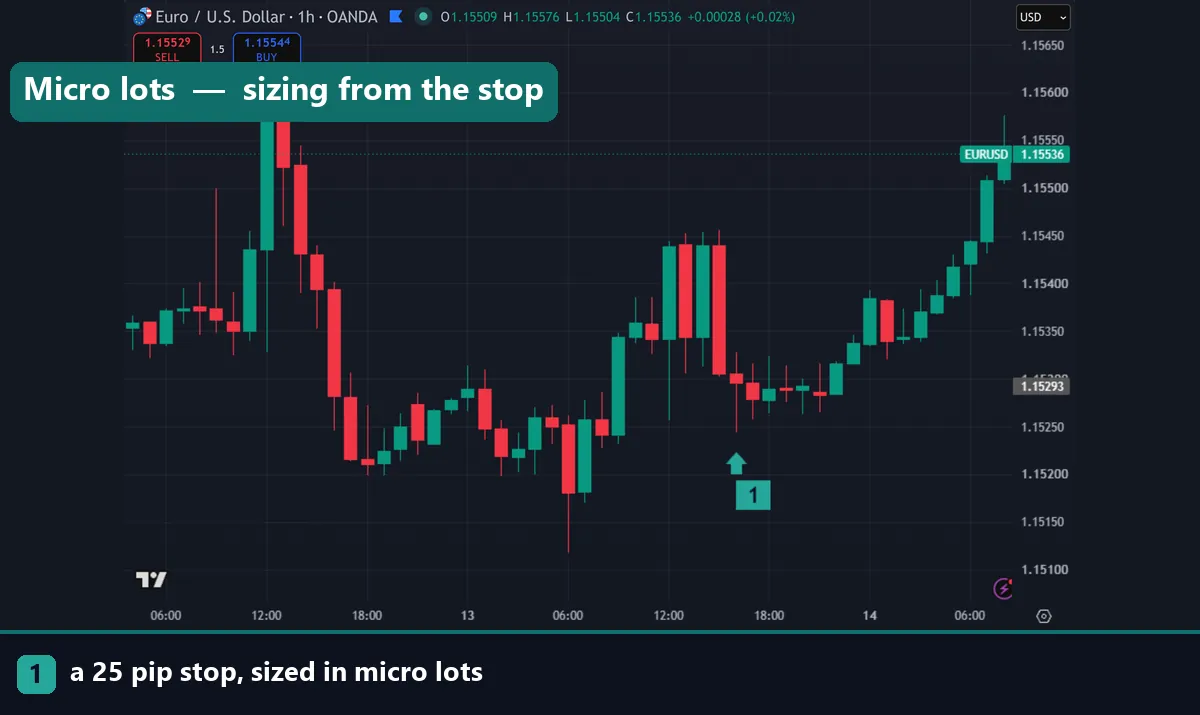
What a forex micro account gives you
Account types are defined by the smallest lot they let you trade. A standard lot is 100,000 units of the base currency, a mini lot is 10,000, and a micro lot is 1,000.
| Account type | Smallest lot | Units | Pip value on USD pairs |
|---|---|---|---|
| Standard | 1.00 | 100,000 | $10.00 |
| Mini | 0.10 | 10,000 | $1.00 |
| Micro | 0.01 | 1,000 | $0.10 |
| Nano (rare) | 0.001 | 100 | $0.01 |
Nothing else changes. Spreads, execution and the instruments available are usually identical to the broker’s larger accounts. You are buying granularity, not a different market.
One point of confusion worth clearing up: a micro account does not restrict you to micro lots. It sets the smallest increment. You can trade 0.37 lots if that is what the risk maths produces.
The arithmetic that makes it work
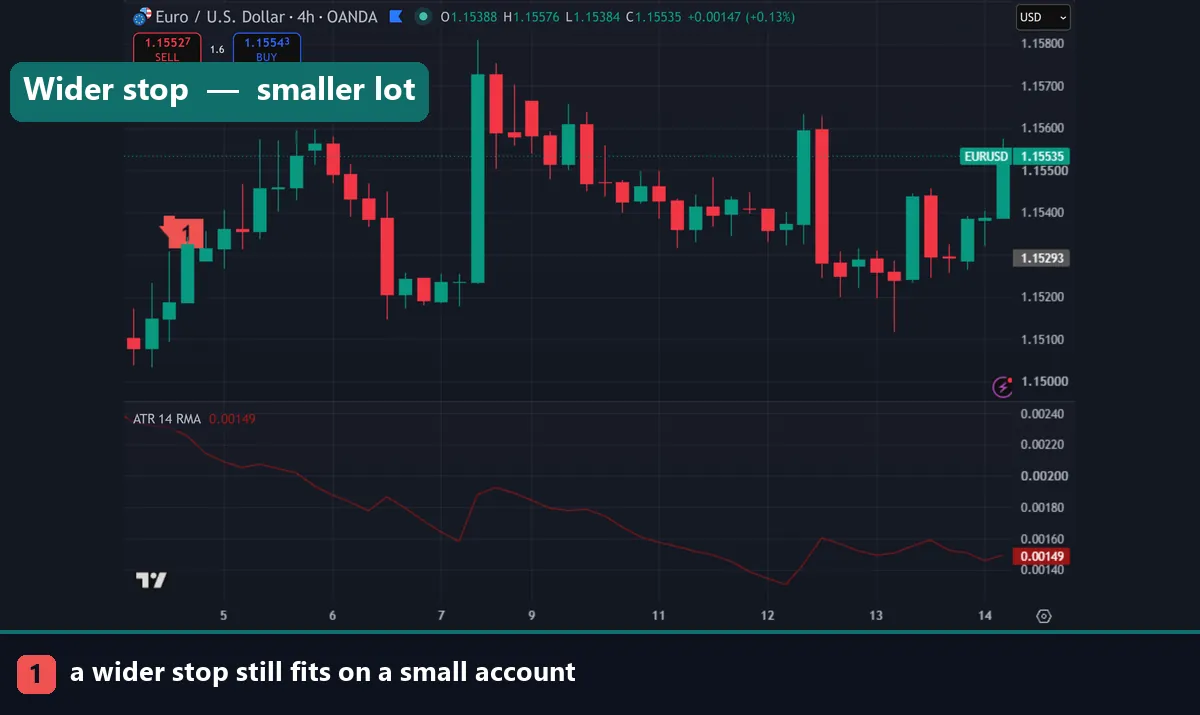
Position size should come from your stop distance, not from what the margin allows. That formula only works if you can trade small enough to satisfy it.
Lot size = (balance × risk percent) ÷ (stop in pips × pip value per lot)
Take a 500 dollar account risking 1%, which is 5 dollars, with a 25-pip stop. Divide 5 by 25 to get 0.20 dollars per pip. Divide by 10 and the answer is 0.02 lots, which is two micro lots.
On a mini account, the smallest position is 0.10 lots. That same 25-pip stop would risk 25 dollars, or 5% of the balance. The setup is identical; the account type decides whether you can take it responsibly. Our forex trading lot sizes guide covers the full arithmetic and the position sizing calculator runs it for you.
Why the granularity matters more than the balance
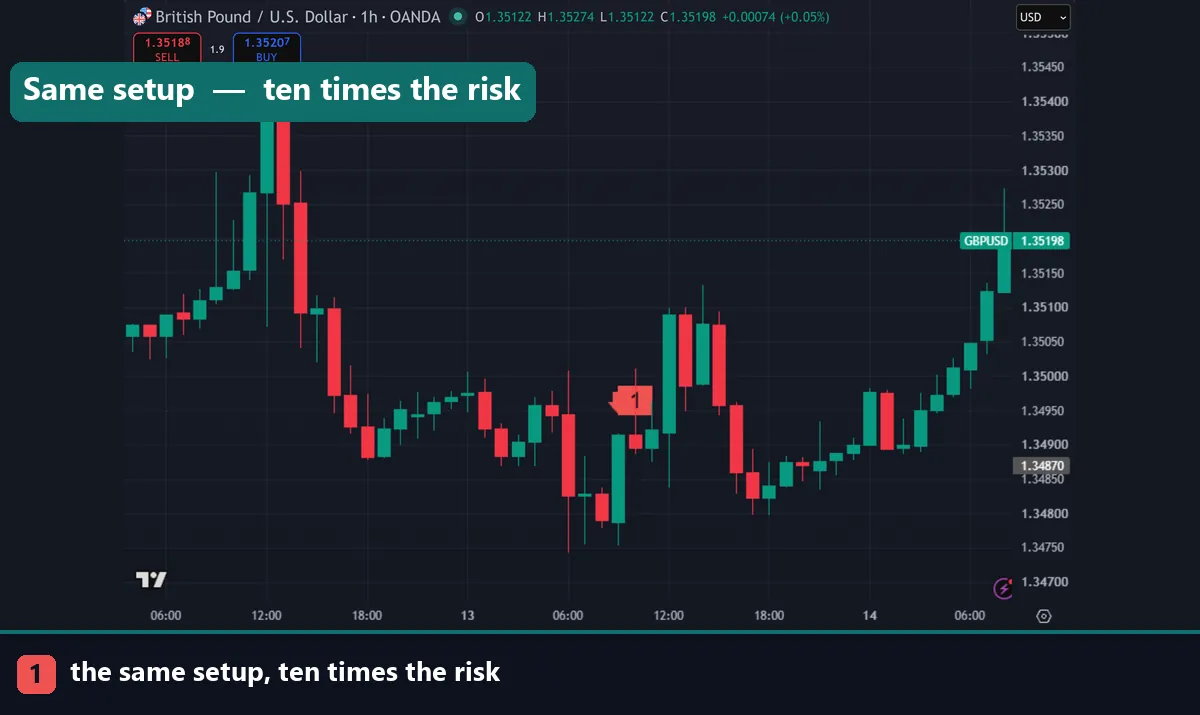
The usual framing is that micro accounts are for people with little money. The more useful framing is that they let anyone size correctly whatever the stop distance.
Volatility varies enormously between instruments. A EURUSD setup might need a 20-pip stop while a GBPJPY setup needs 90. On a mini account the second trade forces you to risk four and a half times as much, or skip it. On a micro account you simply trade a smaller lot.
That matters most on the pairs that move furthest, as covered in our volatile forex pairs guide. Fine sizing is what lets you trade them at constant risk.
What it does not change
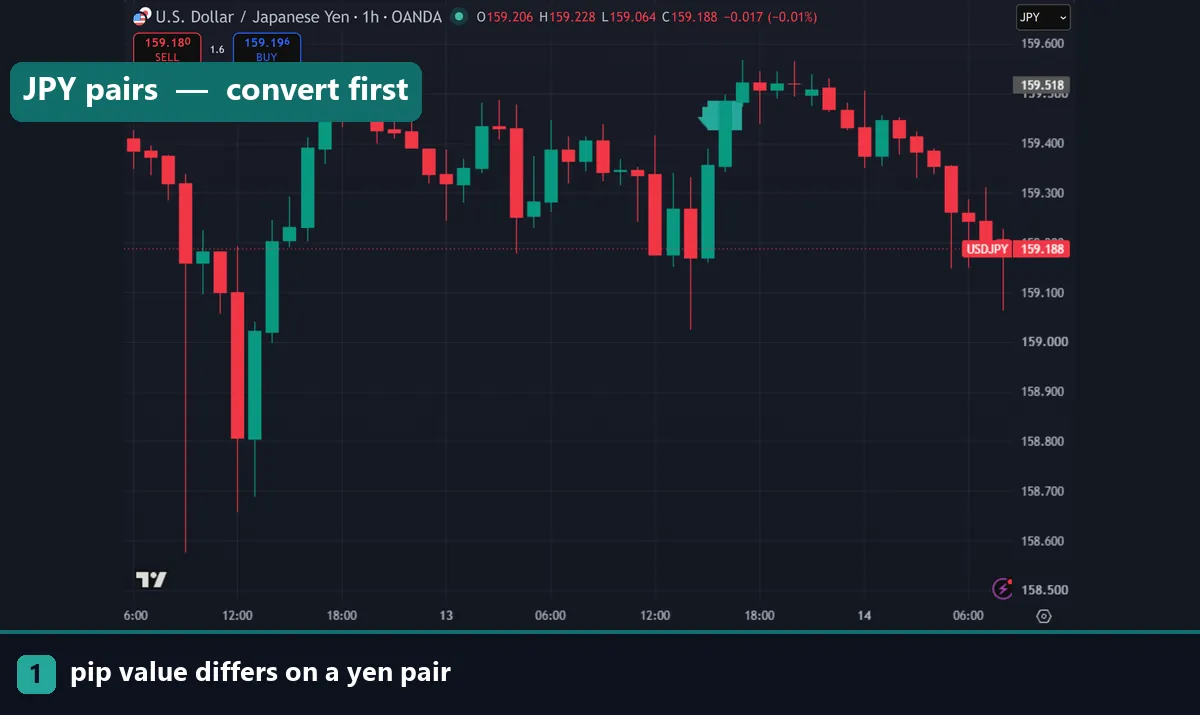
Three things stay exactly the same, and expecting otherwise causes trouble.
Spread costs the same proportionally. A 1.6-pip spread is 1.6 pips whether you trade 0.01 or 10 lots. It costs less in absolute terms, not relative terms, so a strategy that cannot survive the spread will not survive it on a micro account either.
Pip values still convert. On yen pairs a micro lot moves 10 yen per pip, not 10 cents, and gold works differently again. Our pip in forex trading guide covers the conversions.
The market does not care. Execution, slippage and news reactions are identical. Some brokers route micro accounts differently, so it is worth checking whether the execution model is the same as the larger account types.
Download the complete indicator database
Put these concepts on your charts. One email unlocks the full library of 1,380+ indicators with compiled MT4 and MT5 files, plus my TradingView scripts. No paywall, no spam, unsubscribe any time.
Get free access to my indicator database
One email unlocks 1,380+ free MT4, MT5 and TradingView indicators — the complete library. No single-tool download; you get the whole database.
The honest limits
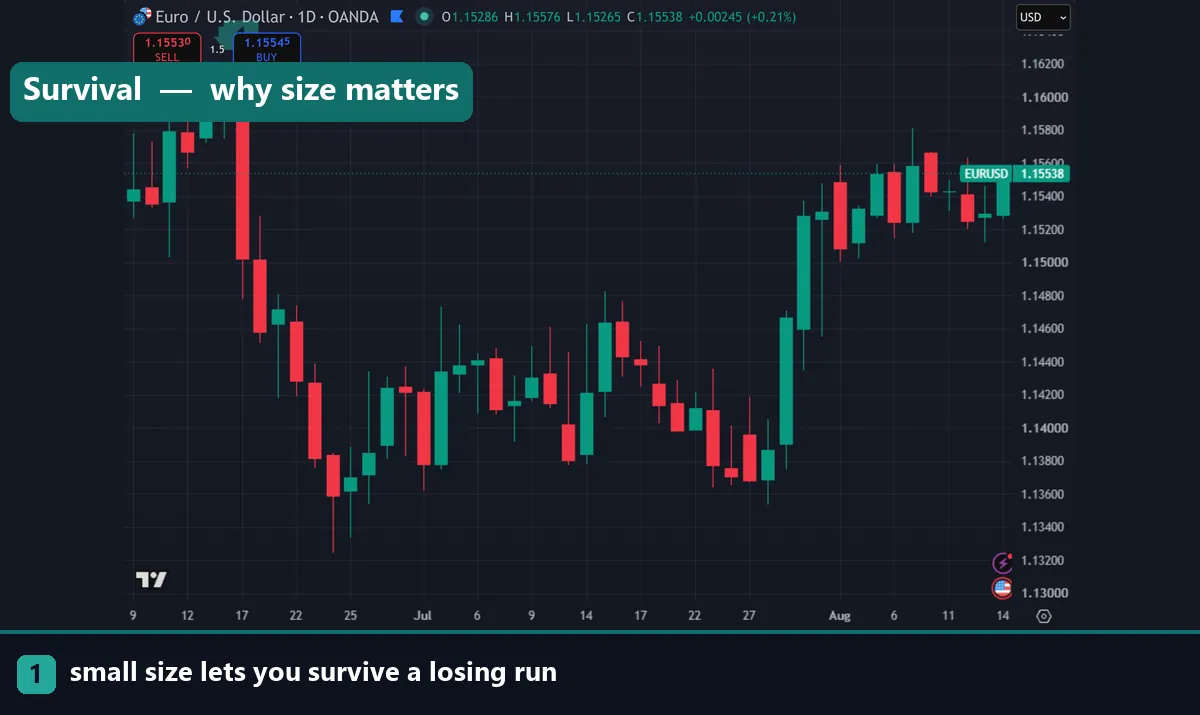
Two constraints deserve stating plainly.
The first is that small accounts produce small returns in cash terms. A 500 dollar account growing 5% in a month earns 25 dollars. That is a perfectly good percentage and a disappointing number, and the gap between those two facts is where most people abandon proper sizing and start over-trading.
The second is that fixed costs weigh more heavily. If your broker charges commission per lot with a minimum, or an inactivity fee, those cost the same regardless of size and therefore consume a larger share of a small account.
What a micro account is genuinely good for: learning execution with real money at stake, testing a strategy live after demo, and trading volatile instruments at controlled risk. What it is not good for is generating an income from a few hundred dollars, and any material promising that is selling something.
Choosing a broker for one
Four checks matter. Confirm the minimum lot is genuinely 0.01, since some brokers market a micro account that still enforces 0.1. Check the minimum deposit, which varies from nothing to a few hundred. Compare the spread against the broker’s standard account, because some widen it on smaller tiers. And check whether execution is the same model.
Leverage matters less than it appears, since sizing from your stop makes the ratio largely irrelevant. Our leverage guide covers why.
Common mistakes
Four repeat. Treating a micro account as permission to over-trade tops the list, since small positions feel harmless and the losses still compound. Skipping the sizing calculation comes second, which wastes the granularity you opened the account for. Third, traders forget pip values differ on yen pairs and gold. Fourth, they expect a small balance to produce a living, then abandon risk control chasing it.
Where to go next
Sizing is the part you fully control. Read forex trading lot sizes for the arithmetic, then the pip in forex trading for the units behind it. Start with forex trading for beginners if the terms are new, and see how consistent sizing compounds with the compound interest calculator. For further reading, Investopedia explains lot sizes at Investopedia, and the foreign exchange market article on Wikipedia covers how retail access works.
FAQ
What is a forex micro account?
An account whose smallest tradeable lot is 0.01, or 1,000 units. Each pip is worth about ten cents on dollar-quoted pairs, which lets a small balance take a proper stop without over-risking.
How much money do I need to open one?
Minimum deposits range from nothing to a few hundred dollars depending on the broker. More useful than the minimum is whether the balance can absorb a losing run at 1% risk per trade.
Can I trade more than one micro lot?
Yes. The account sets the smallest increment, not a ceiling. If the risk maths says 0.37 lots, you trade 0.37 lots.
Is the spread wider on a micro account?
Usually not, though some brokers do widen it on smaller tiers. Compare the micro account spread against the same broker’s standard account before opening one.
What is the difference between micro and mini?
A mini lot is 10,000 units with a pip worth about one dollar. A micro lot is 1,000 units with a pip worth about ten cents, so it allows ten times finer position sizing.
Can I make a living from a micro account?
A good percentage return on a small balance is still a small cash amount, and chasing more usually means abandoning risk control. Trading involves risk, results are not guaranteed, and past performance is not indicative of future results.

About the author
Written by Dominic Walsh, a Forex trader and MT4/MT5 indicator, Expert Advisor and script developer. Every tool on forexmt4systems.com is tested on live charts before release and ships with ready-to-use compiled MT4 (.ex4) and MT5 (.ex5) files. Learn more about the trader and developer behind this site.
How we build, test and correct every tool: Editorial & Testing Policy. Trading carries risk; see the disclaimer.