
Forex swing trading strategies aim at one leg of a larger move. You enter on a signal from the H4 or daily chart. Then you hold for a few days to a few weeks, and exit when that leg runs out. The style suits anyone with a job, because it needs a chart check once or twice a day. It also carries costs that intraday traders never meet: rollover charges, weekend gaps, and news landing while you sleep. This guide covers the three core setups, their stop and target logic, and the real drawbacks of holding overnight.
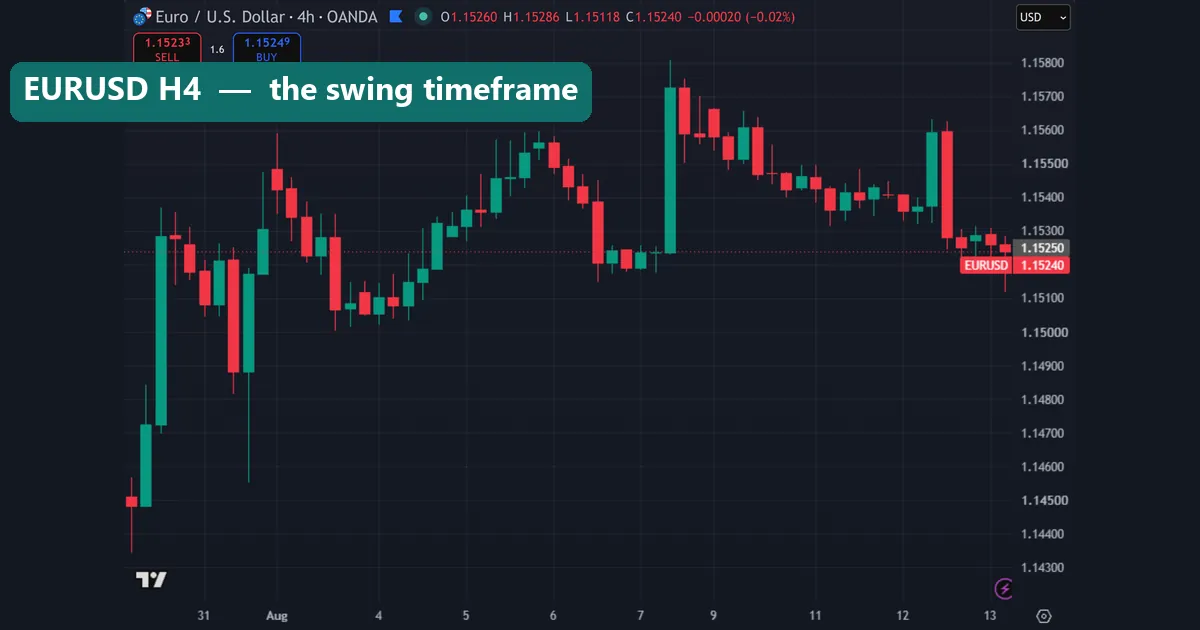
What swing trading is
A market rarely moves in one clean push. Price runs, pauses, retraces, then runs again. Each push is a swing, and a swing trader tries to capture one from start to finish. Typical holds last two days to three weeks. Typical targets run from 100 to several hundred pips.
Because the target is bigger, the stop must be bigger too. That single fact shapes everything else: position size, trade count, and how much patience the style demands. Swing traders take a handful of positions a month, not a handful a day.
Swing, day and position trading
Day traders open and close inside one session. They avoid swap charges and weekend risk entirely. However, they pay the spread far more often, and they must watch the screen while positions are live.
Position traders sit at the other end. They hold for months and read weekly charts, so stops run several hundred pips wide. Costs per trade drop to almost nothing, but capital stays committed for months.
Swing trading sits between the two. Screen time falls to roughly twenty minutes a day. Transaction costs stay low, simply because you trade less. In exchange, you accept overnight exposure and slower feedback. Our overview of forex currency trading strategies compares the styles in more depth.
The timeframes that suit it
Three charts do the whole job. Use the weekly for bias: trending, ranging, or turning. Use the daily for the setup itself, since daily candles filter out most intraday noise. Then drop to H4 to refine the entry and tighten the stop.
Anything faster pulls swing traders into decisions they should not make. A 15-minute candle says nothing useful about an eight-day hold. So check the chart at the daily close, act if a signal is there, and otherwise leave it alone.
Three forex swing trading strategies
The setups below cover the three market states you meet: trending, ranging, and breaking out. Each has clear entry, stop and target logic, and each fails in a predictable way.
Setup 1: the trend pullback
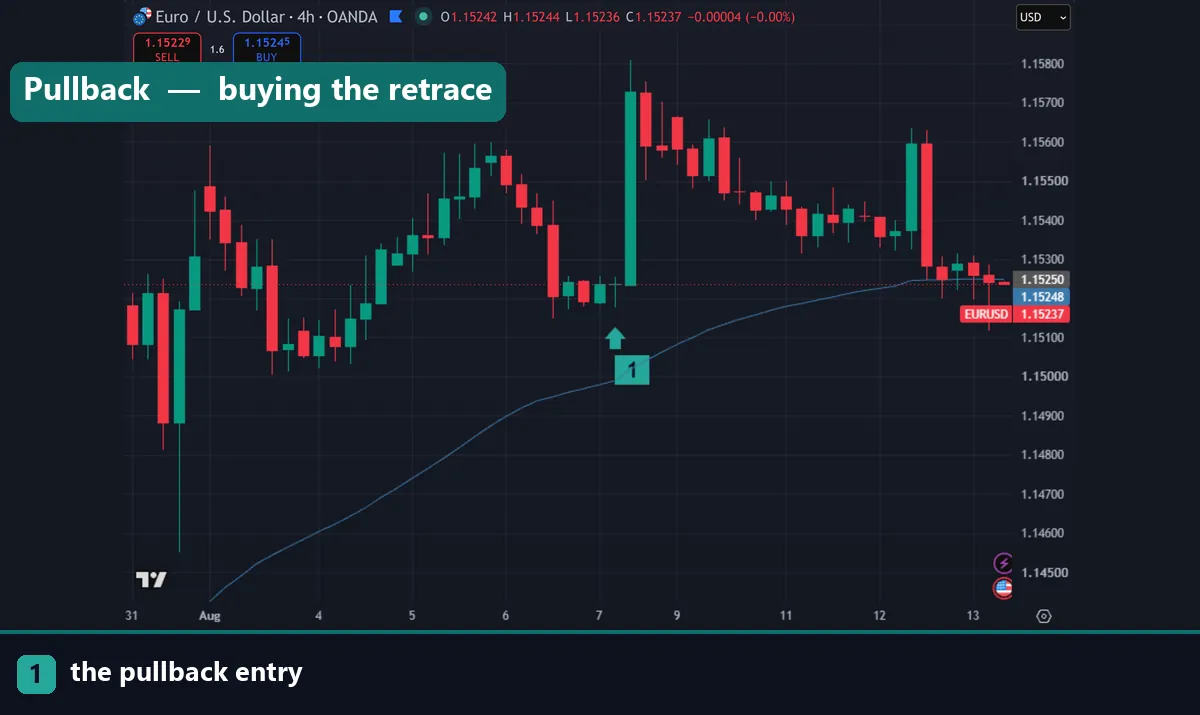
This is the bread-and-butter swing setup. First, confirm a daily trend — higher highs and higher lows for longs, the mirror image for shorts. Next, wait for a retrace into a reference zone. The 20 or 50 EMA works, and so does the 38.2% to 61.8% Fibonacci band on the last impulse leg. Then require a reaction candle there. A bullish engulfing bar or a long-tailed rejection candle both qualify. Our guide on how to read candlestick charts separates a real rejection from a random wick.
Place the stop below the pullback low for a long, with a volatility buffer so ordinary noise cannot clip it. Target the previous swing high first. After that, trail behind each new higher low while the trend extends.
The weakness: pullbacks and reversals look identical at the moment you enter. Some retracements simply keep going and become the new trend. Deep retracements also force wider stops, which shrinks your position for the same risk.
Setup 2: the range reversal
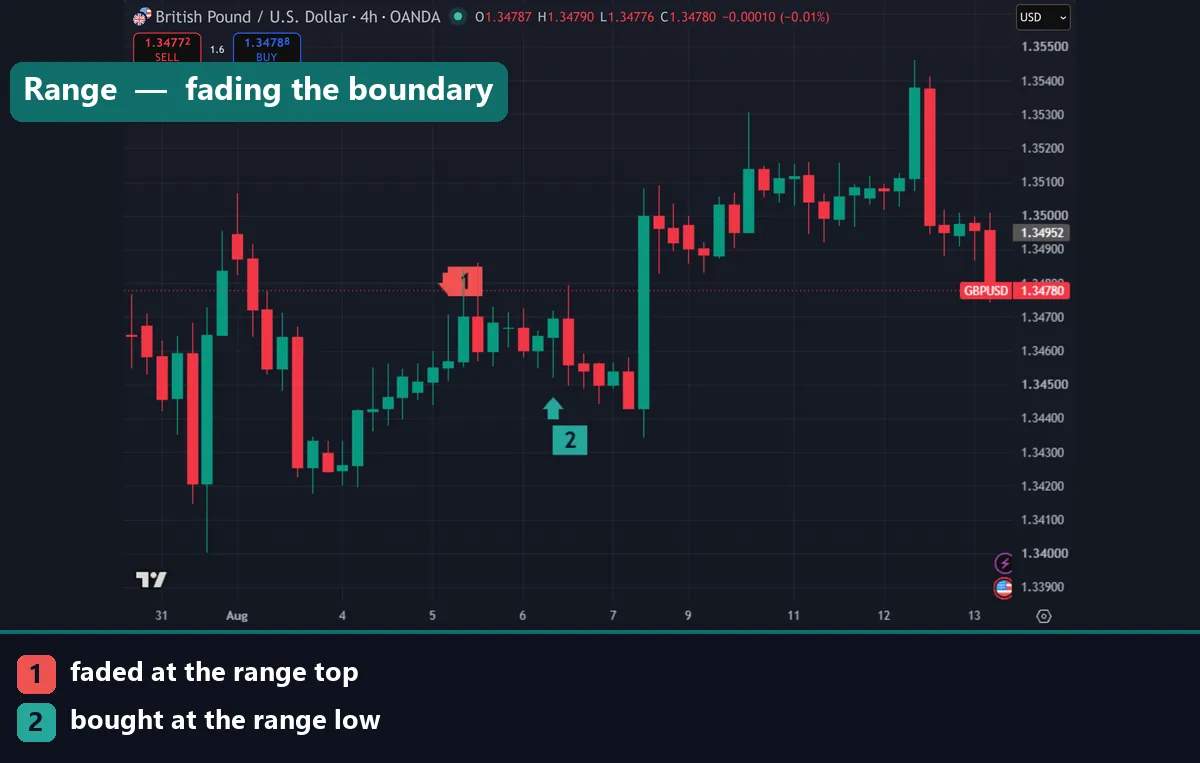
Not every pair trends, and ranging markets punish trend traders. When the daily chart shows a horizontal band with two touches top and bottom, you have a tradeable range. Sell near the tested ceiling and buy near the tested floor. First, though, wait for rejection there: a failed close outside the boundary, or a clear reversal candle.
Put the stop just beyond the boundary plus a buffer. Boundaries get overshot by a few dozen pips before price turns. Target the opposite side of the range.
The weakness: ranges end without warning. The final touch before a genuine breakout looks like every other touch, and that trade goes straight to the stop. For that reason, many traders cut range positions once a daily candle closes outside the band.
Setup 3: the breakout retest
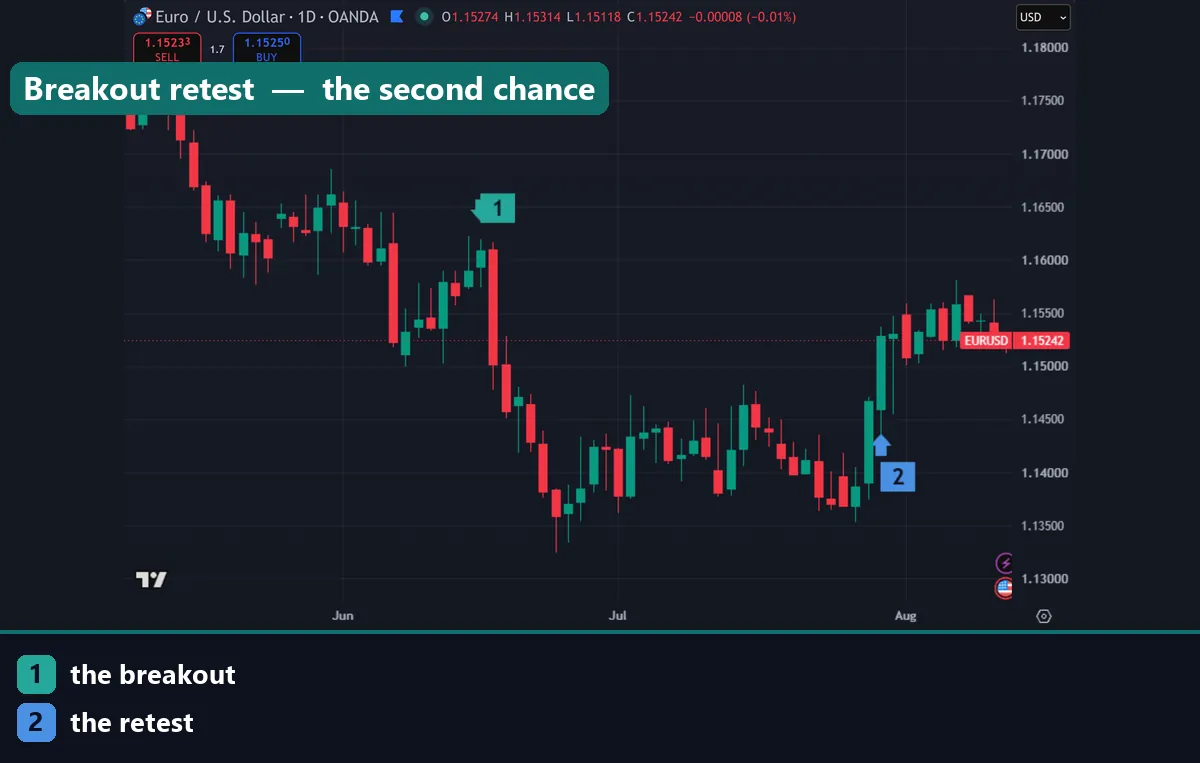
Chasing a breakout candle is expensive. Waiting for the retest is not. The sequence matters here. Price closes decisively beyond a level that held for weeks. Then it pulls back to that same level, and the level holds from the other side. Old resistance becomes support, and you enter on the reaction.
The stop goes back inside the old range, below the retest low for a long. For the target, take the height of the prior range and project it from the breakout point. Because the entry sits close to invalidation, this setup often gives the tightest stop of the three.
The weakness: many breakouts never retest. You watch the move leave without you, which is frustrating but cheaper than chasing. Others fail outright and drag price back through the level. The decisive daily close matters more than an intraday poke.
The three setups compared
| Setup | Market condition | Entry trigger | Stop placement | Typical hold |
|---|---|---|---|---|
| Trend pullback | Clear daily trend | Rejection at MA or Fib zone | Beyond the pullback swing point | 3–10 days |
| Range reversal | Sideways, edges tested twice | Rejection at the range edge | Outside the boundary plus buffer | 2–7 days |
| Breakout retest | Level just broken | Level holds from the other side | Back inside the old range | 5–20 days |
Match the setup to the condition in front of you. Forcing a trend setup onto a ranging pair is the most common way swing traders give money back.
Wider stops mean smaller positions
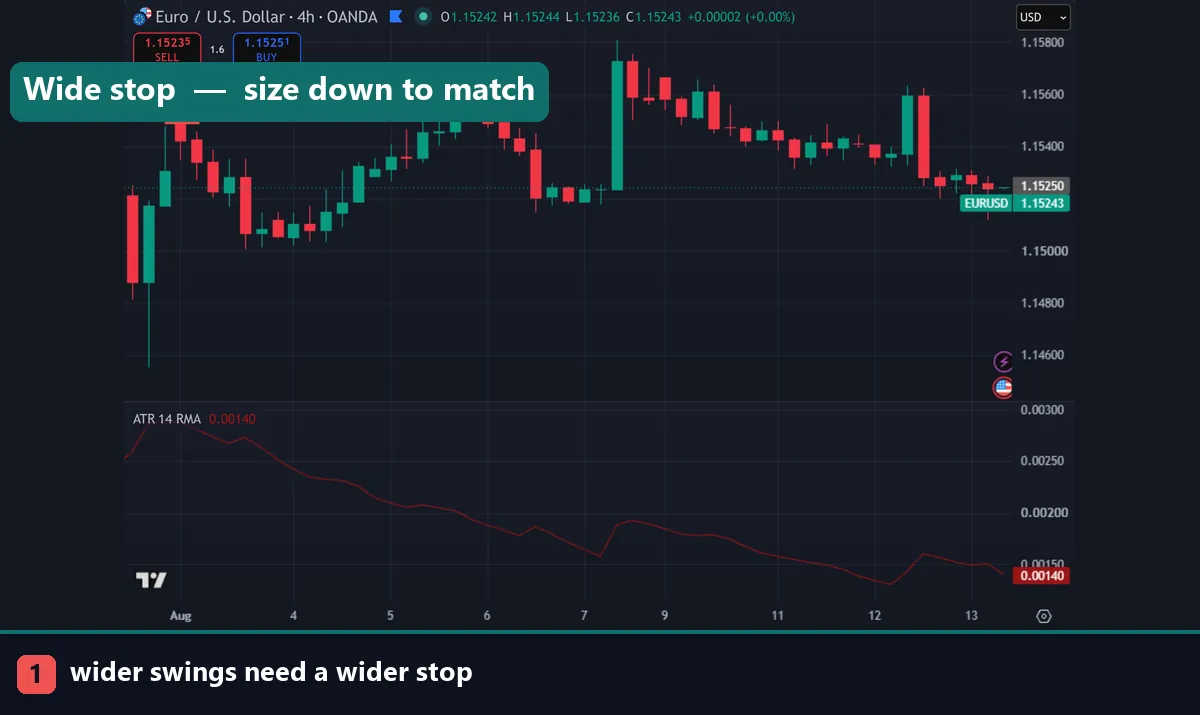
Beginners get this part wrong. A daily-chart stop might sit 120 pips away, where an intraday stop would sit 15 pips away. Your risk per trade should not change because of that. Instead, the position shrinks so the money at risk stays the same. On a modest account, that means fractions of a standard lot.
Work the size out before you enter, never after. Our forex position sizing calculator guide shows the formula. A volatility-based stop keeps the distance honest — see how to use ATR as a stop loss. Set both, then let the trade breathe.
Overnight and weekend risk
Holding through the close adds three costs day traders never see.
Swap and rollover. Every position open at 5pm New York is rolled over. Your account is then debited or credited on the interest differential between the two currencies. Hold a negative-swap pair for three weeks and the charge becomes a real drag. Wednesday usually carries a triple charge to cover the weekend, so check the figures before a long hold.
Weekend gaps. Markets close on Friday and reopen on Sunday, sometimes at a very different price. A stop cannot protect you inside a gap, because no trading happens between the two prices. As a result, some swing traders cut size into the weekend.
News while you hold. Central bank decisions, inflation prints and geopolitical headlines land while your position sits open. Check the calendar before entry, and accept that surprises are part of the style.
Download the complete indicator database
Put these concepts on your charts. One email unlocks the full library of 1,380+ indicators with compiled MT4 and MT5 files, plus my TradingView scripts. No paywall, no spam, unsubscribe any time.
Get free access to my indicator database
One email unlocks 1,380+ free MT4, MT5 and TradingView indicators — the complete library. No single-tool download; you get the whole database.
Patience is part of the method
Fewer trades means slower feedback. Six positions a month tells you very little about your approach. A hundred-trade sample then takes well over a year to build. That is the trade-off for lower costs and less screen time.
So keep a written record of every setup, and learn from a small sample rather than from memory. Also expect long stretches with no valid signal; those weeks are normal.
Common swing trading mistakes
Three errors do most of the damage. First, day-trading a swing position. You enter on the daily chart, then watch M15. Panic at the first pullback closes a trade your plan said to hold. Second, moving the stop. Widening it because price is “nearly” there converts a planned loss into an unplanned one. Third, ignoring rollover. Traders check the spread religiously, ignore the swap, then wonder why a three-week winner returned less.
Where to go next
Sharpen the toolkit next. Compare instruments in our roundup of the best day trading technical indicators. Then add structure reading with a price action trading indicator. Set your charts up properly with our guide on how to install MT4 and MT5 indicators. For background, Investopedia defines swing trading at Investopedia. The wider history of the approach sits in the swing trading article on Wikipedia.
FAQ
What timeframe is best for swing trading forex?
The daily chart carries the setup, the weekly sets your bias, and H4 refines entries. Anything faster pulls you into intraday decisions that have nothing to do with a multi-day hold.
How long does a swing trade last?
Most last from two days to three weeks. Trend pullbacks tend to resolve inside two weeks. Breakout-retest trades chasing a measured move can run longer.
How much capital do I need to swing trade?
Stops are wide, so the account must absorb a 100-pip stop at a sensible risk percentage. On a small account that means micro lots. Forcing a bigger size to make the trade “worth it” is the fastest way to blow up.
Do swing traders pay swap fees?
Yes. Any position held past the daily rollover is charged or credited on the interest differential. Wednesday usually carries a triple charge for the weekend, and those figures add up over a multi-week hold.
Can I swing trade with a full-time job?
Yes, and that is the main appeal. Signals come from the daily close. One review each evening is normally enough to manage positions and spot new setups.
Are these swing setups guaranteed to make money?
No. Each setup describes a condition that often precedes a move, not one that must produce it. Every one of them fails in the ways described above. Trading involves risk, results are not guaranteed, and past performance is not indicative of future results.

About the author
Written by Dominic Walsh, a Forex trader and MT4/MT5 indicator, Expert Advisor and script developer. Every tool on forexmt4systems.com is tested on live charts before release and ships with ready-to-use compiled MT4 (.ex4) and MT5 (.ex5) files. Learn more about the trader and developer behind this site.
How we build, test and correct every tool: Editorial & Testing Policy. Trading carries risk; see the disclaimer.