
Forex hedging strategies open an offsetting position so that a trade or a portfolio you already hold stops moving against you. That is the whole idea. A hedge does not create profit, and it does not remove risk — it caps your exposure and converts that risk into a cost you pay in spread, swap and tied-up margin. This guide covers the three approaches retail traders use: the direct hedge, the correlated-pair hedge and currency options. You will see what each protects against, what it costs, and when hedging is simply an expensive way to avoid closing a bad trade.
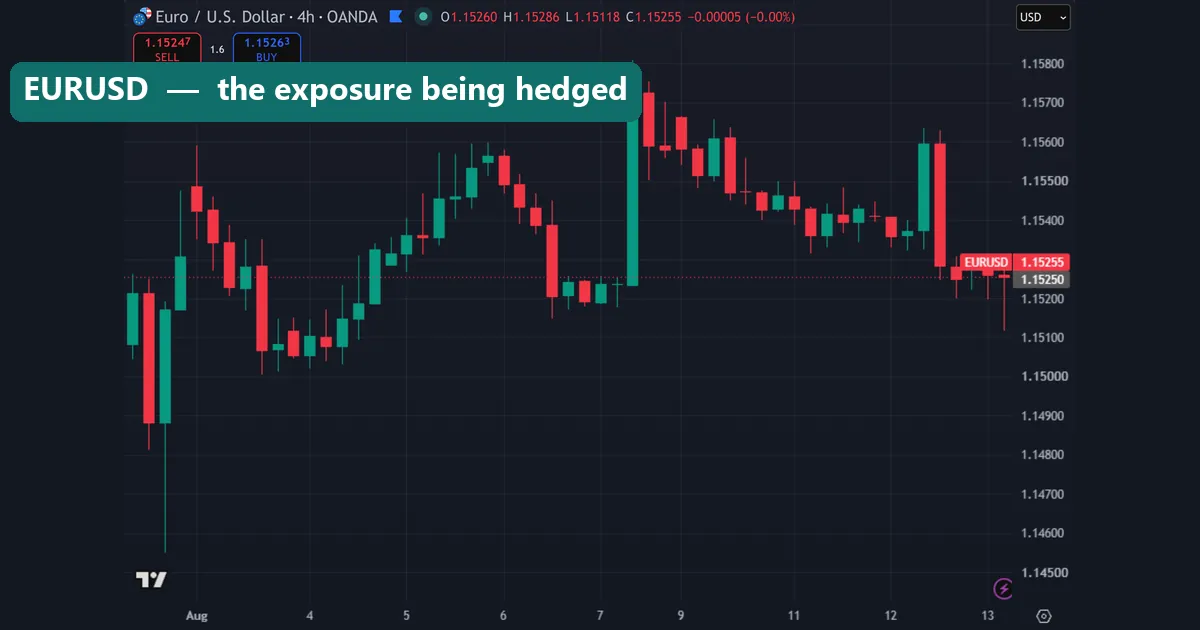
What hedging in forex actually means
Hedging came from commerce, not from trading screens. An importer who owes euros in three months buys them forward today, so a rising euro cannot wreck the budget. She is not predicting anything. She is removing a variable.
Currency hedging in a retail account follows the same logic. You hold a position with directional risk. Then you add a second position that moves the opposite way, so the next swing affects you less — or barely at all. Gains shrink along with losses, and that trade-off is the entire point.
So treat a hedge as insurance rather than as a strategy. Insurance carries a premium. Buy it on every trade out of habit and that premium drains the account slowly instead of quickly.
The direct hedge: long and short the same pair
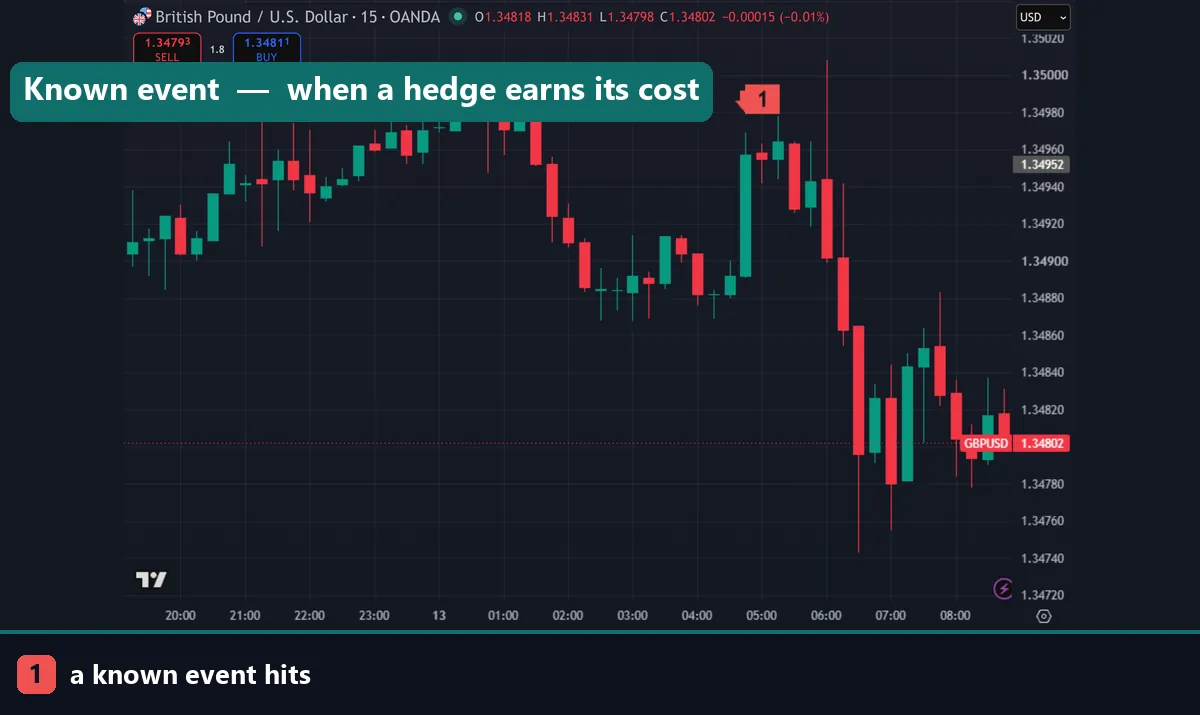
A direct hedge is the simplest version. You are long one lot of EURUSD, and you open one short lot of EURUSD in the same account. Net exposure drops to zero. From that moment the pair can run 300 pips in either direction and your floating profit barely moves.
Two things happen the instant you place that second leg. First, you pay the spread again. Second, swap now accrues on both legs at every rollover, and the two figures rarely cancel out — you end up paying the wider side.
Now the part that decides whether this is even available to you. US retail traders cannot place a direct hedge. NFA rules apply FIFO and forbid holding opposing positions in the same pair inside one account. A US-regulated broker will close part of your original trade rather than open a hedge against it. So if your broker is US-regulated, this approach is off the table, and any article recommending it was not written with your account in mind.
Even where regulation allows it, ask what the hedge really achieves. Your loss is frozen, not repaired, and you still have to unwind both legs later.
The correlated-pair hedge
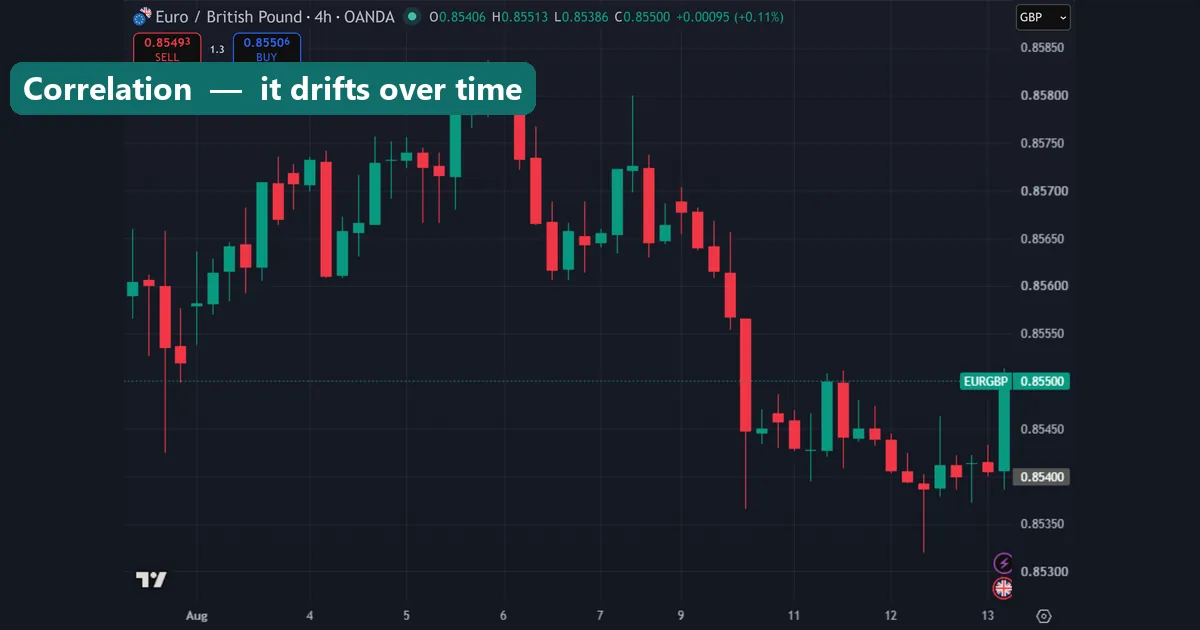
Hedging in forex more often happens across pairs rather than inside one. EURUSD and GBPUSD both trade against the dollar, so they usually drift in the same direction. Short GBPUSD against a long EURUSD and you offset much of the dollar risk while keeping the euro-versus-sterling view you actually wanted.
Negative correlation does the same job in reverse. EURUSD and USDCHF have historically moved opposite one another, so holding both long acts as a partial hedge.
Here is the catch that costs people money. Correlation is a rolling statistic, not a fixed property of two pairs. It shifts when central banks diverge, when one currency gets its own headline, and when risk sentiment flips overnight. A relationship that measured 0.9 last month can slide toward 0.4 during the exact week you needed it.
Pip value creates a second problem. Equal lot sizes on two pairs rarely produce equal money risk, so size the hedge leg by value rather than by lots. Volatility differs too, which is why a check on forex pair volatility belongs in the setup.
Options-based hedging
Currency options offer the cleanest protection on paper. Buy a put on EURUSD and you hold the right to sell at the strike, so a drop below that level is covered while your long keeps its upside. Your maximum cost is the premium, known before you commit.
Availability is the real obstacle. Most MT4 and MT5 brokers do not offer FX options at all. Traders who want them usually need exchange-traded contracts or a broker with a dedicated options desk, plus a larger account and a separate platform. Premiums also decay as expiry approaches, so cover you never use still costs you.
For most retail traders, then, options are worth understanding rather than planning around. Confirm what your broker supports first.
Forex hedging strategies compared
| Approach | What it protects against | Cost | Main drawback |
|---|---|---|---|
| Direct hedge (same pair, opposite side) | Any further move in that one pair | Spread twice, swap on both legs, margin on both | Freezes a loss instead of ending it; blocked for US retail accounts |
| Positive-correlation hedge (e.g. long EURUSD, short GBPUSD) | Broad moves in the shared currency, usually the dollar | Spread and swap on the second pair, margin on both | Correlation drifts, so cover is partial and can fade when you need it |
| Negative-correlation hedge (e.g. long EURUSD, long USDCHF) | The same shared-currency risk, using an inverse pair | Same as above | Same drift risk, plus pip-value mismatch between the two legs |
| Currency options (buy a put or call) | Moves beyond the strike, with the cost capped at the premium | Premium paid up front and lost if unused | Rarely offered by retail MT4/MT5 brokers; premium decays over time |
Read the cost column carefully. Every row charges something certain to reduce something uncertain, which is how a hedge works.
When hedging makes sense, and when it does not
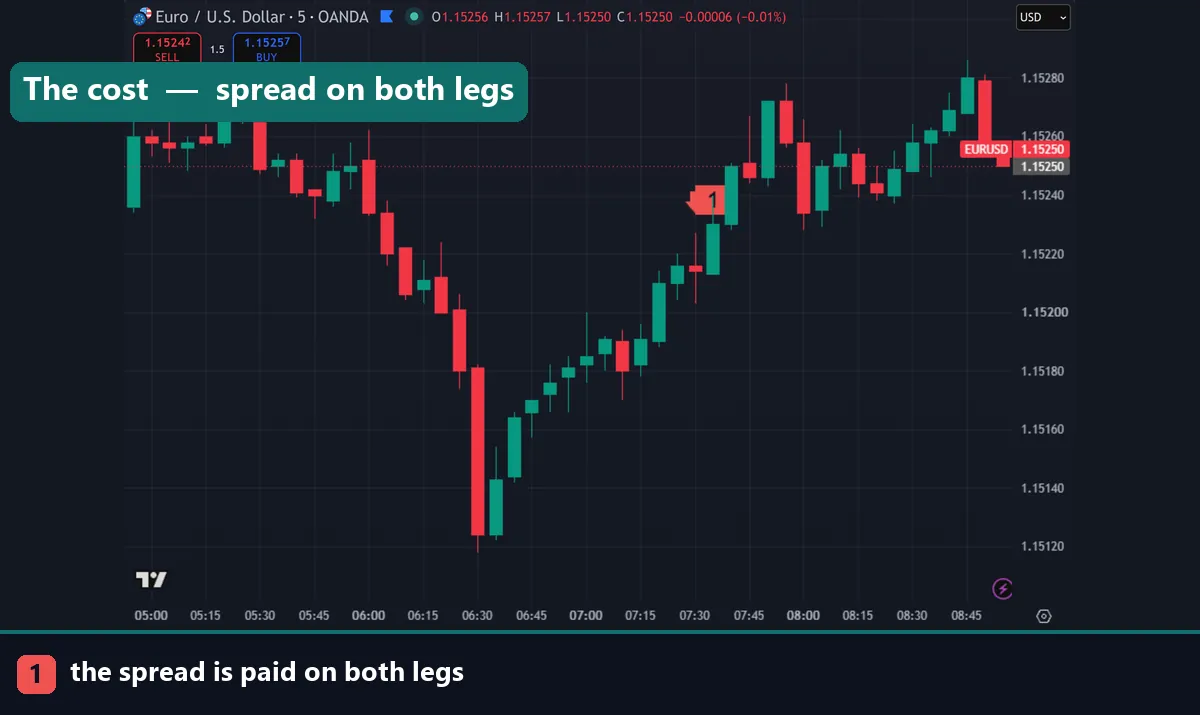
Hedging earns its cost in a few specific situations. Holding a swing position through a scheduled event is the clearest one. You like the setup over the next month, but a central bank decision lands on Thursday and the gap risk exceeds your stop. So you cover for two days, then lift the hedge once the headline passes.
Portfolio exposure is the second good reason. Five long trades across EURUSD, GBPUSD, AUDUSD, NZDUSD and gold are, underneath, one big short-dollar bet. A single dollar-positive position trims that concentration without closing five setups you still believe in.
Now the blunt part. Most retail hedges get placed for a different reason entirely: the trade is losing, closing it feels like an admission, so a second position parks the number where it stands. That is avoidance, not risk management. You pay another spread, carry swap on both legs, tie up margin twice, and the loss sits untouched. Closing costs one spread and ends it. If you only want a hedge because you cannot press the close button, the cheaper fix is a smaller position and a stop you can live with — start with using ATR to set a stop loss and a proper forex position sizing calculator.
The real cost of a hedge
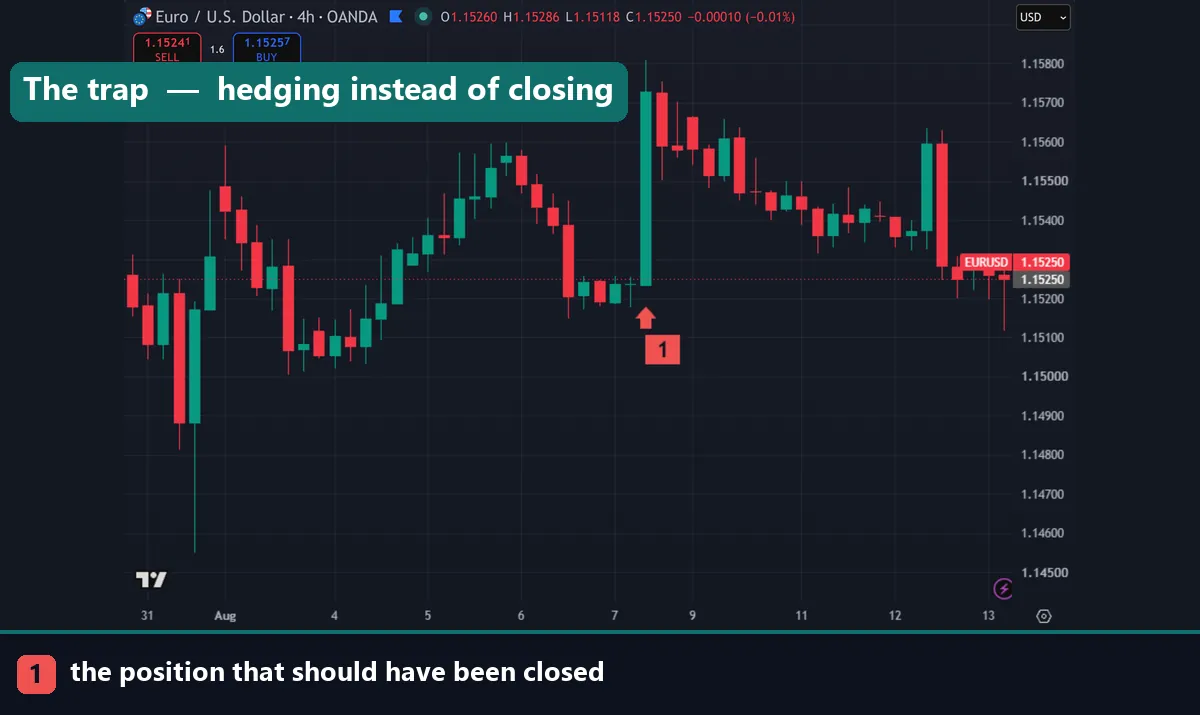
Four costs stack up, and traders usually count only the first. The spread gets paid twice, once per leg, plus commission if your account charges it. Swap then accrues on both legs every night you hold.
Margin is the third cost and the sneakiest. Some brokers net the margin on a hedged pair; plenty do not. Then free margin drops sharply and a stop-out sits closer than you assumed. Slippage is the fourth, because you rarely unwind both legs at the same instant.
Add all four across several weeks and the protection can cost more than the move you feared. So price the hedge before you place it. Open the contract specification, read the swap figures for both directions, and multiply by the nights you expect to hold.
Download the complete indicator database
Put these concepts on your charts. One email unlocks the full library of 1,380+ indicators with compiled MT4 and MT5 files, plus my TradingView scripts. No paywall, no spam, unsubscribe any time.
Get free access to my indicator database
One email unlocks 1,380+ free MT4, MT5 and TradingView indicators — the complete library. No single-tool download; you get the whole database.
Common forex hedging mistakes
Four mistakes account for most hedging damage. Traders hedge emotionally, adding a leg to dodge a decision rather than to manage exposure. They assume correlation holds, sizing the second leg once and never rechecking it. Swap gets ignored, which quietly turns a two-week hedge into a steady drip of cost. And many hedge with no unwind plan, so both legs sit open for months. Decide in advance what releases each leg, then write it down before you click.
Where to go next
Hedging only helps when the position was sized sensibly to begin with. Start with our guide to forex currency trading strategies, then work through how to read candlestick charts so entries stop needing rescue. Bookmark the position sizing calculator for the exposure maths, and follow the walkthrough on how to install MT4 and MT5 indicators when you add new tools. For background theory, Investopedia explains what a hedge is at Investopedia, and Wikipedia covers the broader concept of hedging in finance on Wikipedia.
FAQ
What is the best forex hedging strategy for beginners?
Honestly, none of them. Beginners gain more from smaller position sizes and a stop-loss than from a second position that doubles the costs. Consider hedging only once you manage several correlated positions at the same time.
Is direct hedging allowed in the United States?
No. NFA rules apply FIFO and prohibit holding long and short positions in the same pair within one account, so a US-regulated broker closes part of the existing trade instead. Traders under other regulators can usually hedge directly.
Does hedging remove the risk from a trade?
No, it converts risk into cost. A hedge narrows the range of outcomes, limiting further loss and further gain together. You still pay spread, swap and margin, and a correlated hedge leaves real exposure on the table.
Do I pay swap on both legs of a hedge?
Yes, on nearly every broker. Each leg accrues its own rollover, and the two rarely cancel because the paid side is usually wider. Check both figures before holding a hedge overnight.
How do I unwind a hedge properly?
Decide the trigger before you open it. Most traders lift the protective leg once the event passes or once price reclaims a level that validates the original idea. Then manage the remaining position normally, with its stop back in place.
Are forex hedging strategies guaranteed to protect my account?
No. Hedging caps exposure at a price; it does not predict anything, and correlated hedges can fail exactly when markets move fastest. Trading involves risk, results are not guaranteed, and past performance is not indicative of future results.

About the author
Written by Dominic Walsh, a Forex trader and MT4/MT5 indicator, Expert Advisor and script developer. Every tool on forexmt4systems.com is tested on live charts before release and ships with ready-to-use compiled MT4 (.ex4) and MT5 (.ex5) files. Learn more about the trader and developer behind this site.
How we build, test and correct every tool: Editorial & Testing Policy. Trading carries risk; see the disclaimer.