
A daily loss limit in trading is a hard cap on how much you let yourself lose in one session. Hit the number, and you stop trading for the rest of the day.
This guide explains the daily loss limit in trading in plain, beginner terms. You will see why the cap protects both your account and your mind, and learn how to set a level that fits your style.
What Is a Daily Loss Limit in Trading
A daily loss limit is a line you draw before the session starts. Once your losses reach that line, you close the platform and walk away. No new trades, no exceptions, no second-guessing.
Think of it as a circuit breaker for your account. When the current runs too hot, the breaker trips and cuts the power. So a daily stop trips when the losses run too deep, and it saves you from a far worse day.
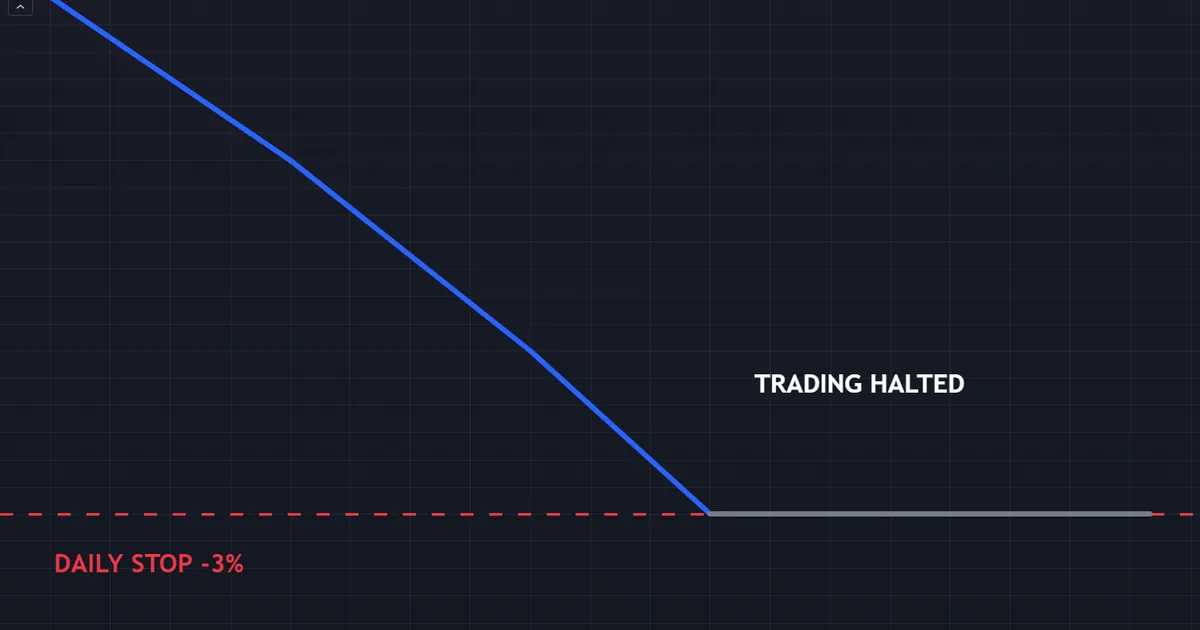
The cap is usually a small percentage of your balance. Many traders pick three percent, while cautious ones use one or two. The exact figure matters less than the habit of honoring it.
A Hard Stop for the Whole Day
The key word here is hard. A soft limit that you bend on a bad day protects nothing. So the rule only works when you treat the number as a wall, not a suggestion.
Once you hit the cap, the session ends for you. You can still watch the market and take notes. Yet you place no more trades until tomorrow, because the point is to break the run before it grows.
How to Set a Daily Loss Limit
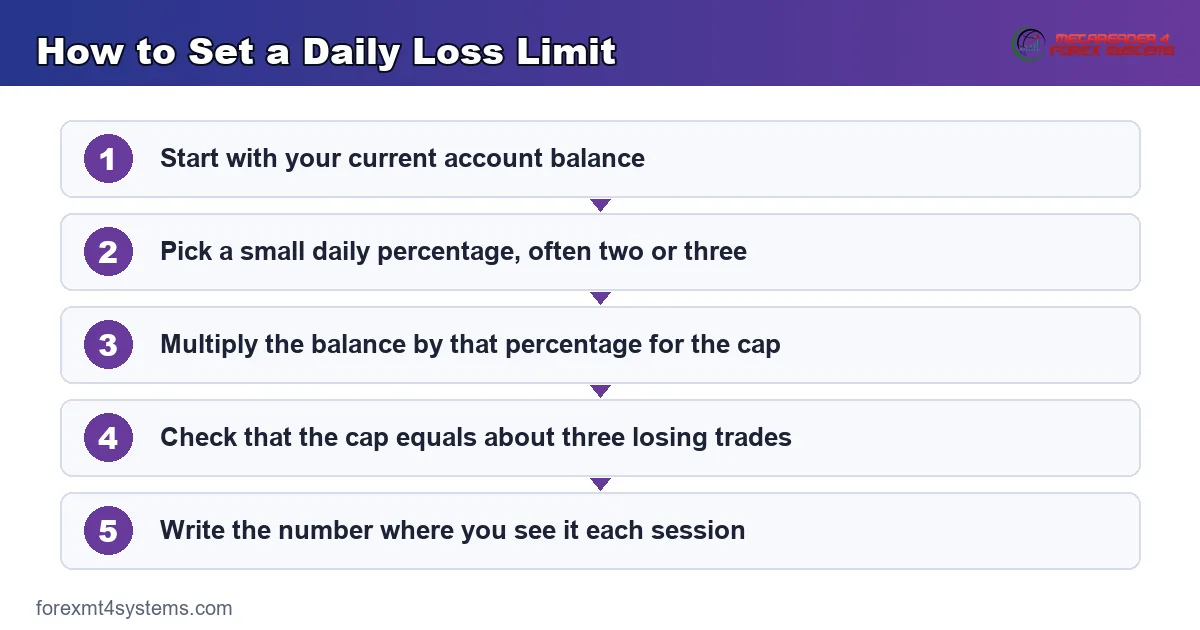
Setting the cap takes only a few steps. Work through them once, and you can size the limit for any account. The goal is a number that stings a little but never threatens the whole balance.
- Start with your account size. Note the balance you trade with today.
- Pick a daily percentage. Choose a small figure, often two or three percent.
- Convert it to money. Multiply the balance by that percentage for the cap.
- Compare it to per-trade risk. The cap should equal roughly three losing trades.
- Write it down. Record the number where you see it before every session.
Say you trade a ten thousand account and choose three percent. Three percent of ten thousand is three hundred. So your daily loss limit sits at three hundred, and you stop the moment losses reach it.
That three hundred also lines up with your per-trade risk. If you risk one percent, or one hundred, each trade, the cap equals three losing trades. So a rough day ends after three stops, not thirteen.
Anchoring the Cap to Per-Trade Risk
The cleanest way to set the limit ties it to your trade risk. A common rule uses three times the per-trade risk as the daily cap. So a trader risking one percent per trade caps the day at three percent.
This link keeps the pieces in balance. A larger per-trade risk lifts the cap, while a smaller risk lowers it. Because the two move together, the limit always reflects how you actually trade.
You can lean stricter if losing streaks rattle you. Some traders use two times per-trade risk instead of three. So a jumpy trader caps the day sooner, which protects both the account and the nerves.
A Worked Daily Limit Example
Numbers make the rule concrete, so follow a full session. A trader starts the day with a twenty thousand account and a three percent cap. That sets the daily loss limit at six hundred.
The first trade loses two hundred, a normal one percent stop. The second trade also loses two hundred, and the account sits down four hundred. Two stops in, the trader stays calm and keeps to the plan.
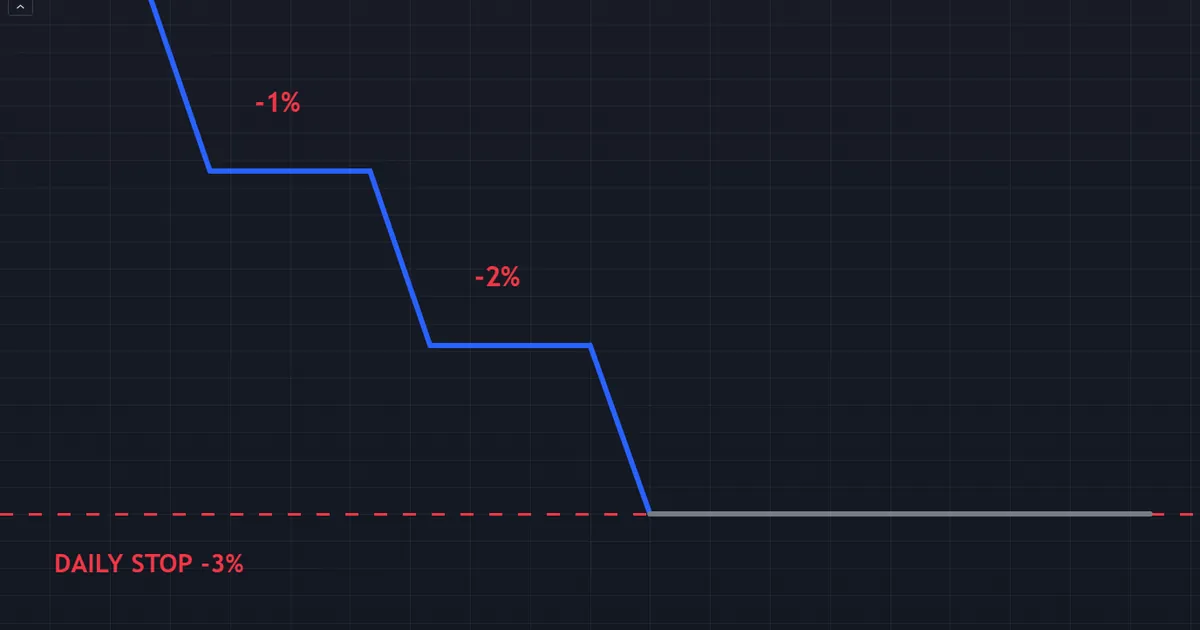
Then a third trade loses another two hundred. Now the account is down six hundred, right at the cap. So the trader closes the platform, logs the day, and steps away from the screen.
What Happens When You Hit the Cap
Hitting the cap is not a failure, and this point matters. A three percent down day is ordinary over a long career. The rule simply stops that ordinary day from becoming a disaster.
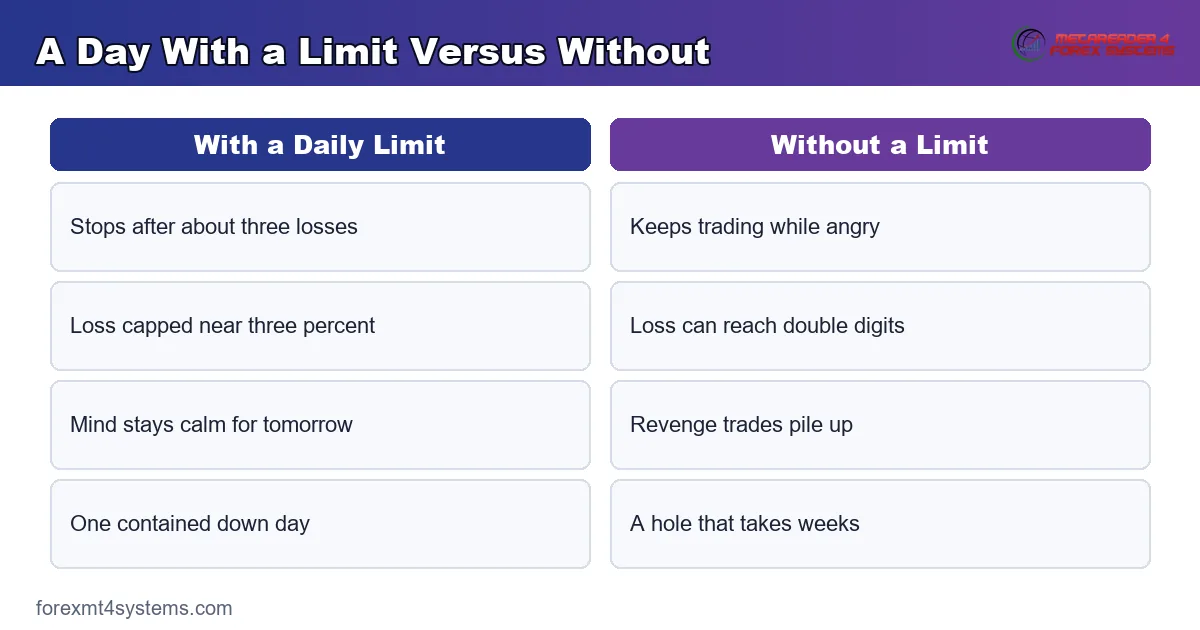
Without the cap, the story often turns ugly. The trader chases the six hundred back, sizes up, and loses more. So a routine down day snowballs into a ten percent hole that takes weeks to repair.
Why a Daily Stop Protects Your Mind
The daily loss limit guards your capital, but it guards your mind even more. Losses cloud judgment, and clouded judgment breeds worse losses. So the cap steps in exactly when your thinking turns least reliable.
After a string of stops, most traders feel a strong urge to fight back. That heat pushes them into oversized, low-quality trades. Because the cap ends the session first, it removes the chance to act on that heat.
Breaking the Loss Cascade
Most blown accounts do not die from one bad trade. They die from a cascade, where a loss sparks a chase that sparks a bigger loss. So the danger is the chain reaction, not the first stop.
The daily cap snaps that chain early. Once you hit the number, the chase simply cannot start. So a limit turns a potential spiral into a single, contained down day.
Choosing a Percentage That Fits You
No single cap suits every trader, so pick one that matches your style. A scalper who takes many trades may want a tighter percentage. A swing trader with fewer, larger trades might set it wider.
Your temperament matters as much as your method. If losses shake your discipline, a smaller cap keeps you out of trouble sooner. So an honest look at your own reactions should guide the figure.
Starting Conservative and Adjusting
Beginners do well to start on the tight side. A one or two percent daily cap keeps early mistakes cheap. So you learn the ropes without ever risking a serious dent to the account.
As your record grows, you can revisit the number. A steady, disciplined trader may widen the cap a little. Yet the change should come from data in your journal, not from a bad day and a wish to keep trading.
Download the complete indicator database
Put these concepts on your charts. One email unlocks the full library of 1,380+ indicators with compiled MT4 and MT5 files, plus my TradingView scripts. No paywall, no spam, unsubscribe any time.
Get free access to my indicator database
One email unlocks 1,380+ free MT4, MT5 and TradingView indicators — the complete library. No single-tool download; you get the whole database.
Common Daily Loss Limit Mistakes and Fixes
The daily loss limit is a simple rule, yet traders undo it in familiar ways. Nearly every slip comes from bending the number under pressure. The diagram below contrasts a day with the cap against a day without it.
Moving the Cap After You Hit It
The most common slip is stretching the limit mid-session. You reach the cap, feel one more trade will fix it, and move the line. So set the number in advance, and treat it as fixed once the day begins.
Setting the Cap Too Wide
A huge daily cap protects nothing worth protecting. A twenty percent limit lets a single bad day gut the account. So keep the figure small, often two or three percent, where it can actually catch a spiral.
Ignoring the Limit on a Winning Streak
Confidence after wins tempts traders to drop the cap. A hot streak feels like proof that the rule no longer applies. So keep the limit on at all times, because the worst days often follow the best ones.
Counting Only the Balance
Open trades can push you past the cap while the balance still looks fine. An unrealized loss is a real loss for this rule. So track equity, which counts open positions, to see the true daily damage.
Building the Limit Into Your Routine
A rule you must remember is a rule you will forget on a bad day. The fix is to bake the cap into your setup before trading. So the limit works for you even when your discipline slips.
Write the daily number on a sticky note beside your screen. Many platforms also let you set an alert at the level. So a visible reminder, or a beep, catches you the moment the cap is near.
Using Platform Tools to Enforce It
Some brokers and prop firms enforce a daily cap for you. Once your losses hit the line, the platform blocks new orders. So the tool removes willpower from the equation entirely, which is a real gift on a rough day.
Where the broker offers no such tool, you can build your own guardrail. Close the trading window and log out once you hit the cap. So a small barrier stands between you and the next impulsive click.
Reviewing Your Limit Days
Keep a note of every day you reach the cap. Over a month, the pattern reveals whether your sizing runs too hot. So a run of frequent limit days often signals a per-trade risk that needs trimming.
Read those days without shame, because they are data, not defeats. Each capped day is a spiral you avoided. So treat the record as proof the rule is working, and adjust your sizing where the notes point.
How the Cap Fits a Full Trading Plan
A daily loss limit works best as one gear in a larger machine. On its own, it caps a day, yet it cannot fix loose sizing or weak entries. So pair the cap with a written plan that covers every trade.
Your plan should set the risk per trade first. From there, the daily cap follows as a simple multiple. Because the two connect, a change to one flows naturally into the other.
Sizing Comes Before the Cap
Position size is the foundation the whole rule rests on. If each trade risks a small, fixed slice, the cap lands where you expect. So decide your per-trade risk before you ever set the daily number.
Skip that step, and the cap loses its meaning. One oversized trade can blow the limit in a single move. So consistent sizing turns the daily cap into a wall you can trust.
Stops Make the Cap Predictable
A stop-loss on every trade keeps each loss capped and known. Without stops, one trade can run far past its planned risk. So a firm stop on each position keeps the daily total inside the range you drew.
Daily, Weekly, and Monthly Limits
The daily cap is the first layer, yet it need not stand alone. Many traders add a weekly and even a monthly limit above it. So a rough patch that spans several days meets a second, wider guardrail.
The layers work together like nested nets. The daily cap catches a single bad session. A weekly cap then catches a string of capped days before they add up to real damage.
Setting a Weekly Guardrail
A common weekly cap sits at two or three times the daily figure. So a trader with a three percent daily limit might cap the week near six. Hit that line, and you step back until the next week opens.
This layer guards against a losing streak that spans days. Three capped days in a row would breach a six percent weekly limit. So the wider net forces a pause before a bad week becomes a bad month.
Why Layered Limits Help
A single daily cap can still allow a long, slow bleed. Five capped days in one week add up to real pain. So the weekly and monthly layers catch the damage the daily cap alone would miss.
Matching the Limit to Your Trading Style
Your method shapes the cap that suits you best. A high-frequency scalper meets losses quickly and often. A patient swing trader takes fewer trades, so a rough day looks different.
The number should reflect how many trades you take. A scalper with twenty trades a day may want a tight cap. So the limit ends a bad run before it stretches across dozens of entries.
Scalpers Need a Tighter Rein
Speed magnifies both wins and losses for a scalper. A run of quick stops can pile up in minutes. So a tight daily cap acts as an emergency brake for the fastest styles.
The tight cap also fights the tilt that speed breeds. Rapid losses stir strong emotion, and emotion drives worse clicks. So an early stop protects the scalper from the very pace their method demands.
Swing Traders Can Breathe a Little
A swing trader holds fewer, larger positions over days. A single session rarely sees many stops in a row. So a slightly wider daily cap can suit this slower, steadier rhythm.
Even so, the wider cap still needs a firm ceiling. A gap against a large swing position can bite hard. So the swing trader keeps the cap generous but never open-ended.
The Discipline Behind the Number
A daily loss limit is only as strong as your will to honor it. The rule lives or dies on a single decision made under pressure. So the real work is training yourself to obey the number every time.
Discipline here grows through repetition, not raw willpower. Each day you honor the cap makes the next day easier. Over time, stopping at the line becomes a reflex rather than a struggle.
Treating the Cap as Non-Negotiable
The strongest traders never debate the rule in the moment. They decided long ago that the cap is final. So when the line arrives, nothing remains to argue, only a platform to close.
This mindset removes a dangerous inner voice. On a bad day, part of you will beg for one more trade. Because the rule is settled, you never have to win that argument again.
Rewarding Yourself for Stopping
Honoring the cap deserves quiet credit, not regret. Every clean stop is a spiral you chose to avoid. So treat a capped day as a small win for discipline, and the habit grows stronger each time.
Daily Loss Limit Quick Reference
Keep this short list beside your platform. Run through it before every session begins.
- Set the cap as a small percentage, often two or three percent.
- Anchor the number to roughly three losing trades.
- Write the money figure where you can see it.
- Track equity, not just balance, so open losses count.
- Stop the moment you reach the cap, with no exceptions.
- Never widen the limit mid-session to chase a loss.
- Review your limit days to spot sizing that runs too hot.
Pitfalls and Edge Cases
A few wrinkles bend the clean rule, so keep them in mind. The chart below shows two sessions from the same start, one halting at the cap and one spiraling past it.
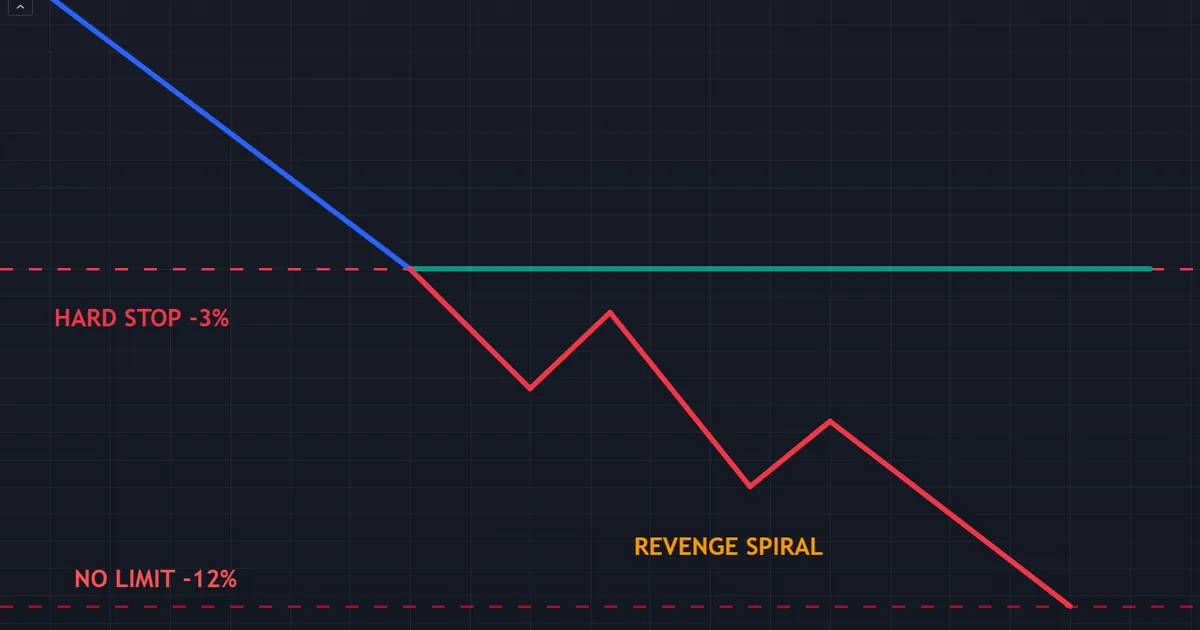
Picture two equity paths leaving the same opening balance. One dips to the minus three percent line and flattens for the day. The other blows through the line, chases the loss, and sinks far deeper.
News Days Can Gap Past the Cap
A sudden news spike can jump price straight through your stop. The day’s loss then lands beyond the cap before you can act. So trade smaller around major releases, which keeps a gap from blowing the limit wide open.
A Funded Account Sets the Cap for You
Prop firms often impose a hard daily loss rule. Breach it, and the account closes regardless of your longer plan. So on a funded account, the daily limit is not a choice but a line you must respect.
One Big Trade Can Break the Rule
A single oversized trade can blow the cap in one move. The limit only holds when each trade risks a small, fixed slice. So size every position first, and the daily cap stays a meaningful wall.
Related Concepts to Study Next
The daily loss limit sits inside a wider toolkit of risk rules, and a few deserve your next reading hour. The size you risk on each trade sets how quickly the cap arrives. A clear-headed plan then keeps one bad day from turning into a long drawdown.
Start with our overview of risk management in forex to see how the pieces fit, then learn how to recover from a drawdown when a rough stretch arrives. Our guide to common risk management mistakes shows what the cap helps you avoid. To size each trade so the cap lands where you want, use our free position size calculator, measure any dip with the drawdown calculator, and fit it all into a plan on our forex trading strategies hub.
FAQ
What is a daily loss limit in trading?
A daily loss limit is a hard cap on how much you allow yourself to lose in one session. Once your losses reach the number, you stop trading for the day. It protects the account from a single session spiraling out of control.
What is a good daily loss limit percentage?
Many traders use two or three percent of the account as a daily cap. A common rule sets it at roughly three times the per-trade risk. Cautious traders, and most beginners, do well to start even tighter.
Why does a daily stop help my psychology?
Losses cloud judgment, and clouded judgment breeds worse losses. The cap ends the session right when your thinking turns least reliable. So it removes the chance to chase a loss with an oversized, emotional trade.
Should I move my daily limit on a bad day?
No, and this is the mistake that undoes the whole rule. A limit you stretch under pressure protects nothing at all. Set the number in advance, and treat it as a fixed wall once the session starts.
How do I enforce a daily loss limit?
Write the money figure where you can see it, and set a platform alert at the level. Some brokers and prop firms block new orders once you hit the cap. Where none exists, close the platform and log out to build your own guardrail.
Does a daily loss limit stop me losing money for good?
No cap can promise a profit or erase risk from trading. The daily limit only caps the damage of any single session. Used with sound sizing, it keeps rough days survivable so you stay in the game. Results are not guaranteed; past performance is not indicative of future results.
External references
- For background on this concept, see Maximum Drawdown at Corporate Finance Institute.
- For broader market context, see Behavioral Economics at Investopedia.

About the author
Written by Dominic Walsh, a Forex trader and MT4/MT5 indicator, Expert Advisor and script developer. Every tool on forexmt4systems.com is tested on live charts before release and ships with ready-to-use compiled MT4 (.ex4) and MT5 (.ex5) files. Learn more about the trader and developer behind this site.
How we build, test and correct every tool: Editorial & Testing Policy. Trading carries risk; see the disclaimer.