
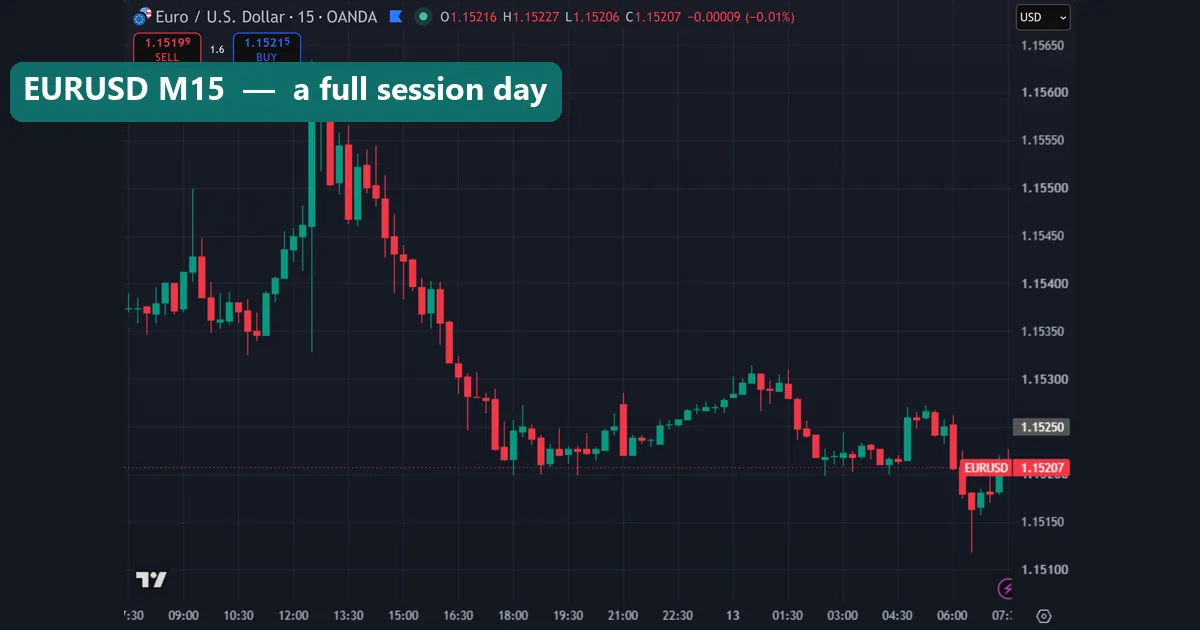
ICT times are the narrow session windows that Inner Circle Trader followers call kill zones. The idea is simple: volatility and volume cluster around session opens, so most of the day’s clean movement lands inside a few hours. The four standard windows are the Asian range, the London Open kill zone, the New York AM kill zone and the London Close. This guide gives each window in New York time and GMT, explains what traders look for inside it, and shows why the clock alone is never a reason to trade.
What ICT kill zones actually are
A kill zone is a block of hours, nothing more. ICT traders expect the highest-quality moves during these blocks because that is when the largest banks and funds are active. Outside them, spreads widen and volume thins, so price drifts or chops. The windows therefore act as a filter on when you look, never as a signal in themselves.
Each zone has its own personality. London expands the range, New York often reverses or extends it, and the Asian hours usually build a tight box. Learn each character first, and the setups you already trade become easier to time.
The four main ICT times in New York time and GMT
| Kill zone | New York time | GMT (US winter) | What it is used for | Typical character |
|---|---|---|---|---|
| Asian range | 20:00–00:00 | 01:00–05:00 | Framing the box London will break | Quiet, narrow, range-bound |
| London Open | 02:00–05:00 | 07:00–10:00 | First real expansion of the day | Fast, directional, sweeps the Asian range |
| New York AM | 07:00–10:00 | 12:00–15:00 | Main US move, often news-driven | Volatile, widest daily range |
| London Close | 10:00–12:00 | 15:00–17:00 | Profit-taking and reversals | Choppier, mean-reverting |
Daylight saving shifts these figures. The GMT column above assumes US winter time, when New York sits five hours behind GMT. From mid-March to early November, New York moves to daylight saving and sits four hours behind, so every GMT figure lands one hour earlier. London Open then runs 06:00–09:00 GMT rather than 07:00–10:00. Europe and the United States also switch on different dates, which creates two awkward weeks each year. Check the offset rather than trusting a screenshot from last season.
The Asian range and how it frames London
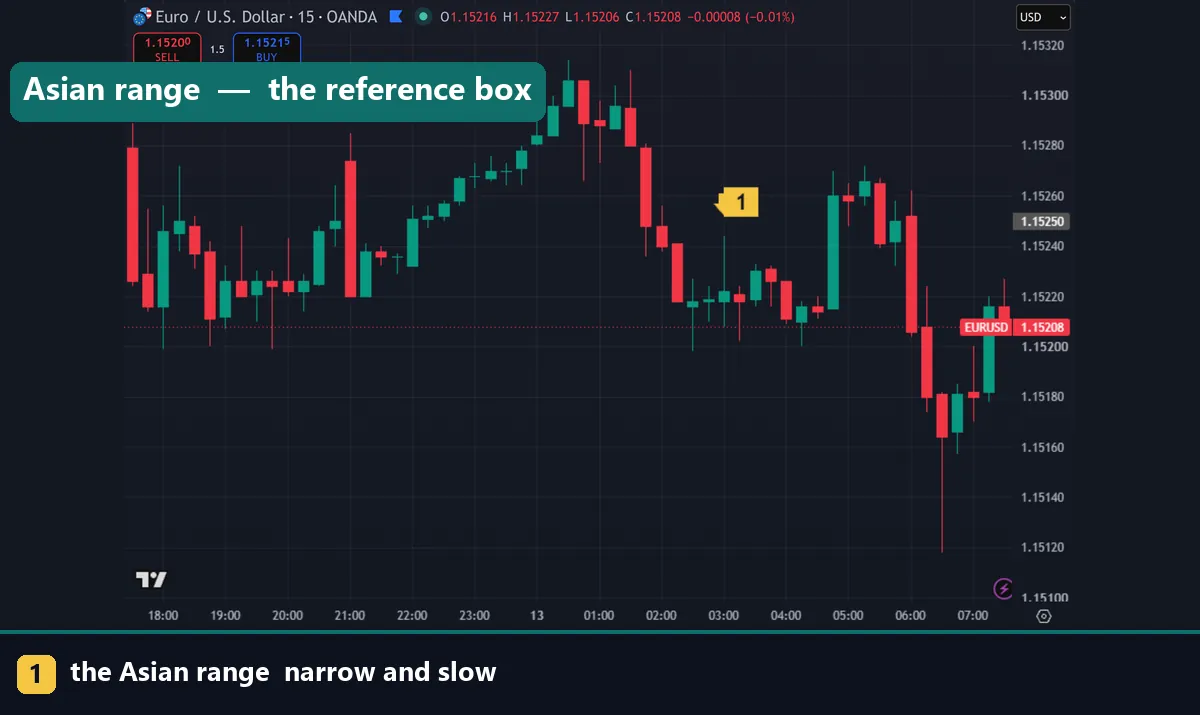
The Asian session is the quietest block on the majors. Tokyo and Sydney carry the volume, and EURUSD or GBPUSD often trade in a band of thirty pips or less. Rather than trading it, most ICT traders simply measure it. Draw a box from the high and low between 20:00 and 00:00 New York time, then leave it on the chart.
That box becomes the reference for the next few hours. London frequently pushes through one side of it, collects the stops resting there, and then reverses toward the other side. So the range gives you two liquidity pools before the busy session starts. Yen pairs are the exception, since Tokyo is their home session.
One caveat matters. On days with Asian news or a big equity move, the range expands and the box loses its meaning. A range of 100 pips is not a coiled spring; it is already the day’s move.
The London Open kill zone
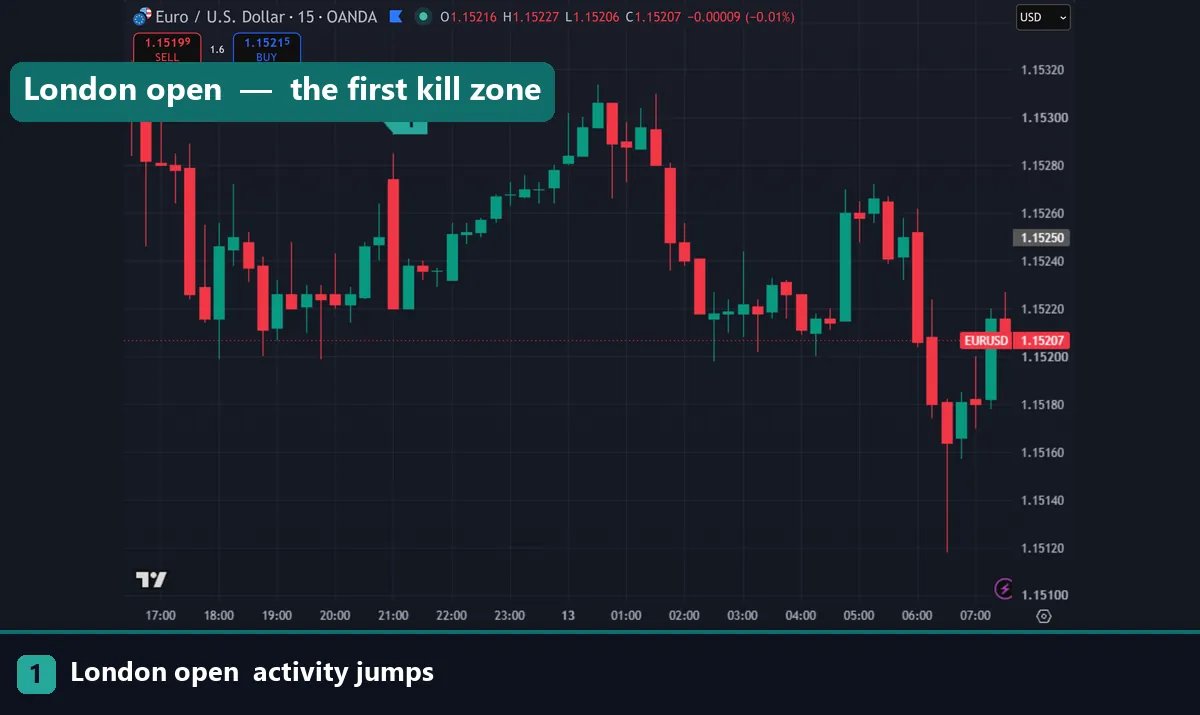
London is the largest forex centre by volume, so its open produces the first genuine expansion of the day. The kill zone runs from 02:00 to 05:00 New York time, which is 07:00 to 10:00 GMT in winter. Traders watch for a sweep of the Asian high or low, then a shift in structure back the other way.
The classic sequence looks like this. Price pokes above the Asian high, takes the stops, fails to hold, and then breaks its short-term structure downward. Traders sell the retracement into the candle that caused the break. Our walkthrough of a liquidity sweep example shows that sequence bar by bar, and the guide to the liquidity trap explains why the first breakout fools so many traders.
Not every London session cooperates, though. On slow Mondays or ahead of major data, price sweeps both sides and goes nowhere. Judge the session by price action, not by the clock.
The New York AM kill zone
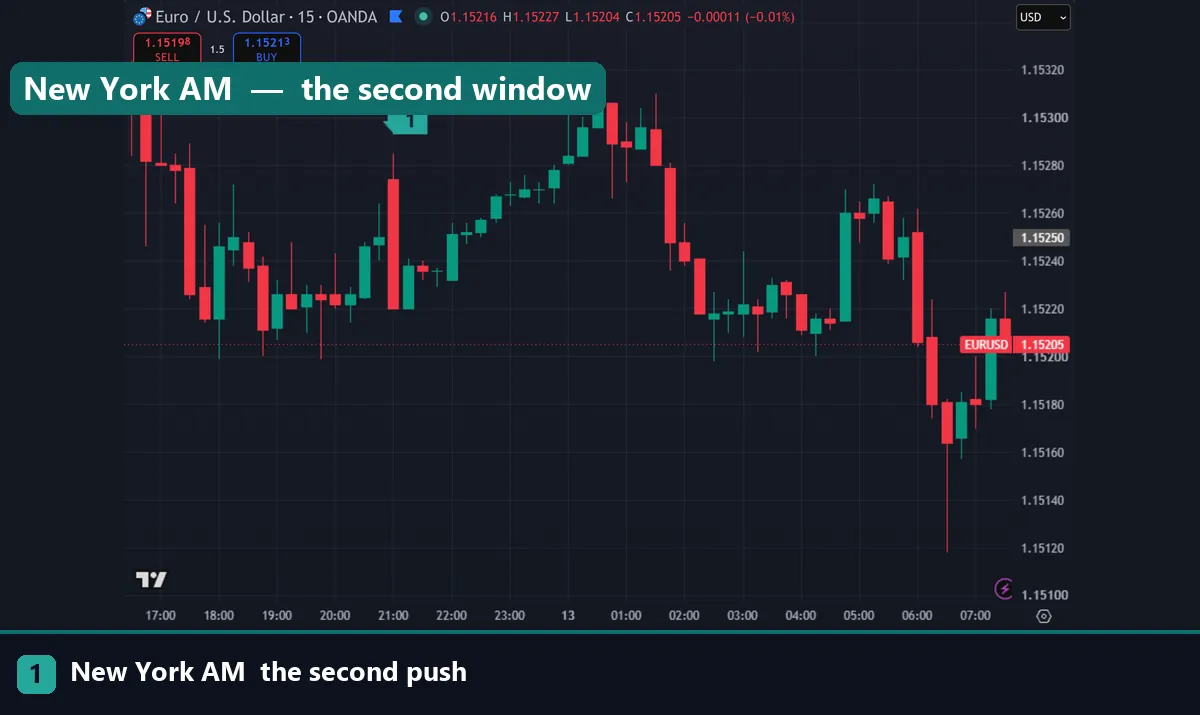
New York AM runs 07:00 to 10:00 local, or 12:00 to 15:00 GMT in winter. This block overlaps with the second half of London, so it carries the heaviest participation of the entire day. US data releases land at 08:30 New York time, which is why the range often widens sharply within a single candle.
Two setups dominate here. Either New York continues the London direction after a shallow pullback, or it reverses that move and hunts the opposite side. Traders choose between them using their higher-timeframe bias. Meanwhile, news traders stand aside until the first data candle closes.
Be careful with the release itself. Spreads widen, slippage grows, and a close stop gets taken on a spike that reverses seconds later. Many experienced traders skip the minutes around major data entirely.
The London Close kill zone
London Close covers 10:00 to 12:00 New York time, or 15:00 to 17:00 GMT in winter. European desks square their positions before they finish, which often produces a partial retracement of the day’s move. That makes it a mean-reversion window rather than a breakout window.
Traders use it in two ways. Some fade an extended daily move back toward the middle of the range. Others take partial profit while liquidity is still decent. After roughly 12:00 New York time, activity fades and the afternoon drifts.
Why session timing matters at all
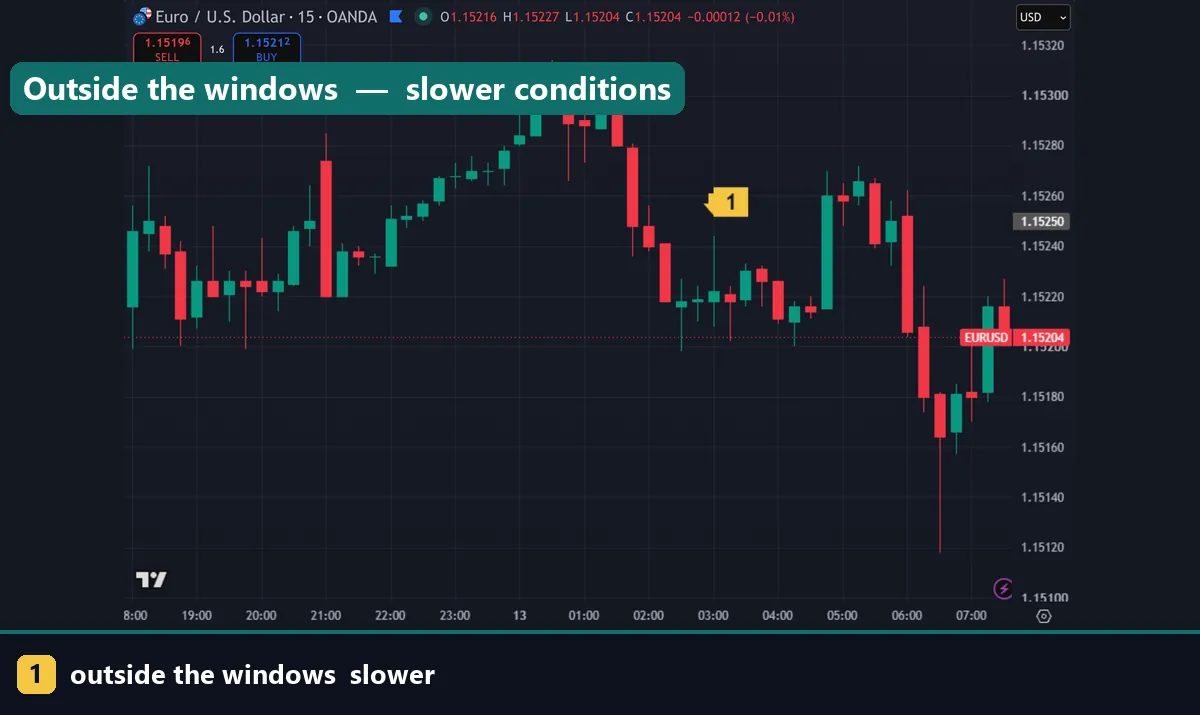
Forex trades around the clock, yet the hours are anything but equal. Liquidity concentrates when the big centres are open, and the London and New York overlap carries far more volume than the Asian afternoon. Spreads tighten then, and moves run further before they stall. That is the real reason session timing helps.
The practical effect is simple. A breakout at 03:00 New York time has genuine participation behind it, while the same pattern at 17:00 often stalls within a few pips. Our guide to when the forex market opens maps each centre’s hours, and reading candles well helps you judge session character, which the guide on how to read candlestick charts covers.
Remember that your broker’s server clock rarely matches New York. Most MetaTrader servers run on GMT+2 or GMT+3, so a chart-based session tool needs the correct offset before the boxes line up. Set that once, then verify against a known event such as the 08:30 New York data release.
Download the complete indicator database
Put these concepts on your charts. One email unlocks the full library of 1,380+ indicators with compiled MT4 and MT5 files, plus my TradingView scripts. No paywall, no spam, unsubscribe any time.
Get free access to my indicator database
One email unlocks 1,380+ free MT4, MT5 and TradingView indicators — the complete library. No single-tool download; you get the whole database.
The honest limitation of ICT times
A time window is not a signal. That single sentence prevents most of the damage beginners do with kill zones. The clock tells you when participation is likely, and nothing else. Price still has to sweep liquidity, shift structure and offer an entry before a trade exists.
Plenty of moves also ignore the windows completely. A surprise central bank headline at 14:00 New York time moves the market hard, whatever the schedule says. Trends that begin in Asia sometimes run all day without a London reversal. Late December breaks the pattern for weeks.
The specific hours are conventions too, not measured constants. Different ICT materials quote slightly different boundaries, and none of them come with published evidence. Treat the windows as a sensible focus for your attention, then judge each session on the price action it actually produces.
Common ICT times mistakes
Forcing a trade because the window opened is the biggest error. An empty session should end with no position at all. The second mistake is using the wrong clock: traders read 02:00 as their broker’s server time, mark the box three hours late, and then wonder why the levels do nothing. Fix the offset before anything else.
Ignoring daylight saving causes the same problem twice a year. Levels drift by an hour and setups appear to stop working. A fourth mistake is trading every window on every pair. Yen crosses behave differently from euro crosses during Asian hours, so match the pair to the session. Finally, avoid stacking four session boxes plus indicators on one chart; clutter hides the price action.
Where to go next
Session timing works best alongside solid chart basics. Begin with when the forex market opens for the full market-hours picture, then learn how to read candlestick charts. For the setups traders hunt inside these windows, study a liquidity sweep example and the mechanics of a liquidity trap. If you want confirmation tools for intraday work, compare the best day trading technical indicators, then follow the steps on how to install MT4 and MT5 indicators. Investopedia offers a handy the foreign exchange market article on Wikipedia, and Wikipedia describes the structure of the foreign exchange market behind these sessions.
FAQ
What are the ICT kill zone times?
In New York winter time: Asian range 20:00–00:00, London Open 02:00–05:00, New York AM 07:00–10:00, and London Close 10:00–12:00. In GMT those become 01:00–05:00, 07:00–10:00, 12:00–15:00 and 15:00–17:00.
Do ICT session times change with daylight saving?
Yes. New York shifts from five hours behind GMT to four hours behind between mid-March and early November, so each GMT figure moves one hour earlier. Europe changes on different dates, which briefly breaks the usual offset.
Which ICT kill zone is best for beginners?
London Open suits most beginners. It runs at a predictable hour, the Asian range gives clear reference levels, and the session usually delivers one clean expansion instead of the constant news spikes of New York AM.
How do I set kill zones on my MT4 or MT5 chart?
Check your broker’s server time first, since most run GMT+2 or GMT+3. Then apply a session indicator with that offset, or draw vertical lines by hand. Verify the alignment against the 08:30 New York data release.
Should I trade every kill zone?
No. Trading all four leads to overtrading and thin setups. Most traders pick one window that fits their own schedule, then learn its rhythm properly before adding a second.
Are ICT times guaranteed to produce a move?
No. A time window only tells you when participation is likely, and many sessions pass with no valid setup at all. Trading involves risk, results are not guaranteed, and past performance is not indicative of future results.

About the author
Written by Dominic Walsh, a Forex trader and MT4/MT5 indicator, Expert Advisor and script developer. Every tool on forexmt4systems.com is tested on live charts before release and ships with ready-to-use compiled MT4 (.ex4) and MT5 (.ex5) files. Learn more about the trader and developer behind this site.
How we build, test and correct every tool: Editorial & Testing Policy. Trading carries risk; see the disclaimer.