
The Asian trading session is the calm opening act of the forex day, and it sets the stage for the busier hours that follow. Trading begins in Sydney, then Tokyo takes over as the main hub. So the market wakes slowly here, with lower volume and tighter ranges than London or New York bring.
This guide explains the Asian trading session in New York time, the clock this site uses throughout. By the end, you will know when it opens, why it stays quiet, which currencies lead, and how it hands off to London. So let us walk through the session hour by hour.
What The Asian Trading Session Is
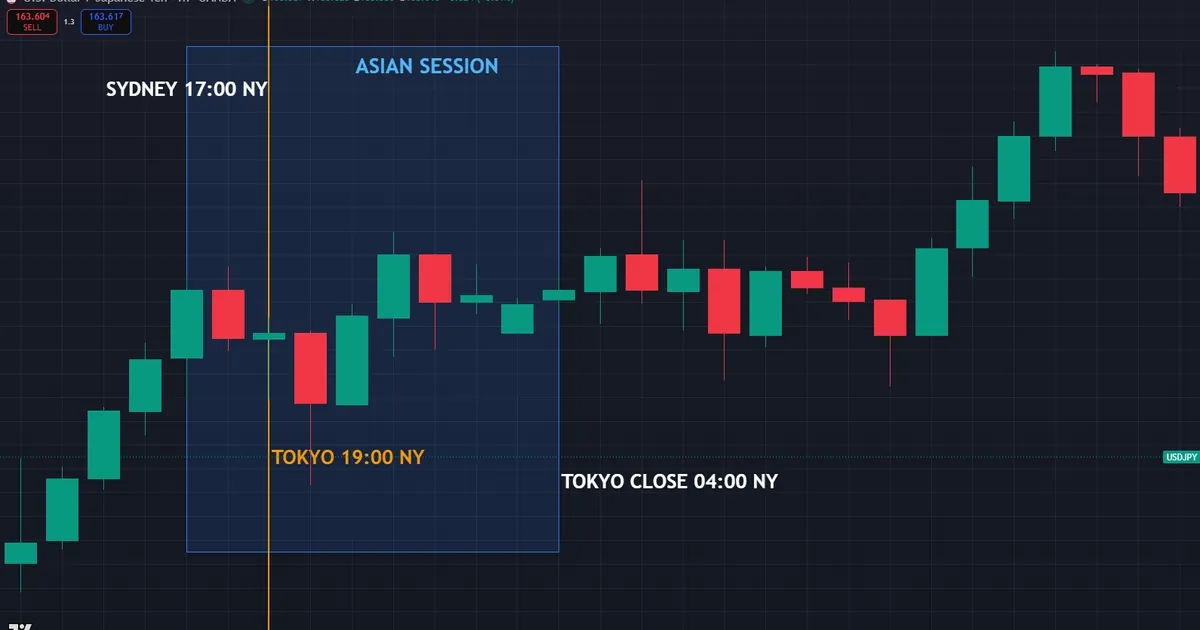
The Asian session covers the trading day across the Pacific and East Asia. It opens in Sydney around 17:00 New York time, then Tokyo joins near 19:00 NY as the main driver. So the chart often marks the window as “Asian 19:00 NY,” since Tokyo carries most of the flow.
The session runs through to about 04:00 NY, when Tokyo winds down and Europe begins to stir. Because it bridges the American close and the European open, it acts as the overnight lull of the global chain. So the tone here stays patient, not frantic.
Think of the session as a slow tide rather than a wave. Volume drifts in as Tokyo opens, holds through the middle hours, then fades toward the London handoff. So the Asian day has a gentle shape, and knowing that shape helps you pick the right hour for your style.
The quiet also shapes what a session can offer. Because the flow stays light, a big trend rarely forms before Europe wakes. So the smart play here leans on ranges and preparation, not on chasing a runaway move that the hours cannot sustain.
The Sydney And Tokyo Hours
Two centres define the session. Sydney opens first near 17:00 NY, so the earliest orders come from Australia and New Zealand. Then Tokyo opens near 19:00 NY, and Japan brings the deepest pool of the window.
Tokyo matters most for a simple reason. Japan runs one of the largest economies in the region, so its banks and exporters move real size through the yen. Because Tokyo leads, many traders treat its open as the true start of the Asian day.
Singapore and Hong Kong add flow as well. Both join through the Tokyo hours, so the middle of the session holds steady liquidity. When these hubs trade alongside Tokyo, the yen and the Aussie tend to show their cleanest moves.
Why The Session Stays Quiet
The Asian session trades lighter than the ones that follow. Fewer of the world’s largest banks sit in this time zone, so the overall pool runs shallow. Because volume stays modest, price often drifts in a narrow band rather than trending hard.
That calm brings a mixed blessing. On one hand, ranges stay tight, so a range trader finds clean levels to work. On the other hand, breakouts fade more easily, since the thin flow lacks the force to sustain a big push.
Spreads can widen a touch in these hours too. When fewer players quote prices, the gap between bid and ask grows. So a scalper who trades this window checks the spread closely before pulling the trigger. The major currency pairs still trade, yet they move with less urgency here.
How The Asian Session Works Step By Step
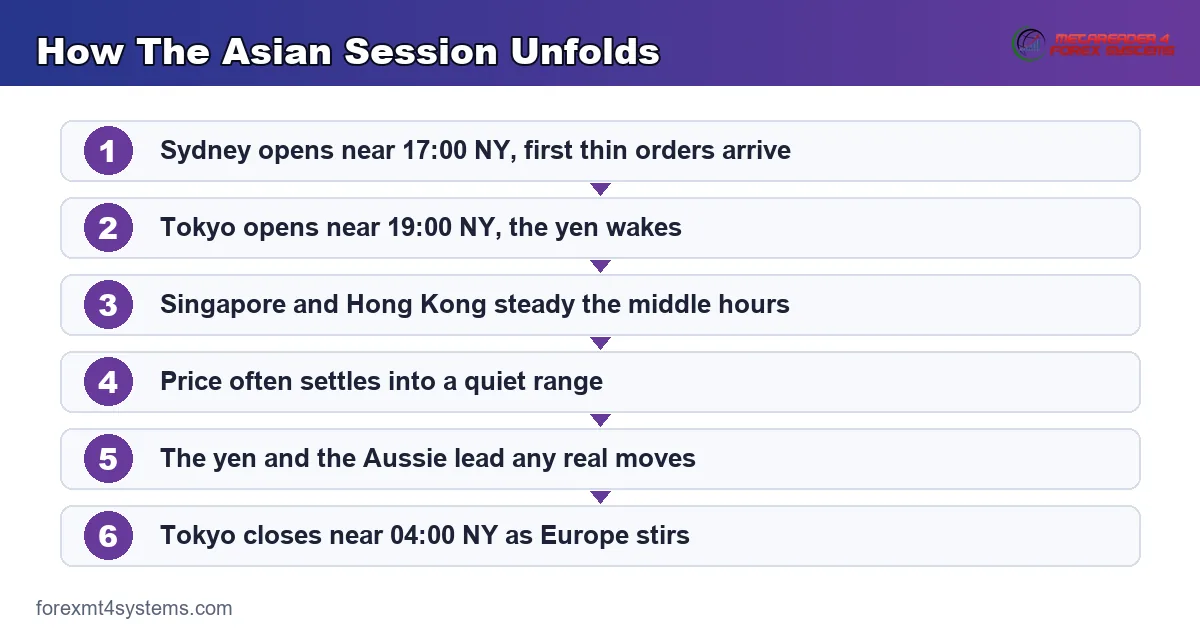
The session follows a familiar rhythm most nights. Once you know the order of events, the quiet hours start to make sense. So here is the Asian day broken into simple steps.
- Sydney opens near 17:00 NY, and the first thin orders arrive.
- Tokyo opens near 19:00 NY, so volume lifts and the yen wakes.
- Singapore and Hong Kong join, which steadies the middle hours.
- Price often settles into a range while the majors idle.
- The yen and the Aussie lead any real moves that appear.
- Tokyo closes near 04:00 NY as Europe begins to stir.
Read those steps as a build toward the London open. So the range you see overnight often becomes the launch pad for the European breakout. Because London flow tends to break the Asian range, many traders mark its high and low before they sleep.
The Yen And The Aussie Lead
Two currency groups own this session. The yen leads first, since Tokyo drives the flow and Japanese desks trade real size. So USD/JPY and the yen crosses often print the cleanest moves of the night.
The Aussie and the Kiwi come next. Because Australia and New Zealand sit inside these hours, AUD/USD and NZD/USD respond to local data and to Chinese numbers. When a Chinese release surprises the market, the Aussie can jump while Europe still sleeps.
The euro and the pound stay sleepy by contrast. Their home desks sit in the next time zone, so they drift until London arrives. So a trader who wants movement in the Asian hours leans toward the yen and the commodity pairs instead.
Trading The Asian Range In Practice
Most Asian-session strategies center on the range. Because price drifts between a high and a low, the edges of that band offer clear reference points. So a patient trader can fade the boundaries or wait for the later London break.
Picture a night on USD/JPY. Price settles between around 162.20 and 162.60 through the Tokyo hours, a band of forty pips. So a range trader marks both edges and waits for a bounce near either line.
The yen pairs suit this window best. Since Tokyo drives the flow, USD/JPY and its crosses often respect their overnight levels. When price nears the top of the band, a seller steps in; near the bottom, a buyer does. Because the range holds, the plan repeats through the calm hours.
Volatility guides the exit as much as the entry. Because the Asian range runs narrow, a target set near the far edge often makes more sense than a distant one. So a range trader books a modest reward, then waits for the next touch rather than hoping for a trend that rarely comes before London.
Sizing Risk In A Thin Market
Thin flow calls for careful sizing. A stop that fits a busy London range may sit too tight for the Asian drift, yet a wider stop needs a smaller position. So a trader balances the two with a fixed risk per trade.
Say your plan risks one percent of a ten thousand dollar account. That gives one hundred dollars of risk on the trade. If your stop sits twenty pips away on USD/JPY, you divide the risk by the stop to find the size. So the math keeps the loss capped whatever the market does next.
To run those numbers without the mental effort, our free position size calculator turns a risk percent and a stop distance into a lot size in seconds. So you can size each trade the same way, night after night.
A Worked Example At The Tokyo Close
Consider a full night on EUR/USD. Through the Tokyo hours, price holds a tight band between about 1.1380 and 1.1405. So the overnight range spans roughly twenty-five pips, a typical quiet night.
Then the London open changes everything. Near 03:00 NY, European desks flood in, and price breaks above 1.1405 with force. Because the Asian range gave way, the breakout traders who marked that high now hold a clean signal.
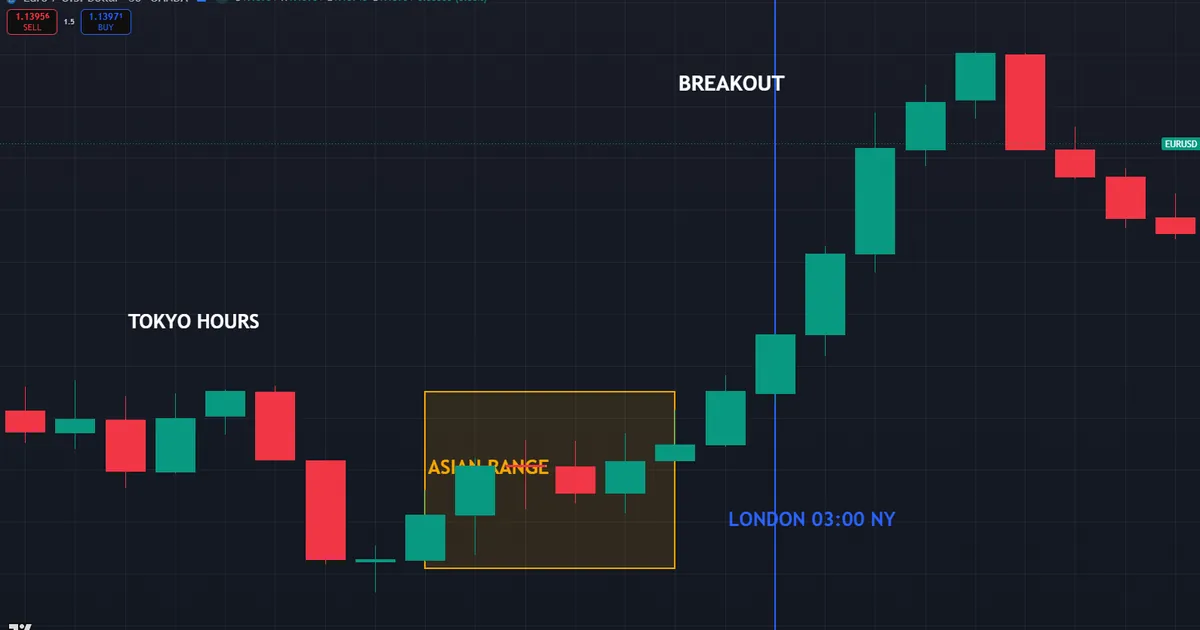
The lesson sits in the handoff. So the Asian range did not trend on its own, yet it framed the move that followed. When you treat the overnight band as preparation, the calm hours earn their place in your plan. To see how the next window builds on this base, read our guide to the London trading session.
Timing matters for the handoff, so keep a clock handy. Our free forex market hours tool shows which sessions run right now, even when daylight saving shifts the exact hour. So you can catch the Tokyo-to-London switch without guessing.
Download the complete indicator database
Put these concepts on your charts. One email unlocks the full library of 1,380+ indicators with compiled MT4 and MT5 files, plus my TradingView scripts. No paywall, no spam, unsubscribe any time.
Get free access to my indicator database
One email unlocks 1,380+ free MT4, MT5 and TradingView indicators — the complete library. No single-tool download; you get the whole database.
Common Mistakes In The Asian Session
The quiet hours look easy, yet the same errors trip new traders again and again. Most come from treating the Asian session like London. So the fixes start with a simple change of expectation.
Expecting Big Trends
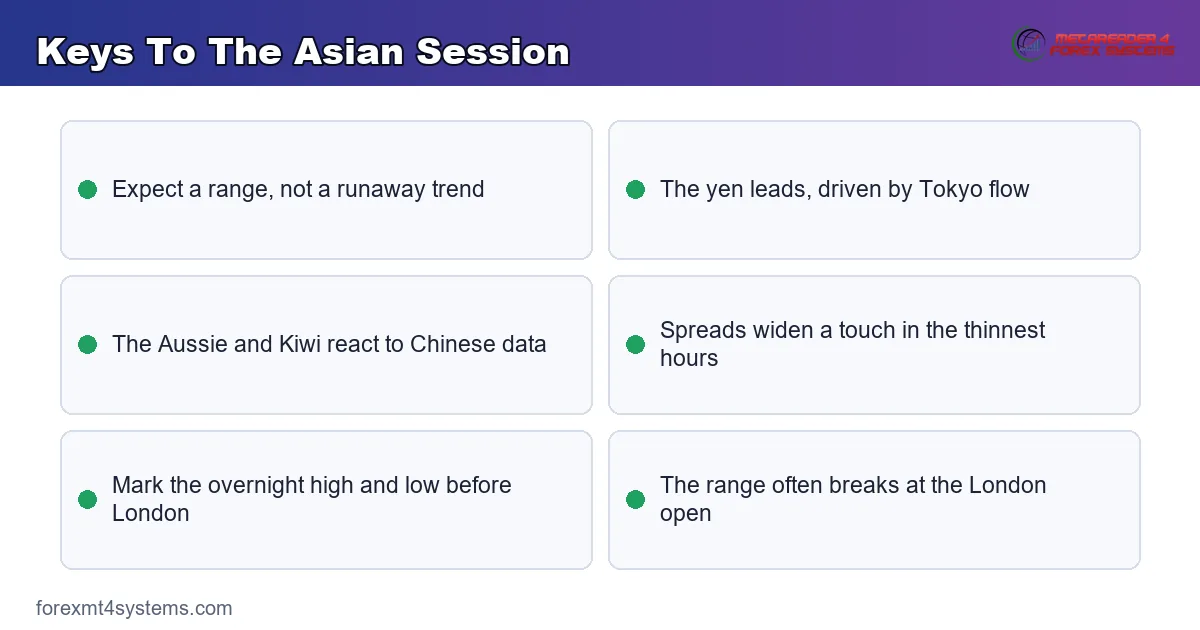
The session rarely trends hard, so a trader who hunts a runaway move usually waits in vain. Price drifts more than it drives here. Instead, plan for a range, and let the trend hunting wait for the London open.
Chasing Thin Breakouts
A push through the range high can look like a breakout, yet thin flow often fails to back it. So the move stalls and snaps back within the hour. Wait for a candle to close beyond the level, and confirm with the London open before you trust it.
Ignoring The Wider Spread
Spreads creep wider when volume thins. Because a scalper pays that gap on every trade, a careless entry can start underwater. So check the current spread before each order, and skip the trade when it looks unusually wide.
Forgetting The Local Calendar
Japanese and Australian data drop inside these hours. A Bank of Japan comment or an Australian jobs print can jolt the yen or the Aussie in seconds. So note the local calendar in advance, then stand aside through the release.
Overtrading The Lull
Boredom tempts a trader to force setups in the quiet. Yet a thin market punishes trades that lack an edge. So treat the lull as a time to wait, and save your risk for the clean levels that the range provides.
Asian Session Trading Styles
The session suits a few styles more than others, so match your approach to the calm flow. A range trader thrives here, while a trend chaser usually struggles. So there is no single right method; there is only the one that fits the quiet hours and your schedule.
The Range Fade Approach
Range traders find their home in the Asian hours. Because price so often bounces between a clear high and low, a fade at the edges can work well. So a trader marks the band early, waits for a touch of a boundary, then fades back toward the middle.
Patience decides this style. When price drifts to the top of the range, a seller waits for a stall before acting. Because a thin market can drift a little past a level, a small buffer on the stop keeps a normal wobble from ending the trade early.
The Breakout Preparation Approach
Other traders skip the fade and prepare for London instead. They mark the Asian high and low through the night, then wait for the European open to break one side. Because the break arrives with real flow, their entries carry more force than a thin overnight push.
This style rewards a plan over a fast trigger. So the trader sets alerts at the range edges, then steps away until London approaches. When price breaks and holds beyond a level near 03:00 NY, the setup finally fires with the session behind it.
The Yen Carry Angle
Some longer-term traders watch the yen for a different reason. Because Japanese rates often sit low, the yen features in many carry trades that hold for weeks. So a shift in tone during the Tokyo hours can hint at where the larger flow may lean.
Read this angle as background, not a day trade. A carry position rests on interest rates and risk appetite, not on a single overnight range. So the Asian session offers a window into the yen’s mood rather than a quick entry signal.
Quick-Reference: The Asian Session At A Glance
Keep this short list beside your chart. A quick check here points you to the right hours, so run through it before you trade the night.
- Sydney opens near 17:00 NY, Tokyo opens near 19:00 NY.
- Volume runs lighter than London or New York.
- Price often holds a range through the Tokyo hours.
- The yen and the Aussie lead any real moves.
- Mark the overnight high and low before the London open.
- Watch for wider spreads in the thinnest hours.
- Tokyo closes near 04:00 NY as Europe stirs.
Edge Cases And Pitfalls
Even a quiet session springs surprises on special days. Central bank days come first. When the Bank of Japan meets, the yen can lurch far beyond its usual overnight range. So a calm night can turn wild in a single headline.
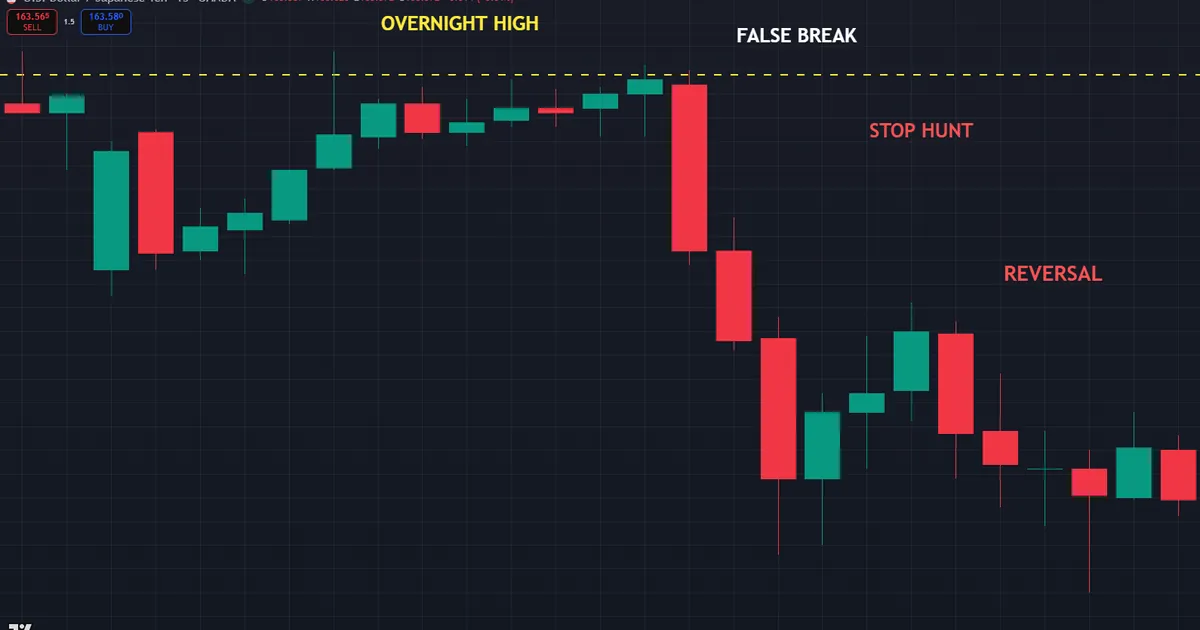
Watch the chart below for a classic trap. Price pushes past the overnight high on thin flow, trips a cluster of stops, then reverses hard. Because the move ran on stops rather than real buying, the reversal punishes anyone who chased the first spike.
Holidays And Thin Nights
Japanese holidays thin the session even further. When Tokyo takes a day off, the deepest pool vanishes, so the yen drifts and the range shrinks. Because the crowd stays home, a breakout has even less chance to run.
Chinese data can override the calm as well. A surprise release from Beijing may send the Aussie and the Kiwi moving while the majors idle. So check the regional calendar before you assume the session will stay flat.
End-of-month flows add another twist. Because large funds rebalance near the month’s close, the Tokyo fix can bring a burst of yen orders. So a normally sleepy hour may see a sharp move that fades just as fast once the flow clears. Because these bursts pass quickly, a patient trader waits them out rather than chasing the spike.
When News Overrides The Calm
Scheduled news can flip the whole session on its head. A Bank of Japan rate decision, an Australian jobs report, or a Chinese growth print all land inside these hours. So a night that started flat can produce the day’s biggest candle in a heartbeat.
Prepare for those releases rather than react to them. Because the spread can spike for a few seconds around the print, a market order may fill far from the screen price. So many traders flatten before the release, then wait for the dust to settle before they act again.
Risk appetite shifts overnight too. When a headline out of Asia rattles stocks, the yen often gains as traders seek safety. Because the yen tends to strengthen in a scare, its pairs can move against the calm-range script you planned. So keep one eye on the wider mood, not just the chart.
The Asian Range As A Setup
Some traders build a whole plan around the overnight band. They mark the Asian high and low, then trade the London break of that range at the open. So the quiet session feeds a strategy that only pays off hours later.
Read that idea as patience rewarded, not a quick trade. Because the range needs the full Asian night to form, a rushed entry misses the point. So let the band settle first, then judge the break once London arrives with real flow.
Related Concepts To Study Next
The Asian session connects to a web of basics, and a few deserve your next reading hour. Start with the full map of the trading day by reading our guide to the forex trading sessions, which shows how the Asian hours fit the wider chain. Then learn how the American window builds on that base with our guide to the New York trading session.
Two more tools sharpen the picture. Because the yen and the Aussie lead these hours, our currency strength meter ranks the majors in real time, so you can see which currency owns the night. So the Asian session stops being a blur of flat candles and starts telling a clear story.
FAQ
What is the Asian trading session?
The Asian trading session covers the trading day across the Pacific and East Asia. It opens in Sydney near 17:00 New York time, then Tokyo joins around 19:00 NY as the main driver, and it runs to about 04:00 NY. Because fewer major banks trade in this zone, it carries lower volume than London or New York.
What time does the Asian session open in New York time?
Sydney opens near 17:00 NY, and Tokyo opens near 19:00 NY as the main hub. The window closes around 04:00 NY as Europe begins to stir. Daylight saving can shift the exact hour, so confirm the current time with a live market-hours tool.
Which currencies move most during the Asian session?
The yen leads the session, since Tokyo drives the flow, so USD/JPY and its crosses print the cleanest moves. Next come the Aussie and the Kiwi, because Australia, New Zealand, and Chinese data all land in these hours. Meanwhile, the euro and the pound stay sleepy until London arrives.
Why is the Asian session so quiet?
Fewer of the world’s largest banks sit in this time zone, so the pool of orders runs shallow. Because volume stays modest, price often drifts in a narrow band rather than trending hard. That calm suits range trading more than trend hunting.
How do traders use the Asian range?
Many traders mark the overnight high and low that the session leaves behind. Then they watch the London open for a break of that range near 03:00 NY. Because London brings real flow, a clean break of the Asian band can start the day’s first trend.
Does the forex market gap during the Asian session?
Small gaps can appear at the Sunday reopen, when Sydney starts the new week. Because news breaks over the weekend, the first Asian price may sit above or below the Friday close. Within the week itself, though, the round-the-clock market rarely gaps inside the Asian hours.
Is the Asian session good for beginners?
The calm hours suit a patient, range-based approach, yet thin flow brings false breaks and wider spreads. So a beginner should wait for clear levels and manage risk on every trade. Results are not guaranteed; past performance is not indicative of future results.
External references
- For background on this concept, see Japan Exchange Group on Wikipedia.
- For broader market context, see Extended Trading at Investopedia.

About the author
Written by Dominic Walsh, a Forex trader and MT4/MT5 indicator, Expert Advisor and script developer. Every tool on forexmt4systems.com is tested on live charts before release and ships with ready-to-use compiled MT4 (.ex4) and MT5 (.ex5) files. Learn more about the trader and developer behind this site.
How we build, test and correct every tool: Editorial & Testing Policy. Trading carries risk; see the disclaimer.