
The forex trading sessions split the trading day into four blocks, and knowing them tells you when the market runs fast and when it crawls. Because currencies trade around the clock, no single bell opens the day. Instead, the action rolls from Sydney to Tokyo to London to New York, so the busy hours follow the sun across the globe.
This guide maps the forex trading sessions in New York time, the clock most traders track. By the end, you will know when each session opens, where the overlaps fall, and which windows tend to move the most. So let us follow the market around the world, one session at a time.
What The Forex Trading Sessions Are
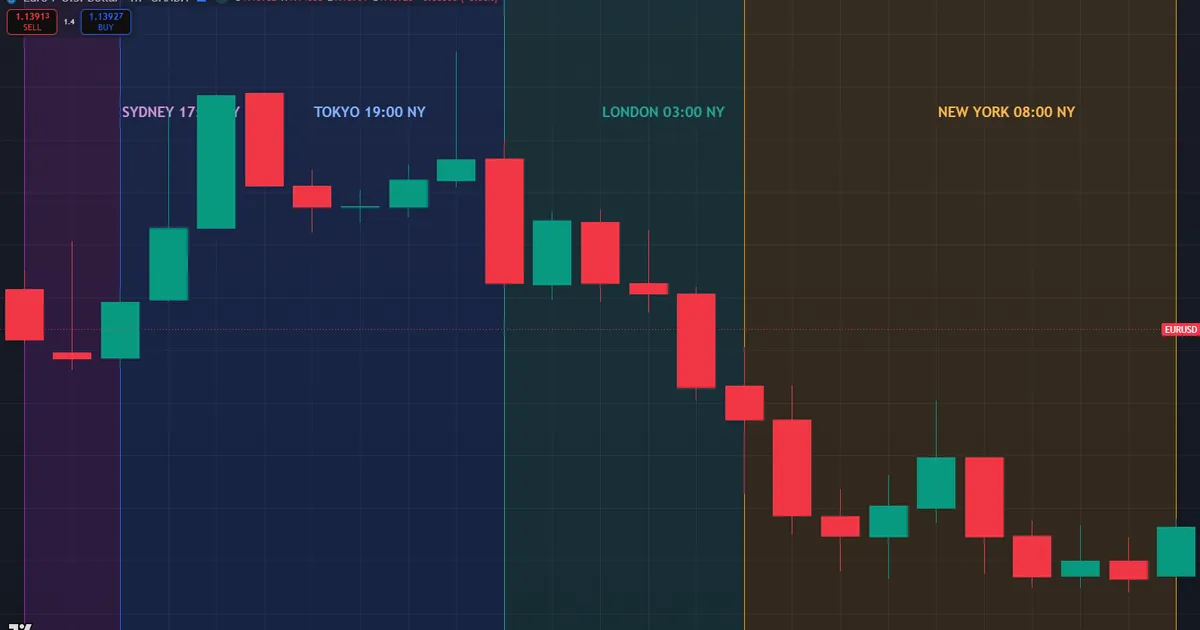
Forex runs 24 hours a day, five days a week, yet activity is not spread evenly. The market clusters into four regional sessions, each named for a major financial hub. So when banks in that region open their desks, the currencies they trade come alive.
The four sessions are Sydney, Tokyo, London, and New York. As one hub winds down, the next picks up, so trading passes hand to hand without a real close. Because the sessions overlap at the edges, some hours carry two hubs at once, and those hours tend to move the most.
Why New York Time Is The Anchor
Traders need one clock to compare sessions, and New York time serves that role well. So this guide quotes every opening in New York hours, written as NY. When you see “London opens near 03:00 NY,” that means three in the morning on a New York clock.
Keep daylight saving in mind, though. Because regions shift their clocks on different dates, the exact NY hour of a session can drift by an hour through the year. So treat the times here as close guides, not fixed bells, and confirm the current shift with a live tool.
How The Weekly Cycle Works
The market does not run every day of the week. It opens on Sunday evening in New York, as Sydney starts the new week, and it closes on Friday evening as New York shuts down. So the working week spans five sessions, not seven days.
Read the week as a long relay, then. Because Sunday’s open follows a two-day break, early liquidity runs thin, so spreads sit wider than midweek. As the week builds, the sessions settle into their normal rhythm, and the busy overlaps return to full force.
The Four Sessions In New York Time
Each session opens as its region starts the workday. The table below lists the rough windows in New York time, so you can see how they chain together across a full day.
| Session | Rough window (NY time) | Character |
|---|---|---|
| Sydney | 17:00 to 02:00 | Quiet open, thin liquidity, gentle moves |
| Tokyo | 19:00 to 04:00 | Yen and Asian pairs lead, moderate flow |
| London | 03:00 to 12:00 | Deepest volume, big trends often start |
| New York | 08:00 to 17:00 | US data drives moves, strong early flow |
Read the table as a relay, not a set of separate races. So Sydney hands off to Tokyo, Tokyo to London, and London to New York. Because each pass keeps the market open, a trader can find some activity at almost any hour of the working week.
The Sydney And Tokyo Sessions
Sydney opens the trading week first, so it sets the early tone. Liquidity stays thin here, and moves tend to stay small. Because few desks trade in these hours, spreads on many pairs sit a touch wider than later in the day.
Tokyo joins soon after and lifts the pace. The yen crosses lead this session, so USD/JPY and AUD/JPY often see their liveliest hours here. When big Asian data lands, this window can jump, yet on a normal day it moves at a moderate clip.
Asian hours suit range tactics for many traders. Because price often drifts between clear levels here, a fade at the edges can work where a breakout would stall. So a trader who knows the session leans toward the tools that fit its calmer character.
The London Session
London is the heavyweight of the four. It opens near 03:00 NY, with European activity building from around 02:00 NY as Frankfurt starts. Because London handles the largest share of global forex volume, its open often kicks off the day’s first strong trend.
Watch the majors wake up here. EUR/USD, GBP/USD, and USD/CHF all draw deep flow during London hours, so their spreads tighten and their moves gain force. To dig into this window on its own, our guide to the London trading session walks through its hours and habits.
The London open often sets a bias for the day. When price breaks the Asian range at the open, that direction can hold into the New York hours. So many traders mark the overnight high and low, then watch how London treats those levels for an early clue.
The New York Session
New York opens near 08:00 NY and runs to about 17:00 NY. US data lands early in this window, so the first few hours often carry the most movement. Because the dollar sits in every major, a US surprise can shake the whole board at once.
Then the pace eases into the afternoon. As London closes near 12:00 NY, one hub leaves the stage, so liquidity thins through the later New York hours. For a closer look at this window, see our guide to the New York trading session.
The early New York hours carry the punch. Because major US releases drop near 08:30 NY, the first hour often sets the session’s range. So a trader who misses that window may find a much calmer market by the early afternoon.
Where The Sessions Overlap
Overlaps are the heart of session trading. When two hubs trade at once, twice the flow hits the market, so moves tend to grow and spreads tend to shrink. The steps below rank the overlaps from busiest to calmest.
- London and New York. This overlap runs from about 08:00 to 12:00 NY. Because two giant hubs trade together, it carries the deepest liquidity of the day.
- Sydney and Tokyo. This overlap spans roughly 19:00 to 02:00 NY. It keeps the Asian hours active, though at a gentler pace than London.
- Tokyo and London. This brief overlap sits near 03:00 to 04:00 NY. It bridges Asia and Europe, so it can spark early moves before London hits full stride.
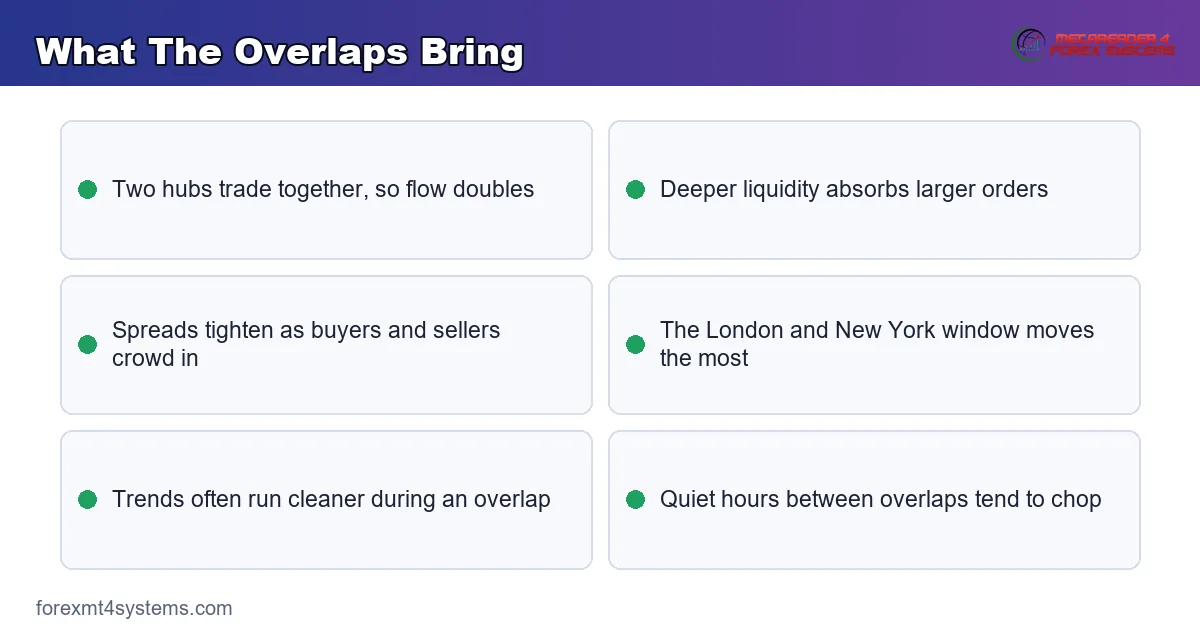
So the London and New York overlap stands above the rest. It gathers the euro, the pound, and the dollar into the same few hours, so it often prints the day’s cleanest trends. Because volume peaks here, many day traders focus their whole session on this window.
The overlap rewards preparation over reaction. Since the busiest flow arrives on a schedule, you can plan your ideas in advance and wait for the window to open. So the overlap is less about speed and more about being ready when the crowd shows up. A calm plan beats a fast reflex in these busy hours, and it keeps your risk in check.
Why Overlaps Move The Most
Overlaps concentrate the crowd, and a bigger crowd means bigger moves. When both London and New York trade, orders stack up fast, so a fresh headline finds plenty of fuel. Because liquidity runs deep, large trades slip in without jarring the price.
Tight spreads add to the appeal. Since so many buyers and sellers meet in an overlap, the gap between bid and ask narrows, so each trade costs a little less. To see how that gap changes through the day, our guide to the spread in forex lays out the mechanics.
Reading Volatility By Session
Volatility measures how far price travels, and it swings by session. The Asian hours often print small ranges, so a stop that suits Tokyo may be too tight for London. Because the average move grows in the busy hours, your risk plan should flex with the clock.
Track the daily range as a guide. When London opens, the range often expands fast, so a breakout can run for hours. So a trader who sizes stops from the active-session range avoids the trap of using a quiet-hour setting in a loud market.
Then respect the calm that follows a peak. After the overlap fades, ranges shrink again, so late trades need patience. Because a slow tape rewards smaller targets, matching your goal to the session’s pace keeps expectations honest.
A Worked Example Across A Trading Day
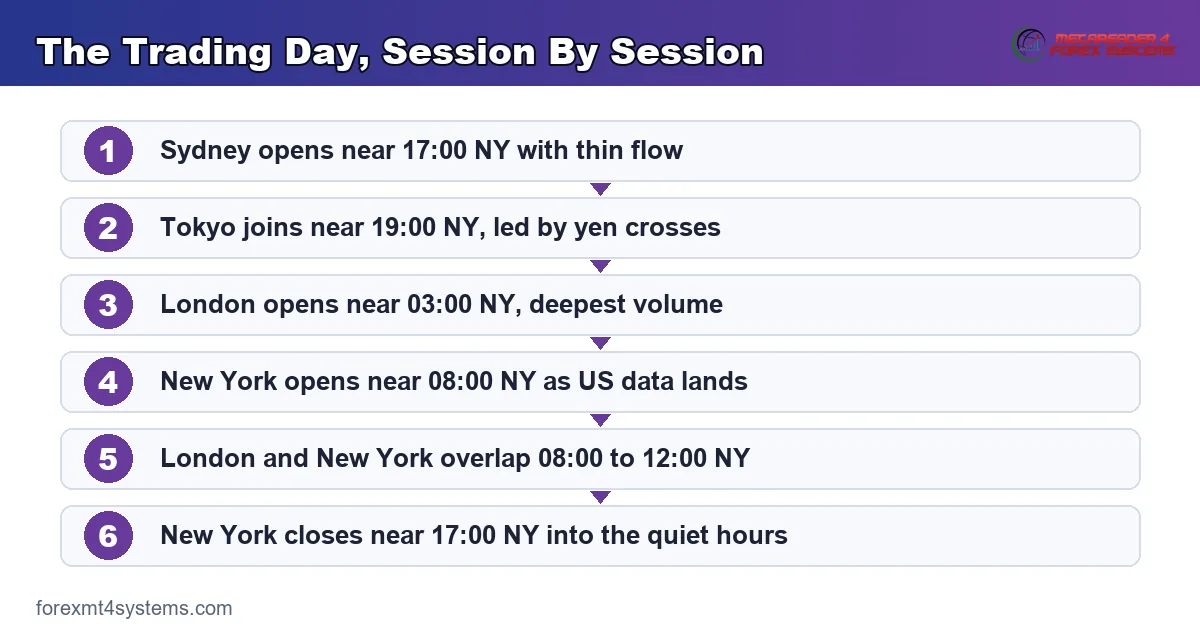
Picture a full weekday to see the rhythm. Trading opens quietly in Sydney around 17:00 NY, and EUR/USD barely stirs. Because Asia leads first, the yen crosses show more life than the euro or the pound.
Then Europe wakes the market. Near 03:00 NY, London opens and EUR/USD springs to life, often setting the day’s first real trend. So a trader who slept through Sydney finds a very different chart by the London open.
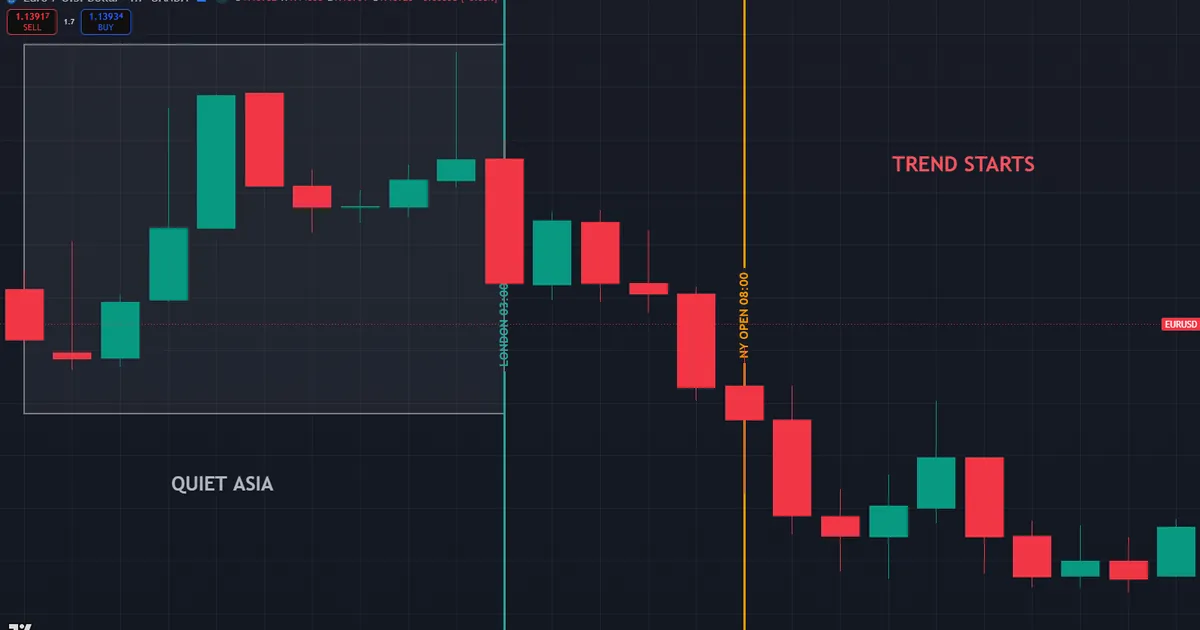
Now the day peaks. From 08:00 NY, New York joins London, and the overlap floods the market with flow. Because both hubs trade at once, a US data surprise near 08:30 NY can send EUR/USD running for the next few hours.
Later, the tide goes out. After London closes near 12:00 NY, the market thins, so afternoon moves often lose steam. To line these windows up against your own clock, our free forex market hours tool shows which sessions are open right now.
Matching A Strategy To Each Session
The best session depends on how you trade, so match the window to your style. A scalper needs deep flow, while a swing trader can enter in almost any hour. So there is no single right time; there is only the time that fits your plan and your life.
The Day Trader And Scalper
Fast traders need the busiest hours, so the London and New York overlap suits them best. Because flow runs deep from 08:00 to 12:00 NY, fills stay clean and moves carry force. So a scalper who trades only this window often does more with less screen time.
Then the quiet hours become rest, not opportunity. When the overlap ends, a scalper can step away rather than force marginal trades. Because the edge lives in the busy window, chasing the dead hours usually gives back the day’s gains.
The Swing Trader
Swing traders hold for days, so the exact entry hour matters less. Even so, a fill during an active session still costs less, since spreads tighten when the crowd arrives. So many swing traders place orders around the London open for a cleaner price.
Watch the daily close too. Because a swing trade rides the bigger trend, the session that starts a fresh daily candle can set the tone. So a swing trader reads the sessions for context, not for a minute-by-minute trigger.
The Part-Time Trader
Many traders work a day job, so they trade around it. When your evenings fall in the Tokyo hours, the yen crosses offer the most life, so lean toward pairs like USD/JPY. Because the session shapes which pairs move, matching your free hours to the right pair beats forcing a quiet one.
Download the complete indicator database
Put these concepts on your charts. One email unlocks the full library of 1,380+ indicators with compiled MT4 and MT5 files, plus my TradingView scripts. No paywall, no spam, unsubscribe any time.
Get free access to my indicator database
One email unlocks 1,380+ free MT4, MT5 and TradingView indicators — the complete library. No single-tool download; you get the whole database.
Common Mistakes With Trading Sessions
Sessions look simple, yet the same errors catch new traders again and again. Most come from ignoring the clock, and the fixes take only a moment once you spot them.
Trading The Dead Hours
Late in the New York afternoon, the market thins right out. So a trader who forces trades here fights wide spreads and choppy price. Instead, plan your best ideas around an active session, and let the quiet hours pass without a fight.
Ignoring The Overlap Window
The London and New York overlap offers the day’s deepest flow. Yet many beginners trade at random hours and miss it entirely. Because that window moves the most, planning your session around it can sharpen both your fills and your reads.
Forgetting Daylight Saving Shifts
Regions change their clocks on different dates, so a session can shift by an hour twice a year. When a trader ignores that shift, the open seems to arrive early or late. So confirm the current session times with a live tool before you rely on a fixed hour.
Trading The Wrong Pair For The Session
Each session favours certain pairs. The yen crosses lead in Tokyo, while the euro and the pound lead in London. Because a mismatch means thin flow, choose a pair that fits the open session rather than one that sleeps through it.
Expecting Every Session To Trend
Not every session produces a clean trend. Quiet hours often chop sideways, so a trend method can bleed there. Instead, match your approach to the session, using range tactics in slow hours and trend tactics when the crowd arrives.
Chasing The First News Spike
Big US data drops near the New York open, and the first candle can whip both ways. So a trader who chases that spike often buys the high or sells the low. Instead, let the first move settle, then trade the clearer direction that follows.
Quick-Reference: The Sessions At A Glance
Keep this short list beside your chart. A quick check here points you to the right hours, so run through it before you plan a session.
- Sydney opens near 17:00 NY with thin, gentle flow.
- Tokyo runs from about 19:00 NY, led by the yen crosses.
- London opens near 03:00 NY and carries the deepest volume.
- New York opens near 08:00 NY as US data lands.
- The London and New York overlap spans 08:00 to 12:00 NY.
- Overlaps bring bigger moves and tighter spreads.
- Daylight saving can shift each open by an hour.
Edge Cases And Pitfalls
Even a clear session map bends on special days. Holidays are the first case. When London or New York takes a bank holiday, the matching session runs thin, so a normally busy overlap can feel oddly quiet.
So check the calendar before you count on a busy window. The chart below marks a holiday session where the usual overlap flow fails to arrive. Because the crowd stays home, spreads stay wide and moves stay small even at the usual peak hour.
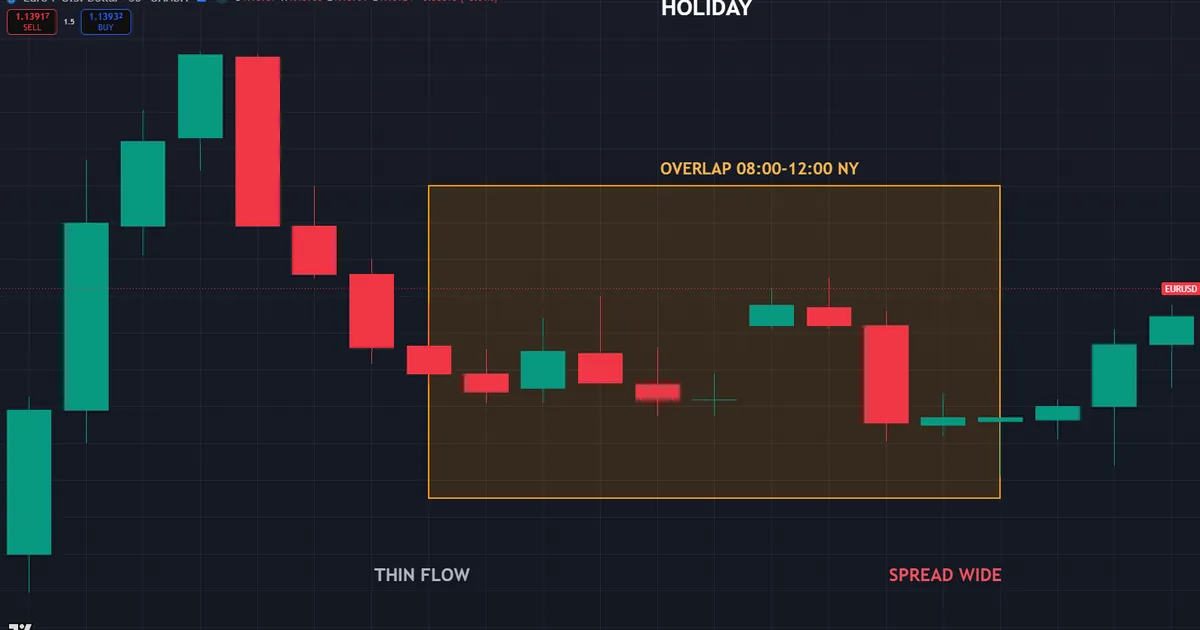
Watch the week’s edges too. Sunday’s open can gap away from Friday’s close when weekend news lands, so early Sydney hours turn jumpy. Because liquidity is thin at that open, a small order can push price further than it would midweek.
Mind the Friday close as well. As New York winds down for the weekend, big players square up, so late-Friday moves can turn erratic. So many traders flatten positions before the close rather than carry risk through a quiet weekend.
Major news can also override the session map. When a central bank surprises the market midweek, a normally quiet hour can erupt. Because scheduled data usually lands near a session open, an off-schedule shock is the one that catches traders off guard.
Month-end brings a quirk too. Large funds rebalance near the last trading day, so late-session flows can spike without any fresh headline. So a trader who sees an odd surge into the New York close should check the calendar before reading it as a real trend.
To read which currency leads within any session, our currency strength meter ranks the majors in real time. So you can see whether the dollar, the euro, or the yen owns the current hours before you commit.
Related Concepts To Study Next
The sessions connect to a web of basics, and a few deserve your next reading hour. Start with the pairs that lead each window by reading our guide to the major currency pairs, which shows why the dollar pairs dominate the busy hours. Then learn the two numbers behind every quote with our guide to the bid and ask price.
Two more guides round out the picture. Because position size decides your risk in any session, read our overview of lot size in forex. Then learn how the smallest price step works with our guide to the pip in forex. So the sessions stop being a blur and start telling you exactly when to focus.
FAQ
What are the forex trading sessions?
The forex trading sessions are Sydney, Tokyo, London, and New York. Each one opens as its region starts the workday, so the market stays active around the clock. Because the sessions overlap at the edges, some hours carry two hubs at once.
Which session is the busiest?
London is the busiest single session, since it handles the largest share of global forex volume. Its open near 03:00 NY often starts the day’s first strong trend. So many traders build their routine around the London hours.
When is the best time to trade forex?
The London and New York overlap, from about 08:00 to 12:00 NY, tends to move the most. Two hubs trade at once, so liquidity runs deep and spreads run tight. Even so, more movement also means more risk, so plan each trade with care.
Why do the session times shift during the year?
Regions change their clocks for daylight saving on different dates. So the New York hour of a London or Sydney open can drift by an hour through the year. Confirm the current times with a live market-hours tool to stay accurate.
Can I trade forex at any hour?
Yes, the market runs 24 hours a day on weekdays, so you can trade any time from Sunday evening to Friday evening in New York. Still, the quiet hours bring thin flow and wider spreads. So most traders favour an active session or an overlap.
Do all pairs move in every session?
No, each session favours certain pairs. The yen crosses lead in Tokyo, while the euro and the pound lead in London. Because a mismatch means thin flow, match your pair to the open session. Results are not guaranteed; past performance is not indicative of future results.
External references
- For background on this concept, see Why trade forex at Investopedia.
- For broader market context, see Global financial system on Wikipedia.

About the author
Written by Dominic Walsh, a Forex trader and MT4/MT5 indicator, Expert Advisor and script developer. Every tool on forexmt4systems.com is tested on live charts before release and ships with ready-to-use compiled MT4 (.ex4) and MT5 (.ex5) files. Learn more about the trader and developer behind this site.
How we build, test and correct every tool: Editorial & Testing Policy. Trading carries risk; see the disclaimer.