
The New York trading session is the American leg of the forex day, and it carries the weight of the world’s reserve currency. Because the US dollar sits in every major pair, a single American data release can shake the whole market at once. So the New York hours often decide whether a London trend extends or fades.
This guide breaks down the New York trading session in its own time zone, the clock this site uses throughout. By the end, you will know when New York opens, why US data drives so much movement, how the London overlap works from the American side, and where the session’s traps hide. So let us walk through the day hour by hour.
What The New York Trading Session Is
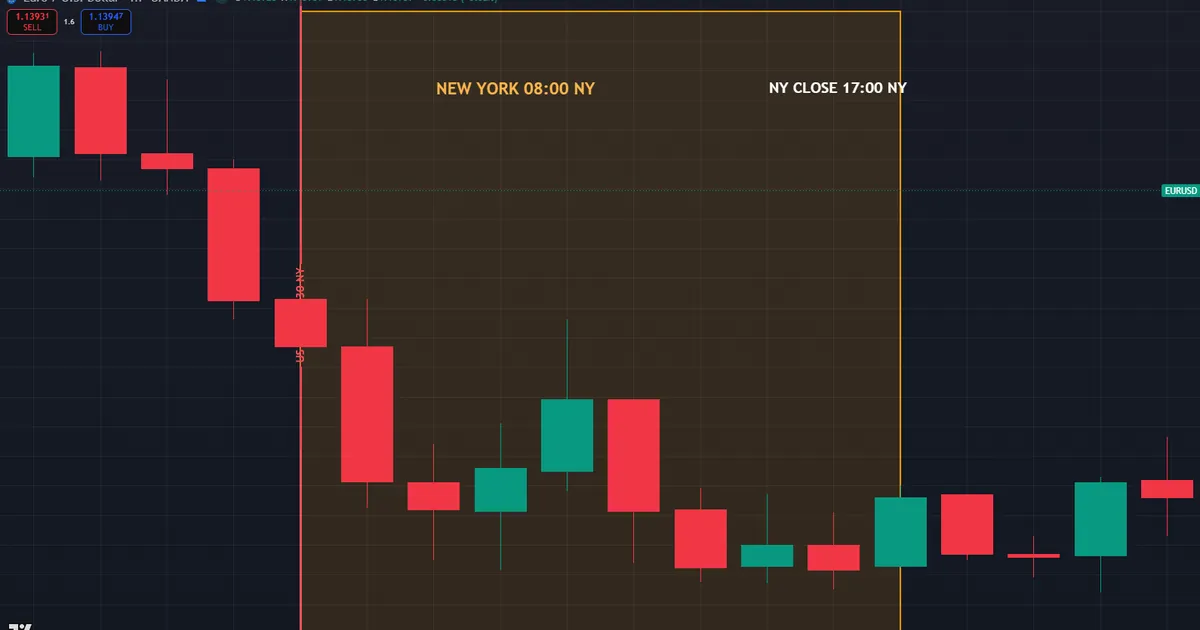
The New York session covers the American trading day, centred on Wall Street. It opens near 08:00 New York time and runs to about 17:00 NY, when US desks close for the day. So it forms the final leg of the global session chain before the market quiets into the Asian hours again.
New York matters far beyond its own borders. Because the dollar anchors most global trade, US flows touch every corner of the market. So even a trader who never buys a dollar pair feels the New York session through the moves it sends across the board.
Think of the session as an afternoon that follows a busy morning abroad. New York arrives after Asia and Europe have set the early tone, so it either confirms their story or rewrites it. Because the American desk holds the final word each day, its verdict often shapes the close.
Why US Data Drives The Session
The American calendar packs a punch, and it lands early. Major reports such as jobs, inflation, and growth usually drop near 08:30 NY, right after the open. So the first hour of New York often carries the day’s sharpest moves.
The Federal Reserve adds even bigger dates. When the Fed sets interest rates, the dollar can lurch in seconds, so every major reacts at once. Because the Fed steers the world’s main currency, its decisions rank among the most watched events in all of trading.
Second-tier reports matter too, and they arrive all week. Retail sales, factory data, and consumer surveys each nudge the dollar in turn. So even a day without a headline release can carry small US-driven moves that shape the New York hours.
Traders price the future, not just the present. Because a report hints at the Fed’s next step, a strong number can lift the dollar before any policy shifts. So the reaction often depends on how the print compares with what the market already expected.
The New York Hours In Its Own Time
Keep the clock simple, and the session falls into three phases. The table below lays out the rough windows in New York time, so you can see how the American day unfolds.
| Phase | Rough window (NY time) | What tends to happen |
|---|---|---|
| Open and data | 08:00 to 11:00 | US reports land, the overlap peaks, moves run hard |
| Midday lull | 11:00 to 13:00 | London winds down, flow eases into a slower pace |
| Afternoon and close | 13:00 to 17:00 | Thinner trade, Fed days aside, reversals can appear |
Read those phases as a wave, not three separate events. So the open brings the surge, the midday brings the lull, and the afternoon brings the fade. Because each phase flows into the next, the New York day has a clear and repeatable shape.
Fed days break that shape on purpose. When a decision lands in the afternoon, the usual lull turns into the day’s loudest hour. So a trader reads the calendar first, then decides whether the normal wave or a Fed-day exception applies.
The London Overlap From The American Side
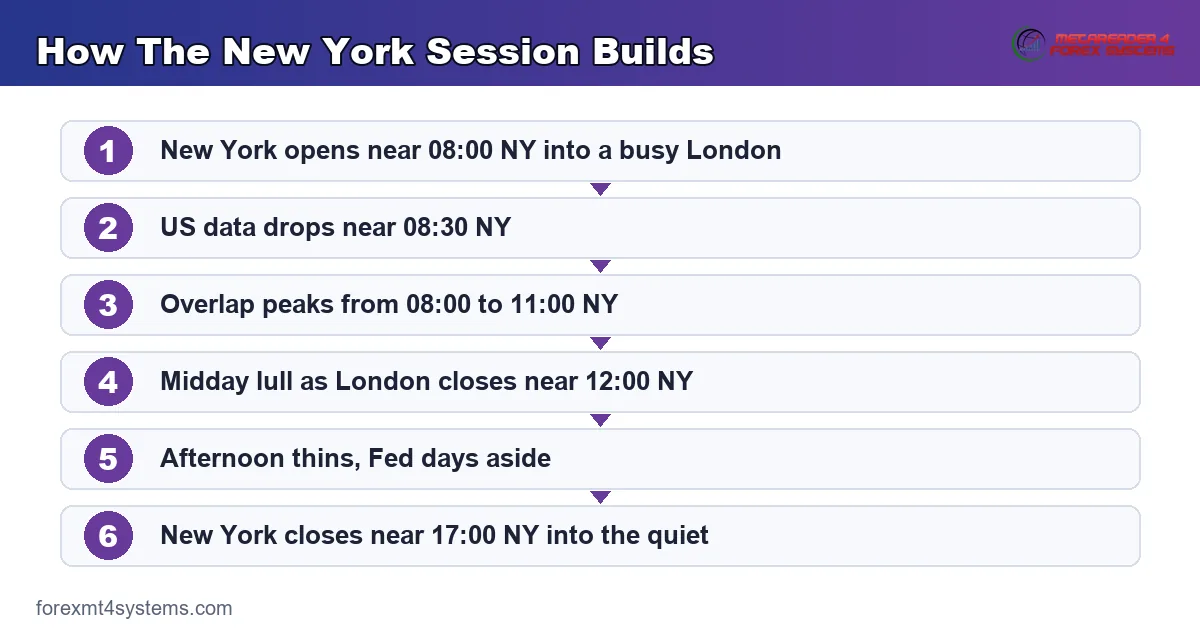
New York opens into a market London already runs. From about 08:00 to 12:00 NY, both hubs trade together, so the overlap floods the market with flow. Because two giant sessions meet here, this window carries the deepest liquidity of the entire day.
The peak sits early, roughly from 08:00 to 11:00 NY. US data drops into an already busy market, so a surprise finds plenty of fuel. So the first three hours of New York usually print the session’s biggest and cleanest moves.
Tight spreads sweeten the window too. Because both hubs bring buyers and sellers, the gap between bid and ask narrows, so each trade costs a little less. So the overlap gives a trader both stronger moves and cheaper entries at the same time.
How The Overlap Shapes The Day
The overlap often confirms or breaks the London trend. When a London move survives the 08:00 NY join, American flow can extend it for hours. When New York pushes the other way, the morning trend can stall and reverse instead.
So the join is a decision point, not just a busy hour. Traders watch how price behaves as the Americans arrive, since that reaction hints at the afternoon. To study the European side of this handoff, see our guide to the London trading session.
Volatility runs high in these hours, so size your stops for it. A stop that fits the calm afternoon may be far too tight at the open. Because the average move grows during the overlap, sizing your risk from the busy-hour range keeps a normal swing from stopping you out early.
Which Pairs Lead In New York
Dollar pairs rule the session, since US flow drives them directly. EUR/USD, GBP/USD, USD/JPY, and USD/CAD all see heavy trade during New York hours. Because the dollar leads, a strong US report can move all four at once.
USD/CAD earns a special note. Because Canada shares the American time zone and trades oil, it often moves on US and energy news together. So a trader watching the New York session keeps an eye on the loonie alongside the euro and the pound. To see why dollar pairs carry such flow, our guide to the major currency pairs explains their liquidity edge.
USD/JPY deserves a mention too. The yen reacts to shifts in US bond yields, so a strong American report can push the pair quickly. Because rate expectations drive this move, USD/JPY often tracks the same data that steers the dollar elsewhere.
A Worked Example Through A New York Day
Picture a typical weekday to see the rhythm. New York opens near 08:00 NY with London already busy, so EUR/USD trades actively around 1.14. The market waits for the 08:30 NY data with a coiled feel.
Then the report lands. A soft US inflation print hits at 08:30 NY, so the dollar slips and EUR/USD jumps forty pips within minutes. Because the overlap runs deep, the move extends cleanly rather than stalling on thin flow.
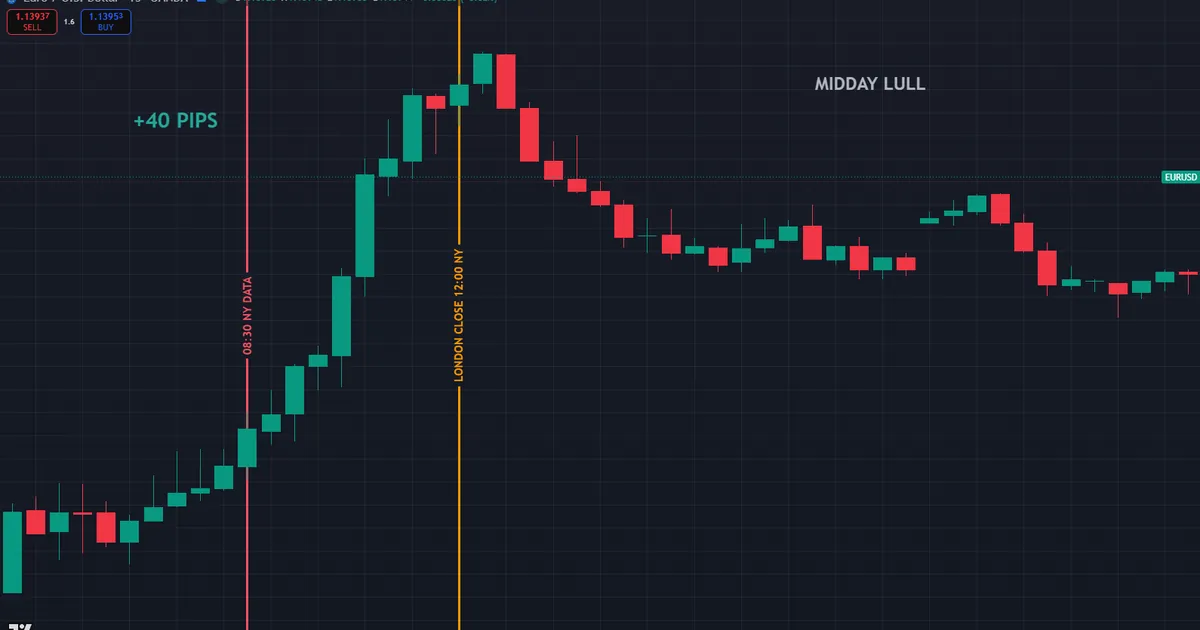
Now the day settles. By the 11:00 NY hour, the burst cools, and price drifts into a tighter range. As London closes near 12:00 NY, the afternoon turns quiet, so late trades need patience and smaller targets.
Notice the shape of the whole day. One clean burst near the open, then a long slow drift, so most of the action packs into a few hours. Because the pattern repeats, a trader who plans for it wastes little time on the sleepy afternoon.
Now read the reverse case. If the inflation print had come in hot, the dollar would firm instead, so EUR/USD might drop forty pips rather than climb. Because the dollar sits on one side of the pair, the same report swings the quote either way depending on the number.
To turn any pair and stake into your account currency, our free currency converter handles the maths in a click. So you always know what a New York move means in the money you actually hold.
Download the complete indicator database
Put these concepts on your charts. One email unlocks the full library of 1,380+ indicators with compiled MT4 and MT5 files, plus my TradingView scripts. No paywall, no spam, unsubscribe any time.
Get free access to my indicator database
One email unlocks 1,380+ free MT4, MT5 and TradingView indicators — the complete library. No single-tool download; you get the whole database.
How To Trade The New York Session
The session rewards a plan built around the calendar. Because US data drives the early hours, knowing the schedule matters as much as reading the chart. So build a routine that respects both the clock and the news.
Trade The Overlap, Rest The Afternoon
The deepest flow runs from 08:00 to 11:00 NY, so focus your best ideas there. Because the overlap moves the most, a trader who works only this window often does more with less screen time. So treat the quiet afternoon as rest, not opportunity.
Then step back as London closes. When the crowd leaves near 12:00 NY, spreads widen and moves chop. Because the edge lives in the busy hours, chasing the thin afternoon usually gives back the morning’s gains.
Respect The 08:30 Data Drop
The first big release often lands at 08:30 NY. So a trade opened just before it can lurch the wrong way in a heartbeat. Instead, note the report in advance, then either flatten before it or wait for the print to land and the dust to settle.
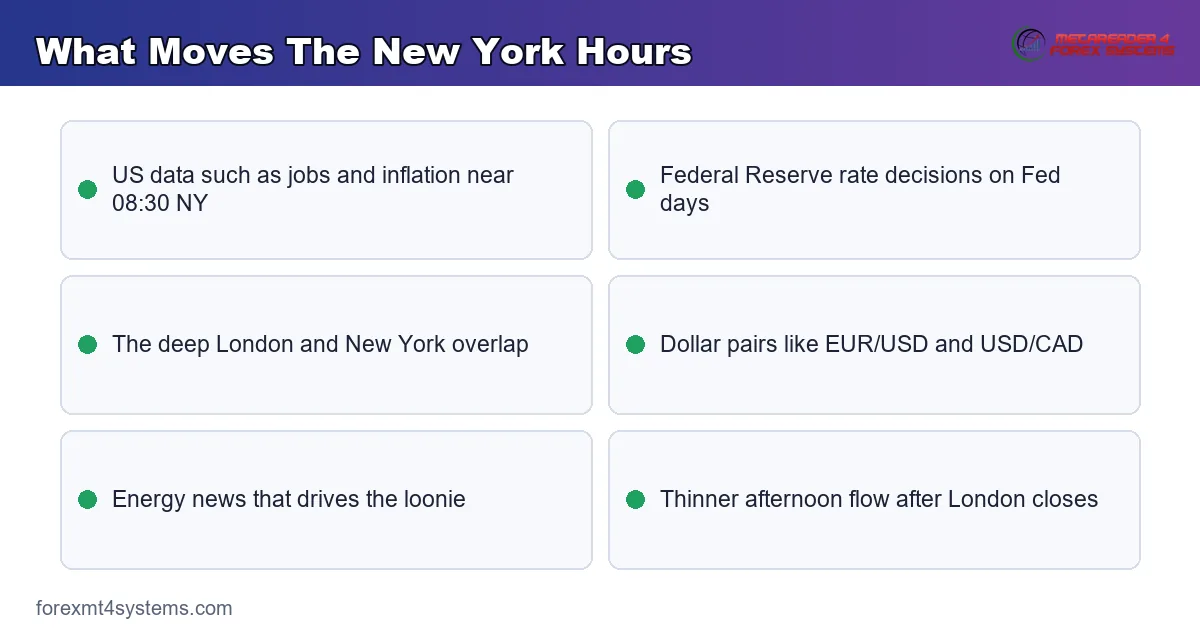
Read the reaction, not just the number. Sometimes price spikes, then fully reverses within minutes. Because the first candle can mislead, a trader who waits for a clear direction after the news avoids the worst of the whipsaw.
Plan Around Fed Days
Fed decision days sit in a class of their own. The announcement usually arrives in the afternoon, so a normally quiet hour can erupt. Because the dollar can move hard in seconds, many traders reduce size or stand aside around the release.
Common Mistakes In The New York Session
The New York session looks straightforward, yet the same errors catch new traders again and again. Most come from ignoring the calendar or the clock, and the fixes take only a moment.
Chasing The News Spike
The 08:30 NY release often prints a huge first candle, and it tempts a rushed entry. Yet that candle can whip both ways as the market digests the number. So let the first move settle, then trade the clearer direction that follows.
Trading The Dead Afternoon
After London closes near 12:00 NY, the market thins right out. So a trader who forces trades here fights wide spreads and choppy price. Instead, plan your best ideas for the overlap, and let the quiet afternoon pass.
Ignoring The Fed Calendar
A Fed decision can turn a calm afternoon violent. When a trader overlooks the date, a routine position can face a sudden lurch. So mark the Fed days in advance, then size down or step aside around the announcement.
Forgetting Daylight Saving
New York and London shift their clocks on different dates. So the overlap can drift by an hour twice a year. Confirm the current session times with a live tool before you rely on a fixed hour.
Overtrading The Open
The busy open tempts a flurry of trades. Yet quantity rarely beats quality, so a scattered approach bleeds cost. Instead, pick one or two clean setups in the overlap, and let the rest of the noise pass by.
Reading Every Spike As A Trend
A news spike is not always a trend. Price can jump on a headline, then drift back as the shock fades. So wait for follow-through beyond the first candle before you treat a move as the real direction.
New York Session Trading Styles
The session suits several styles, so match your approach to the hours you can trade. A news trader loves the data drop, while a trend trader may prefer the overlap. So there is no single right method; there is only the one that fits the flow and your schedule.
The News Trader
News traders build their day around 08:30 NY. Because the big releases land then, a sharp read on the number can pay fast. Yet the spread often widens for a few seconds, so a market order can fill far from the screen price.
So the smart news trader waits a beat. Rather than chase the first tick, they let the initial spike settle, then join the clearer move. Because the follow-through often lasts longer than the spike, that patience turns a wild moment into a workable trade.
The Overlap Trend Trader
Some traders skip the data gamble and ride the overlap trend. By the 09:00 NY hour, the day’s direction is often clearer, so they join a move already in flow. Because they trade with proven momentum, their entries carry less guesswork.
Then they trail the stop as the trend runs. When the overlap fuels a clean push, a simple trailing rule locks in the move. So a continuation trader lets the deep hours do the work while risk stays tightly managed.
The Afternoon Range Trader
A few traders prefer the quiet after London leaves. Once flow thins past 12:00 NY, price often settles between clear levels, so a fade at the edges can work. Because the afternoon lacks a strong drive, small targets suit it better than big ones.
Discipline matters most for this style. When a Fed decision looms, the afternoon calm can shatter, so the range trader must know when to stand aside. So this approach demands a firm read of the calendar as much as a plan to enter.
Quick-Reference: The New York Session At A Glance
Keep this short list beside your chart. A quick check here points you to the right hours, so run through it before the open.
- New York opens near 08:00 NY and closes near 17:00 NY.
- US data usually drops near 08:30 NY.
- The overlap with London peaks from 08:00 to 11:00 NY.
- EUR/USD, GBP/USD, USD/JPY, and USD/CAD lead.
- Flow thins after London closes near 12:00 NY.
- Fed decisions can move the afternoon hard.
- Daylight saving can shift the overlap by an hour.
Edge Cases And Pitfalls
Even a busy session bends on special days. Afternoon reversals are the first case. When a morning trend runs on news alone, it can unwind once the overlap ends, so a strong open sometimes gives way to a weak close.
Watch the chart below for that pattern. Price rallies hard on the 08:30 NY data, then rolls over through the quiet afternoon as London leaves. Because the move ran on a single report, it lacked the flow to hold once the crowd thinned.
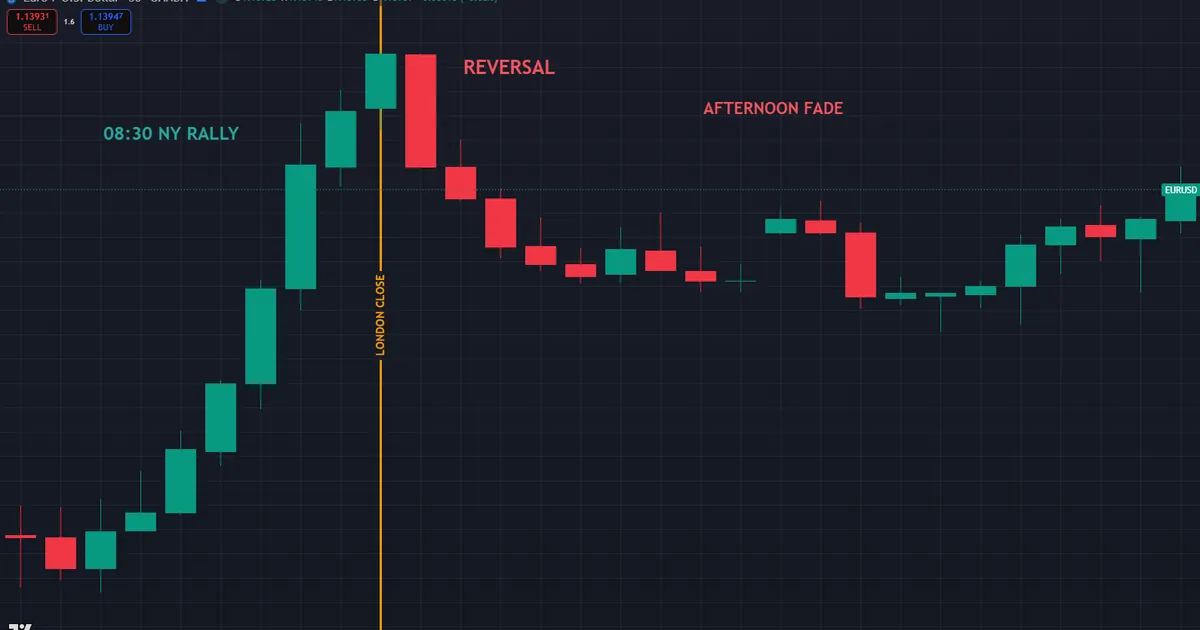
When The Session Turns Quiet
Holidays drain the New York hours too. When Wall Street takes a break, US flow never arrives, so the overlap underwhelms and the afternoon barely moves. Because the crowd stays home, spreads stay wide even at the usual peak.
Summer weeks can dull the tape as well. During light-staff periods, the open lacks its usual punch, so trends stall and reverse more often. So a trader should temper expectations when the calendar hints at thin participation.
The Friday close brings its own quirk. As New York winds down for the weekend, big players square positions, so late moves can turn erratic. Because a weekend gap can skip past a stop, many traders flatten before the close rather than carry risk over the break.
The Open As A Kill Zone
Traders who study smart-money ideas call the New York open a kill zone. Our concept guide to the New York kill zone explores how large players may hunt stops around the data drop. So the same open that offers clean moves can also spring traps.
Read that idea as a caution, not a fear. Because big orders may sweep an obvious level before the real move, waiting for confirmation beats front-running a spike. So the kill-zone lens reinforces the same rule: let a level close before you trust it.
Related Concepts To Study Next
The New York session connects to a web of basics, and a few deserve your next reading hour. Start with the full map of the trading day by reading our guide to the forex trading sessions, which shows how New York fits the wider chain. Then learn how trading costs shift by hour with our guide to the spread in forex.
Two more guides round out the picture. Because position size sets your risk in any session, read our overview of lot size in forex. Then learn how the smallest price step works with our guide to the pip in forex. So New York stops being a blur of candles and starts telling a clear story.
FAQ
What is the New York trading session?
The New York trading session covers the American trading day, centred on Wall Street. It opens near 08:00 New York time and runs to about 17:00 NY. Because the US dollar anchors most global trade, its flow touches every major pair.
What time does the New York session open?
New York opens near 08:00 NY and closes near 17:00 NY. The busiest hours run from 08:00 to 11:00 NY, when the London overlap and US data combine. Daylight saving can shift the exact hour, so confirm the current time with a live tool.
Why does US data move the market so much?
The dollar sits in every major pair, so a US surprise moves them all at once. Reports such as jobs and inflation usually drop near 08:30 NY, right after the open. So the first hour often carries the day’s sharpest moves.
When is the London and New York overlap?
The overlap runs from about 08:00 to 12:00 NY, with the peak from 08:00 to 11:00 NY. Two hubs trade together, so liquidity runs deep and spreads run tight. Many day traders build their whole plan around this window.
Which pairs are best in the New York session?
Dollar pairs lead, so EUR/USD, GBP/USD, USD/JPY, and USD/CAD see the heaviest trade. USD/CAD often moves on US and energy news together. Because the dollar drives the hours, these pairs offer the strongest flow.
Is the New York session good for beginners?
The overlap offers strong flow, yet the news drops and Fed days add risk. So a beginner should wait for a move to settle rather than chase the first spike. Manage risk on every trade. Results are not guaranteed; past performance is not indicative of future results.
External references
- For background on this concept, see Wall Street on Wikipedia.
- For broader market context, see Foreign exchange (FX) at Corporate Finance Institute.
- The dollar’s standing as the world’s main currency, which is what gives those decisions their reach, is measured in The International Role of the U.S. Dollar at the Federal Reserve.

About the author
Written by Dominic Walsh, a Forex trader and MT4/MT5 indicator, Expert Advisor and script developer. Every tool on forexmt4systems.com is tested on live charts before release and ships with ready-to-use compiled MT4 (.ex4) and MT5 (.ex5) files. Learn more about the trader and developer behind this site.
How we build, test and correct every tool: Editorial & Testing Policy. Trading carries risk; see the disclaimer.