
Every leveraged trade starts with one question: what is margin in forex, and why does your broker hold part of your cash the second you click buy? Margin is that held amount. Think of it as a good-faith deposit, not a charge you pay away.
This guide answers what is margin in forex in plain steps. So by the end, you will know how a broker works out the required margin, how used margin and free margin differ, and how to keep enough spare cash to hold every trade open.
What Is Margin in Forex, in Plain Terms
Margin is the slice of your account a broker holds while a trade stays open. It backs the position on your behalf. When you close the trade, that slice returns to you in full.
So margin is not a cost, and it is not a fee. You do not hand it over for good. Instead the broker parks it as collateral, then hands it straight back once the position ends.
Here is the mental picture. You want to control a large position with a small deposit. The broker lends you the rest and asks for that deposit as security. Because your cash sits behind the trade, the broker can trust you to cover small moves against you.
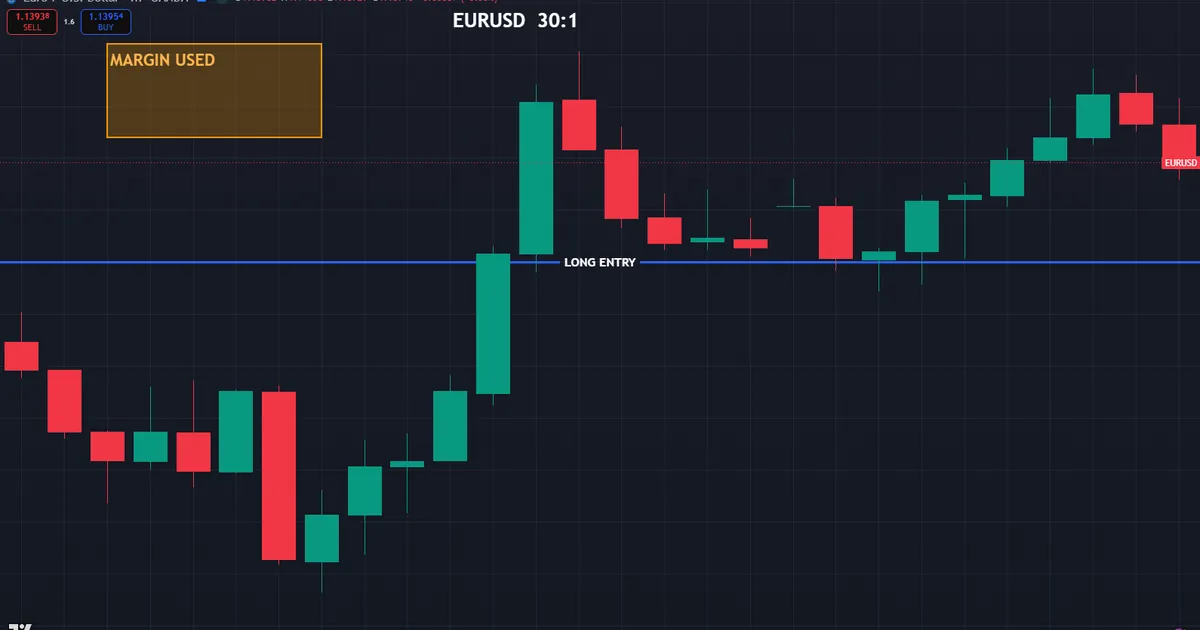
Notice how this ties into leverage. Leverage lets a small deposit control a big position, and margin is the size of that deposit. So the two ideas are two sides of one coin. Our short guide to leverage in forex walks through the other side in the same plain style.
A Simple Deposit Analogy
Picture renting a flat. The landlord asks for a deposit before you move in, and that deposit sits untouched while you live there. You get it back when you leave in good order. Margin works the same way, only the broker holds it and the trade is your tenancy.
So the deposit shields the other party against small damage. In trading, that damage is a modest loss on your position. Because your margin covers it, the broker rests easy lending you the rest of the trade value. Once you close cleanly, the deposit comes home.
How to Work Out the Required Margin
The math behind margin is simple once you see the two inputs. You need the notional value of the trade and the leverage your broker offers. Then one short division gives you the number.
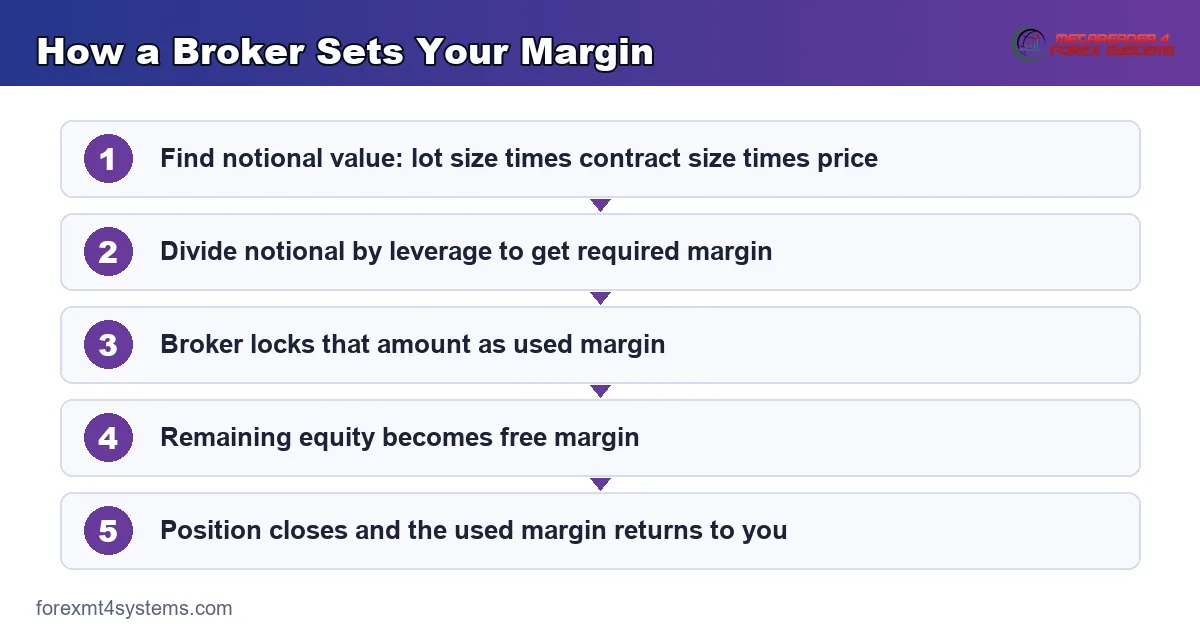
- Find the notional value. Multiply the lot size by the contract size, then by the current price. One standard lot of EURUSD is 100,000 euros, so at a price near 1.14 the notional runs to about 114,000 dollars.
- Divide by the leverage. Required margin equals notional value divided by leverage. At 30 to 1 leverage, 114,000 divided by 30 gives roughly 3,800 dollars.
- The broker holds that amount. That 3,800 dollars becomes your used margin, locked while the trade runs.
- The rest stays free. Whatever equity remains after used margin turns into free margin, ready for new trades or open losses.
- Everything returns on close. When you shut the position, the broker releases the used margin back to your balance.
So the formula reads: required margin equals notional value divided by leverage. Change the leverage and the margin changes with it. At 100 to 1, that same lot needs only about 1,140 dollars. The concept flow below traces the deposit from click to close.
One point trips up newcomers. Higher leverage shrinks the margin you must post, yet it never shrinks the size of the trade. So a smaller deposit still controls the full 114,000 dollars, which means gains and losses stay just as large.
Why the Number Moves With Price
Margin is not frozen the instant you open a trade. Because the notional value leans on the live price, a shift in price nudges the required margin too. So as EURUSD climbs, the notional grows, and the broker may hold a touch more.
The change is usually small for a modest move. Still, it matters on a big swing or a large position. Because of this, a good habit is to leave a buffer rather than post the bare minimum. That cushion keeps a rising margin from squeezing your free margin.
Standard, Mini, and Micro Lots
Lot size drives the notional, so it drives the margin too. A standard lot is 100,000 units of the base currency. A mini lot is 10,000 units, and a micro lot is just 1,000.
So the margin scales in the same steps. If a standard lot of EURUSD needs about 3,800 dollars at 30 to 1, a mini lot needs near 380 dollars, and a micro lot needs about 38. Because of this, smaller lots let a modest account hold a trade without locking much cash. Beginners often start on micro lots for exactly that reason.
Used Margin Versus Free Margin
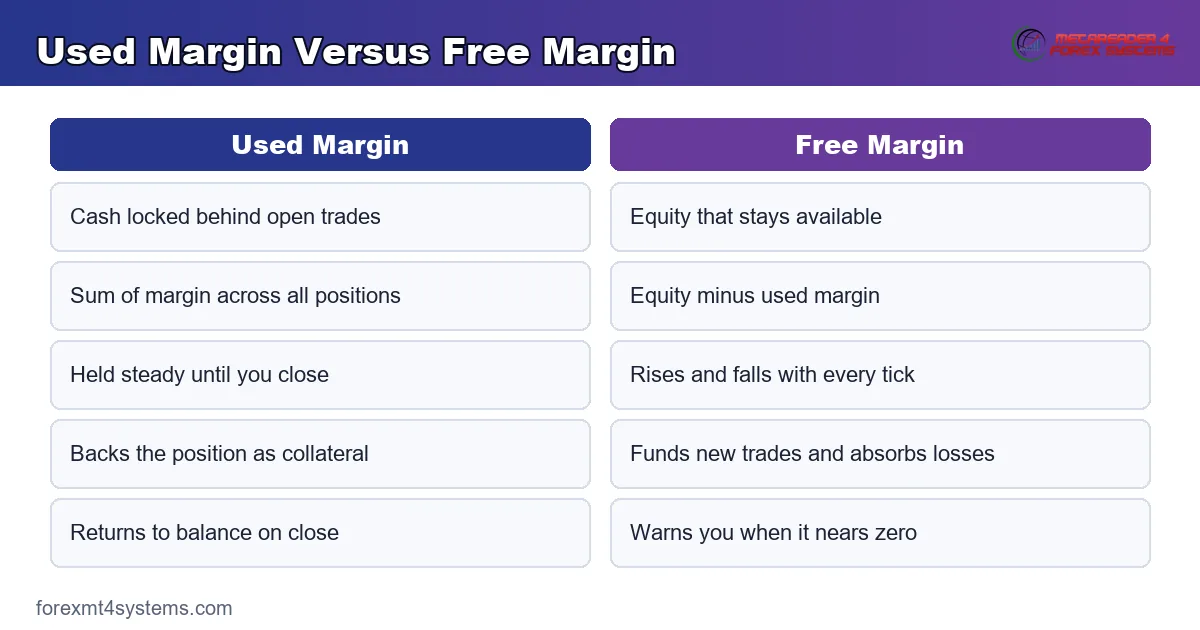
Two words cause most of the confusion here, so let us split them cleanly. Used margin is the cash locked behind your open trades. Free margin is everything else in your account that stays available.
Start with used margin. Every open position carries its own required margin, and the broker sums them all. That total is your used margin, and it grows with each new trade you open.
Then come to free margin. Free margin equals your equity minus your used margin. It plays two roles. First, it funds fresh trades. Second, it absorbs the floating losses on trades you already hold.
Equity is the third piece that ties them together. Your equity is your balance plus or minus the profit or loss on open trades. So a winning trade lifts equity and free margin, while a losing one drags both down. Our note on equity in forex unpacks that live figure in full.
A Quick Number Check
Picture an account holding 5,000 dollars with no trades open. Here every dollar sits as free margin, because used margin reads zero. So you can deploy the whole balance if you choose.
Now open one trade that needs 760 dollars of margin. Used margin jumps to 760 dollars, and free margin drops to 4,240 dollars. Because equity has not moved yet, the two simply trade places on the ledger.
Why Free Margin Is Your Real Runway
Balance gets the attention, yet free margin is what truly holds a trade open. It is the runway a losing position can travel before trouble starts. So a large balance with little free margin is weaker than it looks.
Watch free margin the way a pilot watches fuel. Each open trade burns a little, and each floating loss burns more. Because a full tank buys time, keeping free margin high lets a trade recover from a dip rather than close at the worst moment. That single habit separates calm accounts from stressed ones.
Margin at a Real Broker
Numbers feel concrete once you place them in a live account, so walk through a full example. Say you hold 5,000 dollars and want a 0.2 lot position in EURUSD near 1.14.
First size the notional. A 0.2 lot equals 20,000 euros, which sits near 22,800 dollars at that price. Then divide by 30 to 1 leverage, and the required margin lands around 760 dollars.
So the broker holds 760 dollars as used margin. That leaves 4,240 dollars of free margin to cushion the trade and open more. The chart below marks the position with a MARGIN USED callout so the deposit is easy to picture.
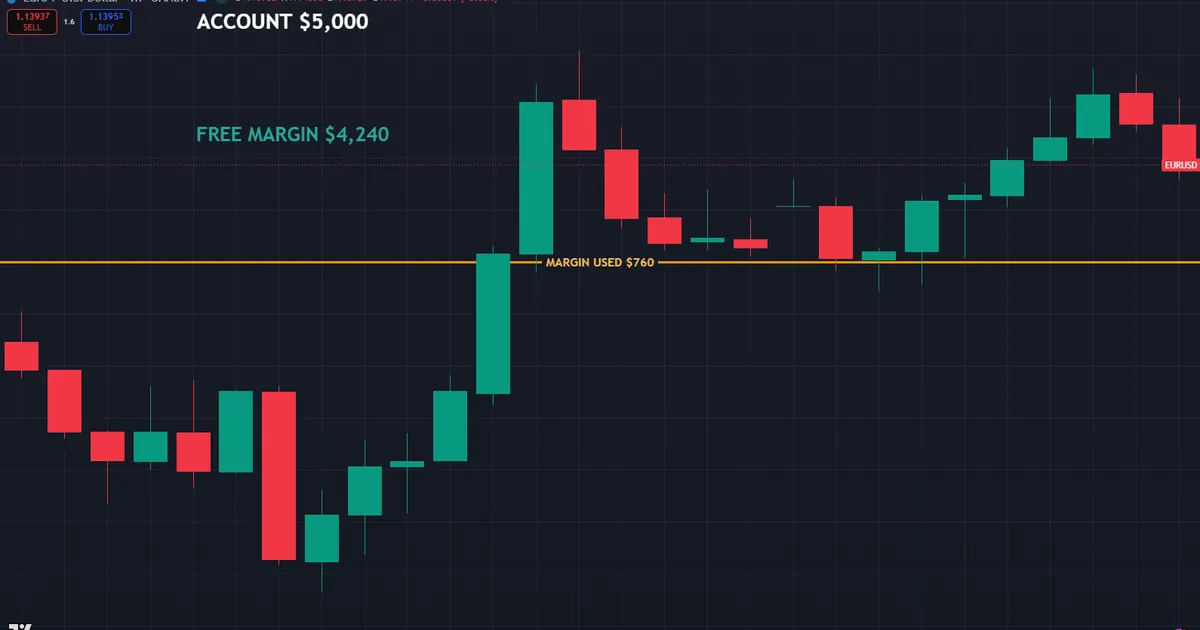
Watch what a move does next. If the trade slips 50 dollars into the red, your equity falls to 4,950 dollars. Because used margin stays at 760 dollars, free margin now reads 4,190 dollars. So the loss eats into free margin first, exactly as it should.
Then flip it to a gain. A 50 dollar profit lifts equity to 5,050 dollars and free margin to 4,290 dollars. So free margin breathes in and out with every tick, while used margin holds steady until you close. Our free margin calculator runs these same sums for any pair, lot, and leverage in a second.
Leverage Limits Shape the Deposit
Brokers do not all offer the same leverage, and rules vary by region. Some cap majors at 30 to 1, while others reach far higher. Because the cap sets your divisor, it sets the margin you must post.
So the same 0.2 lot can need 760 dollars at one broker and far less at another. Higher leverage frees up cash, yet it tempts you to over-trade that spare room. To size a position against your own limit, our position size calculator keeps the risk in check first.
Reading the Margin Line on Your Platform
Your trading platform shows these numbers live, so learn where they sit. Most terminals list balance, equity, used margin, free margin, and margin level in one row. So a single glance tells you the health of the account at any moment.
Check that row before and after every trade. Before, it confirms you hold enough free margin to open safely. After, it shows how much cushion the new position left behind. Because the figures update tick by tick, they turn an abstract idea into a dashboard you can act on.
How Margin Differs by Pair
Not every pair asks for the same margin, even at one leverage setting. The notional value drives the number, and that value shifts with the price and the base currency. So a pair quoted at a high price ties up more cash per lot.
Take a yen pair as a contrast. One standard lot still controls 100,000 units of the base currency, yet the conversion back to dollars changes the notional. Because the base currency sets the unit count, always price the trade in your account currency before you trust a margin figure.
Majors, Minors, and Metals
Majors like EURUSD usually enjoy the deepest liquidity, so brokers often grant the highest leverage on them. That means a lower margin per lot. Minor pairs and exotic ones can carry stricter limits, which lifts the deposit you must post.
Metals sit in their own bracket. Gold near 4,100 dollars an ounce moves fast, so brokers tend to set lower leverage and a heavier margin. So check the margin on gold before you size it like a currency pair, since the deposit can surprise you. Our note on major currency pairs covers which pairs trade tightest.
Download the complete indicator database
Put these concepts on your charts. One email unlocks the full library of 1,380+ indicators with compiled MT4 and MT5 files, plus my TradingView scripts. No paywall, no spam, unsubscribe any time.
Get free access to my indicator database
One email unlocks 1,380+ free MT4, MT5 and TradingView indicators — the complete library. No single-tool download; you get the whole database.
Common Margin Mistakes to Avoid
The idea is simple, yet the same slips repeat across new accounts. Most come from treating margin as a cost or from spending free margin down to nothing. The graphic below sets the errors side by side, and the fixes follow.
Treating Margin as a Fee
The first slip is reading margin as money you lose. You do not. The broker only parks it, then returns it on close. So track margin as locked cash, not as an expense, and your account math will finally add up.
Using Every Dollar of Free Margin
New traders often load trades until free margin nears zero. That leaves no room for a normal dip. So keep a healthy slice of free margin spare, and let it absorb the swings that every open trade brings.
Forgetting Losses Shrink Free Margin
Floating losses pull equity down, and free margin falls with it. Many traders watch only the price and miss this quiet drain. Instead glance at free margin often, since it warns you long before a position turns critical.
Reading High Leverage as Free Money
A tiny margin can feel like a bargain, yet the trade size never shrank. So a small deposit still controls a large position, and the losses stay full sized. Size by risk, not by the margin the broker happens to ask for.
Ignoring the Rollover on Margin
Margin can shift as price moves or as a broker adjusts its rules around news. A position that felt safe can tighten overnight. So review your open margin before big events, and never assume the number you saw at entry holds forever.
Copying a Margin Figure Across Brokers
Margin numbers do not travel between brokers. Each firm sets its own leverage caps, its own instrument rules, and its own margin on metals. So a deposit that worked at one broker can differ at the next.
Always read the margin your own platform reports, then. A quick check on a demo account shows the exact figure before you risk real cash. Because the rules vary by region and account type, that habit spares you a surprise on your first live trade.
Margin Quick-Reference Numbers
Keep this short list beside your platform while the habit sets in. A few seconds of checking here saves a painful surprise later. So read each line before you commit real cash to a trade. Print it if that helps, and glance at it until the math feels natural.
- Notional value equals lot size times contract size times price.
- Required margin equals notional value divided by leverage.
- One standard lot of EURUSD near 1.14 carries about 114,000 dollars of notional.
- At 30 to 1 leverage, that lot needs roughly 3,800 dollars of margin.
- Used margin is the sum of margin across all open trades.
- Free margin equals equity minus used margin.
- Equity equals balance plus or minus floating profit or loss.
Edge Cases That Catch Traders Out
Study the tricky moments as hard as the simple ones. Here is one that stings. A trader posts the bare minimum margin, then a fast move pushes the price the wrong way and the buffer vanishes.
As the loss grows, equity slides toward the used margin figure. Free margin drops through zero, and the account enters the margin-call zone. The chart below marks that slide, with EQUITY falling toward the MARGIN USED line as the cushion thins.
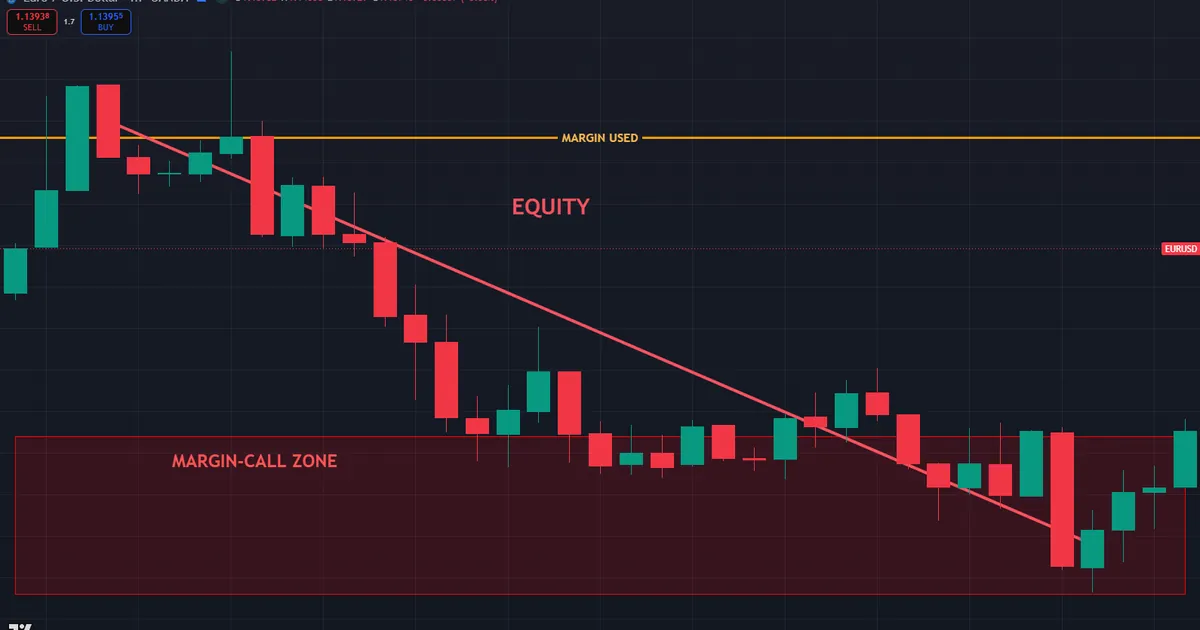
So what went wrong? The trader confused a small deposit with a small risk. Because the position stayed large, a routine move was enough to drain the free margin entirely. Our guide to margin level in forex shows the exact percentage that flags this danger early.
Margin Around News Events
Respect the calendar when margin sits tight. Around a central-bank decision, brokers can widen spreads and lift margin needs for a while. So a position that fit your account yesterday may not fit during the release.
Give yourself room before scheduled news, then. Trim size or add funds so a temporary margin bump does not tip you into trouble. Because these changes pass, a small buffer usually carries you through the storm.
Adding Funds Versus Cutting Size
When free margin runs thin, you hold two clean choices. You can add funds to lift equity, or you can cut position size to lower used margin. Both push the account back toward safety, yet they suit different moments.
Adding funds makes sense when the trade idea still holds and only the buffer looks tight. Cutting size makes sense when the market has turned and you want less risk on the table. So decide which lever fits before the pressure builds, rather than during a fast move against you.
Related Concepts to Study Next
Margin connects to a small web of account terms, and a few deserve your next reading hour. The percentage that measures your safety cushion comes first, and the point where trades close by force sits right beside it. Both build directly on the used and free margin split you just learned.
For the wider picture, our guides to margin call and stop out and to broader forex trading strategies frame margin inside real risk control. So master this deposit idea first, then let each partner term sharpen how safely you size every trade you take.
FAQ
What is margin in forex?
Margin in forex is the deposit your broker holds to open and keep a leveraged trade running. It is collateral, not a fee, so the broker returns it in full when you close the position. You work it out by dividing the notional value of the trade by your leverage.
Is margin the same as leverage?
No, but the two link tightly. Leverage is the ratio that lets a small deposit control a large position, while margin is the size of that deposit. Higher leverage means a smaller required margin for the same trade, though the trade size stays the same.
What is the difference between used and free margin?
Used margin is the cash locked behind your open trades, summed across all of them. Free margin is your equity minus that used margin. Free margin funds new trades and absorbs the floating losses on trades you already hold.
Does margin change after I open a trade?
It can. Because the required margin leans on the live price, a large price move nudges it up or down. Brokers may also raise margin needs around major news. So leaving a buffer above the bare minimum keeps a shift from squeezing you.
What happens if my free margin runs out?
Once free margin falls through zero, your account enters the margin-call zone. The broker may warn you to add funds, and if the slide continues it can close trades to protect itself. Keeping spare free margin is the simplest way to avoid that outcome.
Can I lose more than my margin?
On most retail accounts, no. Brokers in many regions offer negative-balance protection, which stops your account from falling below zero. The stop-out process closes trades before losses run past your equity. Even so, you can lose the full margin and more of your balance, so size every trade with care and keep a buffer.
How much margin should I keep spare?
There is no single number, since it depends on your pair, size, and style. A common approach is to use only a modest share of free margin at once and hold the rest as a cushion. This gives every trade room to breathe through normal swings. Results are not guaranteed; past performance is not indicative of future results.
External references
- For background on this concept, see Margin at BabyPips.
- For broader market context, see Buying on margin at Investopedia.

About the author
Written by Dominic Walsh, a Forex trader and MT4/MT5 indicator, Expert Advisor and script developer. Every tool on forexmt4systems.com is tested on live charts before release and ships with ready-to-use compiled MT4 (.ex4) and MT5 (.ex5) files. Learn more about the trader and developer behind this site.
How we build, test and correct every tool: Editorial & Testing Policy. Trading carries risk; see the disclaimer.