
The gold pip value confuses more beginners than almost any other number in trading. Gold moves in big dollar swings, and brokers quote it in different ways, so the same trade can look like a few pips or a few thousand.
This guide makes the gold pip value simple and concrete. You will see how brokers quote XAUUSD, how the contract size sets the money per move, and how one honest anchor keeps your math right no matter what your platform calls a pip.
Gold Pip Value Explained
Gold trades on your platform as XAUUSD, the price of one ounce of gold in dollars. When gold sits near 4100, that number means about four thousand one hundred dollars for a single ounce.
A pip on gold is the smallest listed price step, and its size depends on your broker’s digits. On a two-decimal quote, one pip is a move of one cent in the price. On a three-decimal quote, the last digit becomes a pipette, a tenth of a pip.
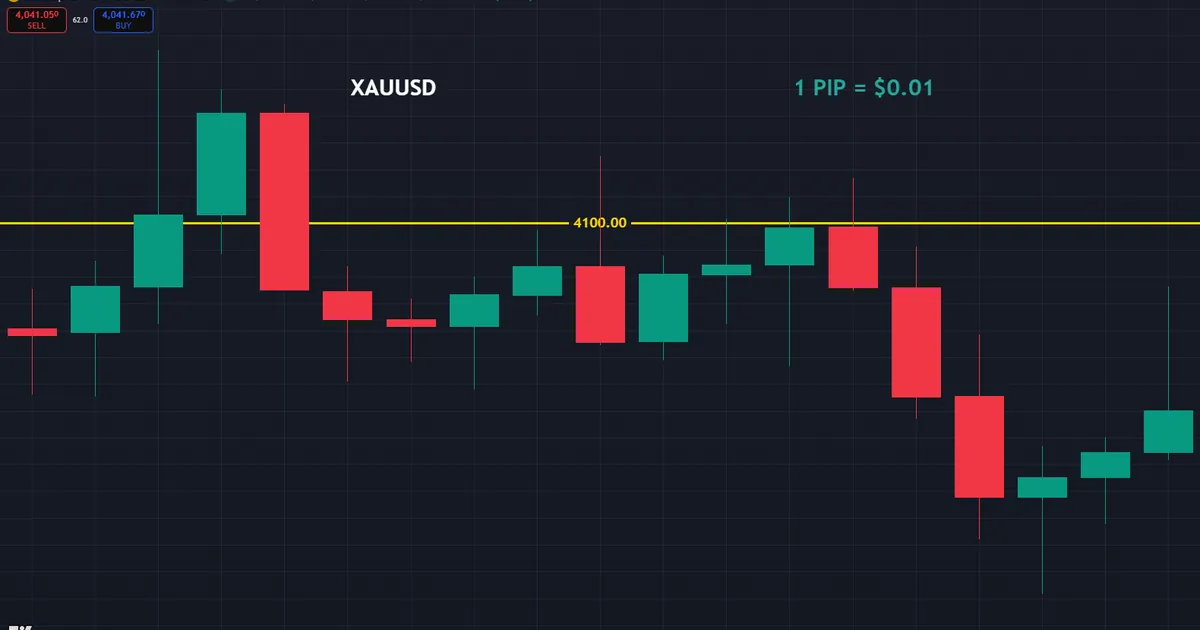
So the first job is to read your own price feed. Count the decimals your broker shows on XAUUSD before you judge any move. Because the digits set the pip, that quick check settles half the confusion right away. A two-decimal feed and a three-decimal feed simply count the same move in different steps.
How Brokers Quote Gold
Brokers do not agree on a single gold convention. Some show two decimals, so 4100.00 is a full price and 4100.01 is one pip higher. Others show three decimals, adding a pipette digit on the end for finer pricing.
Traders add their own slang on top. Many call a full one dollar move a point, so a jump from 4100 to 4101 counts as one point. Others loosely call that same dollar move ten pips, treating each ten cents as a pip.
None of these are wrong, but they clash. So a move described as one hundred pips by one trader may be ten points to another. That is why a shared anchor, rather than a shared label, keeps everyone honest on gold.
The Contract Size Behind Gold Lots
Gold lots do not count currency units like forex lots. Instead, a gold lot counts ounces of metal, which changes the whole pip value picture. So the familiar forex figures do not carry over.
On most brokers a standard gold lot is one hundred ounces. A mini lot is ten ounces, and a micro lot is one ounce. So a 0.10 lot on gold controls ten ounces, and a 0.01 lot controls a single ounce.
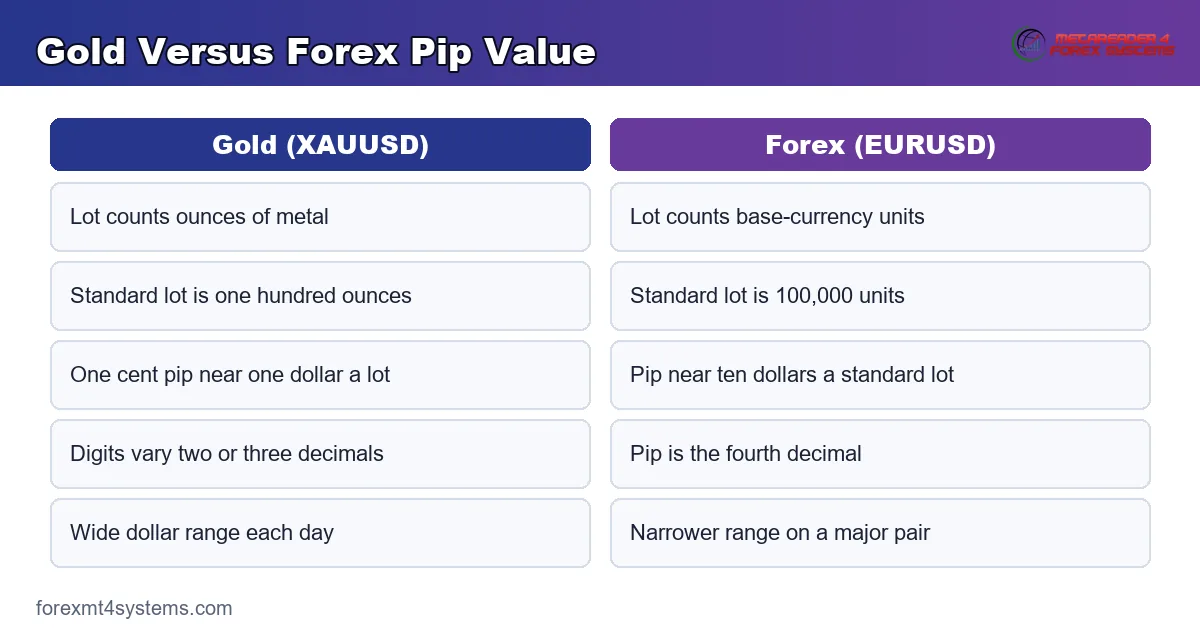
This ounce count is the honest anchor for all the math. Your profit or loss always equals the ounces you hold times the dollar move in the price. Because that rule never bends, it survives every naming argument about pips and points. So keep the ounce count in mind, and the dollar figures will always add up.
Why Ounces Beat Pips as an Anchor
Pips shift with the broker, yet an ounce is always an ounce. So counting ounces removes the guesswork that pip labels create. A trader who thinks in ounces never wonders whether a move meant cents or dollars.
The method is refreshingly plain. Read how many dollars the price moved, then multiply by your ounces. Because both figures are unambiguous, the answer comes out the same on any platform, whatever it prints for the pip. So the ounce anchor turns a messy question into a single, reliable calculation.
Pip Value by Lot Size on Gold
Take the two-decimal case, where one pip is a one cent move. Multiply the ounces by that one cent to find the pip value.
- Standard lot. One hundred ounces times one cent gives about one dollar a pip.
- Mini lot. Ten ounces times one cent gives about ten cents a pip.
- Micro lot. One ounce times one cent gives about one cent a pip.
Notice the whole-dollar view too. Many traders quote gold in one dollar points, where a standard lot earns about one hundred dollars a point and a micro lot about one dollar. Our free pip value calculator handles either convention for you.
A Gold Pip Value Worked Example
Numbers settle the idea, so trade one example. You buy gold near 4100.00, and you choose a lot size of 0.10, which is ten ounces of metal.
Gold then climbs to 4110.00, a move of ten dollars in the price. Your profit is the ounces times that move, so ten ounces times ten dollars gives one hundred dollars. That single line is the whole calculation, and it never depends on the pip label.
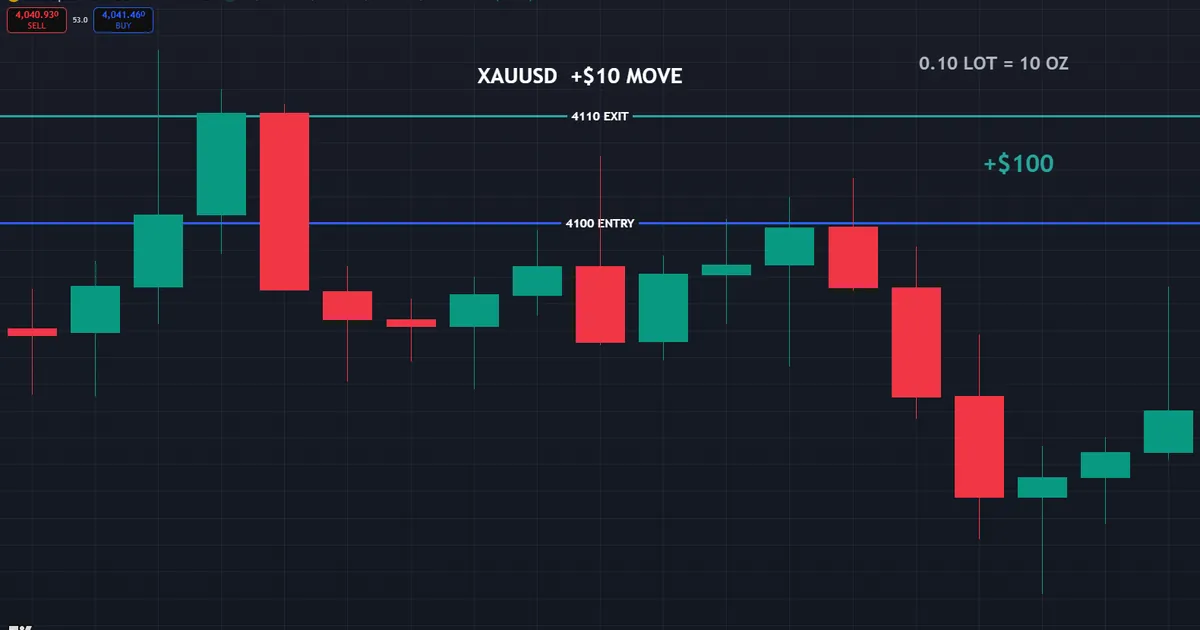
Now check that the pip views agree. In one cent pips, the ten dollar move is one thousand pips at ten cents each, which is one hundred dollars. The anchor and the pip count land on the same figure, exactly as they should. So you can trust either route, as long as you read the dollar move correctly.
Reading the Move Three Ways
The same ten dollar move wears three different labels, so watch them line up. Each label uses a different pip value, yet all three arrive at one hundred dollars.
- One cent pips. One thousand pips at ten cents a pip equals one hundred dollars.
- Ten cent points. One hundred points at one dollar a point equals one hundred dollars.
- One dollar points. Ten points at ten dollars a point equals one hundred dollars.
So the labels are just different rulers for the same distance. The dollars never change, only the way you count the steps. Because of that, the ounce anchor is the safest number to trust on any gold trade.
Download the complete indicator database
Put these concepts on your charts. One email unlocks the full library of 1,380+ indicators with compiled MT4 and MT5 files, plus my TradingView scripts. No paywall, no spam, unsubscribe any time.
Get free access to my indicator database
One email unlocks 1,380+ free MT4, MT5 and TradingView indicators — the complete library. No single-tool download; you get the whole database.
Pips, Points, and Pipettes on Gold
The three words trip up almost every new gold trader. They sound similar, yet each marks a different slice of a price move. Sorting them out once saves a lot of confusion later. Each word points to a different size of move, so the distinction is worth learning early.
One pip on a two-decimal quote is a one cent move. The pipette is the third decimal, a tenth of that pip, on brokers who show it. A point, in common gold slang, is usually a full one dollar move in the price.
Why the Words Matter for Risk
Mixing the words can misstate your risk by a wide margin. A stop set one hundred pips away is one dollar of price on a two-decimal feed, not one hundred dollars. So confirm which unit your platform and your plan use before you place a stop.
The safe habit is to translate everything into dollars of price. Ask how many dollars the stop sits away, then multiply by your ounces. Because dollars of price and ounces never argue, that translation cuts straight through the slang.
A Second Gold Example on a Larger Lot
Scale the idea up to see it hold. You buy gold near 4100.00 at a lot size of 0.50, which is fifty ounces of metal. Gold then rises eight dollars to 4108.00 before you close.
Apply the anchor directly. Fifty ounces times the eight dollar move gives four hundred dollars of profit. The pip label never entered the math, and the trade still resolved to a clean, exact figure.
Checking It Against the Pip Count
Confirm the result through one cent pips for peace of mind. The eight dollar move is eight hundred pips, since each dollar holds one hundred cents. A fifty ounce position is worth fifty cents a pip, so eight hundred pips times fifty cents gives four hundred dollars.
Both roads met at the same place. The ounce anchor and the pip count agreed on four hundred dollars, as they always will. So use whichever feels natural, and lean on the ounce view whenever the pip label looks murky.
Gold Pip Value and Your Account Currency
The worked figures assume a dollar account, since gold quotes in dollars. A euro or pound account needs one more step, because the profit first appears in dollars. So convert the final dollar figure into your own currency at the end.
Take the one hundred dollar gain from the first example on a euro account. Divide one hundred dollars by EURUSD near 1.14, and the profit becomes about eighty-eight euros. The trade did not change, only the currency you read it in. So a euro trader should carry that final step into every gold calculation.
Keeping Gold Math Consistent
The cleanest routine keeps every gold trade in the same account currency. A dollar trader can stop at the ounce anchor, while a euro trader adds the single conversion. Because the extra step is easy to forget, a fixed habit protects the figure.
So decide your account currency once, then apply it to every gold trade you take. That discipline keeps your risk and reward honest, whatever the gold price does through the day.
Why Gold Feels Different From Forex
Gold behaves unlike a currency pair in a few ways worth knowing. Its price is large, its daily range is wide, and a single move can cover many dollars. So the same lot size feels heavier on gold than on a major pair.
Consider a routine day where gold swings thirty dollars. On a 0.10 lot that thirty dollar move is three hundred dollars of profit or loss. A major forex pair rarely hands you that swing on such a small size, which is why gold demands a smaller lot for the same comfort.
The lesson is easy to miss until it stings. Beginners often carry a forex-sized lot onto gold and meet a swing three times larger than expected. So treat gold as its own market, and let the wide range set the size rather than a habit from currency pairs.
Sizing Gold With Care
Because gold ranges wide, a careful trader sizes down to match. A stop on gold often sits several dollars from the entry, which is a large pip count. So the lot must shrink to keep the dollar risk within your plan.
Run the ounce anchor to stay safe. Decide the dollars you can lose, divide by the stop in dollars of price, and that gives your ounces. Then translate the ounces into a lot, and you have sized gold without touching a single pip label.
Common Gold Pip Value Mistakes
Gold invites a handful of repeat errors, most of them rooted in the pip confusion. The fixes sit under the graphic below, and each one traces back to the ounce anchor.
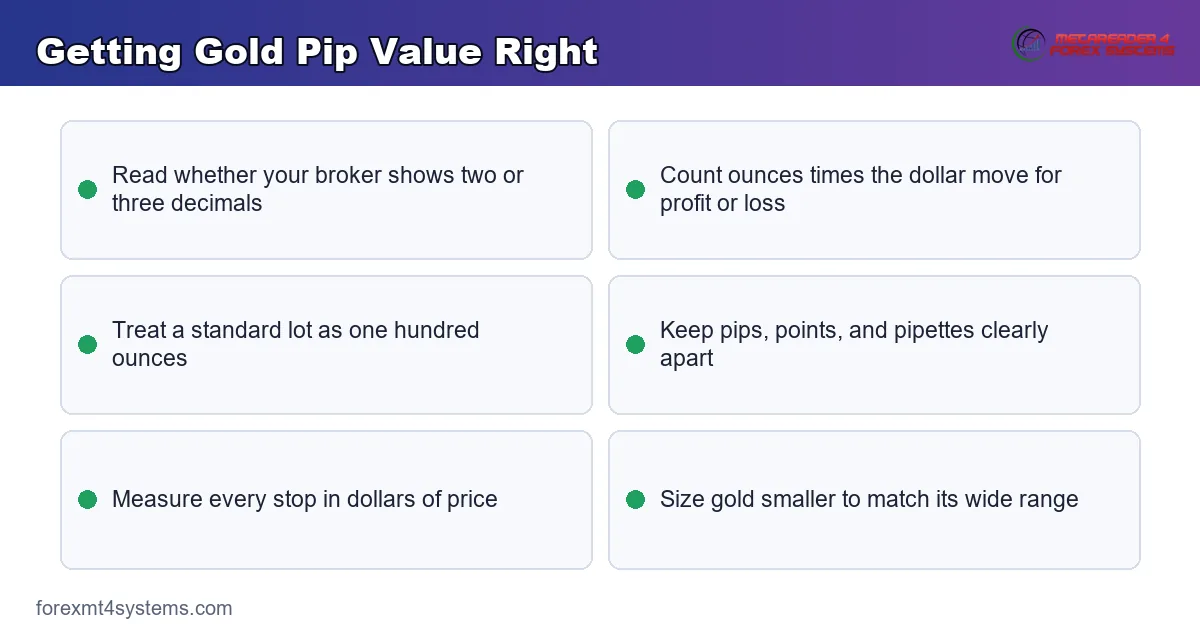
Assuming Ten Dollars a Pip
A trader who borrows the forex figure expects ten dollars a pip on gold. On a standard lot at one cent pips, the real value is closer to one dollar. So drop the forex habit, and count ounces times the price move instead.
Confusing Points With Pips
Calling a one dollar move one pip inflates the pip value a hundredfold in your head. That error can turn a sensible stop into a reckless one. So fix your unit before sizing, and keep the pip and the point clearly apart.
Ignoring the Broker’s Digits
Two decimals and three decimals change what a pip means. A trader who never checks the feed sizes on the wrong unit. So read the decimals on your own XAUUSD quote before you trust any pip figure at all.
Oversizing on a Wide Range
Gold’s wide swings punish an oversized lot fast. A size that suits EURUSD can be far too large on gold. So cut the lot for gold’s range, and let the ounce anchor tell you how far to trim.
Forgetting the Account Conversion
A euro or pound trader who reads gold profit as dollars overstates the gain. Gold quotes in dollars, so the figure needs one conversion. So finish in your own account currency, and never leave a gold result sitting in dollars by default.
Sizing Gold Around Big News
Gold reacts hard to major economic events and central bank news. A single release can move the price many dollars in seconds. So the pip value you calculated in a quiet hour can feel very different in a fast one.
The danger is not the pip value itself, which stays fixed per ounce. The danger is the range, since a wild move covers far more dollars than usual. So a lot that felt safe midweek can hand you a large swing during a news spike.
Trimming the Lot Before Events
A simple guard is to size down ahead of known events. Cut the ounces you hold, and the same wild move costs less. Because the range widens without warning, a smaller lot buys room for the surprise.
Wider stops help too, paired with that smaller lot. A stop set only a dollar away on gold can trigger on ordinary noise. So give the trade breathing room, and let the reduced lot keep the dollar risk in check.
Watching the Spread on Spikes
Gold spreads can balloon in the seconds around a release. A entry taken mid-spike pays a heavy cost before the trade even moves. So wait for the spread to settle, and avoid chasing gold into the first burst of a headline.
Gold Pip Value Quick Reference
Keep this short list beside your platform when you trade XAUUSD. It captures the whole idea in a few lines.
- Profit equals ounces held times the dollar move in price.
- A standard gold lot is one hundred ounces on most brokers.
- A one cent pip is worth about one dollar on a standard lot.
- A mini lot is worth about ten cents a pip, a micro about one cent.
- Check whether your broker shows two or three decimals.
- Translate every stop into dollars of price before sizing.
Pitfalls and Edge Cases
A few situations bend the gold rules, so keep them in view. The chart below marks a real gold move and the money behind it near 4100.
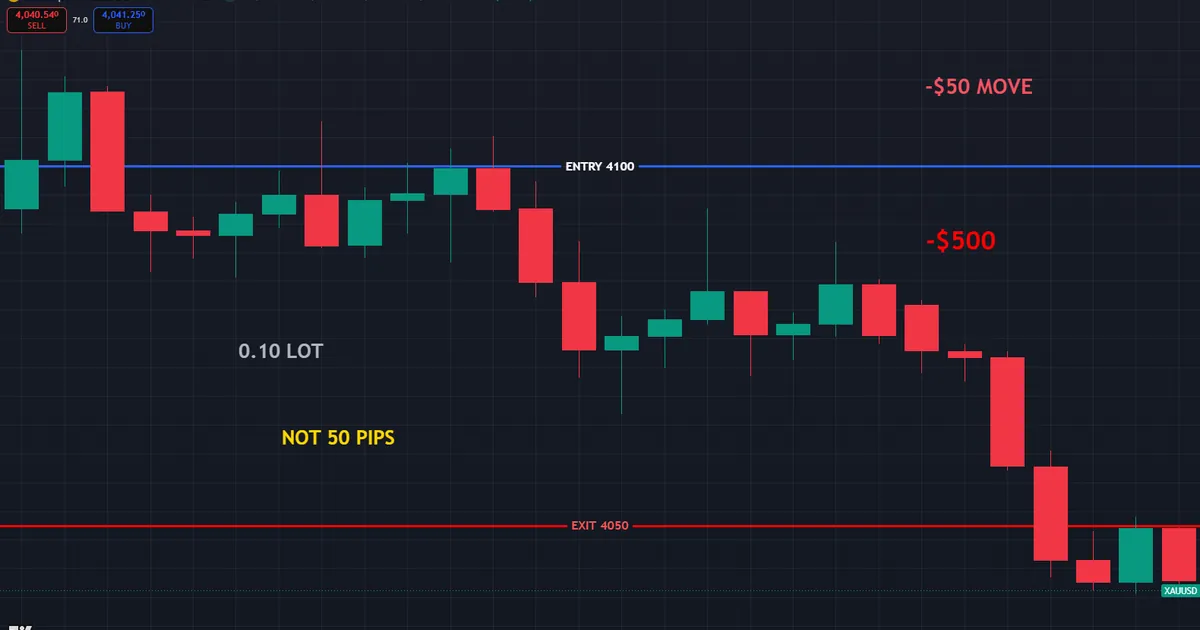
Picture a trader who reads a fifty dollar gold drop as fifty pips. On a 0.10 lot that move is five hundred dollars, not a trivial loss. The label said fifty, yet the ounce anchor revealed the true weight of the move. So a careless pip count can hide a serious loss behind a small-sounding number.
Contract Size Can Vary
Not every broker sets a gold lot at one hundred ounces. Some define smaller or larger contracts, which shifts every pip value. So read the instrument specification for XAUUSD before you lean on any standard figure.
Spreads Widen Fast on Gold
Gold spreads can jump around news, more sharply than on major pairs. A wider spread eats more of your first dollars on entry. So allow extra room in the target, since gold can cost more to enter than a quiet currency pair.
Overnight Costs on Metals
Holding gold overnight can carry a financing charge that differs from forex swaps. Those costs add up on a long hold. So factor them in when you plan to keep a gold trade open across several nights.
Related Concepts to Study Next
Gold sits at the edge of the forex sizing family, and a few ideas make it easier to master. The pip itself is the natural starting point, since gold only bends the standard definition. The general pip value method then shows how the same logic scales across markets.
Start with our guide on the pip in forex to ground the basics. Then read how to calculate pip value for the wider method, and review lot size in forex to connect ounces to lots. To size a gold trade cleanly, read how to calculate lot size in forex and lean on our free position size calculator, and learn the ounce anchor first so the tool simply confirms your math.
FAQ
What is the pip value of gold?
On a two-decimal XAUUSD quote, one pip is a one cent move in the price. A standard lot of one hundred ounces is then worth about one dollar a pip, a mini lot about ten cents, and a micro lot about one cent. The safest check is ounces times the dollar move in price.
Is a gold pip one cent or ten cents?
It depends on your broker and your own convention. On a two-decimal feed the smallest step is one cent, which many platforms call a pip. Other traders treat ten cents or even a full dollar as their pip, so always confirm the unit you are using.
How much is a pip worth on 0.01 lots of gold?
A 0.01 lot on gold is one ounce of metal. At a one cent pip, that ounce is worth about one cent a pip. In whole-dollar points, the same ounce earns about one dollar for every one dollar move in the gold price.
Why does gold move so many pips?
Gold carries a high price and a wide daily range, so it covers many dollars in a normal session. Each dollar is one hundred one-cent pips, so the pip count climbs fast. That large count is why sizing gold by ounces is far clearer than counting pips. The ounce figure stays small and steady while the pip number runs into the thousands.
What is the difference between a pip and a point on gold?
A pip on a two-decimal quote is a one cent move, while a point in common gold slang is a full one dollar move. So one point equals one hundred one-cent pips. Mixing the two is the most common gold sizing error. Always confirm which unit your stop and your plan use before you place a trade.
How do I size a gold trade safely?
Decide the dollars you can lose, then measure the stop in dollars of price rather than pips. Divide the risk by the stop to find your ounces, and turn those ounces into a lot. Confirm the figure with a calculator, and manage the trade with care. Results are not guaranteed; past performance is not indicative of future results.
External references
- For background on this concept, see Pip at BabyPips.
- For broader market context, see Gold as an investment on Wikipedia.

About the author
Written by Dominic Walsh, a Forex trader and MT4/MT5 indicator, Expert Advisor and script developer. Every tool on forexmt4systems.com is tested on live charts before release and ships with ready-to-use compiled MT4 (.ex4) and MT5 (.ex5) files. Learn more about the trader and developer behind this site.
How we build, test and correct every tool: Editorial & Testing Policy. Trading carries risk; see the disclaimer.