
Knowing how to calculate lot size is the step that turns your risk plan into a number you can trade. Lot size decides how much money each pip moves, so getting it right keeps every loss inside the limit you set.
This guide explains how to calculate lot size in forex from a pure risk angle, for a trader who wants the loss on every trade to match the plan. You will move from risk, to pip value, to an exact lot, with a short recipe and full worked examples on real pairs. By the end, the size on the ticket will be a decision, not a guess.
What a Lot Is in Forex
A lot is simply a bundle of currency units you trade at once. A standard lot is one hundred thousand units, and smaller lots scale down from there. So the lot you pick sets how large your position really is.
The size matters because it fixes the money behind each pip. A larger lot means each pip swings more of your balance, for better or worse. So choosing the lot is really choosing how hard the market can hit you.
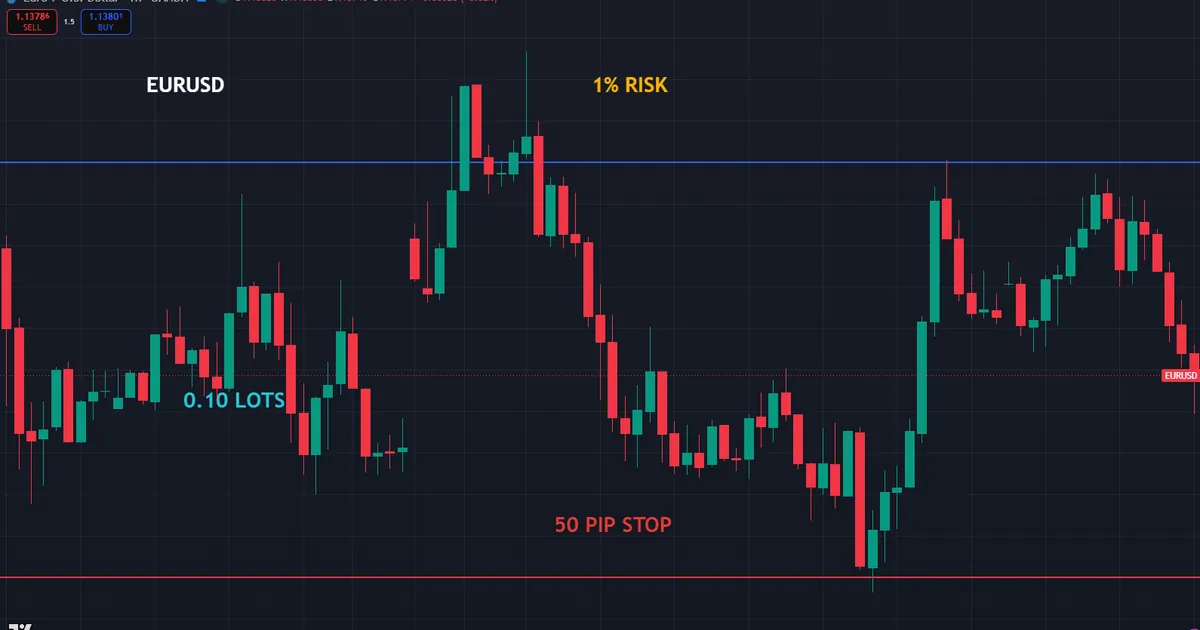
This is why sizing sits at the heart of risk control. The entry and the stop shape a trade, yet the lot decides its weight. So a careful lot keeps a losing trade small while a careless one lets it run large.
The Common Lot Units
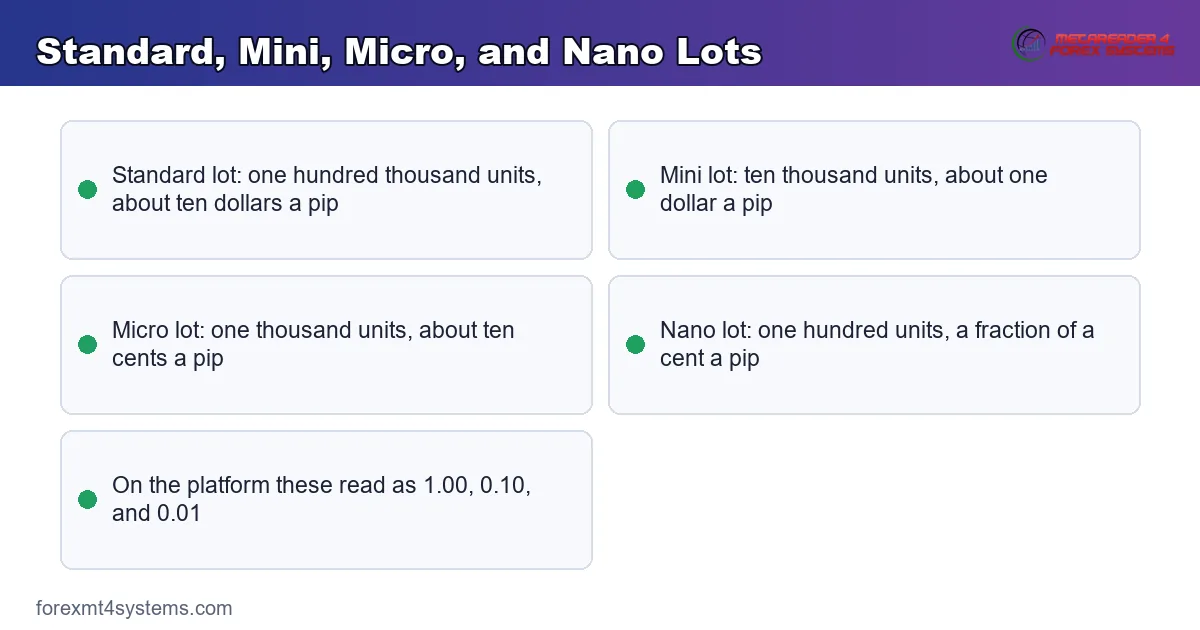
Forex trades in a few standard bundles, and each has a name. A standard lot is one hundred thousand units, a mini lot is ten thousand, and a micro lot is one thousand. So a micro lot is a hundredth of a standard one.
The platform usually shows lots as decimals of a standard. One standard lot reads as 1.00, a mini as 0.10, and a micro as 0.01. So when a calculation returns 0.10, it is pointing at a single mini lot.
The Risk-First Way to Size a Lot
The risk angle flips the usual thinking on its head. Instead of asking how big a trade you want, you ask how much you will lose if it fails. So the loss leads, and the lot follows to fit it.
This backward order is what keeps an account safe. You fix the loss first, then find the size that keeps a losing trade inside that limit. Because the loss leads, the lot always fits the account rather than stretching it.
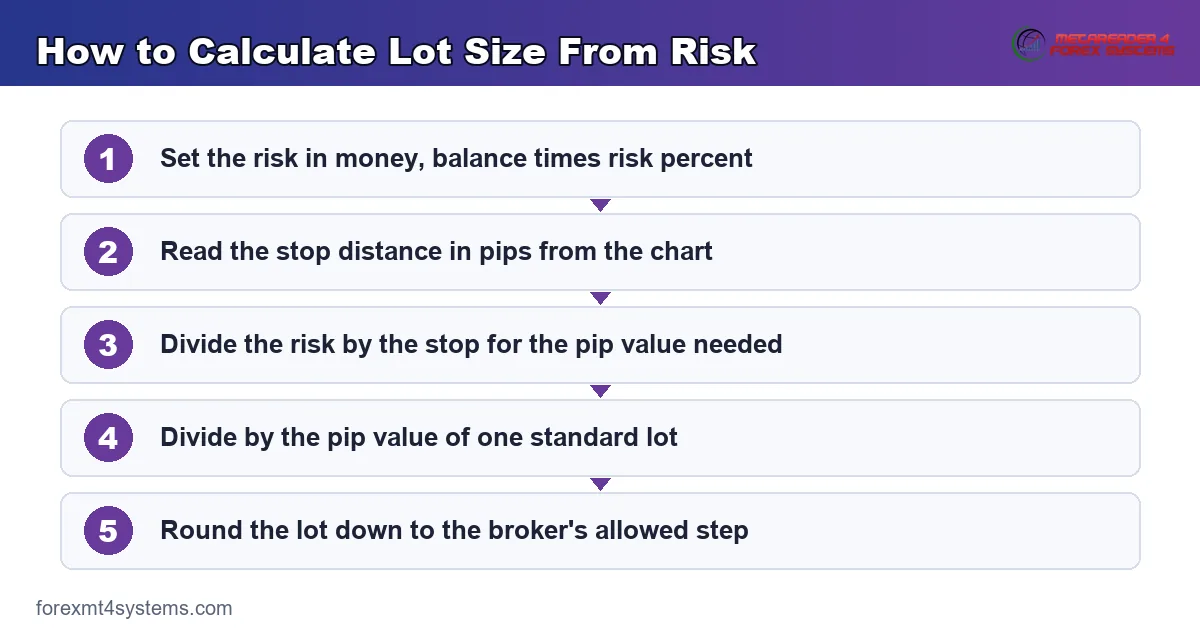
Contrast that with picking a favorite lot for every trade. A fixed lot ignores the stop and the balance, so the real risk drifts from trade to trade. A risk-first lot holds the loss steady, whatever distance the chart asks of your stop.
Why the Loss Should Lead
Leading with the loss protects you from your own optimism. When you size to a target instead, a wide stop quietly balloons the risk. So starting from the loss keeps hope out of the math.
The habit also steadies your results over time. A constant dollar risk lets a normal losing streak pass without damage. Because each loss stays capped, no short run can undo months of careful work.
How to Calculate Lot Size, Step by Step
The recipe needs three numbers, and you already control all of them. Each comes from a different place, yet they slot together in a couple of quick divisions.
- Risk in money. Multiply your balance by the percent you accept losing on the trade.
- Stop distance in pips. Measure how far your stop sits from the entry, read off the chart.
- Pip value per lot. Know what one pip is worth on a standard lot for the pair.
Gather those three, and the lot follows in two moves. Divide the risk by the stop to find the pip value you need, then divide by the pip value of one standard lot. So the size falls out of numbers you already have.
The Two Divisions in Order
The first division spreads your risk across the stop. Fifty dollars over a fifty pip stop needs one dollar a pip. That figure is the pip value the trade requires.
The second division turns that pip value into lots. One dollar a pip divided by ten dollars for a standard lot gives 0.10 lots. So two divisions carry you from risk all the way to a size.
A Full Worked Example
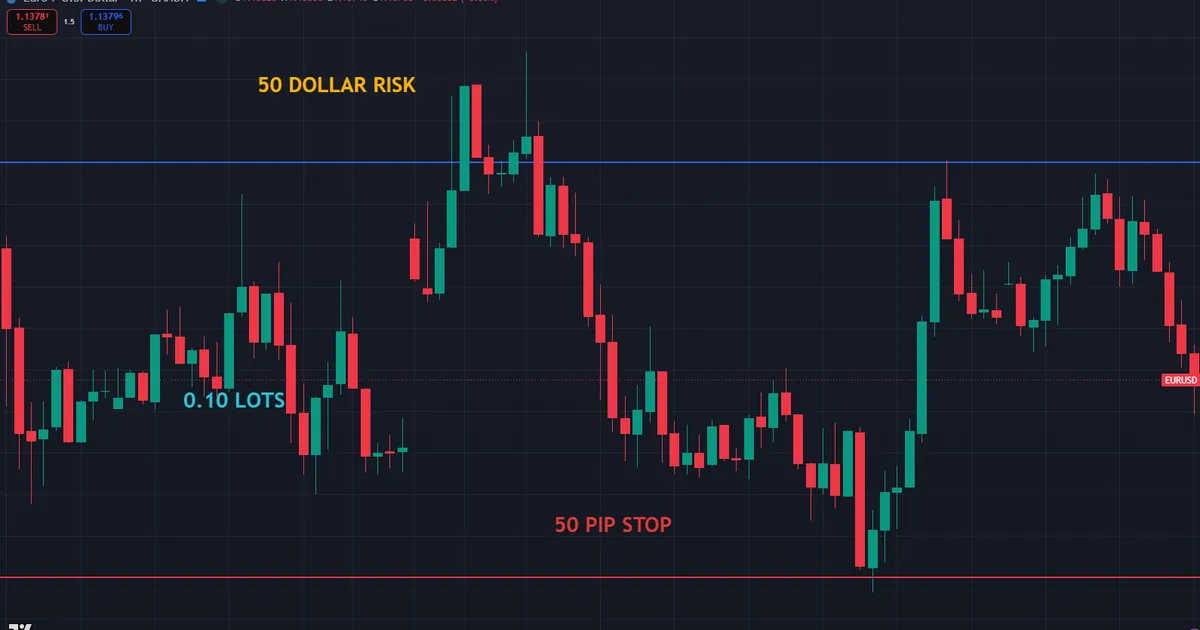
Numbers make the recipe stick, so walk a complete trade through. You hold a five thousand dollar account, and you risk one percent on a EURUSD idea near 1.14.
First, set the risk in money. One percent of five thousand is fifty dollars, so a losing trade may cost fifty. That figure is the ceiling the whole calculation protects.
Next, read the stop off the chart. Your stop sits fifty pips from the entry on EURUSD. So the risk spreads across a fifty pip move against you.
From Pip Value to Lot
Now find the pip value you need. Divide the fifty dollar risk by the fifty pip stop, and you need one dollar a pip. That is the pip value that spends exactly fifty dollars over fifty pips.
Finish with the lot. Divide one dollar a pip by the ten dollars a standard lot is worth, and you get 0.10 lots. So the size here is 0.10, a single mini lot, and a fifty pip loss costs the planned fifty dollars.
Checking Your Work
Run a quick reverse check before you trade. At 0.10 lots the pip value is one dollar, and fifty pips at one dollar is fifty dollars. The numbers close the loop, which confirms the size is right.
This habit catches most slips early. A single missed division shows up at once when the loop fails to close. So the reverse check costs a few seconds and saves the occasional costly mistake. Our pip value calculator supplies that third input in a click.
Lot Size and the Pip Value
The pip value is the hinge the whole calculation turns on. It links the abstract lot to real money on the chart. So a clear grip on pip value makes every lot calculation feel obvious.
On a dollar-quoted pair, a standard lot is worth about ten dollars a pip. A mini lot is worth one dollar, and a micro lot ten cents. So the pip value scales down exactly as the lot does.
Why Pip Value Changes the Lot
Because pip value sits in the final division, it shapes the size directly. A pair with a higher pip value needs a smaller lot for the same risk. So confirming the pip value first keeps the last step honest.
The stop and the pip value together set the size. A wider stop or a higher pip value both shrink the lot, while a tighter stop or lower pip value grows it. So the lot is really a balance of those two forces against your fixed risk.
Calculating Lot Size on Non-Dollar Pairs
The recipe holds on every pair, yet the pip value shifts away from ten dollars. On a yen pair or a cross, one pip on a standard lot is not worth ten dollars, so the final division changes. That is the only part that bends.
Only the pip value moves; the first two steps stay identical. So find the pair’s pip value first, then divide by it instead of by ten. The structure of the calculation never changes.
A Yen Pair Worked Example
Try USDJPY near 162.00 on a five thousand dollar account at one percent risk. Your risk in money is fifty dollars, and your stop sits twenty-five pips away. Divide fifty by twenty-five, and you need two dollars a pip.
Here the pip value per standard lot is about six dollars, not ten. Divide the two dollars you need by six, and you land near 0.33 lots. So the yen pip value bent the size, while the recipe carried through unchanged.
Crosses Work the Same Way
Crosses like EURGBP follow the identical path with their own pip value. You still divide risk by the stop, then by the pair’s pip value. So the only new task is looking up that one figure before the final step.
A calculator removes even that small chore. It stores each pair’s pip value and applies the right one for you. So the messy conversions that trip up manual sizing on crosses simply disappear.
Download the complete indicator database
Put these concepts on your charts. One email unlocks the full library of 1,380+ indicators with compiled MT4 and MT5 files, plus my TradingView scripts. No paywall, no spam, unsubscribe any time.
Get free access to my indicator database
One email unlocks 1,380+ free MT4, MT5 and TradingView indicators — the complete library. No single-tool download; you get the whole database.
Lot Size for Different Account Sizes
The same recipe fits a tiny account and a large one, because it works in percentages. One percent means five dollars on a five hundred dollar account and five hundred on a fifty thousand dollar one. So the method scales without any change.
What changes is the lot you can actually trade. A very small account may need a micro lot to keep the risk in bounds, while a large one reaches for standard lots. Because the broker sets a minimum size, a small balance sometimes cannot risk as little as it would like.
Sizing a Small Starter Account
On a two hundred dollar account, one percent is only two dollars of risk. A fifty pip stop then needs four cents a pip, which sits below one micro lot. So the smallest tradable size may already risk more than one percent.
The honest fix is to accept a slightly higher percent or grow the balance. Chasing sizes below the broker floor only invites errors. So many traders wait until the account can support a micro lot at their chosen risk.
Sizing a Larger Account
On a fifty thousand dollar account, one percent is five hundred dollars of risk. A fifty pip stop then supports ten dollars a pip, a full standard lot. So the same recipe now points at a much larger position.
Here the danger flips toward oversizing. A standard lot swings the balance fast, so stop discipline matters even more. Because the numbers feel large, a calm, calculated size guards against the pull to trade bigger than the plan allows.
Lot Size and the Risk Percent
The risk percent is the input that scales the whole lot. Set it high, and every calculated lot runs hot. Set it sensibly, and the account stays inside a plan you can hold.
Most traders anchor the percent between half a percent and two percent. So a fifty dollar loss on a five thousand dollar account fits the middle of that range. The exact number depends on your comfort and your record.
Keeping the Percent Steady
The percent should hold firm from trade to trade, not swing with confidence. Raising it after a win and cutting it after a loss undoes the plan. So fix the figure, and let the lot calculation size around it every time.
A steady percent also makes results readable. When the risk input never moves, your equity curve reflects the method rather than your nerves. So consistency in that one number pays off across a whole record.
Common Lot Size Mistakes and Fixes
The math is short, yet the same errors repeat across new accounts. Most come from skipping an input or reusing a stale number, and the fixes sit under the graphic.
Sizing Before Placing the Stop
The classic slip is choosing a lot before the stop has a place. Without the stop distance, the risk is unknowable. So mark the stop on the chart first, then size the trade to fit it.
Assuming Ten Dollars a Pip
The ten dollar pip value fits dollar-quoted pairs only. Borrowing it for a yen pair oversizes the trade by more than a third. So confirm the pair’s pip value first, and divide by that figure, not ten by default.
Ignoring the Account Currency
A euro or pound account adds a conversion to every pair. Running the math in dollars then misstates the risk. So calculate in your real account currency, and adjust the pip value before the final step.
Rounding the Lot Up
Brokers trade in fixed lot steps, so your exact figure may not fit. Rounding up nudges the risk above your limit. So round the lot down to the nearest allowed step, and keep the loss inside the plan.
Reusing One Fixed Lot
Many beginners set a favorite lot and reuse it everywhere. That habit lets the risk swing wildly, since a tight stop and a wide stop then cost very different amounts. So let the lot follow the stop on every trade instead.
Lot Size and the Trade Reward
Sizing fixes the risk, yet the reward deserves a glance too. A lot that risks fifty dollars should aim to earn more than that if the trade works. So pair every calculated lot with a target worth the risk.
Think in terms of reward against risk. A fifty pip stop paired with a one hundred pip target risks one to earn two. At 0.10 lots that means risking fifty dollars to make one hundred, before costs.
Why the Lot Ties Both Ends
The lot links the risk and the reward through one pip value. It sets the money at risk on the stop and the money earned at the target. Because both share that pip value, a clean size makes the whole reward plan easy to read.
A steady reward against risk also lets a modest hit rate pay off. Risk one to make two, and you can lose more often than you win and still grow. So sizing and targets work as partners, and neither one carries the account alone.
Keep the pip value in mind whenever you set that target. The same figure that caps your loss also measures your gain. So one clean lot calculation quietly serves both sides of the trade at once.
Lot Size Quick Reference
Keep this short list beside the platform. Run through it before you size any new trade.
- Risk in money equals balance times your risk percent.
- Pip value needed equals risk divided by the stop in pips.
- Lot equals that pip value divided by one lot’s pip value.
- Use ten dollars per standard lot on dollar-quoted pairs.
- Use the pair’s own pip value on yen pairs and crosses.
- Round the lot down to the broker’s nearest allowed step.
Pitfalls and Edge Cases
A few situations bend the clean recipe, so keep them in view. The chart below shows the trap of a fixed lot that ignores the stop entirely.
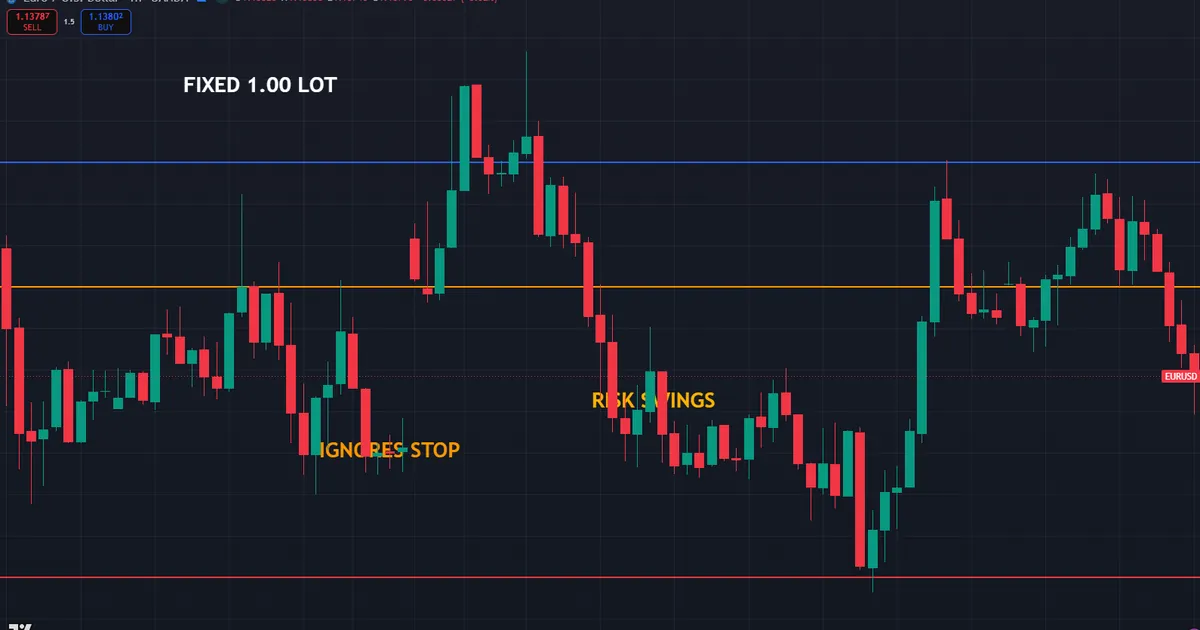
Picture one lot reused on a tight stop and a wide stop. The tight-stop trade risks little, while the wide-stop trade risks many times more. That single image is the case for sizing every trade from its own stop.
Spread and Slippage Eat the Stop
Your stop may fill a little past its level in fast markets. So the real loss can edge above the plan. Leave a small buffer in the risk, and treat the calculated figure as a floor rather than a hard ceiling.
Very Tight Stops Push the Lot Up
A ten pip stop calls for a large lot to spend the same risk. That size can grow uncomfortable on a big account. So respect the broker’s maximum, and remember that a tight stop concentrates risk into a bigger position.
Several Trades Stack the Risk
The recipe sizes one trade at a time and cannot see your other positions. Four trades at one percent each put four percent on the line together. So track the combined risk yourself, and size new trades against a total budget.
Related Concepts to Study Next
Lot size sits at the center of the risk toolkit, and a few nearby ideas make it whole. The tool that automates the math speeds you up, the framework of position sizing gives it context, and the percent you risk sets the first input.
Start with our guide on how to use a position size calculator to automate the steps. Then read position sizing for the full framework, and set the first input with how much to risk per trade. For the beginner view of the units, see how to calculate lot size for beginners, and size any live trade with our position size calculator.
FAQ
How do I calculate lot size in forex?
Multiply your balance by your risk percent to set the risk in money. Divide that by the stop distance in pips to find the pip value you need. Then divide the pip value by the value of one pip on a standard lot.
What is a standard, mini, and micro lot?
A standard lot is one hundred thousand units and reads as 1.00 on the platform. A mini lot is ten thousand units, shown as 0.10, and a micro lot is one thousand, shown as 0.01. Each smaller lot is a tenth of the one above it.
Why does the stop distance change the lot?
The stop and the lot move in opposite directions for the same risk. A wider stop needs a smaller lot, and a tighter stop allows a larger one. So always place the stop before you calculate the size.
Do I use ten dollars a pip on every pair?
No, ten dollars a pip fits only dollar-quoted pairs at a standard lot. Yen pairs and crosses carry a different pip value you must find first. Divide by that pair’s real figure, not by ten, on those markets.
Should I round my lot up or down?
Round the lot down to the broker’s nearest allowed step. Rounding up would push the risk above your planned limit. A slightly smaller lot keeps the loss inside the figure you set out to protect.
Can a calculator work out my lot size for me?
Yes, a position size calculator runs the same steps in one entry. Learning the math first lets you sanity-check its answer and understand the number. Size every trade from your own risk plan, and manage each position with care. Results are not guaranteed; past performance is not indicative of future results.
External references
- For background on this concept, see Notional Value at Investopedia.
- For broader market context, see Notional Value at Corporate Finance Institute.

About the author
Written by Dominic Walsh, a Forex trader and MT4/MT5 indicator, Expert Advisor and script developer. Every tool on forexmt4systems.com is tested on live charts before release and ships with ready-to-use compiled MT4 (.ex4) and MT5 (.ex5) files. Learn more about the trader and developer behind this site.
How we build, test and correct every tool: Editorial & Testing Policy. Trading carries risk; see the disclaimer.