
Compounding in forex is the habit of growing each position as your account equity grows. You risk a steady percentage rather than a fixed cash amount, so every winning stretch quietly enlarges the next trade.
This guide walks through compounding in forex in plain, beginner terms. You will see the rising curve, work real numbers, and learn why compounding too fast can dig a deeper drawdown than most new traders expect.
What Compounding in Forex Really Means
Compounding means earning gains on top of earlier gains. In trading, it works when you fold each profit back into your balance and size the next position from that larger sum.
So the idea is simple at heart. You keep the risk percentage fixed, and you let the growing balance do the scaling for you.
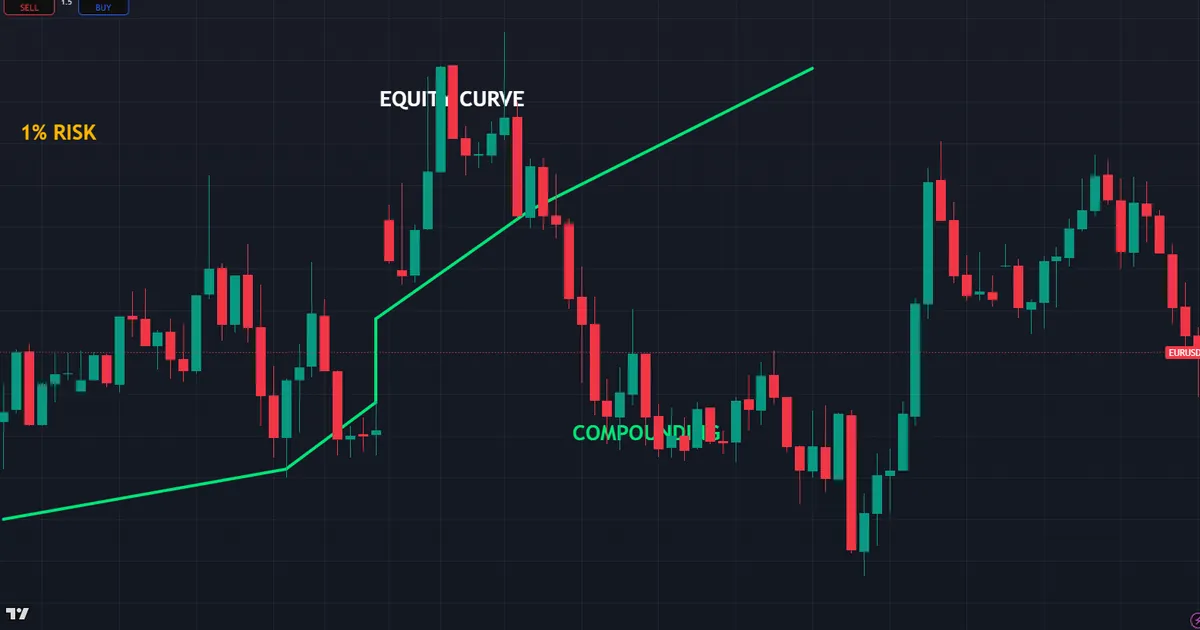
Picture a fixed one percent risk on every trade. Early on, that one percent is a small stake. But as the account climbs, the same one percent controls a larger position, and the profits arrive faster.
This is why traders prize compounding. It turns a flat, linear grind into a curve that bends upward over time, without ever changing the rule you follow.
The Core Idea in Three Steps
The whole method rests on a short loop. Learn these three moves, and compounding stops feeling like magic.
- Fix your risk percent. Choose a steady slice of equity, such as one percent, to stake on each trade.
- Add each profit back. When a trade wins, roll the gain into your balance rather than skimming it off.
- Resize from the new balance. Calculate the next position from the larger equity, so the stake grows in step.
So each cycle feeds the next one. Because the base keeps rising, the same percentage buys a bigger position every time you repeat the loop.
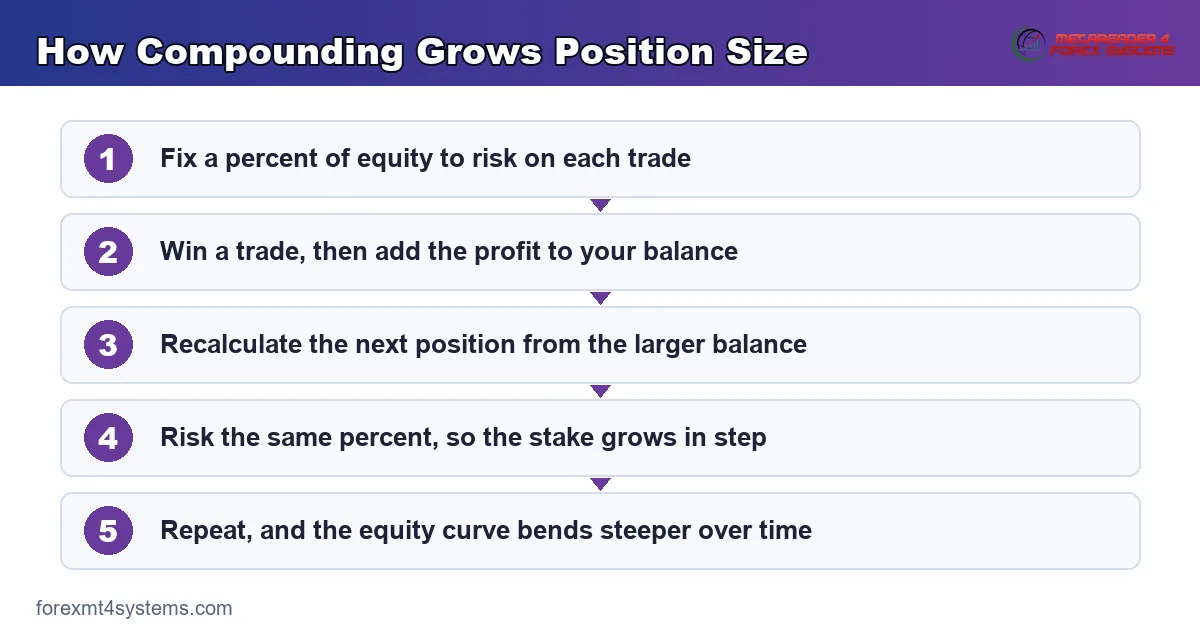
Notice what stays constant here. The risk percentage never moves, yet the cash at stake climbs on its own as equity builds.
Why the Curve Bends Upward
A flat cash risk gives you a straight line. Risk twenty dollars per trade forever, and your gains add up at a steady, unchanging pace.
But a percentage risk behaves differently. As the balance grows, each one percent covers more ground, so the line curves rather than crawls. That gentle bend is the heart of compounding in forex.
Still, the curve only bends when you stay consistent. Skip the resizing, or pull profits out early, and you flatten the very growth you were chasing.
How the Compounding Math Works
Numbers make the concept stick, so walk a real account. You open with ten thousand dollars and risk one percent, which is one hundred dollars on the first trade.
Say that trade earns two hundred dollars. Your balance is now ten thousand two hundred, and one percent of that is slightly more than before. So the next stake edges up without any decision from you.
A First Worked Example
Follow a short winning run to feel the effect. Each step reinvests the gain and resizes from the fresh balance.
Start at ten thousand dollars. A first win lifts you to ten thousand four hundred, then a second to ten thousand eight hundred, then a third past eleven thousand two hundred. Because each stake grows, the gains arrive a touch larger every round.
Now compare that with a fixed cash stake. Risking a flat one hundred dollars, the same three wins would add exactly three hundred, no more. So the percentage method pulls ahead, slowly at first, then with real force.
Reading the Equity Curve
Plot the balance over many trades, and a shape appears. Early on the line looks almost straight, since the account is still small. Later it steepens, because each percent now moves more money.
That steepening is the reward for patience. But it also carries a warning, since the same curve can turn against you when losses hit a larger position. Both sides scale together, so respect the downside as much as the upside.
A Second Worked Compounding Example
Contrast helps the idea land, so try a longer horizon. Picture a trader who compounds a ten thousand dollar account at a steady, realistic pace.
Suppose the account grows by roughly four percent a month, month after month. That may sound modest, yet the reinvestment does heavy lifting over time. After a year and a half, the balance climbs toward sixteen thousand dollars.
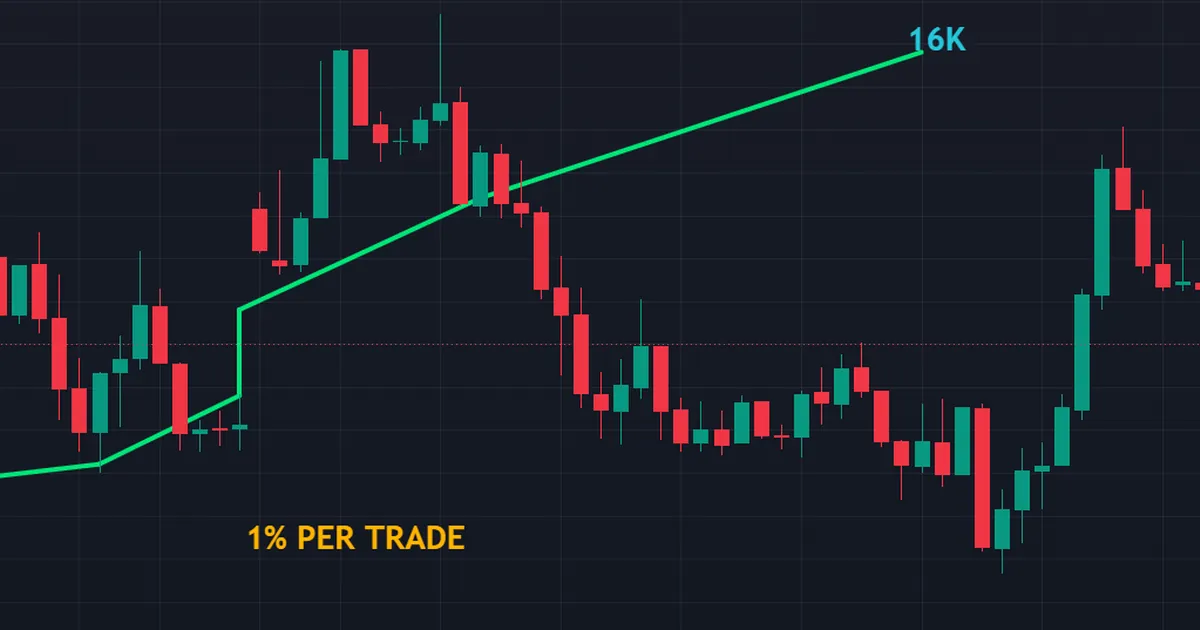
Feel where the growth comes from. The early months add small sums, while the later months add far more, even though the percentage never changes. So the account earns on its earlier earnings, which is compounding in a single sentence.
Then imagine the same trader skimming every profit instead. The balance would sit still near ten thousand, and only the withdrawn cash would show the work. Reinvesting is the quiet difference between a flat line and a rising curve.
Download the complete indicator database
Put these concepts on your charts. One email unlocks the full library of 1,380+ indicators with compiled MT4 and MT5 files, plus my TradingView scripts. No paywall, no spam, unsubscribe any time.
Get free access to my indicator database
One email unlocks 1,380+ free MT4, MT5 and TradingView indicators — the complete library. No single-tool download; you get the whole database.
So the second lesson mirrors the first. A steady percentage, fed back trade after trade, beats a fixed stake by a widening margin as the months roll on.
How Fast Should You Compound
Speed is the tempting question, and it is where most accounts stumble. A higher risk percentage does compound faster, but it also deepens every losing streak.
Because both wins and losses scale with equity, the fast lane cuts in two directions. When you crank the risk to chase a steeper curve, you also hand the market a wider path to hurt you.
The Drawdown Danger of Compounding Too Fast
A losing streak visits every trader eventually. So the real test of a compounding plan is how it behaves during that rough patch, not during the good times.
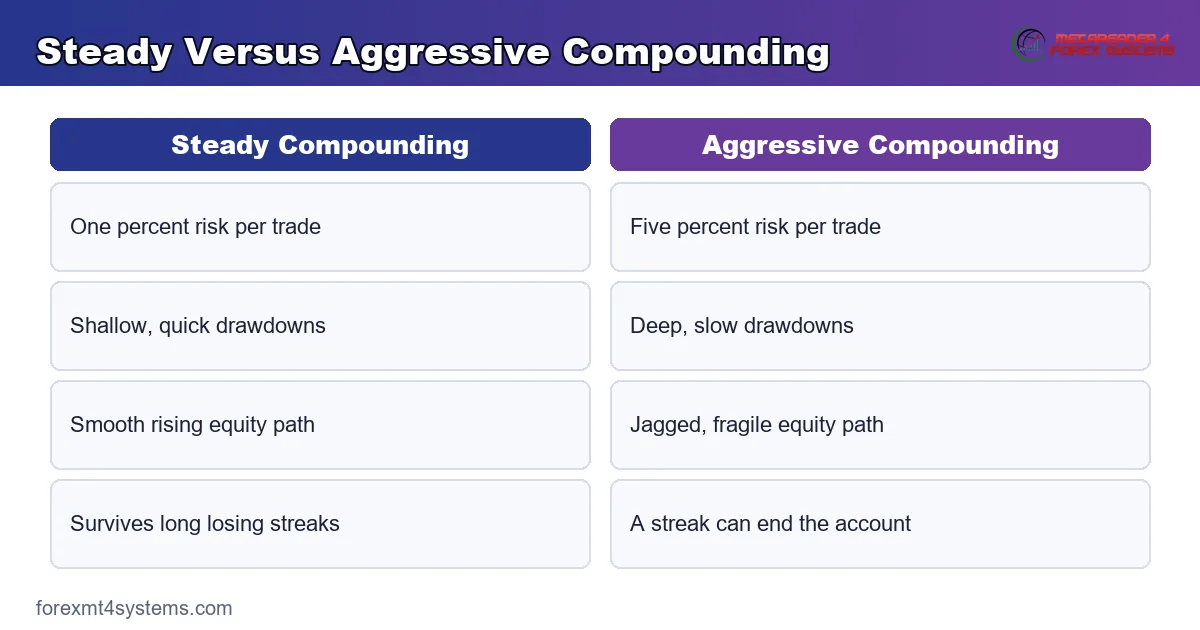
At one percent risk, six losses in a row cost about six percent of the account. That is a shallow valley, and it heals quickly once the wins return. But at five percent risk, the same six losses strip roughly a quarter of the balance.
Here the math turns cruel, since a deeper drawdown needs a steeper climb back. A twenty five percent loss demands a thirty three percent gain just to break even. So compounding too fast can freeze your progress for months while the account digs out.
This is why fast compounding often backfires. You reach for a bigger curve, yet a single normal streak can hand you a hole that erases the head start entirely.
Realistic Monthly Expectations
Set the pace where you can survive a bad run without panic. Many steady traders aim for a few percent a month, then let the reinvestment quietly stack those gains.
Small, repeatable numbers matter more than a flashy single month. Because compounding rewards consistency, a calm four percent that repeats will outrun a wild swing that you cannot sustain. So temper the ambition and let time carry the load.
How Position Size Scales With Equity
The engine behind compounding is a single conversion. You turn a risk percent into a lot size, and that lot size climbs as the balance grows.
Say you risk one percent with a stop of fifty pips. On ten thousand dollars, that risk is one hundred dollars, which sets a modest lot. When the account reaches twelve thousand, the same one percent is one hundred twenty dollars, so the lot nudges higher.
The Link Between Percent and Lots
Two numbers decide your position size. The first is the cash you risk, and the second is the stop distance in pips. Divide the cash risk by the pip value across your stop, and you land on the lot size.
Because the cash risk rises with equity, the lot rises too, so long as the stop stays similar. So the same rule that felt tiny at the start controls a meaningful position once the account matures. That quiet scaling is compounding at work.
Why the Stop Distance Still Matters
Compounding does not free you from good trade selection. A wide stop shrinks the lot for a given risk, while a tight stop enlarges it. So the stop distance shapes each position as much as the percentage does.
Keep the stops honest and consistent, and the curve behaves. But stretch the stops to avoid a loss, and you distort the very sizing that compounding depends on. So respect the stop, since it anchors the whole calculation.
Compounding on a Small Account
Small accounts feel the pull of compounding most sharply. A trader with a few hundred dollars often dreams of a fast curve, yet the same account can barely survive an aggressive one.
Because the balance is tiny, the cash risk per trade is tiny too. So progress looks painfully slow in the first months, even when the percentage return is healthy. Patience is the price of admission on a small account.
Micro Lots Keep the Percent Honest
Brokers offer micro lots, which let a small trader hold to a true one percent risk. Without them, the smallest tradeable size might force far more risk than intended. So micro lots are what make disciplined compounding possible on a modest balance.
Trade micro lots, and even a two hundred dollar account can respect a real risk rule. So the percentage stays honest, the drawdowns stay shallow, and the compounding curve gets a fair chance to form.
Managing Expectations Early On
The early months of a small account test your resolve, not your skill. The cash gains look trivial, since a good month on two hundred dollars adds only a few dollars. Yet those small percentages are laying the groundwork for the later curve.
So judge your progress in percentage terms, not in dollars, during this stretch. Because the curve rewards the later account far more than the early one, the trader who stays patient collects most of the growth near the end.
Compounding Across Different Market Conditions
Markets shift between calm and wild, and your compounding plan should notice. A steady trending stretch lets the curve build smoothly, while a choppy patch can stall it for weeks.
Because volatility changes the size of each swing, the same risk percent can feel very different from month to month. So a thoughtful trader softens the size when the market turns jumpy, then leans back in when conditions calm.
Volatile Markets Need Gentler Sizing
A wild market widens the typical stop, which shrinks the lot for a fixed risk. That is a feature, not a flaw, since it keeps your cash risk steady when prices lurch. So let the stop distance breathe, and the position size adjusts on its own.
Gold near four thousand can move fast, so a fixed pip stop covers less percent of price than on a calmer pair. That extra motion feeds straight into your drawdown. So trim the size when volatility climbs, and the compounding curve stays on track.
Quiet Markets Test Your Patience
A slow, range-bound market offers few clean setups. The curve flattens, not because the plan failed, but because the opportunities thinned. So resist the urge to force trades or lift the risk just to keep the line moving.
Because compounding rewards survival, sitting out a dull stretch protects the account for the next trend. So a patient pause often does more for the long curve than a burst of forced, low-quality trades.
Common Compounding Mistakes and Fixes
Compounding is simple math, yet the same errors trip up beginners over and over. Most spring from rushing the process rather than trusting it. The compare graphic below lines a steady approach against an aggressive one.
Cranking the Risk to Grow Faster
The classic slip is lifting the risk percent to steepen the curve. A deeper drawdown then becomes far more likely, not less. So keep the percentage small and let the growing balance, not a bigger bet, do the accelerating.
Skimming Profits Every Week
Pull every gain out, and you starve the very engine you built. The balance stays flat, so the curve never gets a chance to bend. Instead, leave the profits in until the account reaches a size you truly want to draw from.
Ignoring the Losing-Streak Math
Many plan only for the wins and forget the inevitable losses. A run of six red trades is ordinary, not a sign of failure. So stress test your risk against a losing streak before you trust it, and you will size far more soberly.
Compounding a Strategy With No Edge
Compounding multiplies whatever your method already produces. If the underlying approach loses over time, faster sizing simply loses faster. So prove the strategy earns a small, steady edge first, and only then let compounding amplify it.
Changing the Percent After a Loss
Some raise the stake after a red trade to win the money back quickly. That habit turns a shallow dip into a crater. So hold the percentage steady through wins and losses alike, and let the plan work as designed.
Keeping a Simple Growth Journal
A short record turns compounding from a hope into a measured habit. Note your balance at the end of each week, along with the percent you gained or lost.
Over time, that log reveals whether the curve is truly bending upward. So a quick weekly note does more for your discipline than any single big trade. Because the numbers never flatter you, the journal keeps the plan honest through both good and rough stretches.
Compounding Quick Reference
Keep this short list beside your journal. Run through it whenever you review your growth plan.
- Risk a fixed percent of equity, not a fixed cash amount.
- Add each profit back to the balance before you resize.
- Recalculate the next position from the new, larger equity.
- Hold the percent steady through both wins and losses.
- Small, repeatable monthly gains compound better than wild swings.
- A deeper drawdown always needs a steeper gain to recover.
- Prove your edge before you let compounding amplify it.
Pitfalls and Edge Cases
A few wrinkles bend the clean picture, so keep them in view. The chart below sets a smooth rising path beside a steeper one that spikes and then falls.
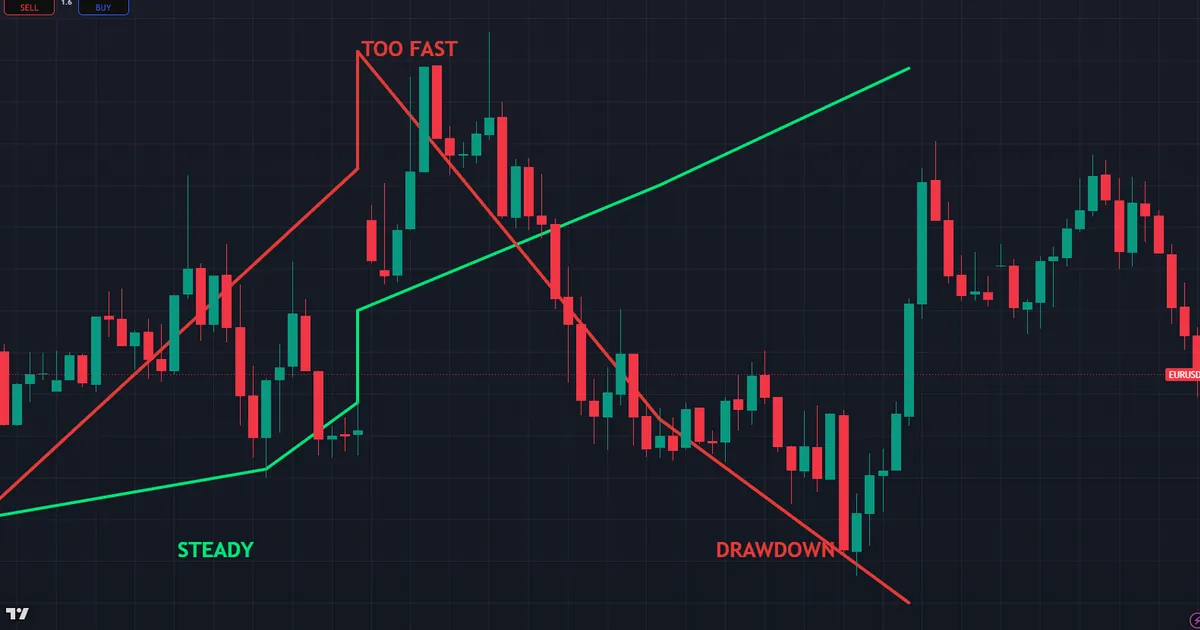
Picture the two paths starting from the same balance. One climbs in calm, even steps, while the other lunges higher and then collapses. That single image captures the difference between patient and reckless compounding.
Fixed Lots Break the Curve
Compounding only works when your size scales with equity. Trade a fixed lot forever, and the account grows in a straight line at best. So switch to a percentage stake if you want the curve to bend upward.
Spreads and Costs Nibble the Edge
Every trade pays a spread, and those costs compound too. On a small account, frequent trading can quietly erode the gains you meant to reinvest. So count the trading costs as part of your real return before you project the curve.
Drawdowns Compound in Reverse
The same math that lifts you can also drag you down. Losses on a larger position bite harder, since the percentage now covers more money. So a compounding account demands the same discipline on the way down as on the way up.
Round Lot Sizes Blur Small Steps
Brokers trade in set lot increments, so tiny balance changes may not move your size at once. On a small account, the position can lag the equity for a while. So expect the compounding curve to climb in small steps rather than a perfectly smooth line.
Related Concepts to Study Next
Compounding sits inside a wider web of risk ideas, and a few deserve your next reading hour. The percent you risk on each trade sets how fast, and how safely, the curve can bend.
Start with our guide on risk per trade to fix the percentage that drives compounding. Then read position sizing to turn that percent into a lot size, and compare fixed fractional versus fixed lot sizing to see why a percentage curve beats a flat one. Because the downside scales too, our overview of drawdown in trading is worth a careful read. To project any growth path in seconds, use our free compounding calculator, size each trade with the position size calculator, and fit it all into a plan on our forex trading strategies hub.
FAQ
What is compounding in forex in simple terms?
Compounding in forex means risking a fixed percent of your equity, then reinvesting each profit so the next position grows. As the balance climbs, the same percent controls a larger trade. So gains build on earlier gains rather than adding up in a flat line.
How is compounding different from a fixed lot?
A fixed lot stakes the same size no matter how the account grows, so the balance rises in a straight line. Compounding scales the size with equity, so the curve bends upward instead. The percentage stays constant while the cash at stake keeps climbing.
How fast should I compound my account?
Choose a pace you can survive during a losing streak, since both wins and losses scale with equity. Many steady traders aim for a few percent a month. A calm, repeatable number compounds far better than a wild figure you cannot hold.
Can compounding increase my drawdown?
Yes, because a larger position loses more when a streak hits. Compounding too fast can dig a deep valley, and a deeper valley needs a steeper gain to recover. So keep the risk percent small to keep each drawdown shallow.
Do I need a winning strategy before I compound?
Compounding multiplies whatever your method already produces, so it only helps a strategy with a real edge. If the approach loses over time, faster sizing simply loses faster. Prove a small, steady edge first, then let compounding amplify it.
Is compounding a shortcut to fast riches?
No, compounding is a slow engine that rewards patience and consistency over many months. Its power shows up in the later stretch, not the first week. So treat it as a long project, and let the small percentages stack quietly over many months. Results are not guaranteed; past performance is not indicative of future results.
External references
- For background on this concept, see Exponential Growth on Wikipedia.
- For broader market context, see Compounding at Investopedia.

About the author
Written by Dominic Walsh, a Forex trader and MT4/MT5 indicator, Expert Advisor and script developer. Every tool on forexmt4systems.com is tested on live charts before release and ships with ready-to-use compiled MT4 (.ex4) and MT5 (.ex5) files. Learn more about the trader and developer behind this site.
How we build, test and correct every tool: Editorial & Testing Policy. Trading carries risk; see the disclaimer.