
Every evaluation sells the same promise with a different shape. The choice of one step vs two step prop firm challenges decides how fast you must earn, how much room you get, and how long the whole attempt takes.
This guide compares the two formats without naming a single firm. You will see the arithmetic, the pacing, the trade-offs and the traps that push traders toward the wrong pick.
One Step vs Two Step Prop Firm Challenges at a Glance
Both formats test the same thing. Can you reach a profit target without breaking a loss limit?
Only the packaging differs. One format asks the question once, while the other asks it twice at a gentler pace.
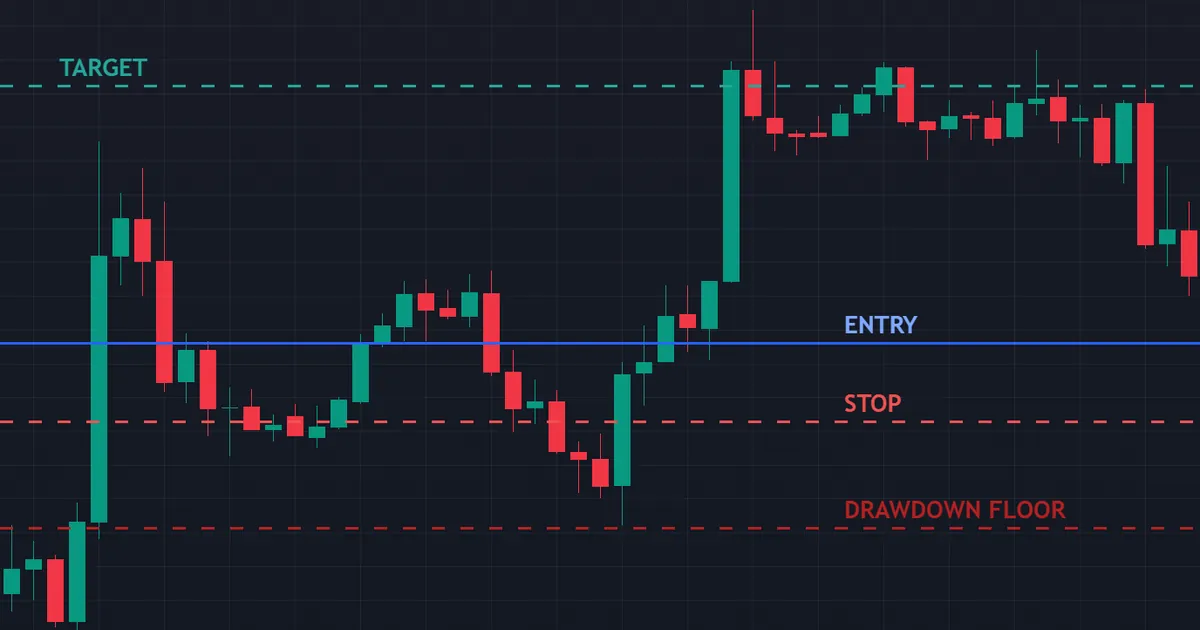
Neither shape suits everyone. So match the format to your trading frequency and your tolerance for pressure, rather than to the marketing.
What a One-Step Program Asks
A one-step evaluation sets a single profit target. Clear it without breaching the daily cap or the drawdown floor, and funding follows.
The trade-off usually sits in the risk rules. Many programs pair a single stage with a tighter drawdown floor or a stricter consistency clause.
What a Two-Step Program Asks
A two-step evaluation splits the work. Phase one carries the larger target, then a verification phase asks for a smaller one.
Each phase usually keeps the same loss limits. So the second stage feels easier on the target and identical on the risk side.
Why Both Formats Exist
Firms design evaluations to filter for durability, not brilliance. A single stage filters quickly, while two stages filter for repeatability.
Pricing follows that logic. Programs frequently charge more for a single-stage route, because the shorter path carries more risk for the firm.
The Honest Framing
Most participants never reach a payout under either format. Treat both routes as an exam you might fail, then price the fee accordingly.
Firms rarely publish clear completion figures. So ignore confident percentages from marketing pages and plan around the mechanics instead.
The Language on Sales Pages
Marketing copy leans on the friendliest number. A single-stage page highlights speed, while a two-stage page highlights room.
Strip the adjectives and keep the figures. Because every claim reduces to a target, a floor and a fee, three numbers settle most comparisons.
How the Two Formats Differ, Point by Point
Six differences cover almost every comparison. Read them together rather than one at a time.
Write your own numbers beside each line. Because programs vary widely, only your own terms settle the question.
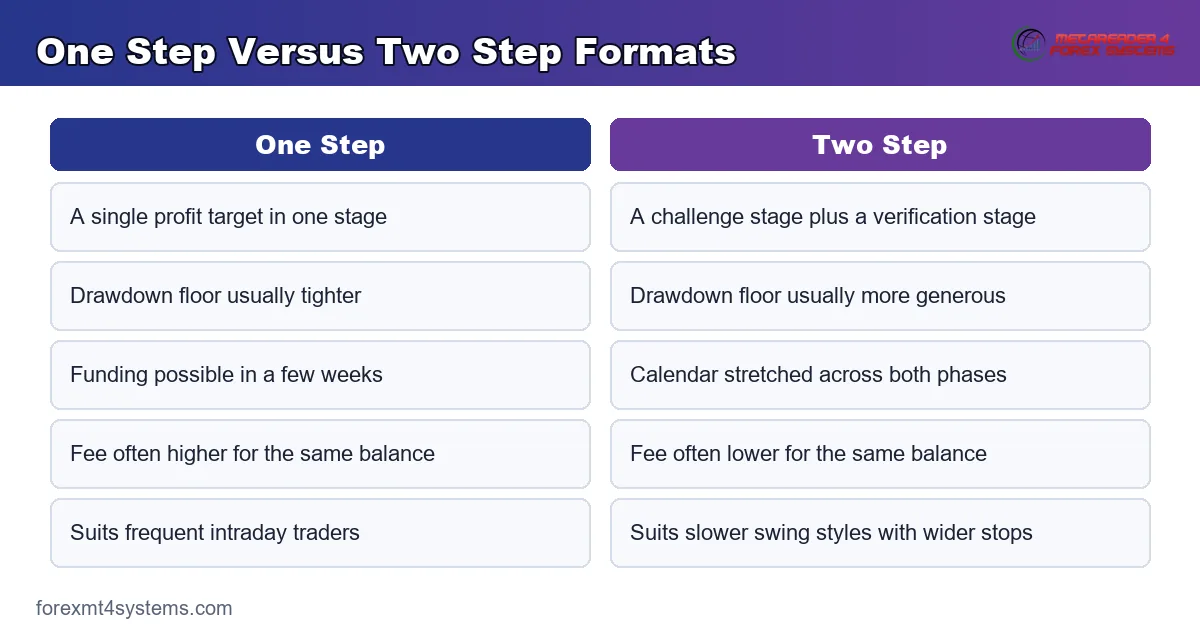
- Number of stages. One target once, against a challenge stage followed by a verification stage.
- Target size per stage. A single larger target, against two smaller targets spread across phases.
- Drawdown room. Single-stage routes often carry a tighter floor, while two-stage routes usually keep more room.
- Time to funding. One stage can finish in weeks, while two stages naturally take longer.
- Fee and reset cost. Single-stage fees usually sit higher for the same account size.
- Extra clauses. Consistency caps, minimum days and news windows differ between formats and tiers.
Notice how few of those lines concern strategy. So the format choice belongs to arithmetic and scheduling, not to your entry method.
Score each line against your own habits. Because a mismatch shows up only under pressure, an honest audit now saves a fee later.
Profit Targets and Their Arithmetic
A single-stage target sounds bigger because it arrives in one lump. Two-stage targets look gentler, yet they usually add up to a similar total.
Add both phases together before you compare. So the comparison rests on total percentage rather than on the headline of stage one.
Drawdown Room, the Real Differentiator
Loss limits matter far more than targets. A tighter floor shortens the streak your account can absorb, whatever the target says.
Divide the floor by your risk per trade for both formats. Because that number counts your survivable losses, it exposes the harder route immediately.
Time, Pacing and Minimum Days
Two stages take longer by design. A minimum day count in each phase can stretch the route across several weeks.
Single-stage routes compress that timeline. So traders with few setups per week often prefer the longer format despite the extra stage.
Fees, Resets and Refunds
Fees differ by account size, format and tier. A reset usually costs less than a fresh attempt, though the counters start again either way.
Ask about a fee refund before you buy. Many programs return the fee with an early payout, while others fold it into a later milestone.
Reading Both Rule Books Before You Pay
Sales pages summarise, and rule books decide. So open both documents side by side before any card details change hands.
Give the task twenty minutes. That short read exposes the clauses which quietly separate the two routes.
Find the Daily Cap First
A daily loss limit ends more attempts than an overall floor. Some single-stage routes shrink that cap alongside the tighter floor.
Write the cap as cash on your chosen balance. So a bad morning stops well before the rule does.
Locate the Consistency Wording
Consistency clauses appear under many names. Look for a cap on how much of your total profit one session may supply.
Check whether the clause covers the evaluation, the funded stage, or both. Because the wording varies, a quick support message beats an assumption.
Check the Minimum Day Definition
Programs count active days differently. Some accept any filled order, while others ask for a closed position or a minimum volume.
Confirm that definition for every phase. So a light session still counts toward the requirement you plan around.
Compare the Instrument Lists
Symbol availability sometimes differs between formats and tiers. Indices, metals and exotic pairs move in and out of the permitted list.
Match the list against the setups you actually trade. Because a missing symbol reshapes your week, that check belongs before checkout.
Compare the Account Sizes on Offer
Tiers rarely line up neatly between formats. One route might start at a modest balance while the other begins much higher.
Pick the smallest tier that still allows sensible lot sizes. So the percentage rules stay identical while the pressure stays low.
Remember that a bigger balance never grants more room. Because every limit scales with the account, a large tier simply raises the cash figures on both sides.
How Each Format Feels to Trade
Rules on paper and rules under pressure feel different. So consider the rhythm of each route, not only its numbers.
The emotional load matters because it drives sizing errors. A format that suits your temperament produces fewer forced trades.
The One-Step Rhythm
A single stage creates a short, intense sprint. Every session carries weight, and a bad week feels heavier because nothing follows it.
Tighter floors amplify that feeling. So the format rewards traders who already size very small and rarely deviate.
The Two-Step Rhythm
Two stages break the work into chapters. Clearing phase one delivers a psychological checkpoint before the verification phase begins.
That pause helps some traders and bores others. Because momentum fades between stages, a few traders overtrade the second phase out of impatience.
Which Style Suits Which Trader
Frequent intraday traders often clear a single stage comfortably. Their trade count fills a day requirement quickly, and their stops stay small.
Swing traders usually prefer the two-stage route. Wider stops need drawdown room, and a longer calendar suits a slower setup count.
Automation and Rule Fit
Automated systems complicate the comparison. Some programs restrict expert advisors, copy tools or high-frequency entries in one format but not the other.
Check the automation clause in both rule books. So your system does not breach a term that never applied to your demo testing.
Screen Time and Real Life
A format only works if your calendar supports it. Two phases with day counts can demand many separate sessions.
Count your realistic trading mornings per month. So the route you choose fits the life you already have.
Beyond the Fee: The Real Cost of Each Route
The sticker price tells half the story. Time, repeated attempts and emotional wear all carry a cost.
Count those items honestly. Because the cheapest headline fee often hides the most expensive path, the total matters more than the entry.
The Cost of Repeated Attempts
Traders rarely buy a single evaluation. A tighter format can produce several fees before anything clicks.
Add a realistic attempt count to your budget. So the comparison reflects the route you will actually walk.
The Cost of Time
Two phases can occupy two or three months. That period carries no income and plenty of screen time.
Price your hours as well as your fee. Because attention runs out, a long route competes with everything else you do.
The Cost of Pressure
Tight floors produce cautious trading, which sounds healthy until it turns into hesitation. Missed setups then stretch the attempt further.
Pick the format that keeps you calm. So your decisions stay ordinary rather than fearful.
The Reset Spiral
Discounted resets tempt traders back within minutes of a breach. Each purchase feels small, and several together stop feeling small at all.
Set a hard limit on attempts per quarter before you start. Because the discount arrives exactly when judgement sits lowest, a written cap protects your wallet.
Use the gap to fix the sizing that caused the breach. So the next fee buys a better attempt rather than a repeat of the last one.
A Worked Example on the Same Account Size
Numbers settle arguments faster than opinions. Picture a fifty thousand unit account under two plausible rule sets.
The single-stage route asks for ten percent with a six percent floor. The two-stage route asks eight percent then five percent, with a ten percent floor.
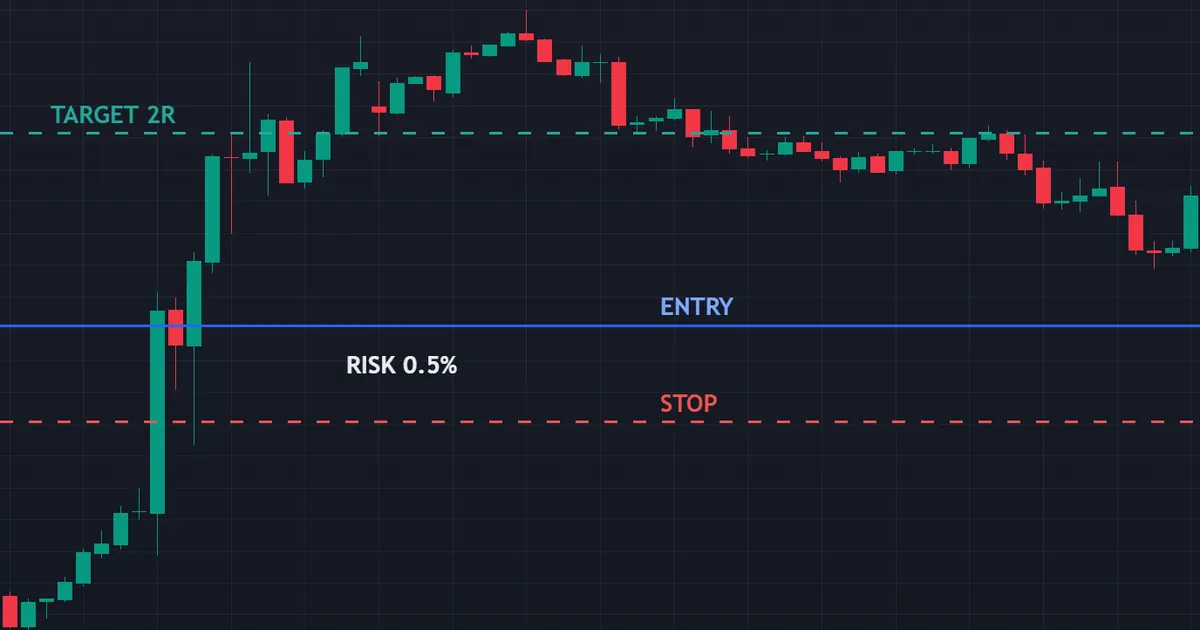
Risk half a percent per trade in both cases. Each loss therefore costs two hundred and fifty units before any spread.
The One-Step Path
Your floor sits three thousand units below the start. Divide that by two hundred and fifty and the account absorbs twelve consecutive losses.
The target equals five thousand units. At a reward of twice your risk, ten net winners clear the stage.
The Two-Step Path
Your floor now sits five thousand units below the start. The same risk per trade absorbs twenty consecutive losses instead of twelve.
Phase one asks for four thousand units, then phase two asks two thousand five hundred. Eight net winners clear the first stage, and five clear the second.
What the Arithmetic Shows
The two-stage route demands more total profit. It also hands you nearly double the survivable losing streak.
Most traders fail on the floor rather than the target. So the extra room usually outweighs the extra percentage, especially for a first attempt.
Changing One Variable
Lift risk to two percent and the picture inverts fast. The single-stage floor now absorbs three losses, and an ordinary bad week ends the attempt.
Run the same arithmetic before you buy anything. Because sizing decides the outcome, a calculator answers the format question in seconds.
The Day It Goes Wrong
Picture five losses across one difficult morning. On the single-stage route you sit one thousand two hundred and fifty units down.
That leaves under two thousand units of floor. Because the cushion now looks thin, the next session starts under real pressure.
The same morning on the two-stage route leaves nearly four thousand units. So an identical trading day feels manageable rather than critical.
Download the complete indicator database
Put these concepts on your charts. One email unlocks the full library of 1,380+ indicators with compiled MT4 and MT5 files, plus my TradingView scripts. No paywall, no spam, unsubscribe any time.
Get free access to my indicator database
One email unlocks 1,380+ free MT4, MT5 and TradingView indicators — the complete library. No single-tool download; you get the whole database.
Common Mistakes When Choosing a Format
Six errors send traders down the wrong route. The compare graphic below sets the two formats side by side on the points that matter.
Comparing Targets and Ignoring Floors
A smaller target looks friendlier on a sales page. Yet a tighter floor decides how many losses you survive. So compare loss limits first, then targets.
Choosing Speed Over Room
Single-stage routes promise faster funding, which appeals after a failed attempt. Speed only helps if the account survives. So pick the format your sizing can absorb.
Forgetting to Add the Phases
Two smaller targets can total more than one larger target. Traders who compare only stage one misjudge the workload. So add both phases before you decide.
Overlooking the Drawdown Type
A static floor and a trailing floor behave very differently under the same percentage. Many format comparisons skip this entirely. So confirm the type in both rule books.
Ignoring the Minimum Day Count
A day requirement in each phase can double the calendar. Traders with limited screen time then rush filler entries. So count the required sessions before you commit.
Buying the Largest Account Available
Bigger balances carry the same percentages and much heavier pressure. A smaller account teaches the same lessons cheaply. So start small whichever format you pick.
Choosing Between the Formats: Quick Reference
Run this list before you pay for anything. It takes a few minutes and prevents the common regrets.
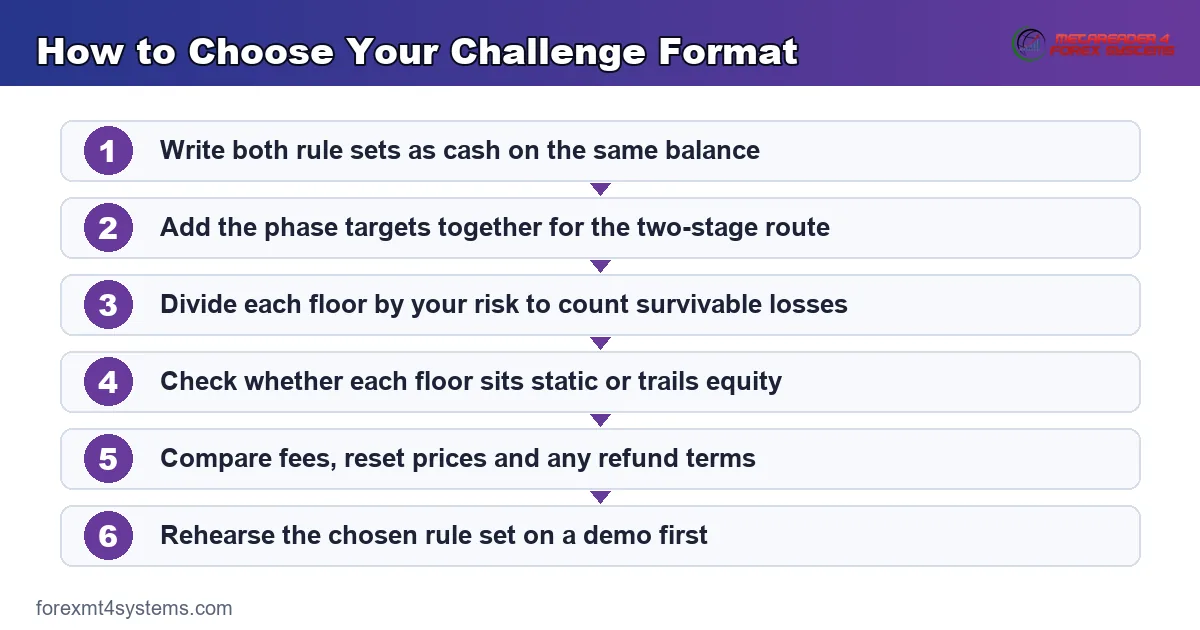
- Write both rule sets as cash figures on the same account size.
- Add the phase targets together for the two-stage route.
- Divide each floor by your risk per trade to count survivable losses.
- Confirm whether each floor sits static or trails your equity.
- Check the daily cap separately from the overall floor.
- Count the minimum trading days in every phase.
- Compare fees, reset prices and any refund terms.
- Read the consistency clause in both rule books.
- Check automation, news and holding-time restrictions.
- Match the calendar to your realistic screen time.
- Pick the smallest account size the program offers.
- Rehearse the chosen rule set on a demo for two weeks.
- Confirm the instrument list for every phase of the route.
- Ask whether the funded terms change with the format you pick.
- Check for any expiry date attached to your chosen tier.
- Budget for more than one attempt before you commit.
Pitfalls and Edge Cases
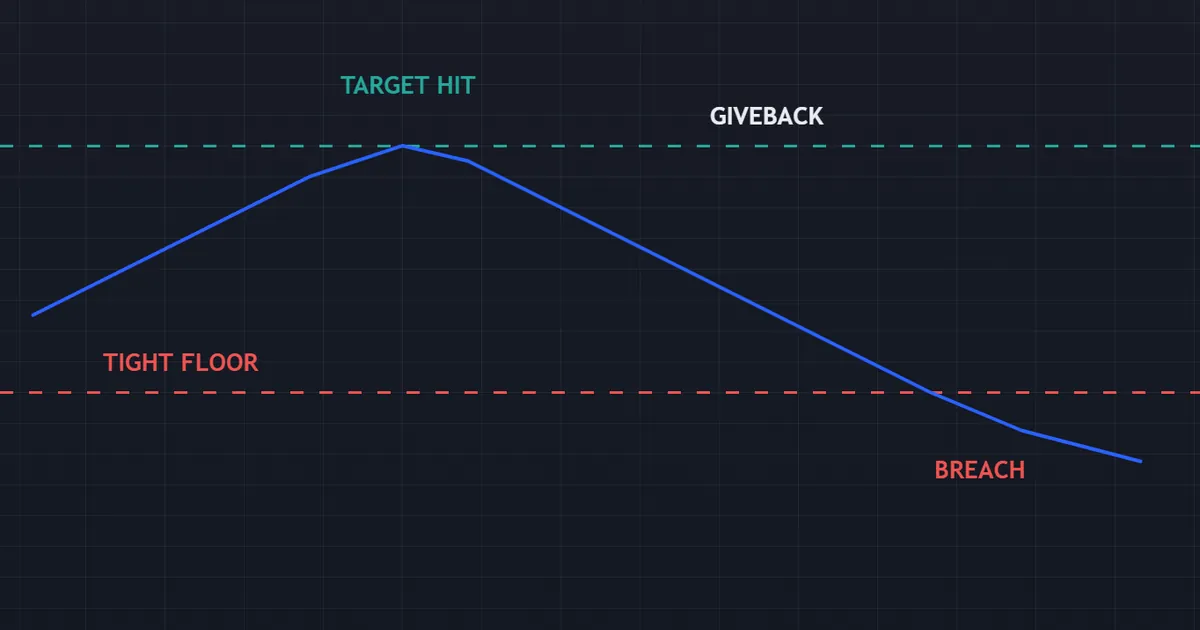
A few details escape most format comparisons. The chart below shows an equity path that clears a target yet trips a tighter floor.
Consistency Caps Hidden in One Format
Some single-stage routes add a consistency rule to offset the shorter path. One strong day can then stall an otherwise clean pass. So read the clause before you compare fees.
Trailing Floors on the Faster Route
A trailing floor climbs behind your equity, which shrinks your cushion after every good run. Traders who track the starting balance get caught. So recalculate the real distance daily.
Verification Phases With Different Rules
A second phase sometimes changes the daily cap or the instrument list. Traders assume continuity and breach a term they never read. So compare both phases line by line.
Resets That Change the Format
A reset occasionally moves you onto different terms rather than repeating the old ones. The counters restart, and so might the rule set. So confirm what a reset actually buys.
Time Limits That Still Exist
Many programs dropped hard deadlines, though some tiers keep them. A quiet month can therefore end an attempt without a single breach. So check for any expiry date on your tier.
Weekend and Rollover Clauses
Holding rules sometimes differ between a challenge phase and a verification phase. A swing trade can breach one while showing a profit. So confirm the holding rules for each stage.
Scaling Promises Attached to a Format
Scaling plans sometimes favour one route over the other. A slower format can therefore pay more over a year. So read the scaling terms alongside the evaluation terms.
What Happens After Either Format Ends
Both routes converge on the same destination. A funded account, a rule set and a payout cycle await either way.
The differences fade quickly at that point. So judge the formats on how likely each one leaves you standing.
The Funded Rules Usually Match
Most firms apply one funded rule set regardless of the evaluation route. The floor, the daily cap and the split carry across.
Confirm that before you assume it. Because a few programs vary funded terms by route, the detail belongs in your comparison.
Payout Timing Rarely Depends on Format
Minimum days and payout windows attach to the funded account, not to the evaluation. So a faster pass rarely means a faster first withdrawal.
Read the payout calendar during your comparison. That single page often reveals more than either evaluation summary.
Habits Travel With You
Whatever route you take, your sizing habits follow. A trader who oversizes during phase one will oversize once funded.
Fix the habit rather than the format. Because the rules stay strict after funding, discipline outlasts any clever route choice.
Related Concepts to Study Next
Format choice rests on drawdown arithmetic, so a few nearby topics repay the reading. Start with the rule set, then the loss limits.
Read our explainer on the prop firm challenge for the full rule set, then check our notes on prop challenge pass rate for an honest look at outcomes. Because loss limits decide most attempts, study static vs trailing drawdown and keep our guide to prop firm rules nearby. For execution, read how to pass a prop firm challenge and our piece on drawdown in trading, then model both floors with our drawdown calculator. More guides sit in our prop trading library.
FAQ
Which is easier, one step vs two step prop firm challenges?
Neither format is easy, and the honest answer depends on your sizing. Single-stage routes finish faster but usually allow less drawdown room. Two-stage routes ask for more total profit while leaving a longer survivable losing streak.
Do one-step programs really cost more?
Fees vary by firm, account size and promotion, so treat any fixed claim with care. Single-stage routes frequently carry a higher fee for the same balance, because the shorter path shifts risk onto the firm. Compare the reset price as well as the entry price.
Does a verification phase have a smaller target?
Usually, yes. Most two-stage programs set a lower target for the verification phase while keeping the same loss limits. Add both phase targets together when you compare the route against a single-stage alternative.
Which format suits a swing trader?
Two-stage routes generally suit slower styles better. Wider stops need more drawdown room, and a longer calendar matches a lower setup count. Check the weekend and rollover clauses too, since swing positions run into them often.
Can I switch formats after failing?
Most firms let you buy a different route rather than reset the old one. Nothing carries over, so the counters and the day count start again. Use the gap to fix your sizing before you pay for anything else.
Is a tighter drawdown really that important?
Yes, because the floor decides how many losses your account survives. Divide the floor by your cash risk per trade to see the count. A route with double the room absorbs double the ordinary bad patch, whatever the target says.
Does one format lead to better funded terms?
Sometimes, since scaling plans and splits occasionally differ by route. Read the funded terms alongside the evaluation terms rather than afterwards. Results are not guaranteed; past performance is not indicative of future results.
External references
- For background on this concept, see Sequential Analysis on Wikipedia.
- For broader market context, see Risk Capital at BabyPips Forexpedia.

About the author
Written by Dominic Walsh, a Forex trader and MT4/MT5 indicator, Expert Advisor and script developer. Every tool on forexmt4systems.com is tested on live charts before release and ships with ready-to-use compiled MT4 (.ex4) and MT5 (.ex5) files. Learn more about the trader and developer behind this site.
How we build, test and correct every tool: Editorial & Testing Policy. Trading carries risk; see the disclaimer.