
Every funded-account hopeful wants to know how to pass a prop firm challenge without burning a second fee. The answer looks dull on paper: size to the drawdown, risk little per trade, respect the daily cap, and stop while you are ahead.
This guide turns that idea into a working plan, and it stays firm-neutral throughout. You will build the arithmetic first, then pace the attempt, then walk a full example of how to pass a prop firm challenge calmly.
How to Pass a Prop Firm Challenge, Step by Step
Passing rests on one insight. The floor beneath your account matters far more than the target above it.
Traders who chase the target oversize and breach a limit. Traders who protect the floor drift toward the target almost by accident.
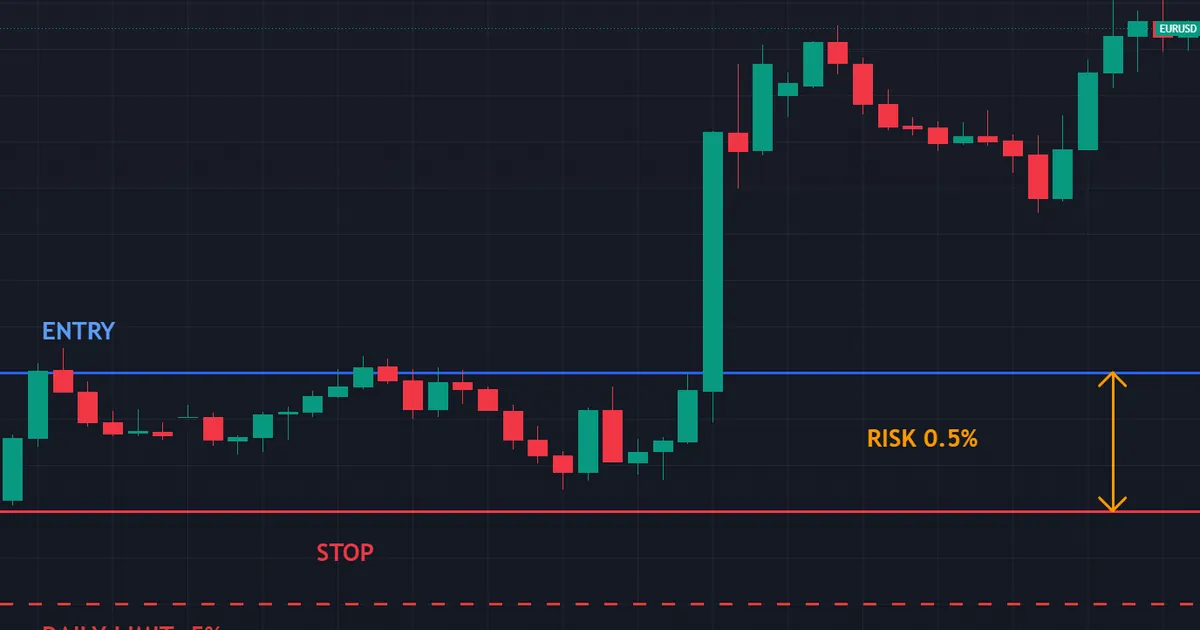
So flip your usual priority. Decide first how much room you have, then decide how large a position that room allows.
Everything else follows from that order. Because the rules punish loss rather than reward speed, a slow attempt beats a fast one every time.
What Actually Ends Attempts
Rule breaches end most evaluations, not losing streaks. A daily cap catches revenge trading, while a drawdown floor catches oversized positions.
Very few traders fail because their method lacks an edge. Instead, a workable method meets a position size the rules cannot absorb.
So the fix rarely lives in your charts. Because sizing causes the damage, sizing also holds the cure.
The Mindset That Passes
Treat the attempt as an exam in restraint. Nobody hands out extra marks for reaching the target early.
Aim to look boring on the equity curve. So small steady gains, a flat day here and there, and no single session that swings the balance sharply.
Practise the Rule Set First
Run a demo account under the exact limits for two weeks. Set the same floor, the same daily cap and the same day count on paper.
Two weeks of rehearsal costs nothing and reveals plenty. Because you find your own weak points before any fee changes hands, that fortnight often saves an entire attempt.
Watch for the sessions where you break your own rules. So you learn which conditions tempt you, then plan around them rather than hoping they vanish.
Before You Buy the Attempt
Choose the smallest account the program offers. A modest balance carries the same percentage rules and a far lighter emotional load.
Check the drawdown type before anything else. A static floor suits a trader who profits early, while a trailing floor demands constant recalculation.
Then read the clauses on automation, holding time and news. Because a single overlooked line can void a clean attempt, that reading belongs before the checkout page rather than after it.
The Plan in Six Steps
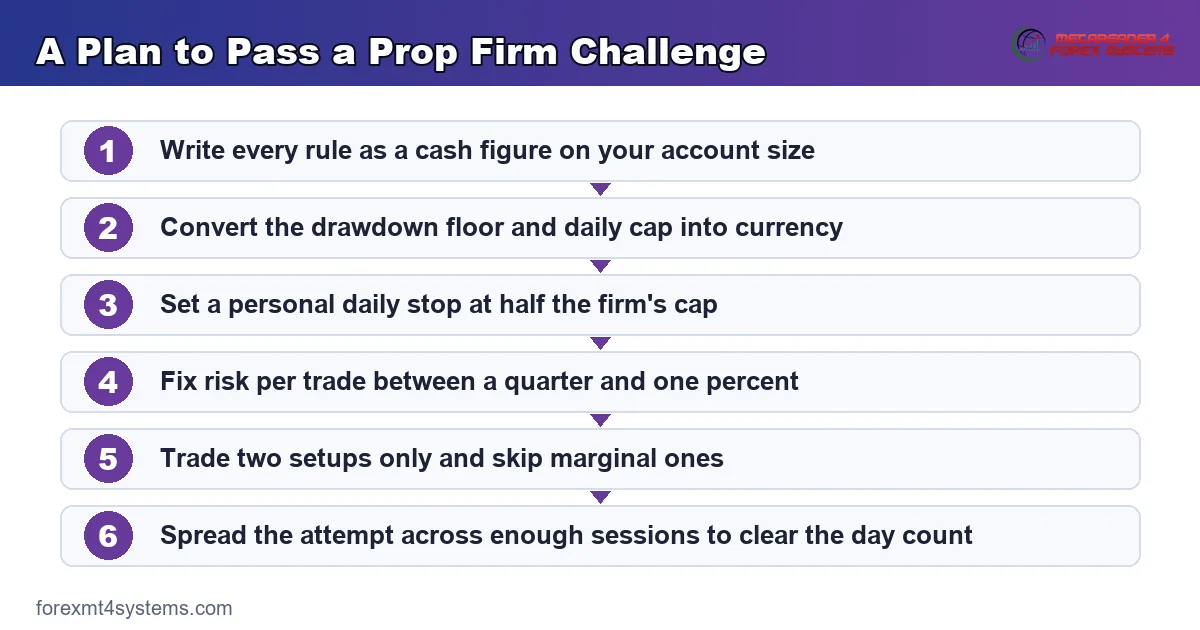
A written plan removes most of the guesswork. Follow these steps in order before you place a single trade.
Print the list and keep it beside your platform. Because pressure erodes memory, a visible plan outperforms a remembered one.
- Write down every rule as a number. Target, maximum drawdown, drawdown type, daily cap, minimum days, extra clauses.
- Convert the floor into cash. Turn each percentage into a currency amount on your exact account size.
- Set a personal daily stop. Choose roughly half the firm’s daily cap, then obey it without exception.
- Fix your risk per trade. A quarter to one percent of the balance suits almost every rule set.
- Pick two setups and nothing else. Fewer patterns mean fewer marginal trades and cleaner data.
- Schedule the attempt. Spread the work across enough sessions to clear the day count without hurry.
Notice that only one step mentions the market. So the bulk of a passing plan sits in arithmetic and scheduling.
Review the plan after every session rather than mid-trade. Because a rule bent once tends to break twice, the review keeps small slips from compounding.
Turn Percentages Into Cash
Percentages hide the danger. Write the floor and the daily cap as real amounts on your account size, then tape them somewhere visible.
Cash figures change behaviour. Because a cap expressed in currency feels concrete, most traders stop far sooner than they would from a percentage.
Set a Personal Daily Stop
Never trade to the firm’s limit. Halve it, then treat your own number as the wall.
That buffer absorbs slippage, a bad fill or a news spike. So a wobbly session ends with a small dent rather than a locked account.
Choose Two Setups
A narrow playbook produces cleaner results under pressure. Two patterns you know well beat six you half-remember.
Fewer setups also protect the day count. Because you will pass on plenty of sessions, the attempt stretches naturally across the calendar.
Review After Every Session
Spend five minutes at the close of each day. Note the distance to the floor, the distance to the target, and any rule you bent.
That short review catches drift early. Because a slightly larger lot or a slightly later stop feels harmless in the moment, a written check keeps the pattern visible.
Log the flat days too. So your journal shows the whole attempt rather than only the eventful parts, which makes the next one easier to plan.
Size to the Drawdown, Not the Target
This single habit decides most attempts. Work from the floor upward and the rules stop feeling hostile.
The target then becomes a by-product. You reach it because you survived long enough to let a modest edge accumulate.
The Arithmetic of Survival
Start with your maximum drawdown in cash. Divide it by your risk per trade and you get the number of consecutive losses the account can absorb.
Aim for a count in the high twenties or better. Because a run of six or seven losses happens to everyone eventually, a thin cushion turns an ordinary streak into a failure.
Risk Per Trade That Fits the Rules
Half a percent per trade suits most evaluations comfortably. A five percent daily cap then absorbs ten losses in a single session.
Push that to two percent and the picture darkens fast. Two losses eat most of a daily cap, and a modest streak reaches the floor within days.
So keep the number small even when the setup looks compelling. A calculator settles it in seconds, so feed our free prop firm position size calculator your balance, stop distance and daily cap before each trade.
Watch a Trailing Floor Closely
A trailing floor climbs behind your equity as the account grows. Your cushion therefore shrinks in cash terms exactly when you feel confident.
Recalculate the floor after every winning day. So you always know the real distance to a breach, rather than the distance from your starting balance.
Where the Reward Target Fits
Small risk needs a decent reward to move the balance. A reward of twice your risk turns a modest strike rate into steady progress.
Avoid stretching for very distant targets, though. Because a wide target lowers how often trades finish, it also lengthens the attempt and tests your patience.
Two to three times your risk sits in the sweet spot for most methods. So take the ordinary exit rather than holding for a rare outsized run.
Pacing the Attempt
Timing matters nearly as much as sizing. A well-paced attempt clears the day count and keeps your nerves intact.
Plan the calendar before you start. Because a deadline invites haste, an attempt without one lets you trade at a natural rhythm.
Meeting the Minimum Days
Count the required active days and add a margin. Trading on eight days when the rule asks for five costs nothing and removes a worry.
Spread those days across two or three weeks. So the market gives you several different conditions, and your results reflect a process rather than one lucky pattern.
Stopping While You Are Ahead
Book a green day and walk away. A gain given back the same afternoon costs more than the gain was worth.
Set a daily profit stop as well as a loss stop. Because a strong morning tempts overtrading, that second rule protects the balance you just earned.
Handling a Losing Run
Cut your size in half after two losing days. Return to normal only once you post a clean session.
Never widen a stop to avoid a loss. So the damage stays measured, and the floor keeps its distance while you find your footing again.
Choosing Your Sessions
Pick the hours your setups actually appear in. A trader who reads the London open badly gains nothing from trading it.
Two focused hours beat a whole day of watching. Because attention fades, a short window keeps your decisions sharp and your trade count low.
Block those hours in a calendar and treat them as work. So the attempt gains a rhythm, and the day count fills without any late scramble.
A Worked Example of a Passing Attempt
Walk one attempt end to end. Picture a fifty thousand unit account with an eight percent target, a five percent daily cap and a ten percent floor.
Your floor sits five thousand units below the start. The daily cap allows two thousand five hundred units in one session, and your personal stop halves that.
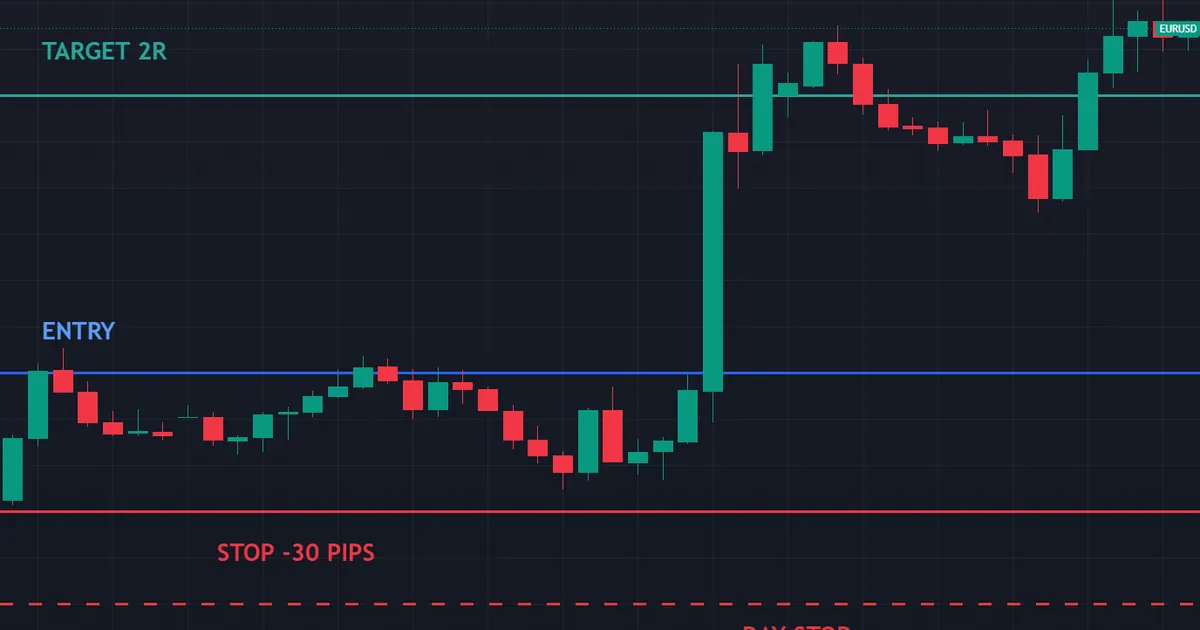
Risk half a percent per trade and each loss costs two hundred and fifty units. So your personal daily stop of one thousand two hundred units absorbs four losses before you close the platform.
Building the Position Size
Take a setup with a stop thirty pips away. Your risk budget of two hundred and fifty units then fixes the lot size precisely.
Never round that number upward. Because a slightly larger lot compounds across dozens of trades, disciplined rounding protects the whole attempt.
Reaching the Target
Eight percent equals four thousand units. At a reward of twice your risk, each winner returns five hundred units.
So eight net winners clear the phase. Spread across three weeks, that pace asks for well under one good trade per session.
The Day It Goes Wrong
Imagine four losses in one morning. You sit one thousand units down, inside your personal stop and far from the firm’s cap.
Close the platform and log the session. Because the floor remains four thousand units away, tomorrow starts with your plan fully intact.
Compare that with a two percent risk on the same account. Four losses would cost four thousand units, which lands you on the floor and ends the attempt in a single morning.
Download the complete indicator database
Put these concepts on your charts. One email unlocks the full library of 1,380+ indicators with compiled MT4 and MT5 files, plus my TradingView scripts. No paywall, no spam, unsubscribe any time.
Get free access to my indicator database
One email unlocks 1,380+ free MT4, MT5 and TradingView indicators — the complete library. No single-tool download; you get the whole database.
Common Mistakes That End Attempts
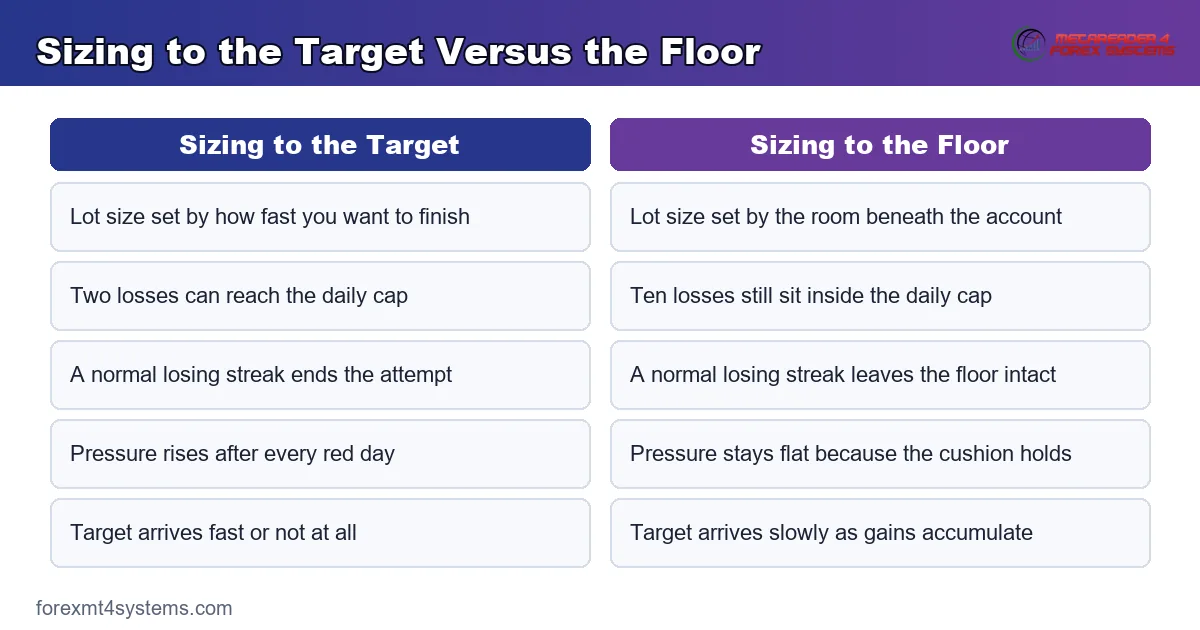
Six errors account for most failed evaluations, and every one of them is avoidable. The compare graphic below sets target-first sizing against floor-first sizing.
Sizing Backwards From the Target
Dividing the target by the days left produces an oversized position. One bad session then ends the attempt. So calculate from the floor, and let the target take as long as it takes.
Trading to the Firm’s Daily Cap
Using the full cap leaves no room for a bad fill or a news spike. A breach costs the whole fee. So set a personal stop at roughly half the limit and honour it.
Revenge Trading After a Loss
The trade that follows a painful loss is usually the worst of the day. Size creeps up, and the plan disappears. So close the platform after your personal stop and return tomorrow.
Chasing the Minimum Days
Traders who hit the target early sometimes force trades to clear the day count. Those filler trades carry no edge. So schedule enough sessions from the start and take only real setups.
Ignoring a Trailing Floor
A floor that follows your equity tightens after every good run. Traders who track the starting balance instead get caught by a small giveback. So recalculate the real distance daily.
Skipping the Extra Clauses
Consistency rules, holding-time limits and news windows sit in most rule books. A profitable attempt can still fail one of them. So read every clause and map your style against it before you pay.
Pass-Plan Quick Reference
Run this list before each session. It takes a minute and keeps the plan honest.
- Write every rule as a cash figure, not a percentage.
- Risk a quarter to one percent of the balance per trade.
- Set a personal daily stop at half the firm’s cap.
- Set a daily profit stop, then bank the day.
- Recalculate a trailing floor after every winning day.
- Trade two setups only, and skip marginal ones.
- Spread the attempt over enough sessions to clear the day count.
- Halve your size after two losing days.
- Trade lighter around major data releases.
- Log every session, including the flat ones.
- Count correlated positions as one trade when you size.
- Rehearse the full rule set on a demo before you pay.
Pitfalls and Edge Cases
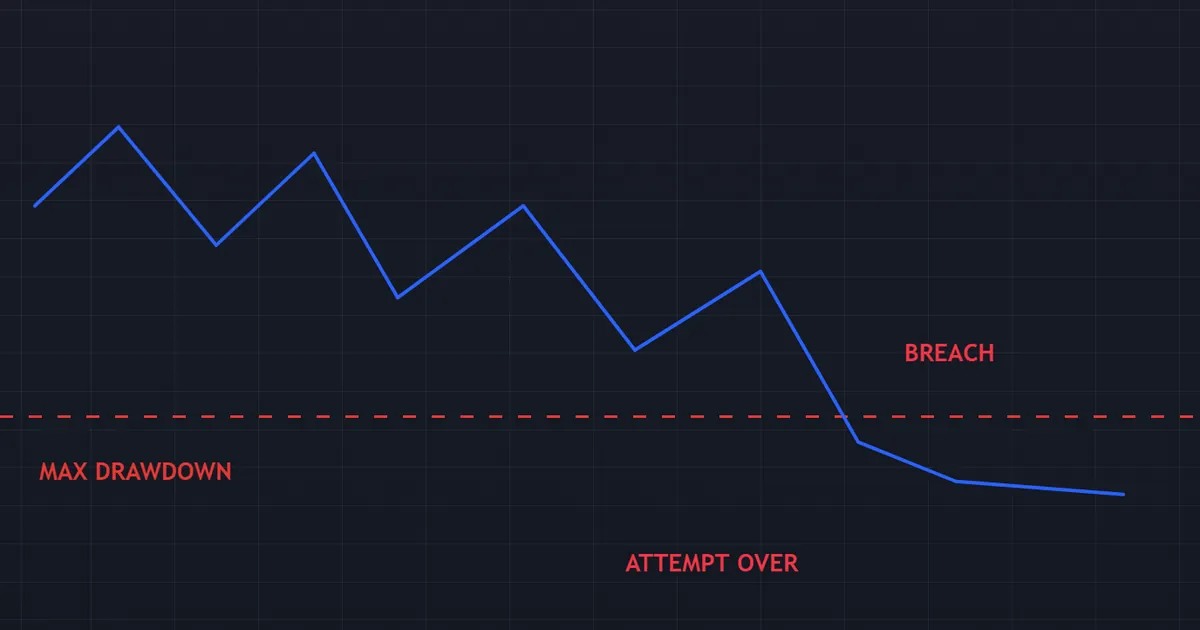
A few wrinkles catch even disciplined traders, so keep them in view. The chart below shows an equity path that ignores the plan and pierces the floor.
Weekend and Overnight Clauses
Some programs bar positions held over a weekend or a rollover. A swing trade can breach that rule while showing a profit. So confirm the holding rules before you plan a longer trade.
Slippage Around News
Fast releases can jump a price straight through your stop. One gap then erases a week of careful gains. So trade smaller around major data, or simply stand aside.
Correlated Positions
Three trades on related pairs behave like one large trade. Your real risk triples while the ticket sizes look modest. So count correlated exposure as a single position when you size.
Equity-Based Floors and Open Trades
A floor that watches equity reacts to unrealised losses. A position that dips before recovering can breach the limit anyway. So keep stops tight enough that no single trade threatens the floor.
Resets and Fresh Counters
Buying a reset returns your target, floor and day count to the start. Nothing carries over from the previous attempt. So rebuild the plan from scratch rather than resuming mid-stream.
Platform Outages Mid-Trade
Feeds stall and dashboards freeze occasionally. A stop that fails to fire can breach a limit through no fault of yours. So keep screenshots, contact support quickly, and never rely on a mental stop.
Dashboard Figures That Lag
Some panels refresh your remaining room only every few minutes. Trading off a stale number invites an accidental breach. So track your own daily loss in a note and treat the dashboard as a second opinion.
What to Do After You Pass
The funded stage rewards the same habits, only more so. Real capital now sits behind every trade.
Keep the Same Risk
Many traders double their size the moment funding lands. That single change undoes the discipline that earned it. So keep your risk per trade exactly where it was, then let a scaling plan grow the account.
Take an Early Payout
Request a withdrawal as soon as the rules allow. A completed payout proves the whole machine works and removes a nagging doubt. Because cash in hand also steadies your nerves, that first cycle pays twice.
Respect the Consistency Clause
Many programs cap how much of your total profit one day may supply. A single outsized session can stall a withdrawal even though the balance looks healthy. So keep your best day modest against the whole cycle, and check the stated percentage before you request cash.
Keep Trading the Same Plan
The plan that passed the evaluation also survives the funded stage. Nothing about real capital rewards a bolder approach.
Revisit your cash figures whenever the balance changes, though. Because percentage rules scale with the account, a larger balance quietly permits a larger loss in currency terms. So recalculate after every scaling step and keep the same discipline in place.
Related Concepts to Study Next
A passing plan rests on ordinary risk management, so a few nearby ideas repay the reading. Start with the rules, then the sizing.
Read our explainer on what is a prop firm challenge for the rule set in full, then study why traders fail prop challenges to see the traps up close. Because the terms differ everywhere, keep our guide to prop firm rules and our primer on what is a prop firm nearby. For the arithmetic, read our notes on risk per trade and position sizing, then check any lot with our position size calculator. More guides sit in our prop trading library.
FAQ
How to pass a prop firm challenge on the first attempt?
Write every rule as a cash figure, risk well under one percent per trade, and set a personal daily stop at half the firm’s cap. Spread the attempt across enough sessions to clear the minimum days. So the target arrives slowly while the floor stays far away.
What risk per trade should I use?
A quarter to one percent of the balance suits nearly every rule set. At half a percent, a five percent daily cap absorbs ten losses in one session. Larger risk shortens that cushion sharply, which is why most failed attempts trace back to sizing.
How long should a challenge take?
Two to six weeks works well for most traders, since that span clears any day count without hurry. Few programs now impose a hard deadline, so check your terms. Nothing rewards you for finishing early, and haste causes most breaches.
Should I trade around news releases?
Trade lighter or stand aside, since fast moves can jump straight past a stop. Several programs also restrict entries inside a news window, so read that clause first. One gap can undo a week of patient work.
What if I lose several trades in a row?
Halve your size after two losing days, and return to normal only after a clean session. Never widen a stop to avoid booking a loss. Because a measured streak leaves the floor untouched, the attempt survives an ordinary bad patch.
Does passing mean steady income?
No, a funded account is an opportunity rather than a salary, and the same rules can still end it. Keep your risk per trade unchanged after funding, then request an early payout to test the cycle. Results are not guaranteed; past performance is not indicative of future results.
External references
- For background on this concept, see Trading Plan at Corporate Finance Institute.
- For broader market context, see Goal Setting on Wikipedia.

About the author
Written by Dominic Walsh, a Forex trader and MT4/MT5 indicator, Expert Advisor and script developer. Every tool on forexmt4systems.com is tested on live charts before release and ships with ready-to-use compiled MT4 (.ex4) and MT5 (.ex5) files. Learn more about the trader and developer behind this site.
How we build, test and correct every tool: Editorial & Testing Policy. Trading carries risk; see the disclaimer.