
New traders often ask what is a prop firm challenge before they hand over an entry fee. A challenge is a paid evaluation that tests whether you can grow an account while obeying a strict risk rule set.
This guide explains what is a prop firm challenge in plain terms, and it stays firm-neutral throughout. You will meet each rule in turn, see how one-step and two-step formats differ, and learn what happens the moment you pass.
What Is a Prop Firm Challenge, Defined
A challenge is an audition on a simulated account. You pay once, then trade toward a profit target without breaking any limit along the way.
Pass it and the firm hands you a funded account. Break a rule and the attempt ends, whatever your balance says at that moment.
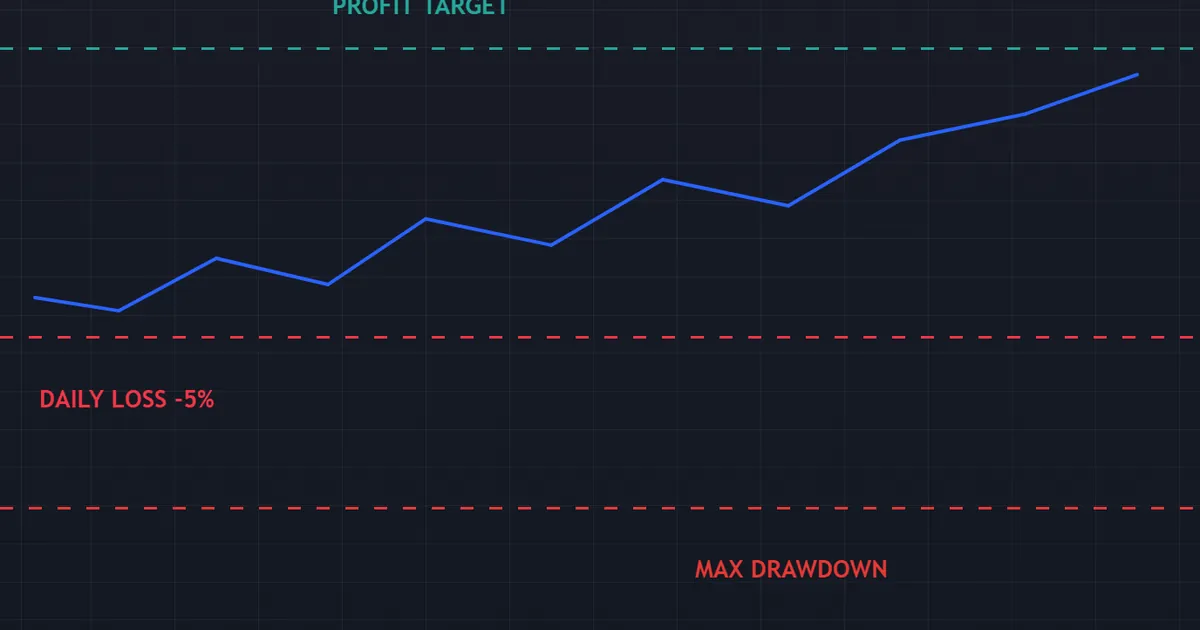
So the test measures two things at once. Skill gets you toward the target, while discipline keeps you inside the floors that sit beneath you.
Most traders focus only on the first half. Because the rules end far more attempts than the market does, the second half deserves equal attention.
Why Firms Run an Evaluation
A firm cannot hand capital to a stranger. It needs evidence that you size sensibly, cut losses and repeat a process.
The challenge supplies that evidence cheaply. Simulated capital costs the firm almost nothing, while the entry fee covers the admin and the marketing.
So the format suits both sides on paper. You get a low-cost route to size, and the firm gets a filter that scales to thousands of applicants.
What the Fee Buys
The fee buys one attempt, a platform login and a rule set. Nothing more travels with it.
Treat that money as spent the moment it leaves your account. Because a failed attempt returns nothing, a sensible trader budgets for the loss up front.
Simulated Capital, Real Consequences
Every challenge runs on demo money. The prices come from a live feed, yet no order reaches a real venue during the evaluation.
That fact changes nothing about your behaviour, though. So trade the challenge exactly as you would trade savings, since the habits you show now decide whether real capital follows.
Challenge, Evaluation or Audition
Programs use several names for the same thing. Challenge, evaluation, assessment and audition all describe one paid test.
Phase names differ too. A two-part program might call the second stage verification, confirmation or phase two, yet the mechanics rarely change.
So ignore the vocabulary and read the numbers. Because every program reduces to a target, a floor, a daily cap and a day count, those four figures let you compare any two offers fairly.
The Rules That Define a Challenge
Four numbers shape almost every evaluation. Learn them once and any firm’s offer becomes readable at a glance.
Read them as a set rather than a list. Because they interact, a generous target means little beside a tight floor.
- Profit target. The gain you must reach, often near eight or ten percent of the starting balance.
- Maximum drawdown. The hard floor beneath the account, commonly around eight to twelve percent.
- Daily loss limit. The most you may lose in one trading day, often four or five percent.
- Minimum trading days. A count of separate active days, which stops a single lucky session from passing you.
Notice how three of those four cap your losses. So the rule book cares far more about how you lose than about how you win.
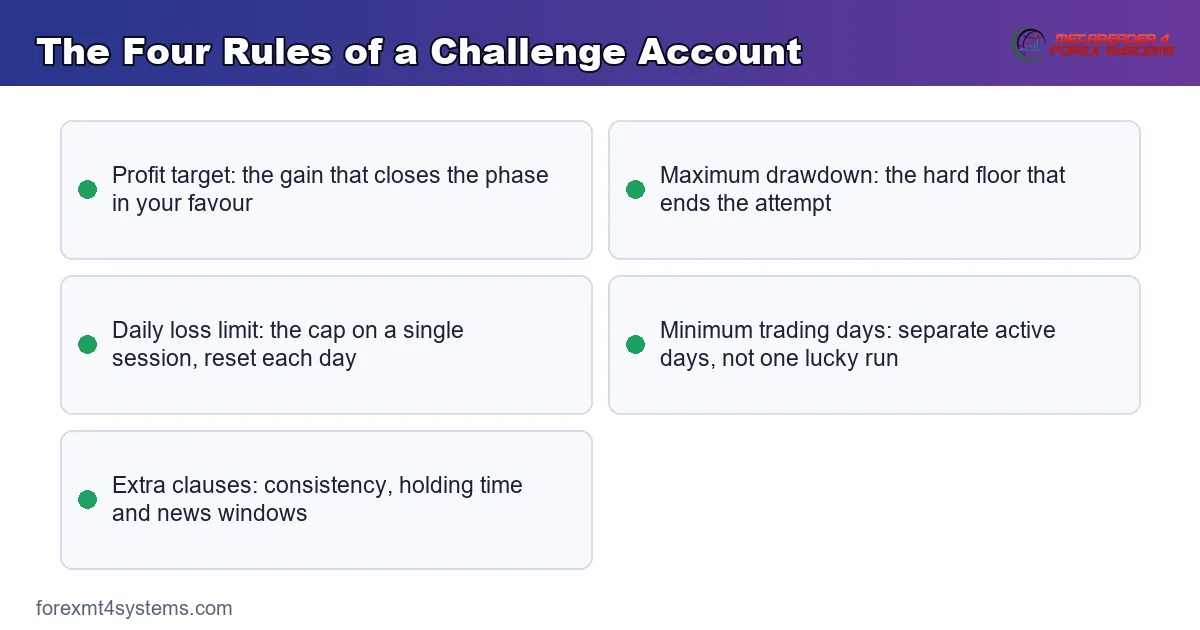
Some programs add a consistency clause, a holding-time rule or a news restriction. Because those extras vary widely, read the full terms rather than a comparison table.
Profit Target
The target sets the finish line. Reach it and, provided you also met the day count, the phase closes in your favour.
Nothing rewards you for arriving early. So a trader who takes six weeks passes on identical terms to one who takes six days.
Maximum Drawdown
Maximum drawdown marks the lowest point your account may reach. Touch it and the attempt ends immediately.
Two flavours exist, and the difference is large. A static floor sits at a fixed level below your starting balance, while a trailing floor climbs behind your equity as it grows.
So a trailing floor tightens exactly when you succeed. Because a giveback after a good run can breach it, that variant ends more accounts than any other rule.
Daily Loss Limit
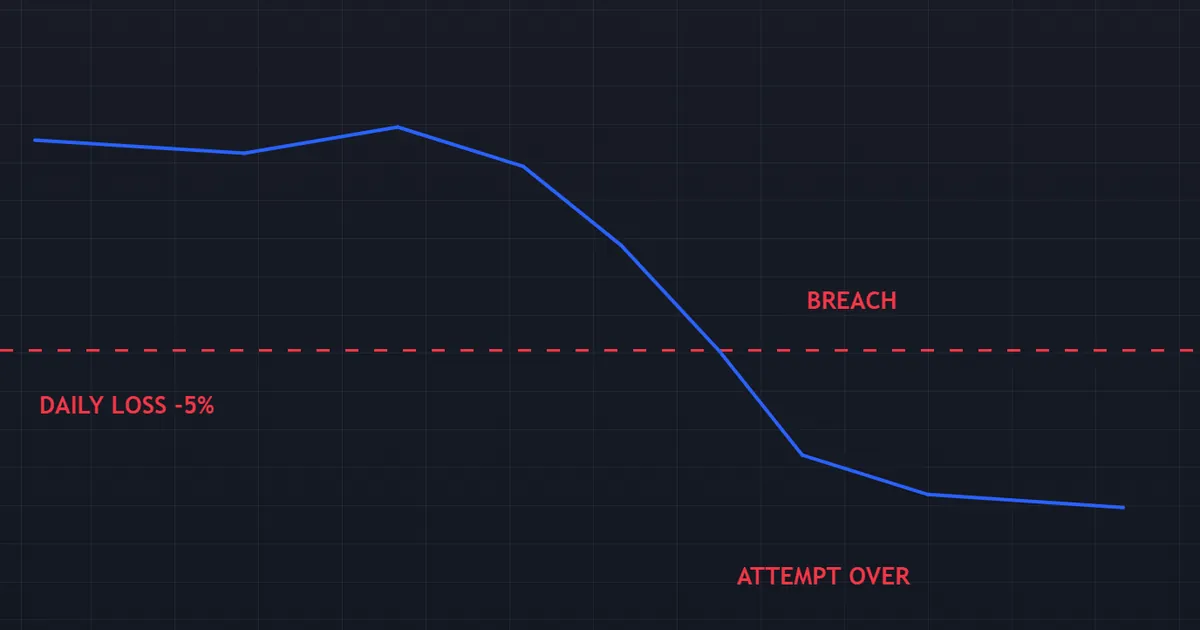
The daily cap limits one session’s damage. Cross it and the platform locks you out, either for the day or for good.
Most firms measure the cap from your balance or equity at the day’s start. So the room resets each morning, which makes the rule a natural stopping signal.
Minimum Trading Days
Day counts stop a jackpot session from qualifying you. A firm wants several separate days of evidence rather than one wild afternoon.
Plan around the requirement instead of fighting it. So if a program asks for five active days, spread your work across at least that many and avoid a rushed finish.
The Extra Clauses
Beyond the four core numbers sit a handful of side rules. Each one can end an attempt on its own.
A consistency clause caps how much of your total profit any single day may supply. Holding-time rules block very short trades, while news windows bar entries around major releases.
Automation limits appear too. Many programs restrict certain robots, copy trading or latency tricks, and some ban them outright. So map your method against each clause before you pay, since a profitable style can still fail one of them.
One-Step Versus Two-Step Evaluations
Programs package the test in two common shapes. Both measure the same qualities, yet they feel different to trade.
Pick the shape that suits your pace rather than the one with the friendlier headline. Because the format changes your workload, it deserves a moment’s thought.
The One-Step Format
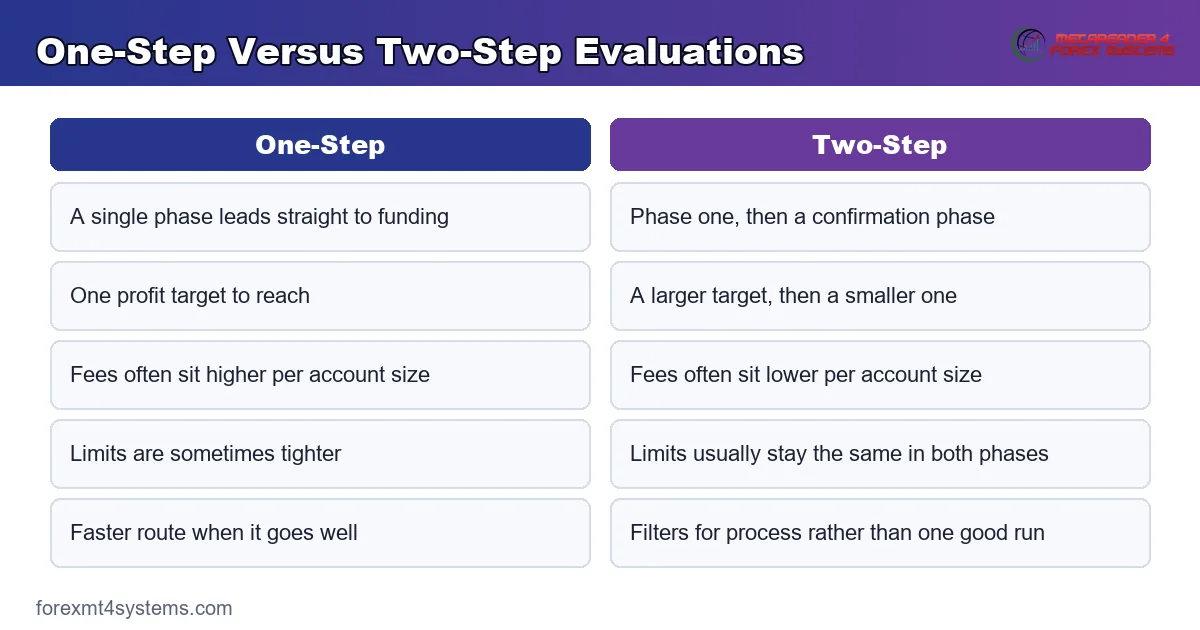
A single phase leads straight to a funded account. You hit one target inside the limits and the evaluation ends.
Speed is the obvious appeal. Still, one-step programs often pair the shorter route with tighter floors or a consistency clause, so read the trade-off carefully.
The Two-Step Format
Two phases split the work. Phase one usually carries the larger target, while phase two asks for a smaller gain under the same rules.
The second phase exists to confirm the first. Because repeating a result is harder than producing it once, this format filters for process rather than luck.
Fees on two-step programs often sit lower for the same account size. So a patient trader can reach funding for less, provided the extra phase does not tempt them into haste.
Which Format Suits You
Match the format to your trading rhythm. A swing trader who takes a few setups a week gains little from a one-step sprint.
Intraday traders often prefer the single phase. Because they generate many more data points per week, they can clear a target without stretching their risk.
Cost matters as well. So compare the total outlay across the likely number of attempts, rather than the sticker price of one.
How the Challenge Feels Day to Day
Rules on a page read simply. Trading them under pressure feels rather different.
Expect the pressure to arrive from the clock and from the floor. Both push traders into decisions they would never make on a private account.
The First Week
Early sessions carry the least pressure and the most temptation. Your cushion sits at its widest, so an oversized trade looks survivable.
Resist that logic. Because an early loss shrinks the room you need later, the first week deserves your smallest risk rather than your largest.
The Final Stretch
Nerves peak within touching distance of the target. Many traders then size up to finish, and the daily cap catches them.
Slow down instead. So halve your risk in the last stretch, take the ordinary setups only, and let the final percent arrive over several sessions.
What Happens When You Pass
Passing feels like the finish, yet it opens the real work. The account changes status, and so do the stakes.
Expect paperwork before profit. Most firms verify identity, issue a trader agreement and then activate the funded login.
From Evaluation to Funded Account
The rules usually carry over unchanged. Your daily cap and drawdown floor follow you, since the firm’s capital now sits behind the account.
Some programs relax the profit target instead. Because you no longer chase a finish line, the job shifts from reaching a number to protecting a floor.
The Profit Split and the Payout Cycle
Now your gains convert into cash on a schedule. Splits commonly hand the trader eighty percent, and some programs go higher as you scale.
Read the cycle length and the minimum withdrawal before you celebrate. So you know when the first payment can land, and how much profit it needs behind it.
Scaling After the First Payouts
Most programs grow the account as you keep performing. A scaling plan lifts your balance after a set number of profitable cycles.
Read the conditions rather than the headline size. Because a plan can require several clean months in a row, the ladder rewards patience over any single strong quarter.
Scaling also raises the stakes quietly. So revisit your lot sizes each time the balance jumps, since a percentage rule on a larger account allows a bigger cash loss.
A Worked Example of a Challenge
Numbers make the rules concrete, so walk one case end to end. Picture a fifty thousand unit account on a two-step program.
Phase one asks for eight percent, which comes to four thousand units. The daily cap sits at five percent, and the maximum drawdown at ten percent.
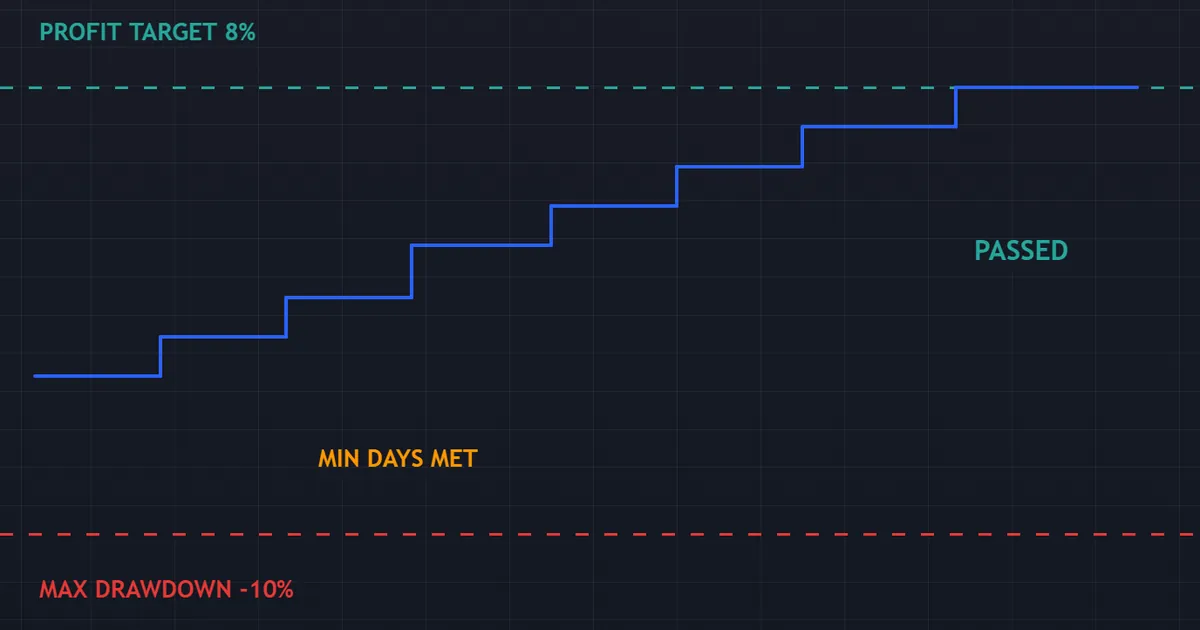
So your floor sits five thousand units below the starting balance. The daily cap allows two thousand five hundred units of loss in any single session.
Sizing to the Floor
Start from the floor rather than the target. Risking one percent per trade puts five hundred units at stake, which the daily cap absorbs four times over.
That arithmetic buys you room to be wrong. Because a losing streak of three still leaves the floor untouched, you can keep trading your plan calmly.
A calculator turns those percentages into a lot size instantly. Feed our free prop firm position size calculator your balance, stop distance and daily cap, then trade the number it gives back.
Pacing the Target
Four thousand units sounds daunting until you divide it. Eight trades that each return half a percent get you there.
Spread those trades across two or three weeks. So you clear any minimum-day requirement naturally, and no single session carries the weight.
Reading the Progress
Check two figures at the end of every session. Note the distance to the target, then note the distance to the floor.
The second number matters more. Because the floor ends the attempt while the target merely delays it, a shrinking cushion should slow you down rather than speed you up.
Download the complete indicator database
Put these concepts on your charts. One email unlocks the full library of 1,380+ indicators with compiled MT4 and MT5 files, plus my TradingView scripts. No paywall, no spam, unsubscribe any time.
Get free access to my indicator database
One email unlocks 1,380+ free MT4, MT5 and TradingView indicators — the complete library. No single-tool download; you get the whole database.
Common Mistakes on a Challenge
The same handful of errors ends most attempts, and none of them involves a clever market call. The compare graphic below sets the one-step format against the two-step version.
Sizing to the Target
Traders who work backwards from the profit target always oversize. A large position hits the daily cap after one bad idea. So size from the floor, then let the target arrive when it arrives.
Rushing the Minimum Days
A fast start tempts people to stop trading and wait. Others cram trades to clear the day count in a hurry. So plan a steady schedule that satisfies the requirement without any late scramble.
Misreading the Drawdown Type
Treating a trailing floor like a static one ruins good runs. The floor climbs behind your equity, so a modest giveback can breach it. So check the type on day one and track the floor after every winning trade.
Trading Through the Daily Cap
A losing morning tempts revenge trades that push straight into the limit. Stopping early costs you a day, while a breach costs the whole fee. So set a personal stop well inside the firm’s cap.
Ignoring the Extra Clauses
Consistency rules, holding-time limits and news windows sit in most rule books. A profitable method can still fail one of them. So read the full terms and map your style against every clause.
Buying Too Large an Account
A bigger balance raises the fee and the emotional weight together. Percentage limits scale with size, so the extra capital brings no extra room. So take the smallest account, prove the process, then let a scaling plan do the growing.
Challenge Quick Reference
Run through this list before you buy any evaluation. It takes two minutes and saves whole attempts.
- Note the profit target as a percentage and as a cash figure.
- Note the maximum drawdown and whether it stays static or trails.
- Note the daily loss limit and what it measures from.
- Note the minimum trading days and any deadline.
- Check for a consistency clause with a stated percentage.
- Check the rules on automation, holding time and news windows.
- Confirm the profit split, payout cycle and minimum withdrawal.
- Size every trade from the floor rather than the target.
- Set a personal daily stop well inside the firm’s cap.
- Note whether the floor tracks equity or closed balance.
Pitfalls and Edge Cases
A few wrinkles catch careful traders too, so keep them in view. The chart below shows an equity path that pierces the daily loss limit and ends the attempt.
Weekend and Overnight Rules
Some programs forbid holding positions over a weekend or a rollover. A swing trader can breach that clause without losing a cent. So check the holding rules before you plan any longer trade.
Floors Measured on Equity
A floor that watches equity reacts to open trades. An unrealised loss can breach the limit even though your closed balance looks healthy. So read whether the rule tracks equity or balance.
Consistency Clauses Late in a Phase
One large winner near the finish can trip a consistency rule. The phase then stalls until you add more ordinary days. So keep your best day modest relative to the whole run.
Time Limits and Inactivity
A few programs still cap the calendar, and others close dormant accounts. Both clocks can end an attempt quietly. So note any deadline and any inactivity window on day one.
Resets That Restart the Rules
Buying a reset usually returns every counter to zero. Your day count, target and floor all begin again. So treat a reset as a fresh start rather than a continuation.
News Windows and Slippage
Fast releases can jump a price straight past your stop. A single gap then eats several days of careful work. So check the news clause, trade lighter around major data, and widen nothing to compensate.
Copy Trading Across Accounts
Running identical trades on two challenges breaks the rules at many programs. Both accounts can fail together over one clause. So read the section on linked accounts before you buy a second attempt.
Platform Outages Mid-Trade
Feeds stall and dashboards freeze from time to time. A stop that fails to trigger can breach a limit through no fault of yours. So keep a screenshot habit, contact support quickly, and never rely on a mental stop.
Dashboard Numbers That Lag
Some panels refresh your drawdown room only every few minutes. Trading off a stale figure invites an accidental breach. So track your own daily loss in a simple note and treat the dashboard as a second opinion.
Related Concepts to Study Next
The evaluation makes far more sense beside the ideas that surround it. A short reading list fills the gaps quickly.
Read the rule articles first, then the sizing ones. Because the limits shape every decision you make, they belong at the front of your study list.
Start with our primer on what is a prop firm, then build a plan with our guide to how to pass a prop firm challenge. Because the limits decide everything, read our overview of prop firm rules, our note on prop firm drawdown rules and our explainer on trailing drawdown at prop firms. To survive a rough session, study our guide to a daily loss limit, then measure recovery with our drawdown calculator. More guides sit in our prop trading library.
FAQ
What is a prop firm challenge in simple terms?
A challenge is a paid evaluation on a simulated account. You must reach a profit target while staying above a drawdown floor, inside a daily loss limit, and across a minimum number of trading days. Pass and the firm grants you a funded account under similar rules.
How long does a prop firm challenge take?
That depends on your pace and on any minimum-day requirement. Many traders spread the work across two to six weeks, which clears the day count comfortably. Few programs now impose a hard deadline, so check the terms rather than assuming one.
What ends a challenge most often?
Rule breaches, not bad market calls. The daily loss limit catches revenge trading, while the maximum drawdown catches oversized positions. A trailing floor adds a third trap, since it climbs behind your equity as you profit.
What is the difference between one-step and two-step?
A one-step program funds you after a single phase, while a two-step program adds a confirmation phase with a smaller target. Two-step fees often sit lower for the same account size. One-step programs sometimes offset the shorter route with tighter limits.
What happens after you pass a challenge?
The firm verifies your identity, issues a trader agreement and activates a funded login. Your daily cap and drawdown floor usually carry over unchanged, since real capital now sits behind the account. Profit then converts to cash on the firm’s payout cycle.
Can a beginner pass a prop firm challenge?
A beginner can, though most participants never reach a payout. Small risk per trade, a personal stop inside the daily cap and a close reading of every clause improve your odds considerably. Results are not guaranteed; past performance is not indicative of future results.
External references
- For background on this concept, see Maximum Drawdown on Wikipedia.
- For broader market context, see Paper Trade at Investopedia.

About the author
Written by Dominic Walsh, a Forex trader and MT4/MT5 indicator, Expert Advisor and script developer. Every tool on forexmt4systems.com is tested on live charts before release and ships with ready-to-use compiled MT4 (.ex4) and MT5 (.ex5) files. Learn more about the trader and developer behind this site.
How we build, test and correct every tool: Editorial & Testing Policy. Trading carries risk; see the disclaimer.