
Traders circle central bank rate decisions on the calendar and then treat them as a single moment. They are not one moment. They are four, and the currency often moves on the last of them.
This guide walks through each stage, explains why the announcement itself so rarely surprises anyone, and sets out a practical decision-day routine you can follow without guessing.
Central Bank Rate Decisions: What Actually Happens
A committee meets, votes, and publishes a number. That takes one second to read and almost never moves a currency far on its own.
Everything around the number does the work. Wording, forecasts and answers to journalists all carry more information than the rate itself.
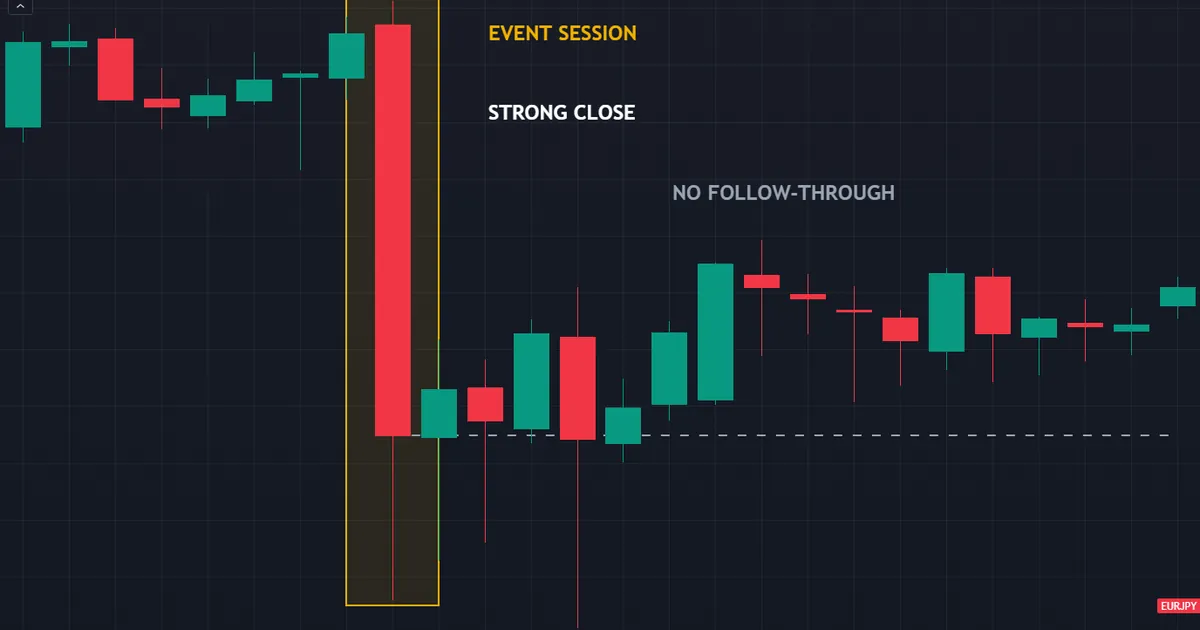
Above sits a daily bar on EURJPY from 29 April 2026. Its range ran roughly 6.42 times the recent average, and its body filled 69 per cent of that span.
We leave the event behind it unnamed on purpose. A wide bar never proves which headline caused it, and honest analysis says so.
What Followed the Strong Close
The session closed near its extreme, which normally reads as conviction. Then the following days edged roughly 0.3 average ranges back the other way, which counts as almost nothing.
So the big session settled very little. Traders who bought that close in expectation of a trend waited a long time.
Who Sits on the Committee
A small group makes the call. Most banks use seven to twelve members.
Some members come from inside the bank. Others join from outside, often from a university or a company board.
Each one brings a view. Those views shift over time, and the balance decides the vote.
Watch the speeches between meetings. They map the split long before the vote arrives.
The Four Separate Events
Split the announcement into its parts. Each part arrives at a different minute and carries a different kind of news.
Event One: The Rate Itself
The headline number lands first. Interest rate futures usually price it with high confidence days ahead, so surprises here stay rare.
Rare does not mean impossible. An unexpected move produces the sharpest reaction of the whole day, because nobody positioned for it.
Event Two: The Statement
A short written statement accompanies the decision. Committees change a handful of words between meetings, and traders compare the two versions line by line.
Dropping the word patient, or adding the word gradual, shifts the expected path. Algorithms parse those changes within milliseconds.
Reading a Statement Line by Line
Open the old statement beside the new one. Then read them side by side.
Look for four things. Words dropped, words added, numbers changed, and the order of the paragraphs.
Small edits carry weight. A single adverb can move an entire market.
Many banks publish a marked-up version. Where they do not, a plain text comparison tool does the job in seconds.
Event Three: The Projections
Several banks publish forecasts alongside the decision, usually every quarter. Growth, inflation and the expected path of policy all appear.
Those forecasts reveal the committee’s own view of the future. A single shift in the projected rate path can outweigh the decision entirely.
Event Four: The Press Conference
Thirty to forty-five minutes later, the chair takes questions. Journalists probe exactly the points the statement left vague.
Here lies the day’s real volatility. Officials answer in real time, and one unscripted phrase can reverse everything the statement implied.
The Sequence at a Glance
- The rate decision. Published at a fixed minute. Usually priced already, so the reaction stays modest.
- The statement. Released at the same moment. Word changes drive the first algorithmic move.
- The projections. Published with the statement on quarterly meetings. The expected path matters more than the current level.
- The press conference. Roughly half an hour later. Live answers frequently reverse the initial reaction.
- The settling. An hour or two afterwards, spreads normalise and a real level emerges.
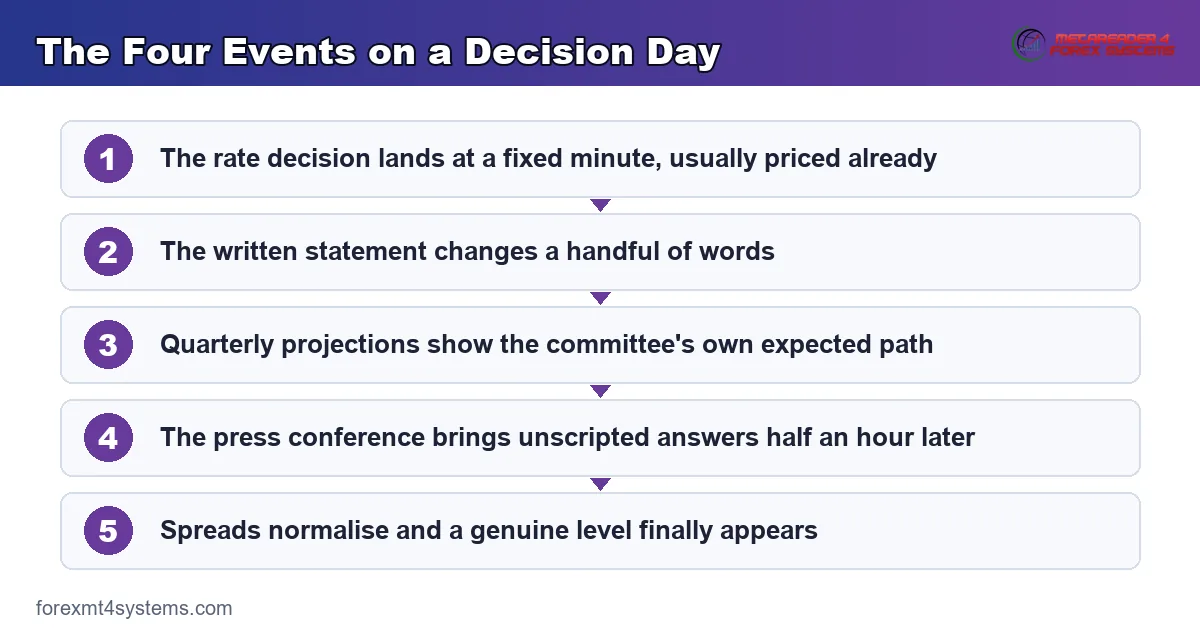
Mark all five moments in your platform clock before the day starts. Watching the clock beats reacting to a surprise.
Why the Currency Often Moves on the Last One
Newcomers watch the number and then switch off. Experienced desks stay glued to the press conference.
The Statement Says Only What It Must
Committees write statements collectively, so the language stays cautious. Ambiguity keeps everyone on board.
Journalists then ask the questions that ambiguity invites. Answers come from one person under pressure, and they carry far more detail.
Tone Travels Where Words Cannot
A chair can deliver the same policy in two very different registers. Confidence about inflation reads as one thing; discomfort about growth reads as another.
Markets trade that register. Our guide to hawkish vs dovish language breaks down the vocabulary in detail.
The Reversal Pattern
A familiar sequence repeats across banks. The currency jumps on a hawkish statement, then gives it all back when the chair sounds cautious.
Anyone who traded the first move sits underwater within the hour. The lesson repeats: wait for all four events.
What the Committee Weighs
Banks work to a written mandate. That mandate names the goals, and the goals shape every vote.
Price Stability First
Most banks target inflation near two per cent. The target sits in law or in a public agreement.
Miss it on the high side and the bank raises rates. Miss it on the low side and the bank cuts.
Simple in theory. Messy in practice, because the data lags and the tools work slowly.
Jobs and Growth
Some banks carry a second goal. The Federal Reserve names maximum employment beside price stability.
Two goals can pull apart. Hot prices ask for a hike, while weak jobs ask for a cut.
That tension explains most split votes. It also explains why guidance sounds vague.
Financial Stability
No mandate lists it first, yet every committee watches it. Banks under strain change the calculation fast.
A credit shock can stop a tightening cycle overnight. Traders who ignore that risk get caught by sudden turns.
Priced In: Why the Decision Rarely Surprises
Markets do not trade the rate. They trade the difference between the rate and what everyone already expected.
Where the Expectation Comes From
Interest rate futures and overnight swaps quote the expected policy path continuously. Anyone can read the implied probability of a move days ahead.
Central banks watch those prices too. Surprising the market carries costs, so officials usually guide expectations toward the outcome in advance.
The result feels almost choreographed. By meeting day, the decision itself holds very little news.
The Path Beats the Level
One cut matters far less than the number of cuts implied over the next year. Currencies trade the whole path, not the current step.
So a bank can cut rates while its currency rallies. If the statement signals fewer cuts ahead than traders assumed, the path just moved higher.
Our deep dive on how interest rates affect forex follows that mechanism from yields through to the exchange rate.
Dissents and Vote Splits
Several banks publish how each member voted. A unanimous decision reads very differently from a narrow split.
Dissenting votes hint at the next meeting. Two members voting for a hike today often means a hike arrives sooner than the statement admits.
Minutes Arrive Later
Most banks publish meeting minutes a few weeks afterwards. Those pages reveal the argument behind the vote.
Markets react to them, though usually less. By then, fresh data has moved on.
Read them anyway. They teach you how a committee reasons, which helps at the next meeting.
The Blackout Window
Officials stop speaking in public before each meeting. The quiet period runs about a week or ten days.
Guidance stops during that window. So the last speech before it starts carries extra weight.
Mark that speech in your notes. It often frames the whole meeting.
Forward Guidance in Plain Terms
Banks talk about the future on purpose. That talk carries a name: forward guidance.
Why They Bother
Rates work through expectations. If the market believes rates stay high for a year, borrowing costs rise today.
So words act as a tool. A bank can tighten policy without moving the rate at all.
The Two Styles
Some guidance ties policy to a date. Other guidance ties it to a number, such as an inflation reading.
Date-based guidance binds the bank. Data-based guidance leaves room to move, which markets find harder to price.
When Guidance Breaks
Promises collide with reality now and then. A bank that abandons its guidance loses credibility, and the currency usually pays.
Watch for the phrase that softens a promise. That edit often lands weeks before the policy shift.
A Worked Example on the Charts
Theory settles nothing, so look at a measured reaction. The chart below shows a four-hour bar on EURUSD from 17 June 2026.
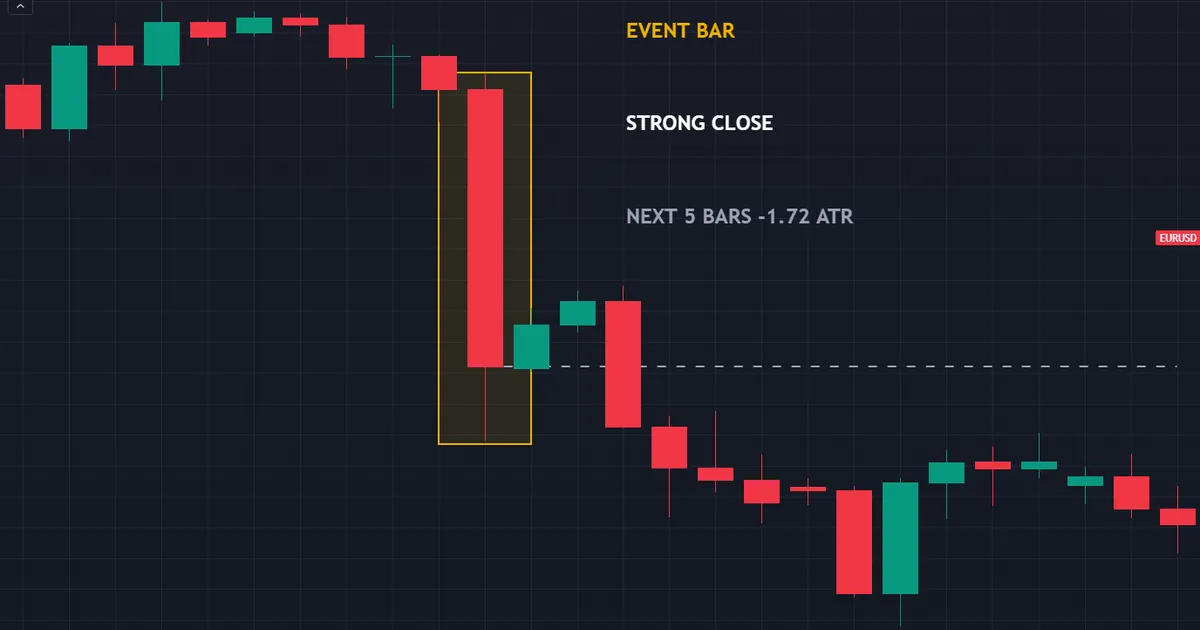
That bar expanded to roughly 5.56 times the recent average range. Its body filled 76 per cent of the span, so one side held control into the close.
Reading the Bar Itself
A large body signals sustained pressure through the period. A small body inside a large range signals a fight with no winner.
Neither shape predicts anything alone. Both need the following bars to mean something.
What Came Next
Over the following bars, price travelled about 1.72 average ranges further in the same direction. So the strong close marked a staging post rather than an ending.
Notice how differently the two examples resolved. Decisive candles around scheduled events sometimes stall and sometimes run, so the close alone settles nothing.
The Measurement Anyone Can Repeat
Take the average range over the last fourteen bars. Divide the event bar by it, then divide the following move by it as well.
Two ratios tell the story. A big first ratio with a tiny second one describes a liquidity gap rather than a repricing.
Download the complete indicator database
Put these concepts on your charts. One email unlocks the full library of 1,380+ indicators with compiled MT4 and MT5 files, plus my TradingView scripts. No paywall, no spam, unsubscribe any time.
Get free access to my indicator database
One email unlocks 1,380+ free MT4, MT5 and TradingView indicators — the complete library. No single-tool download; you get the whole database.
The Decision-Day Playbook
Now the practical part. Three phases, each with a short list of actions.
Before: Reduce and Decide
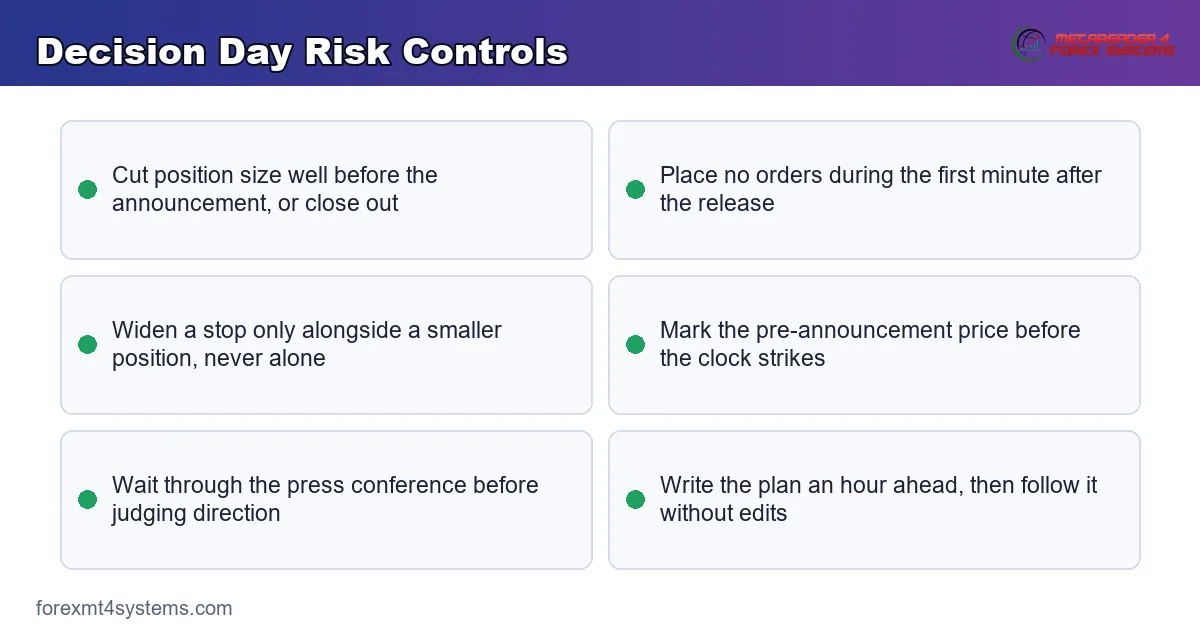
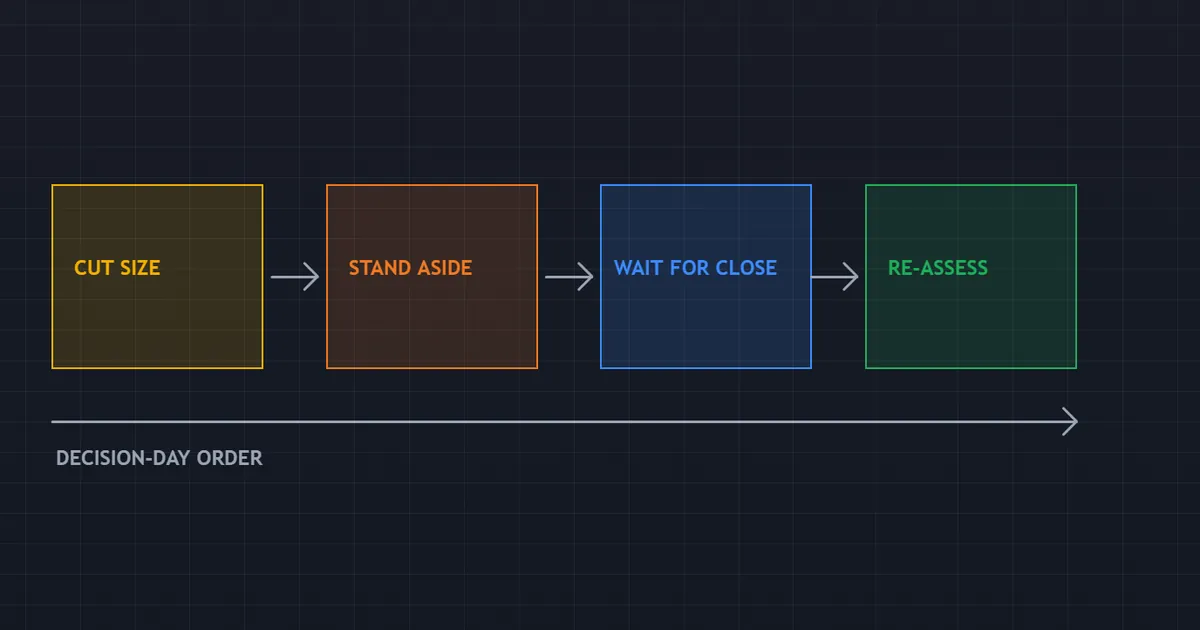
Cut position size well ahead of the announcement, or close positions entirely. Deciding under a flickering quote never ends well.
Widen stops only alongside a smaller position, never on its own. A wider stop with unchanged size simply increases the loss.
Work the size from the stop distance rather than habit. Our position size calculator handles the arithmetic in seconds.
During: Watch, Do Not Trade
Keep the platform open and the orders closed. The first two minutes belong to systems reading the wire faster than any human.
Follow the press conference rather than the price. Tone carries the information, and the chart merely records the response.
Note the pre-announcement price on the chart. Without that reference, every retrace looks identical afterwards.
After: Wait, Then Re-Assess
Give the market thirty to sixty minutes. Spreads normalise, resting orders return, and a genuine level appears.
Then judge the settled structure rather than the extreme. A retest of the pre-announcement level often offers a cleaner entry than the event ever did.
Skip the session entirely when nothing looks clear. No rule requires a trade on every decision day.
Emergency Meetings
Committees can meet outside the calendar. Crises force that, and the announcement can land at any hour.
Nobody can plan for the timing. Modest position size covers the risk better than any rule.
Common Mistakes and the Fixes
Six habits turn a manageable event into an expensive one. Each fix costs nothing but patience.
Trading the Number Alone
The rate rarely carries news. Read the statement changes and the projections before forming any view.
Switching Off Before the Press Conference
The largest move of the day frequently arrives thirty minutes late. Stay at the desk, or step away from the whole event.
Keeping Normal Position Size
Slippage and gaps arrive together during an announcement. Halve the size, or stand aside completely.
Assuming a Hike Lifts the Currency
Direction depends on the expected path, not the current step. A hike alongside dovish guidance often sinks a currency.
Ignoring the Spread
Quotes widen sharply around the announcement, which turns a small edge into a loss before price moves. Our note on why spreads widen explains the mechanics.
Holding Through Two Banks at Once
Some weeks stack several decisions across three days. A single pair can face both of its central banks inside forty-eight hours.
Quick Reference Checklist
Run this the morning of any decision. It takes about three minutes.
| Check | What to confirm | Why it matters |
|---|---|---|
| Announcement time | The exact minute in your platform clock | Removes the surprise of a sudden spike |
| Press conference time | Usually thirty to forty-five minutes later | The larger move often lands here |
| Market-implied odds | Probability of a move from rate futures | Tells you what counts as a surprise |
| Projection meeting | Whether forecasts publish this time | Projection meetings carry more weight |
| Open exposure | Every position touching that currency | Correlated pairs move together |
| Other decisions this week | Any second bank meeting nearby | Two events can hit the same pair |
Keep the list beside the platform. Routine beats memory when the clock runs down.
What Goes Wrong on Decision Day
The panel below sets the routine out in order, with the points where traders usually abandon it. Most damage comes from skipping a step rather than misreading the policy.
The Spike Nobody Can Trade
Price can travel a long way in the first seconds while spreads sit several times wider than normal. Orders fill at prices nobody expected.
Requoting and rejected orders both appear in that window. Treat any fill during the first minute as a lottery ticket rather than a plan.
The Reversal Thirty Minutes Later
A statement reads hawkish, the currency jumps, then the chair sounds cautious and the move unwinds. This sequence repeats across banks and across years.
Anyone who entered on the statement now sits on the wrong side. Waiting through all four events avoids the entire problem.
The Stop That Never Had a Chance
A stop sitting inside the normal daily range gets swept by an event bar without effort. Volatility expands by several multiples for an hour or so.
Tools that measure that expansion help you plan around it, and our volatility indicators archive collects the common ones.
The Trade Taken Out of Boredom
Waiting feels unproductive, so traders enter something marginal just to participate. That impulse costs more than any misread statement.
Write the plan an hour ahead and follow it. Deciding in advance removes the improvisation entirely.
The Main Banks and Their Rhythms
Each institution runs its own schedule and its own style. Learn the rhythm of the banks behind the pairs you follow.
- Federal Reserve. Eight meetings a year, with projections and a press conference at four of them.
- European Central Bank. Eight meetings a year, with a press conference after every one.
- Bank of England. Eight meetings, published vote splits, and a quarterly report alongside four of them.
- Bank of Japan. Eight meetings, an outlook report four times a year, and a long history of surprises.
- Reserve Bank of Australia. Meets more often than the others, with a statement that rewards close reading.
- Bank of Canada and Swiss National Bank. Fewer meetings each year, which concentrates the reaction into each one.
Two Banks, One Pair
Every pair answers to two committees. A quiet week for one can still hold a decision for the other.
Check both sides before you hold anything overnight. Traders often miss the second bank entirely.
Track them all in one place. Our economic calendar lists every decision with its exact time and prior outcome.
Building the Habit
Knowledge helps once it turns into routine. Three steps do the work.
Log Every Meeting
Write down four things before each decision. The market-implied odds, your own view, your position and your plan.
Then add the outcome afterwards. Six months of notes teach more than any guide.
Score Your Own Reads
Check whether your view matched the reaction. Count the hits and the misses honestly.
A poor score still helps. It tells you to sit out rather than guess.
Grade the Banks Separately
Each bank behaves differently. One telegraphs every move, while another enjoys surprising the market.
Keep a page per bank. Patterns show up quickly once the notes pile up.
Related Guides Worth Reading
Policy meetings sit at the centre of the fundamental cluster. Two neighbours complete the picture.
Start with the data that drives the decision, because our deep dive on how inflation affects forex traces the chain from price pressure to the policy path. Then read our explainer on whether central banks trade forex, which covers what these institutions do in the market itself.
After that, watch one full meeting live from start to finish. Nothing teaches the four-event structure faster than seeing it unfold in real time.
FAQ
Why does a currency sometimes fall after a rate hike?
Because markets trade the expected path rather than the current step. If traders had priced two more hikes and the statement signals only one, the path just moved lower even though rates rose today. Position squaring adds to the effect, since crowded trades unwind into the announcement.
What time do rate decisions usually land?
Each bank keeps a fixed schedule. The Federal Reserve announces in the New York afternoon, the European Central Bank in the European afternoon, and the Bank of England mid-morning London time. Convert each one into your own platform clock before the day, because a mistake here leaves you holding a position through the announcement.
Should I close positions before a rate decision?
Many traders do, and the reasoning holds up. Spreads widen, slippage lands on entries and exits alike, and fills at your requested price carry no assurance. Closing removes the uncertainty entirely. Cutting size works as a middle path if you want to stay involved.
Which part of the announcement matters most?
Usually the press conference, followed by the projections. The rate itself rarely surprises, since futures markets price it accurately in advance. Statement wording moves the first algorithmic wave, then live answers from the chair frequently reverse it.
What does data dependent actually mean?
It means the committee has not committed to a path and will judge each meeting on the numbers available then. For traders, that phrase raises the importance of every inflation and jobs release between meetings. It also widens the range of plausible outcomes, which usually widens the reaction too.
Can I build a strategy around policy meetings?
Some traders do, though the honest framing includes real caveats. Costs rise sharply around the event, the first move reverses more often than it extends, and eight decisions a year gives you a small sample per bank. Waiting for the settled level after the press conference beats chasing the announcement, and reviewing several years of your own records beats judging any single meeting. Results are not guaranteed; past performance is not indicative of future results.
External references
- For background on this concept, see FOMC Meeting Calendars at the Federal Reserve.
- For broader market context, see Federal Open Market Committee at Investopedia.

About the author
Written by Dominic Walsh, a Forex trader and MT4/MT5 indicator, Expert Advisor and script developer. Every tool on forexmt4systems.com is tested on live charts before release and ships with ready-to-use compiled MT4 (.ex4) and MT5 (.ex5) files. Learn more about the trader and developer behind this site.
How we build, test and correct every tool: Editorial & Testing Policy. Trading carries risk; see the disclaimer.