
Traders often ask what is a funded trading account once they meet the world of prop firms. A funded trading account lets you trade a firm’s capital after you pass an evaluation, then keep an agreed share of the profit you earn.
This guide answers what is a funded trading account in plain, beginner terms, and it stays firm-neutral throughout. You will follow the profit split, the scaling ladder, and the trailing drawdown rule that quietly ends most accounts.
What Is a Funded Trading Account, Defined
A funded trading account is capital a firm grants you after you prove your skill. You trade that capital under a fixed rule set, and you share the profit with the firm.
So you never risk a large deposit of your own. The firm supplies the money, while you supply the trading and the discipline.
The account looks and feels like an ordinary trading account. It has a balance, an equity figure, and live prices to trade. But it carries rules that a personal account never would, since the capital belongs to the firm.
Those rules are the price of the capital. Break one, and the account closes, whatever your longer plan. So a funded account is an opportunity bounded by clear, unforgiving limits. You get the upside of large capital, but only while you trade inside every line the firm has drawn.
Capital After an Evaluation
You do not receive a funded account for free. First you pass an evaluation, often called a challenge, that tests your discipline on a simulated account. Only then does the firm grant the funded stage.
So the evaluation is a filter. Because the firm risks its own money at the funded stage, it wants proof that you can trade within the rules. So passing the challenge is the gate to real capital and real payouts. Because the fee is small next to the account it unlocks, the evaluation rewards skill rather than a large deposit.
How a Funded Trading Account Works
The account runs through a clear sequence, and every firm shapes it a little differently. At heart, though, the stages stay familiar.
You qualify, you trade within the rules, then you withdraw your share of the profit. So the account rewards steady work at each step rather than a single lucky run.
From Evaluation to Payout
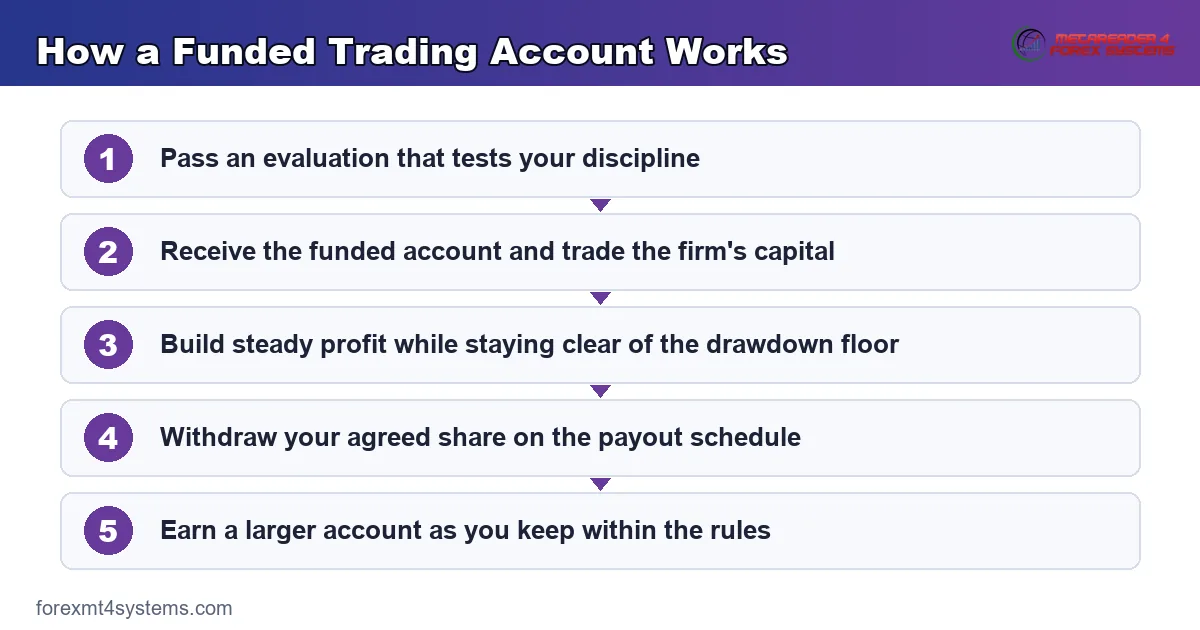
Walk the typical journey in order. Learn these stages, and any firm’s funded offer becomes easy to read.
- Evaluation. Pass a challenge by hitting a target while obeying the risk rules.
- Funding. Receive the funded account and trade the firm’s capital under those rules.
- Trading window. Build steady profit while staying clear of the drawdown floor.
- Payout. Withdraw your agreed share of the profit on the firm’s schedule.
- Scaling. Earn a larger account as you keep trading within the rules.
So the funded stage is where the real work begins. Because the capital is now live, every rule matters, and every trade counts toward your payout or your undoing.
Notice that discipline, not a big win, drives the account forward. The firm wants a trader who lasts, so the stages reward consistency over a single bold swing.
How the Profit Split Works
Once funded, you keep an agreed slice of the profit you generate. The firm keeps the rest as its return for supplying the capital. The trader’s share is often the larger portion, though the exact split varies widely.
Payouts arrive on a schedule, and some firms set a minimum before you can withdraw. So the headline split tells only part of the story. Because the schedule shapes your cash flow, read it as carefully as the split itself.
A Worked Example of Trailing Drawdown
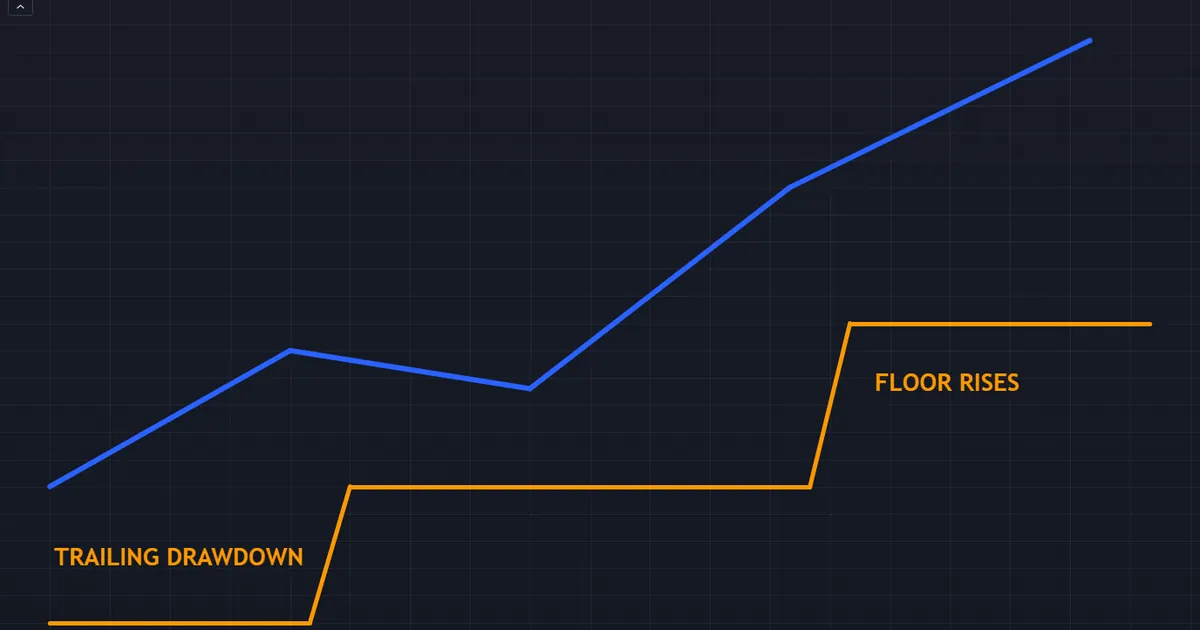
Numbers make the model concrete, so walk a simple case. Picture a funded account with a trailing drawdown floor set a fixed distance below your equity.
You start at the opening balance, and the floor sits below it. Then you win a few trades, and your equity climbs. Because the drawdown trails, the floor rises with your equity, locking in part of the gain.
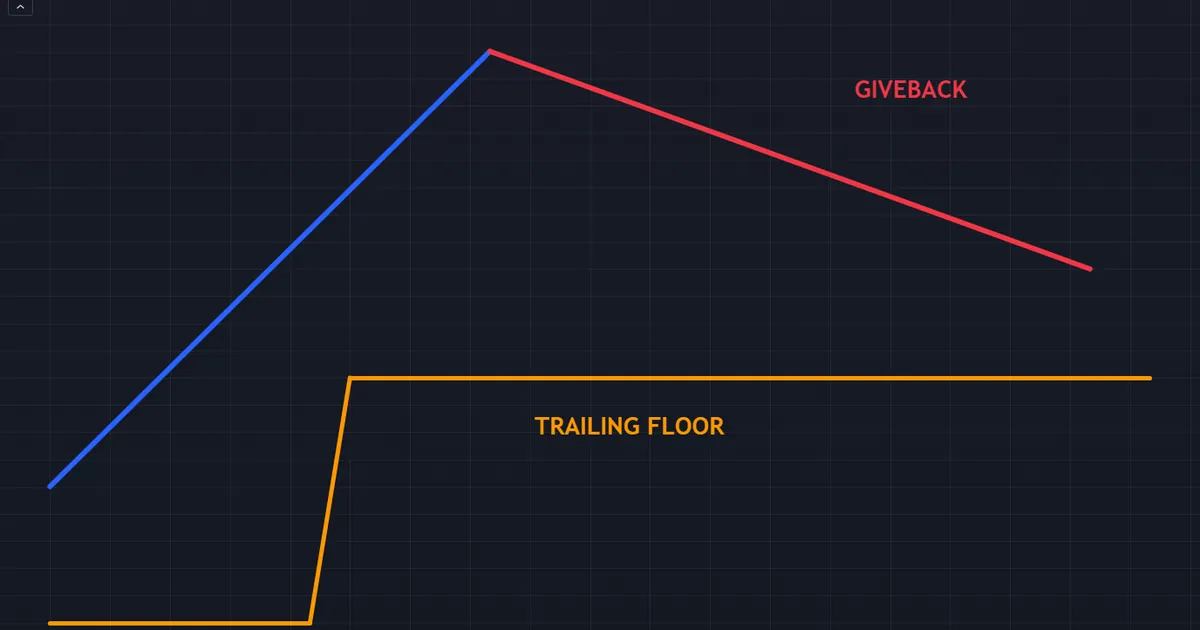
Now the account gives some profit back. The equity falls toward the risen floor, not the original one. So the room you thought you had has shrunk, since the floor climbed while you were winning. That shrinking cushion is exactly how a trailing drawdown rule quietly catches a trader who felt safely ahead of the floor.
Reading the Trailing Floor
Feel why the trailing floor catches so many traders. A fixed floor stays put, so a giveback is safe until it reaches the start. A trailing floor moves up, so the same giveback can breach it far sooner.
So track the floor after every winning trade, not just at the open. Because the floor rose with your equity, your true cushion is smaller than the balance suggests. So bank some caution whenever a good run lifts the account.
Download the complete indicator database
Put these concepts on your charts. One email unlocks the full library of 1,380+ indicators with compiled MT4 and MT5 files, plus my TradingView scripts. No paywall, no spam, unsubscribe any time.
Get free access to my indicator database
One email unlocks 1,380+ free MT4, MT5 and TradingView indicators — the complete library. No single-tool download; you get the whole database.
This is the single most important lesson about funded accounts. The trailing drawdown, not a bad entry, ends most of them. So respect the moving floor, and you sidestep the trap that catches the majority.
The Risk Rules That End Most Accounts
Most funded accounts do not close from one terrible trade. They close from a broken rule, often one the trader misread. So learning the rules matters as much as learning to trade.
Three limits appear at nearly every firm. Master them, and you avoid the traps that catch new funded traders again and again.
Trailing Drawdown
The trailing drawdown is a loss floor that rises as your equity grows. Breach it, and the account closes, whatever your plan. So this moving line is the hard limit beneath everything you do.
Some firms trail the floor tick by tick, while others move it only at the daily reset. So a giveback within the day may or may not count, depending on the firm. Because the mechanics differ, read the exact wording before you trade.
Daily Loss Limit
The daily loss limit caps how much you may lose in a single day. Cross it, and the account is suspended or closed for that session. So this rule forces you to step away after a rough stretch.
The cap is a safeguard as much as a rule. Because it stops a bad day from turning into a disaster, it blocks the revenge trading that sinks many accounts. So treat the daily limit as a discipline you would want regardless.
The Consistency Rule
Many firms add a consistency rule so no single day dominates your profit. It asks that your gains spread across many sessions rather than one jackpot. So the rule rewards repeatable trading over a wild swing.
Consistency rules nudge you toward durable habits. Because one huge day can fail the check, you learn to earn steadily. So the firm gets a reliable trader, and you build a routine that outlasts any single setup.
Scaling a Funded Account
A funded account is rarely static. Most firms grow the capital as you keep trading within the rules, a process called scaling.
So a patient trader can reach a large account over time. Because the ladder rewards consistency, it favors the same steady habits the rules already demand.
How Scaling Ladders Work
A scaling ladder raises your account size after you meet a target over a set period. Hit the mark while obeying the rules, and the firm bumps the capital up a rung. So the account grows in steps rather than all at once.
Each rung usually asks for continued discipline, not a single big month. So the ladder filters for traders who last. Because it rewards months of steady work, scaling suits a calm, repeatable style far better than a burst of risk.
Why Patience Pays
The trader who rushes rarely climbs the ladder. Oversizing to hit a scaling target often breaches a rule instead. So the fastest route to a large account is a slow, disciplined one.
Because scaling compounds your account over months, patience quietly does the heavy lifting. So a steady trader who protects the account through every rough patch usually ends up with the biggest capital. Survival, once again, is the whole game.
Funded Account Versus a Personal Account
A funded account differs from a personal one in a few key ways. Knowing them keeps your expectations honest.
With your own account, you set every rule and keep every profit. With a funded account, the firm sets the rules and takes a share. So you trade a slice of the upside for access to far larger capital.
What You Gain and Give Up
The gain is capital you could not otherwise access. A modest fee unlocks an account many times your personal savings. So your skill, not your bank balance, sets the size you can trade.
The trade-off is control and a profit share. You must trade within someone else’s limits, and you split the gains. So the funded route suits a disciplined trader who values access over full autonomy.
Managing a Funded Account Day to Day
Passing the evaluation is only the start. The funded stage asks for steady management, day after day, under the firm’s watchful rules.
So a simple routine helps you stay inside the limits. Because the account can close on a single breach, a calm process protects it far better than a burst of effort.
Watching the Floor and the Day
Begin each session by noting your equity and the current trailing floor. So you always know your true cushion before the first trade. Because the floor climbed during past wins, that cushion is often thinner than the balance suggests.
Then track your running loss against the daily limit as the session unfolds. If a rough patch nears the cap, stop and walk away. So the rule never has to close the account for you, since your own discipline gets there first.
Keeping a Trading Log
A short log turns a funded account into a measured process. Note each trade, its risk, and how close it came to any rule. So you spot a risky habit long before it breaches a limit.
Over time, the log reveals whether your style fits the firm’s rules. Because the account is not yours, that honest feedback is priceless. So a few minutes of review each day protects both the capital and your payout.
Choosing a Program That Fits Your Style
Firms differ enough that the right choice depends on how you trade. A scalper and a swing trader want very different rule sets.
So match the program to your natural style before you pay. Because the rules shape every trade, a poor fit can end an account that a better fit would have kept alive.
Match the Rules to Your Approach
A swing trader needs a firm that allows overnight and weekend holds. A scalper wants tight spreads and no odd restrictions on quick trades. So read the rule book for the details that touch your method most.
Then weigh the trailing drawdown against how you take profit. Because a tight trailing floor punishes givebacks, it suits a trader who banks gains steadily. So the same firm can feel easy or brutal depending on your habits.
Common Funded-Account Mistakes and Fixes
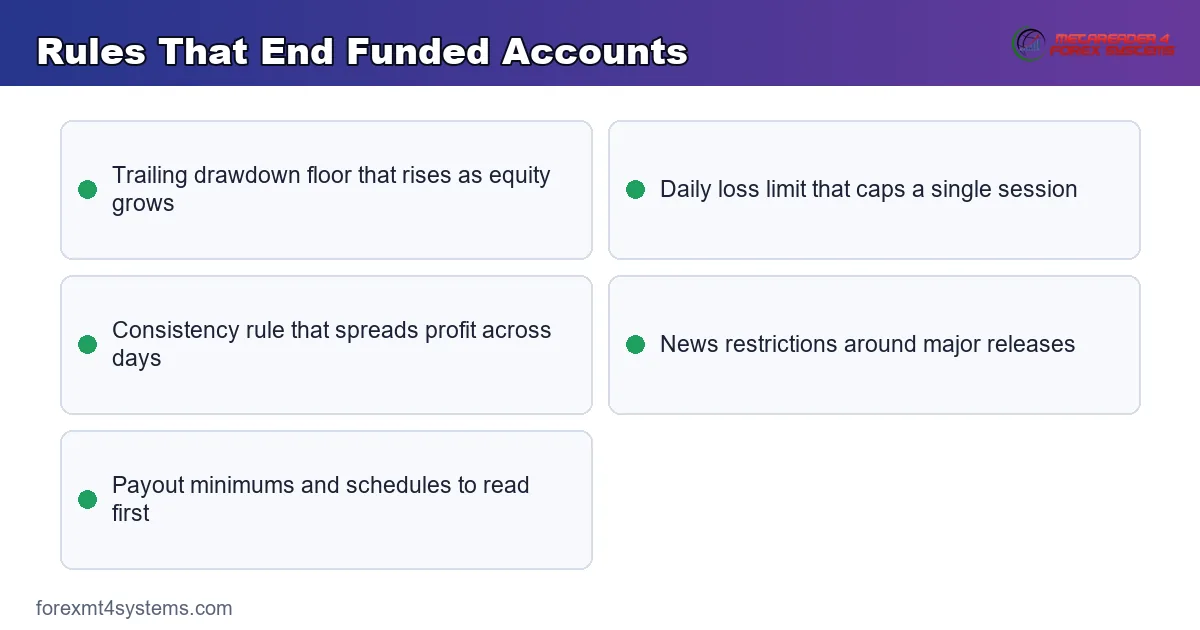
The funded model is straightforward, yet the same errors end account after account. Most trace back to misreading a rule rather than poor trading. The keypoints graphic below gathers the limits worth pinning up.
Treating a Trailing Floor as Fixed
The classic slip is assuming the drawdown floor stays put. As equity climbs, the floor rises, so a giveback can breach it. So track the trailing floor after every winning trade, and bank caution once a run lifts the account.
Oversizing to Hit the Target
Some crank the risk to reach the profit target fast. A single losing streak then breaches the daily or drawdown rule. So size small, aim for steady gains, and let the target arrive over several sessions.
Chasing a Losing Day
A red morning tempts some traders into revenge trades. That habit is exactly what the daily loss limit exists to stop. So honor the cap, close the platform, and return the next day with a clear head.
Ignoring the Payout Terms
A generous split means little if you cannot withdraw for months. Some traders miss a minimum or a schedule buried in the terms. So read the payout rules before you fund, and plan your cash flow around them.
Skimming the Rule Book
Every firm writes its rules a little differently. Traders who skim the fine print often breach a limit they never noticed. So read the full rule set before you pay, and know each figure by heart.
Rushing the Scaling Ladder
Some risk more to climb a rung quickly. That haste usually breaks a rule and resets the progress. So trade the ladder at a natural pace, and let steady months do the growing.
Forgetting the Costs of Trading
Spreads and swaps still apply on a funded account. Frequent trading quietly trims the profit that counts toward your payout. So factor the trading costs into your plan, and favor fewer, cleaner setups. Because those costs stack over a month, they can decide whether you clear a payout minimum at all.
Funded Account Quick Reference
Keep this short list handy before you join any program. Run through it whenever you compare funded offers.
- A funded account grants a firm’s capital after you pass an evaluation.
- You keep an agreed share of the profit you generate.
- The trailing drawdown floor rises as your equity grows.
- The daily loss limit caps how much you can lose in one day.
- A consistency rule rewards steady profit over one big day.
- Scaling grows the account as you keep trading within the rules.
- Read the payout schedule and any minimum before you fund.
Pitfalls and Edge Cases
A few wrinkles bend the clean picture, so keep them in view. The chart below contrasts an equity path that stays above the trailing floor against one that pierces it.
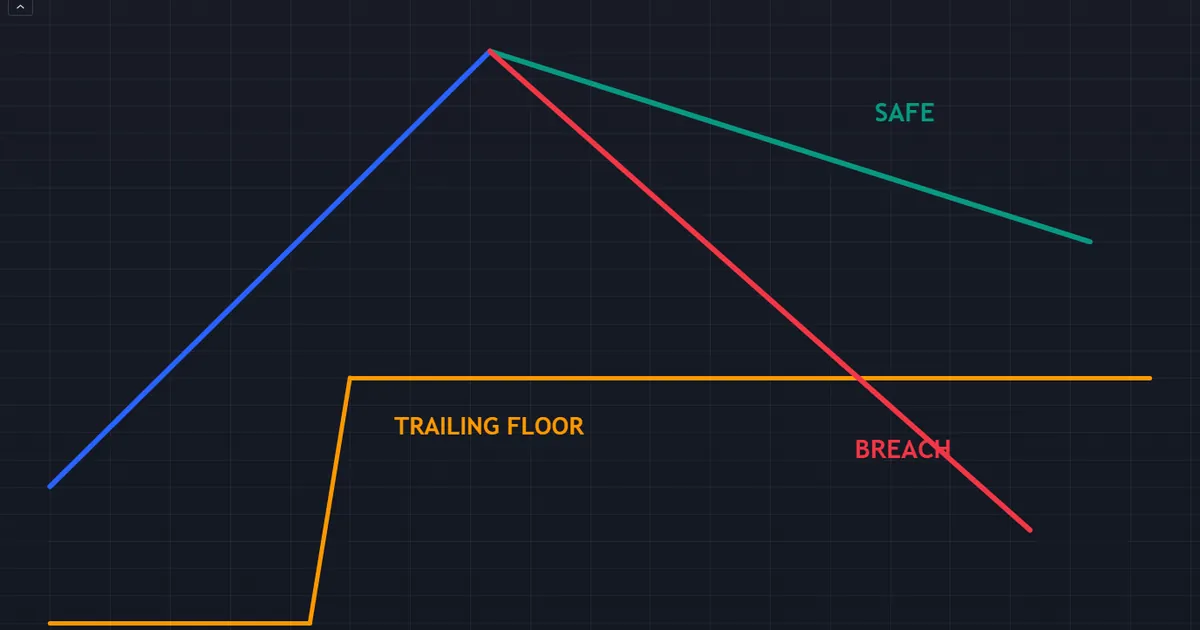
Picture the two paths from the same start. One climbs in careful steps and keeps clear of the rising floor, while the other gives back too much and breaches it. That single contrast captures the whole challenge of a funded account.
Trailing Mechanics Differ
Firms trail the drawdown in different ways. One updates the floor on every tick, while another moves it only at the daily close. So the same giveback can be safe at one firm and fatal at another. Read the mechanics before you trade.
Simulated and Live Fills Differ
Many funded accounts run on simulated capital, even after you pass. Others route to live markets once you prove yourself. So understand which model a firm uses, since it changes how your orders behave and how payouts are funded.
News Moves Skip the Stop
Fast news can jump straight past a stop, a problem called slippage. On a funded account, one bad fill can breach the daily limit. So many firms restrict news trading, and lighter sizing around releases protects the account.
Fees Repeat on Failed Attempts
Each evaluation carries a fee, and a breach means starting over. So a trader who rushes pays again and again. Because patience preserves both the account and the fee, a calm approach saves money as well as capital.
Related Concepts to Study Next
A funded account rewards the same discipline that protects any account, so a few risk ideas deserve your next reading hour. The rules simply put a hard edge on the habits every sound trader already keeps.
Start by pairing this with our guide to what is a prop firm, then browse more in our prop trading library. Because the trailing floor hinges on drawdown, read our overview of drawdown in trading, then our guide to a daily loss limit to survive a rough day, and our note on risk per trade to fix your sizing. To size trades for a firm’s rules, use our free prop firm position size calculator and check a payout against a consistency rule calculator.
FAQ
What is a funded trading account in simple terms?
A funded trading account lets you trade a firm’s capital after you pass an evaluation, then keep an agreed share of the profit. You never risk a large deposit of your own. In return, you trade under strict rules that protect the firm’s money.
How do I get a funded trading account?
You pass a challenge that tests your discipline on a simulated account, then a verification phase at many firms. After that, the firm grants the funded stage under the same rules. So consistency, not a single lucky run, unlocks the capital.
What is a trailing drawdown on a funded account?
A trailing drawdown is a loss floor that rises as your equity grows. So once you profit, the floor tightens, and a giveback can breach it. This moving line ends more funded accounts than any single bad trade.
How does the profit split work?
You keep an agreed slice of the profit, and the firm keeps the rest for supplying the capital. The trader’s share is often the larger portion, though splits vary. Payouts arrive on a schedule, and some firms set a minimum before withdrawal.
Can a funded account grow over time?
Yes, most firms scale the account as you keep trading within the rules. Hit a target over a set period, and the capital moves up a rung. So a patient trader can reach a large account over several disciplined months.
Is a funded account a sure path to income?
No, the rules can end a funded account at any time, and payouts depend on your results. Discipline and steady risk give you the best chance, but nothing is certain. So treat the account as a serious job with real risk, and let the rules guide every trade you take. Results are not guaranteed; past performance is not indicative of future results.
External references
- For background on this concept, see Trader (finance) on Wikipedia.
- For broader market context, see Trader at Investopedia.

About the author
Written by Dominic Walsh, a Forex trader and MT4/MT5 indicator, Expert Advisor and script developer. Every tool on forexmt4systems.com is tested on live charts before release and ships with ready-to-use compiled MT4 (.ex4) and MT5 (.ex5) files. Learn more about the trader and developer behind this site.
How we build, test and correct every tool: Editorial & Testing Policy. Trading carries risk; see the disclaimer.