
Prop firm news trading rules limit when you may trade around a big scheduled release. Some firms bar it outright for a few minutes, while others simply refuse to count the profit.
This guide explains prop firm news trading rules in plain terms, and it stays firm-neutral throughout. You will see why firms bother, how the windows work, and how to plan a week around them.
What Prop Firm News Trading Rules Do
A scheduled release can move a major pair further in ten seconds than it moves all morning. Firms write rules for those ten seconds.
The rule usually names a window: a set number of minutes before and after the release. Inside that window, your freedom to trade shrinks or vanishes.
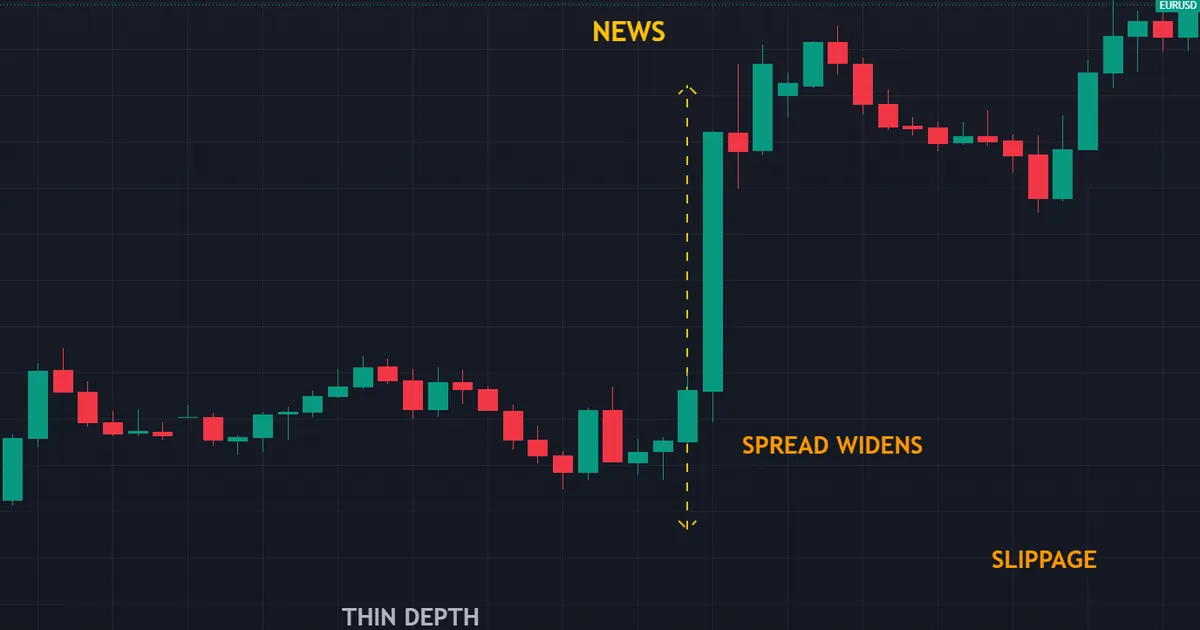
So the clause is narrow but sharp. It touches only a handful of minutes each week, yet it can void a good trade or end an account.
Notice what it does not say. Nothing here bans trading on the day of a release, or holding a swing trade through the week.
Why the Restriction Exists
Firms are not shielding you from a losing trade. They are shielding the account from a loss they cannot size in advance.
In a normal minute, a stop caps your loss near the level you chose. In the first seconds after a release, that link breaks.
So the rule protects a loss limit that would otherwise mean nothing. Because the drawdown floor is a hard number, the firm needs your stops to behave.
There is a second motive worth knowing. Firms hedge part of their traders’ flow with a liquidity provider, and that provider prices news minutes at a premium.
A crowd of funded traders piling into one release costs the firm on both sides. So the window keeps the arrangement workable as well as keeping your losses sane.
Why Big Releases Break Normal Risk
Three things happen at once when a major number prints. Each one attacks the arithmetic your position size rests on.
- Spreads widen. Market makers pull back, so the gap between bid and ask can grow many times over for a short spell.
- Depth thins out. Fewer resting orders sit near price, so a modest order pushes the market further than usual.
- Price jumps. Quotes skip levels instead of trading through them, which leaves your stop with nothing to fill against.
- Fills arrive wide. Your stop closes at the first price it can reach, which may sit far past the level you drew.
So the loss you planned and the loss you take part company. Our guide to why spreads widen covers the mechanics in more depth.
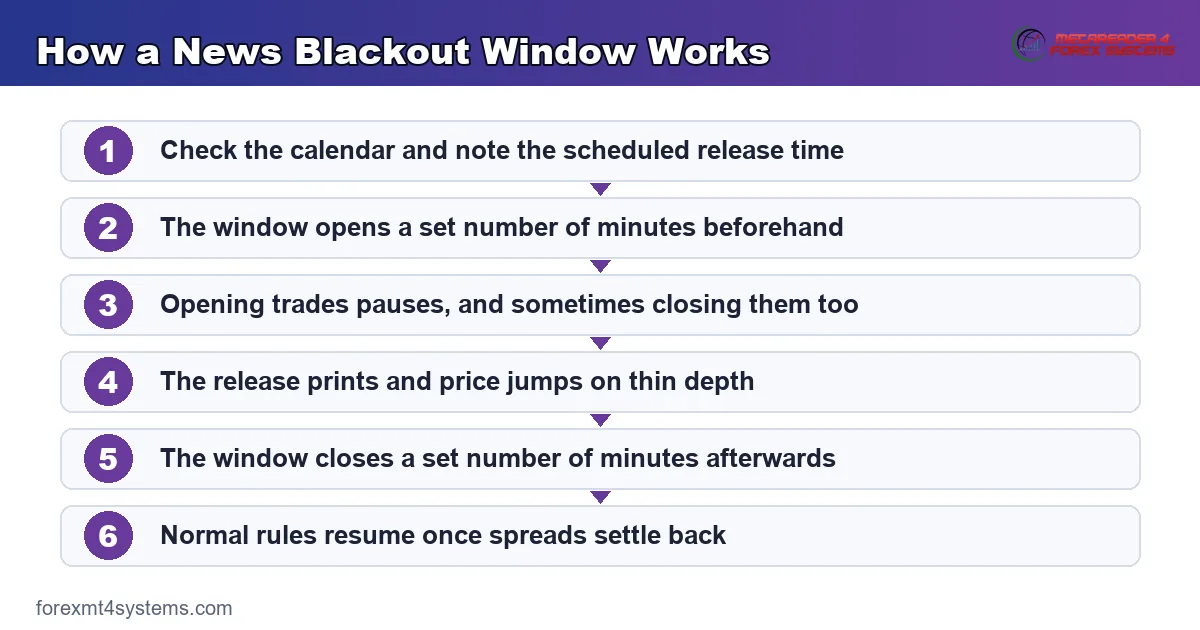
Note how the four effects compound. A wide spread on thin depth turns a small skip into a large one, and the stop pays for all of it.
Spreads Widen
A pair that trades at half a pip all morning can show several pips of spread for a minute. That cost lands on every order you place.
A stop sitting just below price becomes a stop sitting inside the spread. So it triggers on a quote that has nothing to do with real direction.
Then the spread snaps back, and price returns to where it sat. You keep the loss, and the chart shows no reason for it.
Gaps Skip Your Stop
A gap is worse than a wide spread. Price simply reappears at a new level, and every stop in between fills at whatever comes next.
So a 20-pip stop can cost 40 pips or more. The loss doubles, and your careful sizing sum quietly stops being true.
A drawdown floor cannot absorb that kind of failure. One doubled loss on an oversized day is all it takes.
Fills Arrive Wide
Slippage is the plain word for the difference between your level and your fill. In quiet markets it costs a fraction of a pip.
Around a release it can cost more than the trade risked in the first place. Because the platform has to find a buyer, the price you get is the price on offer.
Slippage cuts both ways in theory. In practice it tends to run against you at a stop, since your order joins a crowd of stops all firing in the same direction.
So plan on the unhelpful version. A trader who assumes a friendly fill near a release will meet the other kind soon enough.
Typical Restriction Windows and How They Work
Firms describe the same idea in many ways. Once you know the three moving parts, any wording becomes easy to read.
Those parts are the length of the window, what the window forbids, and which events trigger it.
The Blackout Window
Most firms set a short window on each side of the release. A couple of minutes either way is common, and some stretch it to a quarter of an hour.
Read whether the clock starts at the scheduled time or at the first tick. A release that lands a second early can catch a trade you thought sat outside the window.
So treat the window as wider than it reads. Adding a minute of your own on each side costs nothing and removes the argument.
Hard Versus Soft Enforcement
A hard rule bars you from opening a trade inside the window, and the strictest versions bar you from closing one too. That second part surprises traders most.
A soft rule lets you trade and then declines to count the result. Your account survives, yet the profit from that trade may not reach your payout.
So find out which model applies before you plan anything. The soft version costs money, while the hard version can cost the account.
Which Events Count
Firms almost always mean high-impact items on the economic calendar. Rate decisions, inflation prints and headline jobs numbers head every list.
Some rule books name the events. Others point at a calendar and let its impact rating decide, which puts the burden of checking on you.
Our free economic calendar flags the high-impact rows so you can mark the windows in advance. Read the firm’s list beside it, since the two rarely match exactly.
Not Every High-Impact Row Matters to You
A calendar flags dozens of items a week across every currency. Only a few touch the pairs you actually trade.
So filter the list down to your own symbols first. A trader working two major pairs may find just four or five relevant windows in a normal week.
Keep the firm’s wording in mind, though. Where a rule bars trading during any high-impact event, the filter is a planning tool rather than a licence to ignore the rest.
Stage and Account Type Matter
Plenty of firms allow news trading during the challenge and restrict it once you reach the funded stage. The reason is simple: real money now sits behind the trade.
Others tier the rule by account size, or sell news access as a paid extra. So the policy you read last year may not describe your current account.
A Worked Example Around a Release
Numbers make the risk plain. Picture a 2 percent daily cap, with half a percent already lost this morning.
You take a trade with a 20-pip stop, sized to risk 1 percent. On a quiet afternoon that plan leaves the day at 1.5 percent down in the worst case.
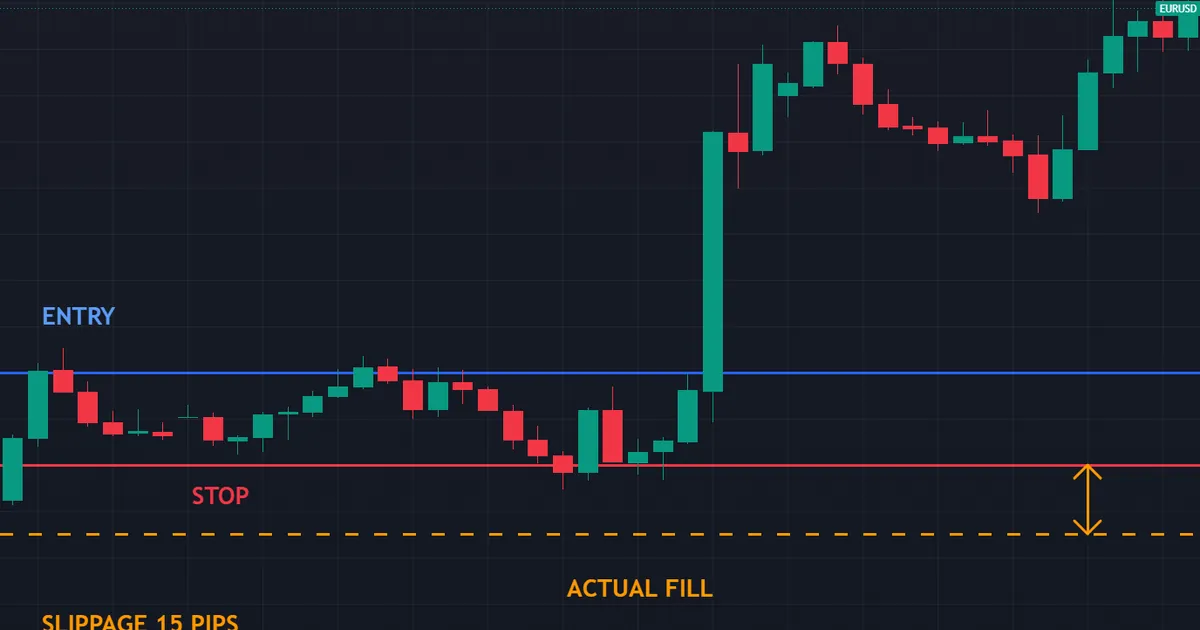
Now suppose the trade sits open as a release prints. Your stop fills 15 pips past its level, and the table shows what that does to your day.
| Item | As planned | Filled on the release |
|---|---|---|
| Stop distance reached | 20 pips | 35 pips |
| Loss on the trade | 1.00 percent | 1.75 percent |
| Already lost today | 0.50 percent | 0.50 percent |
| Day total | 1.50 percent | 2.25 percent |
| Against a 2 percent cap | Inside | Breach |
The Cost of a Wide Fill
Nothing in that example involved a bad decision. You picked a fair entry, placed a real stop, and kept the size modest.
The fill did all the damage. Because 15 extra pips carried three quarters of a percent, the day crossed a cap it should have cleared easily.
So build a buffer into the sum. Our free prop firm position size calculator sizes a trade against a prop cap, and leaving room for a wide fill turns a breach back into a bad day.
A simple habit helps here. Assume every stop near a release costs twice what it should, then size so even that version stays inside the cap.
Download the complete indicator database
Put these concepts on your charts. One email unlocks the full library of 1,380+ indicators with compiled MT4 and MT5 files, plus my TradingView scripts. No paywall, no spam, unsubscribe any time.
Get free access to my indicator database
One email unlocks 1,380+ free MT4, MT5 and TradingView indicators — the complete library. No single-tool download; you get the whole database.
How to Plan the Calendar Around the Rules
Nobody trades well while guessing at a clock. A short weekly routine removes the guesswork for good.
Three steps cover it: map the week, set alerts, then decide each position before the window opens.
Build a Weekly Event Map
Every Sunday, list the high-impact events for the pairs you trade. Write the local time beside each one, not the source time zone.
Then mark the firm’s window around each entry. A sheet with nine or ten shaded slots tells you at a glance which sessions need care.
So the map becomes a trading plan of its own. Because you already know Thursday afternoon stays shut, you stop drifting into it.
Pin the sheet where you can see it. A printed page beats an open browser tab, since the tab tends to close on a busy morning.
Set Alerts Before Each Window
Put a platform alarm five minutes ahead of every shaded slot. Five minutes gives you time to flatten or to decide to hold.
Add a second alarm at the window’s end. Traders who forget that one often sit out a whole session for no reason.
Name each alarm after the event that triggers it. A label reading rate decision tells you far more at a glance than a bare chime, and it stops you clearing the wrong one.
Keep both alarms on the platform rather than on your phone. So the reminder reaches you where the decision actually happens, even when the phone sits face down in another room.
Decide the Position Before the Window Opens
You have three honest choices: close the trade, cut it down, or accept the gap risk in full. Pick one before the alarm sounds.
Where the firm bars closing inside the window, the decision moves earlier still. So flatten well before the clock starts rather than at the edge of it.
Automated systems need the same discipline. Our note on prop firm EA rules covers the calendar filter your robot needs before it may run unattended.
Write the Rule Into Your Journal
Add one column to your journal: the nearest high-impact event when you opened the trade. It takes two seconds to fill in.
After a month, sort by that column. Traders often find a cluster of their worst results sitting within an hour of a release, which settles the argument better than any rule book.
So let your own record set the policy. Where the data says you lose money near releases, a firm’s window becomes a helpful nudge rather than a restriction.
Trading the Sessions Instead of the Spike
Sitting out a window does not mean sitting out the day. A release reshapes a market for hours, and most of that move happens outside any blackout.
So think of the event as a starting gun rather than a trade. The interesting part usually begins once the first burst of noise fades.
Wait for the Range to Form
Give the market fifteen or twenty minutes after a big number. By then a rough high and low exist, spreads have settled, and stops behave normally again.
A break of that early range often carries further than the spike itself. Because the level is visible to everyone, the follow-through tends to be orderly.
So you trade the reaction rather than the print. The risk becomes measurable again, which is the whole point on a funded account.
Let the Session Trend Do the Work
A strong number frequently sets the tone for the rest of the session. So a trade taken an hour later can ride the same idea with a normal stop.
Size that trade as you would any other. Nothing about the earlier release entitles you to more risk, however clear the direction looks in hindsight.
Common News Trading Rule Mistakes and Fixes
Traders trip this clause in a handful of predictable ways. The compare panel below sets a personal account beside a funded one so the extra stakes are clear.
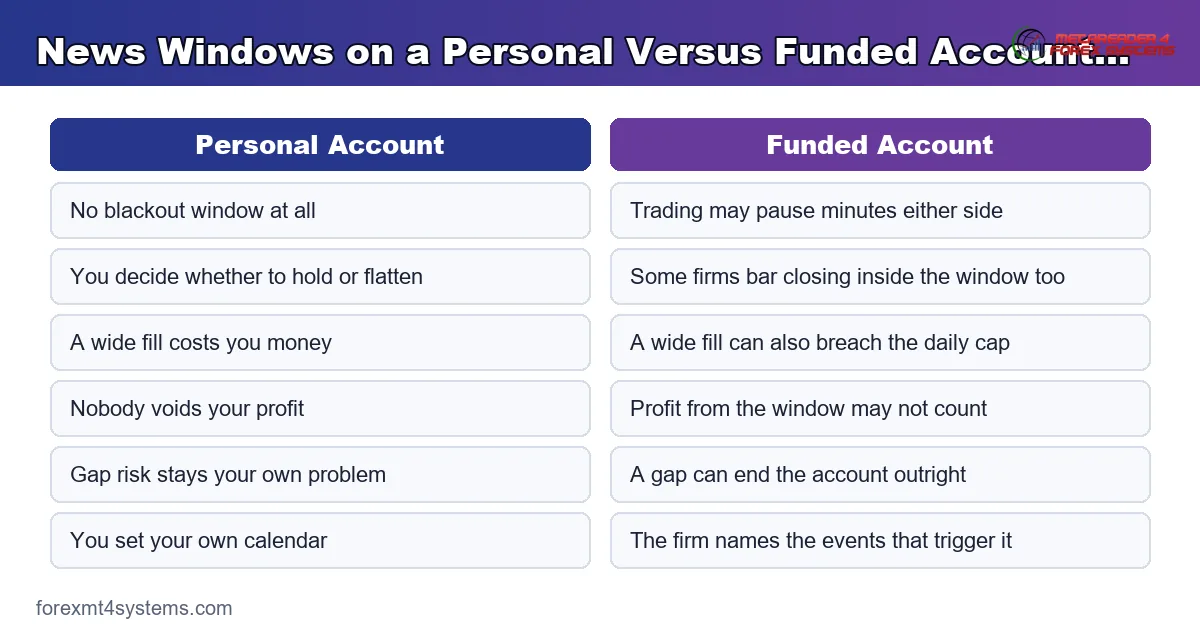
Assuming the Rule Only Blocks Entries
Some firms bar closing inside the window too, which traps you in a live trade. So read the exact wording, and flatten early where that clause applies.
Trusting One Calendar
Calendars disagree on impact ratings and sometimes on times. So check the firm’s own list against a second source, and treat any disagreement as a reason to stay out.
Forgetting Pending Orders
A resting stop order can trigger inside the window without you touching the platform. So cancel pending orders before each slot, then replace them afterwards.
Ignoring the Cross Pairs
A jobs number moves far more than the obvious pair. So treat any pair sharing that currency as restricted, including the crosses you rarely watch.
Sizing as Though Stops Behave
A stop is an instruction, not a promise. So size for a fill well past your level whenever a release sits anywhere near your holding period.
Holding Through a Release for the Extra Move
The temptation is real, and occasionally it pays. It also produces the doubled loss that ends accounts, so read our note on prop firm drawdown rules before you decide the odds suit you.
News Trading Rules Quick Reference
Answer these before your first funded session. Every answer belongs in the rule book or in a written support reply.
- How many minutes does the window run before the release?
- How many minutes does it run afterwards?
- Does the clause bar opening trades, closing them, or both?
- Which events trigger it, and who decides the impact rating?
- Does the rule apply during the challenge, once funded, or at both stages?
- What happens on a breach: a voided trade, a lost payout, or a closed account?
- Are pending orders allowed to rest through a window?
- Do the crosses of a named currency count as restricted?
- Which time zone does the firm publish its calendar in?
- May an automated system trade around a release?
Keep the sheet beside your platform. Because firms revise these clauses often, recheck it whenever you take on a new account.
Pitfalls and What Voids a Trade
A few edge cases catch traders who thought they had the rule covered. The chart below shows a gap that skips a stop and doubles a planned loss.
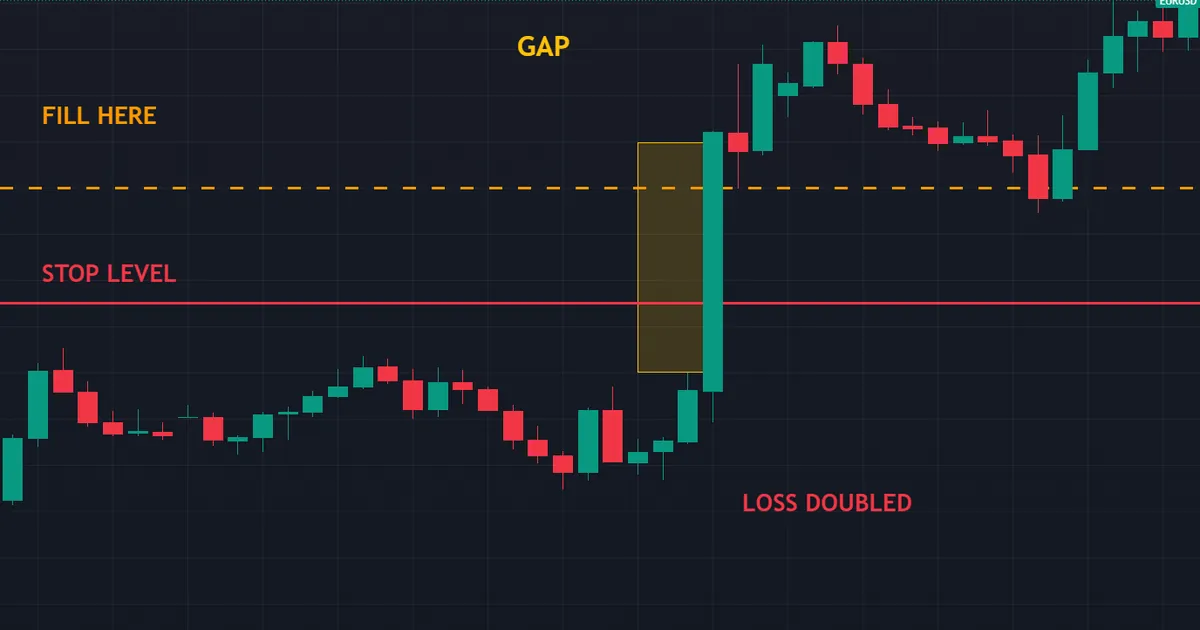
Look at where the fill lands. Price never traded at the stop level, so the order closed at the first price the market offered afterwards.
Unscheduled News Has No Window
A surprise headline arrives with no clock attached. So keep size modest at all times, since a rule can only protect you from events someone printed in advance.
Revisions and Second Releases
Some numbers arrive twice: a first print, then a revision weeks later. Firms may treat both as high impact, so read the calendar rows carefully rather than the event name alone.
Central Bank Press Conferences Run Long
A rate decision lands in one second, yet the press conference moves markets for an hour. A short window closes long before the volatility does.
Time Changes Shift Every Window
Clock changes fall on different dates in different countries. So rebuild your event map twice a year, because a one-hour error puts you inside a window you meant to avoid.
Slippage Counts Toward the Daily Cap
The cap measures your loss, not your intention. So a wide fill counts in full, which is why our guide to the daily loss limit argues for a buffer under every limit.
The Weekend Reopen Behaves the Same Way
Sunday’s reopen carries gap risk with no event attached. So a position carried over the weekend faces the same skipped-stop problem, and many firms bar the practice for exactly that reason.
Related Concepts to Study Next
News rules make most sense beside the rest of the rule book, so a couple of neighboring guides finish the picture. Each one shapes how much room a wide fill can eat.
Read our full walk through prop firm rules for the limits this clause protects, then our primer on what is a prop firm if the funded model itself still feels unfamiliar.
One habit ties all of it together. Treat every published limit as a number you plan to stay well inside, rather than a line you intend to touch.
News windows reward that habit more than any other clause. Because a single wide fill can spend a whole day’s budget, the trader who leaves room simply never meets the problem.
FAQ
What are prop firm news trading rules?
They limit trading in a short window around high-impact scheduled releases. A common shape bars opening a trade for a couple of minutes each side of the event, though some firms stretch that window and some bar closing trades inside it too.
Why do firms restrict trading around releases?
Because stops stop working as intended. Spreads widen, depth thins and price skips levels, so a fill can land far past the level you chose. The firm’s drawdown floor is a hard number, and it needs your losses to stay near their planned size.
How long is a typical news window?
A couple of minutes before and after the release is common, and some firms use up to a quarter of an hour. Read the exact figures in your own rule book, then add a minute of your own on each side as a margin.
Can I hold a swing trade through a release?
Sometimes yes, sometimes no. Where a firm bars only new entries, an existing trade may stay open, and where the clause covers closing as well, you must sit tight until the window ends. Check the wording, then size for a gap.
What happens if I breach a news rule?
It depends on the firm. Softer policies void the trade or leave its profit out of your payout, while harder ones treat the breach as a rule violation with the account at stake. Ask support in writing which model applies.
Should I trade releases at all on a funded account?
Many funded traders simply sit them out, since the reward rarely justifies a doubled loss against a hard floor. Trade the sessions around the event instead, and keep size modest. Results are not guaranteed; past performance is not indicative of future results.
External references
- For background on this concept, see Nonfarm Payrolls on Wikipedia.
- For broader market context, see Non-Farm Payroll at Corporate Finance Institute.

About the author
Written by Dominic Walsh, a Forex trader and MT4/MT5 indicator, Expert Advisor and script developer. Every tool on forexmt4systems.com is tested on live charts before release and ships with ready-to-use compiled MT4 (.ex4) and MT5 (.ex5) files. Learn more about the trader and developer behind this site.
How we build, test and correct every tool: Editorial & Testing Policy. Trading carries risk; see the disclaimer.