
Traders ask how do prop firms make money, and the plain answer surprises many of them. Most of the revenue lands long before anyone touches a funded account.
This guide takes the model apart piece by piece, and it stays firm-neutral throughout. So you will see where the cash comes from, why the incentives pull two ways, and what that means for your own choices.
How Do Prop Firms Make Money at a Glance
A prop firm sells access to capital. Traders pay a fee to attempt a challenge, and a small share of them reach a funded account.
So the firm collects at two very different moments. First it takes entry fees from a large crowd, then it takes a slice of the profit from the few who last.
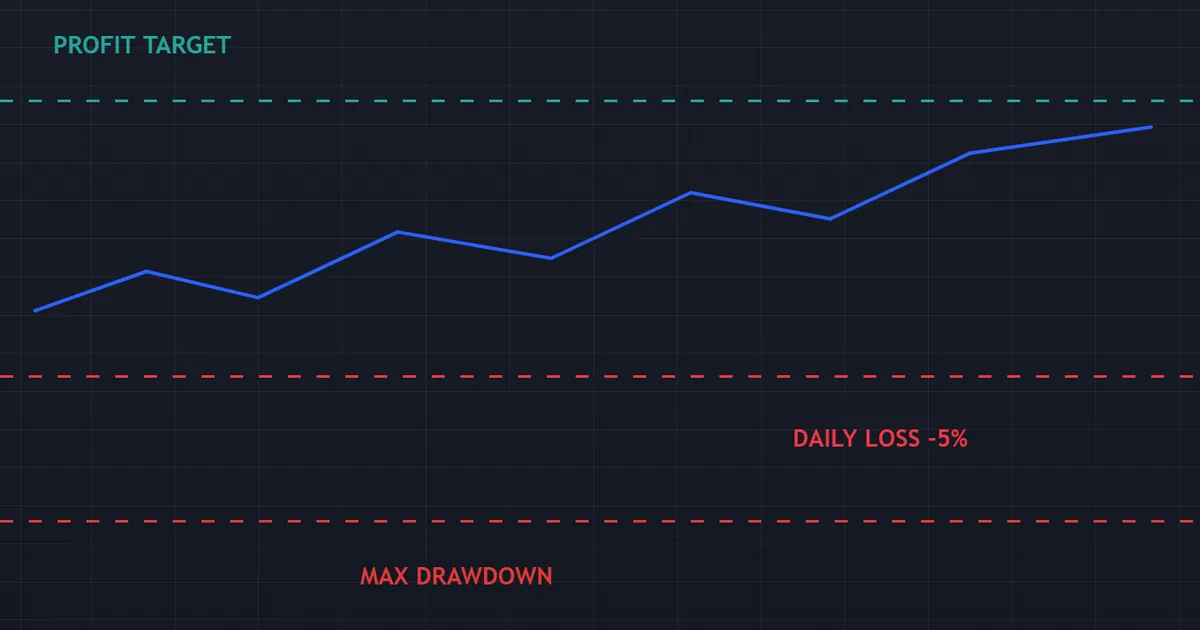
Those two streams differ in size and in timing. Entry fees land up front, arrive in volume, and carry no market risk for the firm. Profit-split income shows up later, in smaller amounts, and only from traders who survive the rules.
Because the first stream dwarfs the second at most programs, the fee side shapes the whole business. Marketing budgets, account sizes and rule books all flow from that one fact.
The Two Sides of the Ledger
Picture the income as a wide funnel. Thousands of traders pay to enter, a fraction pass, and a smaller fraction still collect a payout.
Every stage of that funnel carries a cost too. Platform licences, data feeds, staff and payouts all draw on the same pot. So fee volume must cover those costs before any profit appears.
Why the Model Grew So Fast
Online delivery removed the old limits on scale. A trading desk could seat perhaps fifty traders, while an online program can sell challenges to fifty thousand.
Low delivery cost plus global reach made the format hard to resist. Still, that same reach drew a flood of new operators and a wide spread in quality. So a careful reader now has to judge each program on its own terms.
Who Buys a Challenge
The typical buyer holds a small savings balance and a large ambition. A modest fee unlocks an account size that personal cash could never reach.
That audience skews new, and it skews impatient. Because many buyers have never traded under a strict rule set, breaches come quickly. So the funnel refills constantly, and marketing keeps it wide at the top.
Seasoned traders buy challenges too, though for a different reason. They want size without tying up their own capital, and they treat the fee as a business cost. Firms value that group, since steady traders generate split income for years.
The Revenue Streams, Step by Step
Break the income into named parts and the model stops looking murky. Each stream carries its own size, timing and risk.
Walk the list in order, from the first click to the final payout. Because the order matters, read it as a sequence rather than a menu.
- Challenge fees. A one-time entry fee for each evaluation account, priced by account size.
- Retry and reset fees. Fresh charges when a trader breaches a rule and starts over.
- Add-ons and upgrades. Optional extras such as a wider drawdown, a faster payout cycle or a bigger account.
- Spread and commission arrangements. A share of the trading costs routed through a partner broker or an internal book.
- Subscriptions. Monthly billing on some programs in place of a single entry fee.
- The firm’s half of the profit split. A slice of what genuinely funded traders earn.
Notice how many of those lines fire before a trader ever passes. So the model earns steadily whether or not the trading side performs.
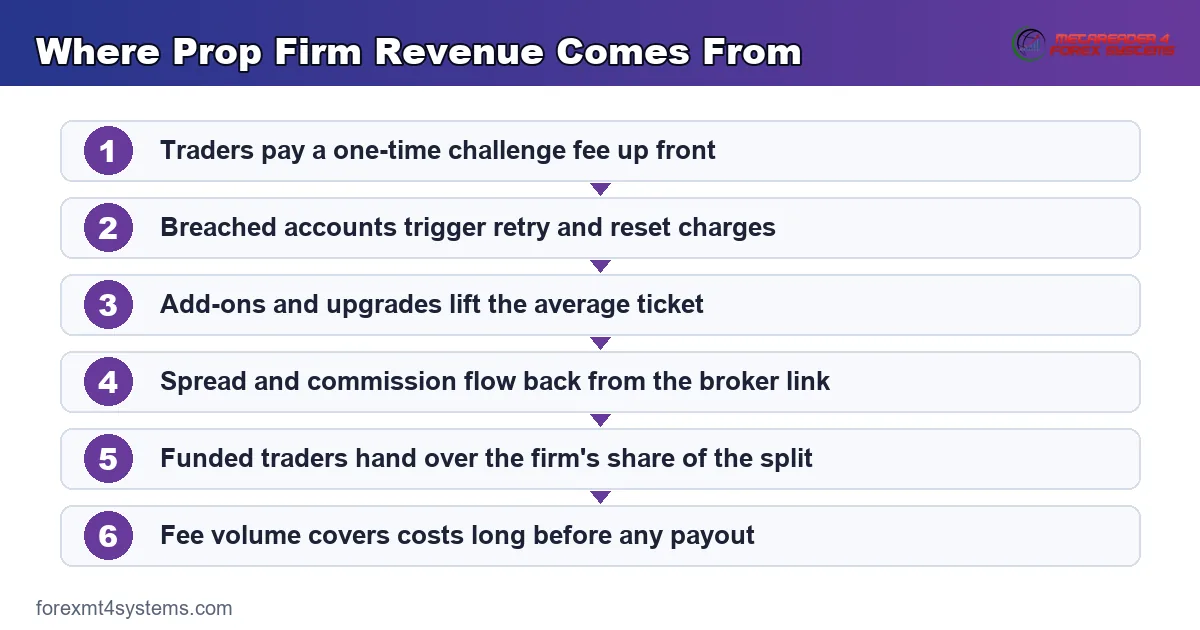
That timing explains a lot about how programs behave. Because early revenue funds everything else, firms compete hardest at the top of the funnel.
Fees Do the Heavy Lifting
Entry fees form the backbone at most programs. They arrive in volume, cost little to collect, and repeat whenever a trader tries again.
Few firms publish audited pass figures, so treat any headline claim with care. Still, every operator agrees on one point: far more traders pay a fee than ever collect a payout.
Trading Costs and the Broker Link
Many programs route orders through a partner broker or an internal book. Spread and commission then flow back in part to the firm.
Some operators hedge a portion of trader flow in the live market. Others simply run the whole book in house and pay winners from fee income. So the plumbing varies widely, and a rule book rarely spells it out.
Add-Ons and the Average Ticket
Optional extras quietly lift what each buyer spends. A wider drawdown, a skipped verification phase or a faster payout cycle all carry a surcharge.
Each add-on looks small beside the base fee. Together they can raise the average ticket by half, which explains why checkout pages push them hard.
Weigh every extra against your actual plan. Because a wider floor helps only a trader who sizes properly, most buyers gain more from patience than from an upgrade. So skip the extras on a first attempt and learn the rules as written.
How the Model Plays Out in Practice
Numbers stay abstract until you follow a cohort through the funnel. So imagine a thousand traders who buy the same challenge on the same day.
The firm banks a thousand fees at once. Over the following weeks, breaches thin the group, and only a small remainder reaches the funded stage.
Where the Crowd Drops Out
Daily loss limits catch the first wave. A rough session, a revenge trade, and the account locks before lunch.
Maximum drawdown catches the second wave. Traders who oversize to chase the profit target pierce the floor within days. So the rules, rather than the market alone, decide most outcomes.
A third group simply stalls. They trade too small to reach the target, drift past any time limit, and let the account lapse. Because the fee already cleared, the firm keeps that revenue either way.
What Survivors Cost the Firm
Funded traders flip the arithmetic. Now the firm owes a payout, and it must cover the winning side of the book.
A steady earner still leaves the firm well ahead on the cohort. Because fee income from the rest sits in the bank, one strong performer rarely dents it. So a program can pay generously and still thrive.
The Cohort After Six Months
Fast forward half a year on that same group of a thousand. A handful still trade a funded account, and the rest have moved on or paid for another attempt.
Those survivors matter far more than their number suggests. They supply the payout proof, the reviews and the referrals that sell the next thousand challenges. So a sensible firm protects them rather than hunting them.
The Costs a Prop Firm Carries
Revenue tells only half the story. A program also carries real bills, and those bills shape its rules.
List the main outflows and the tight limits start to make sense. Nothing here excuses a harsh rule book, yet context helps you read one.
Technology and Trading Costs
Platform licences, server capacity and market data all bill monthly. A dashboard that tracks thousands of accounts in real time costs money to build and to run.
Order routing adds another line. Where a firm hedges trader flow with a real broker, it pays spread and commission just as you do. So the trading side rarely runs for nothing.
Marketing, Support and Payouts
Customer acquisition swallows a large slice of fee income. Affiliate rewards, sponsorships and paid ads keep the funnel full, and none of them come cheap.
Support staff, compliance work and payment processing follow close behind. Payouts sit on top of all of it, since a firm must fund every withdrawal from cash on hand. So a program that overspends on ads can struggle to pay winners, which is exactly the failure mode worth watching for.
The Conflict of Interest, Stated Plainly
Every business model carries tensions, and this one carries an obvious pair. Look at both sides squarely rather than pretending they do not exist.
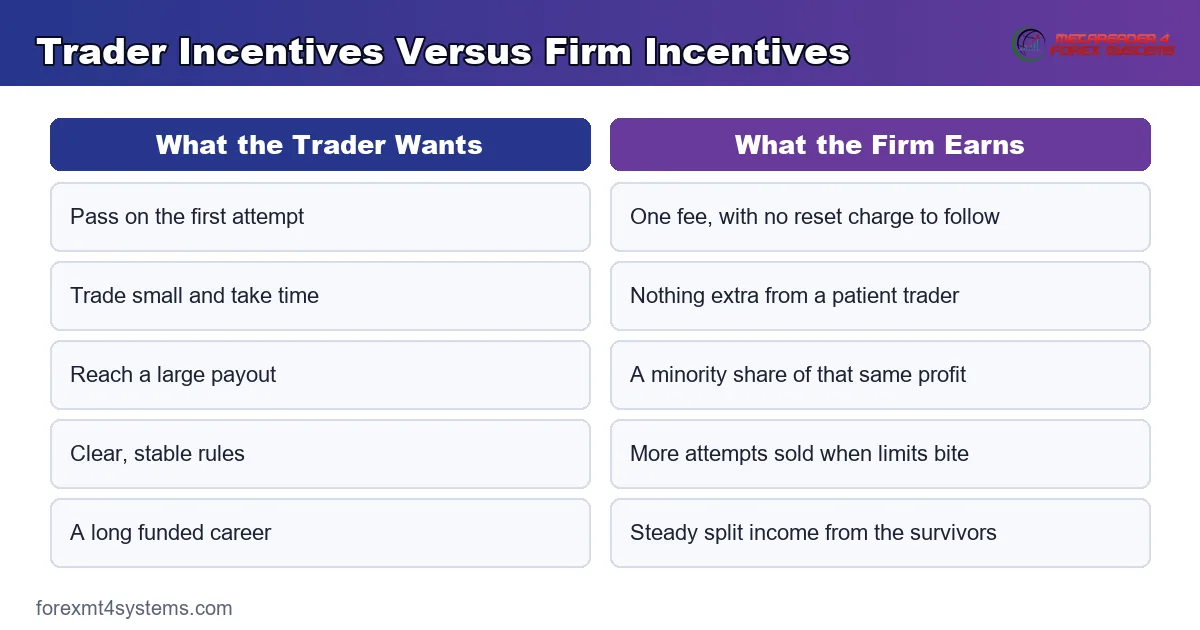
On one side, a firm earns more when many traders fail quickly. On the other, a firm with no successful traders has no story to sell next year.
Where the Incentives Clash
Tight rules raise fee income twice over. They end accounts sooner, and they push traders into paying for another attempt.
So a program could, in theory, tune its limits to fail people. Traps such as a hidden trailing floor, a vague consistency clause or a narrow payout window all point that way. Read the rule book with that possibility in mind.
Where the Incentives Align
Reputation pulls the other way, and it pulls hard. Traders talk, and a program that never pays out loses its funnel within months.
Payout proof therefore works as marketing. Because a firm needs visible winners to keep selling challenges, it gains from at least some traders lasting. So the honest read sits in the middle: real payouts happen, yet the model still leans on fees.
How to Judge the Balance
You cannot audit a firm’s books, yet you can read its behaviour. Clear numbers, stable terms and a long payout history all point the right way.
Vague clauses point the other way. Watch for a consistency rule with no stated percentage, a drawdown described only in prose, or a payout window that shifts. Because ambiguity always favours the party who wrote it, treat fuzzy wording as a cost.
A Worked Example of the Split
Follow one funded trader to see the split in motion. Picture an account of one hundred thousand currency units on an eighty-twenty split.
Your trader earns four percent over a payout cycle. That yields four thousand units of profit on the account.
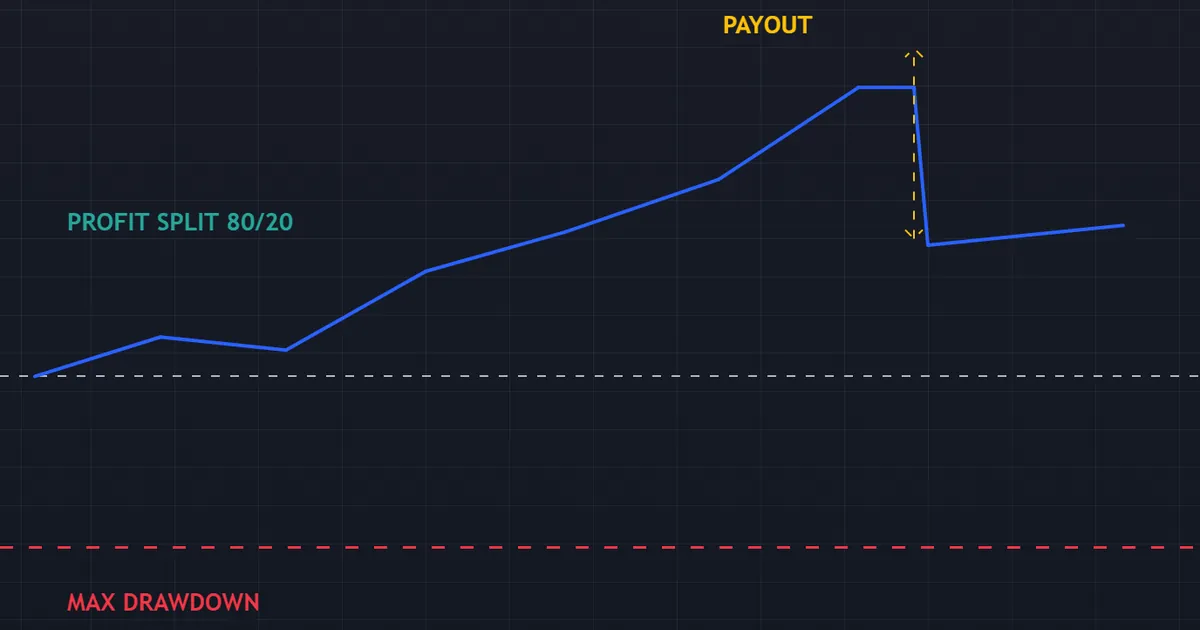
Eighty percent of that profit goes to the trader, and twenty percent stays with the firm. So the firm books eight hundred units from someone who did everything right.
Comparing the Two Streams
Set that eight hundred against the entry fees from the same cohort. Even a modest fee, multiplied across hundreds of failed attempts, dwarfs a single profit share.
The comparison explains why splits look generous. Because the fee side already covers costs, a firm can hand traders the larger slice and still prosper. So a headline split of eighty or ninety percent costs less than it appears.
Scale the same maths across a year. A program with steady sales books fee revenue every week, while split income arrives in lumps from a thin group of traders. So the cash flow leans on the fee side by design.
Sizing Trades Against the Rules
Your job sits on the other side of that arithmetic. Size each trade against the drawdown floor, rather than against the profit target, and the rules stop working against you.
A calculator turns that idea into a lot size in seconds. Feed it your account, your stop distance and the firm’s daily cap, then trade the number it returns. Try our free prop firm position size calculator before your next attempt.
Download the complete indicator database
Put these concepts on your charts. One email unlocks the full library of 1,380+ indicators with compiled MT4 and MT5 files, plus my TradingView scripts. No paywall, no spam, unsubscribe any time.
Get free access to my indicator database
One email unlocks 1,380+ free MT4, MT5 and TradingView indicators — the complete library. No single-tool download; you get the whole database.
Common Mistakes About the Model
Misreading the business model leads to poor choices at the checkout page. Five errors show up again and again. The compare graphic below sets trader incentives against the firm’s.
Assuming the Firm Wants You to Fail
Cynics claim every program hopes for a breach. Reality sits closer to indifference, since fee volume already covers the costs. So judge a firm by its written rules and its payout record, not by a slogan either way.
Ignoring Reset and Add-On Costs
A cheap headline fee can hide an expensive path. Resets, upgrades and extra attempts stack up fast for an impatient trader. So budget for the full route to a payout, then aim to need only one attempt.
Treating the Split as the Main Number
A generous split tempts many buyers, yet it applies only after you pass. Rules decide whether you ever reach that stage. So compare drawdown terms first, and let the split break a tie.
Overlooking How Orders Reach the Market
Some programs pass flow to a live venue, while others keep it in house. That choice affects fills, spreads and slippage on your account. So ask how the firm handles order flow before you commit.
Confusing Marketing With Track Record
Payout screenshots prove little on their own. Look instead for a long history, clear terms and traders who report steady withdrawals. So weigh evidence over enthusiasm, and give a new program time to prove itself.
Buying the Largest Account You Can Afford
A bigger account raises the fee and the pressure at once. Percentage rules scale with size, so extra capital brings no extra room. So start small, prove the process, then let a scaling plan grow the balance for you.
Quick Reference on Prop Firm Revenue
Keep this short list beside you when you compare programs. Run through it before you pay any fee.
- Challenge fees supply the bulk of revenue at most programs.
- Retry, reset and upgrade charges add a second fee layer.
- Spread or commission arrangements can route trading costs back to the firm.
- The firm keeps a minority share of profit from funded traders.
- Fee income arrives up front and carries no market risk.
- Tight rules raise fee income, so read every limit closely.
- Add-ons and larger accounts lift the average ticket.
- Marketing, technology and payouts consume much of that income.
- Reputation pushes serious firms to pay their winners promptly.
Pitfalls and Edge Cases
A few wrinkles bend the clean picture, so keep them in view. The chart below shows a challenge account that breaches its floor and triggers another fee.
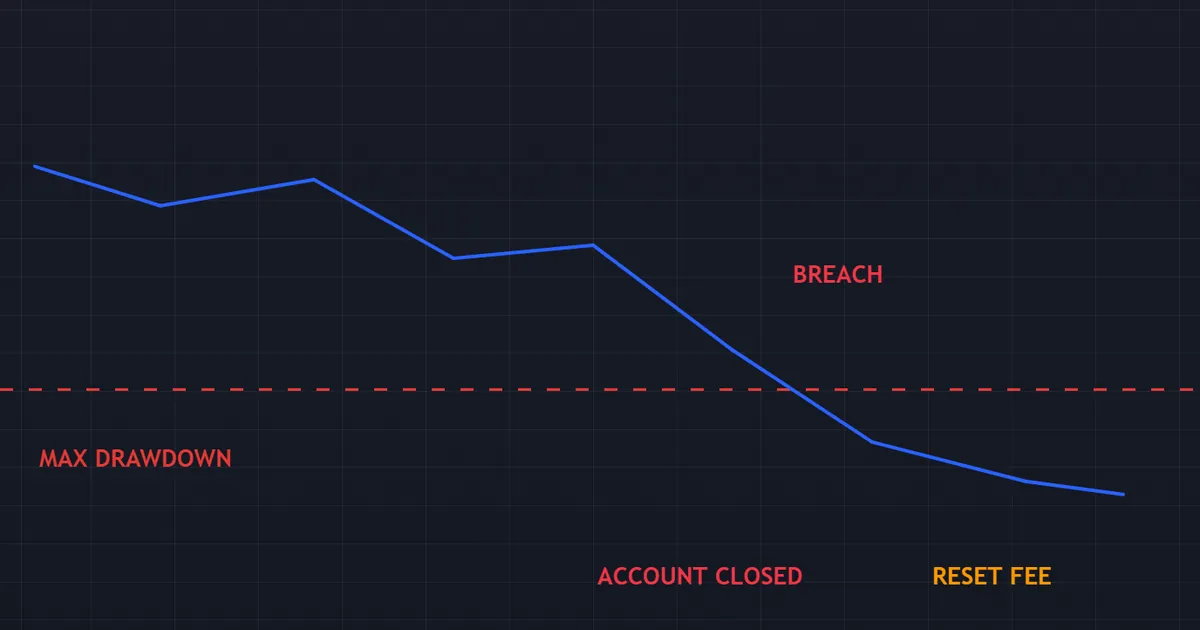
Fee Stacking Across Attempts
Each fresh attempt costs money, and three attempts can cost more than a small live account would. So count the total outlay honestly before you buy another reset.
Simulated Capital at the Funded Stage
Many programs keep even funded accounts on a simulated feed. Payouts still arrive, yet your orders never reach a live venue. So ask the question directly, since the answer changes how you read fills.
Payout Terms That Delay Cash
Some programs pay on a long cycle or hold a minimum threshold. That schedule shapes your cash flow more than the split percentage does. So read the payout section as carefully as the rules.
Rule Changes After You Buy
Terms can shift between the day you pay and the day you trade. Screenshot the rule book at purchase, then check it again before each phase. Because a quiet edit can cost an account, that habit protects you.
Affiliate Reviews and Ranking Pages
Many review sites earn a commission on every challenge they refer. Rankings therefore tilt toward whoever pays best, rather than whoever treats traders fairly. So weigh trader forums and payout threads more heavily than any league table.
Programs That Outgrow Their Cash
A young program can sell far more challenges than its balance sheet supports. Payout delays then creep in, and excuses follow. So favour operators with a long, dull record of paying on time.
What the Model Means for Your Plan
Knowing the revenue map changes how you shop and how you trade. Two practical habits follow directly from it.
Buy Fewer Attempts
Every reset hands the firm another fee and hands you another chance to repeat a mistake. Treat your first attempt as the only one, and prepare for it properly. So rehearse the rule set on a demo for a week before you pay.
Trade the Rules, Not the Target
Fee income rewards haste, while your account rewards patience. Size to the drawdown floor, respect the daily cap, and let the target arrive slowly. Because the firm profits either way, your own discipline remains the single variable you control.
Related Concepts to Study Next
The business model makes far more sense once you know the surrounding vocabulary. A short reading list fills the gaps quickly.
Start with our primer on what is a prop firm, then weigh the honest verdict in are prop firms legit. Because cash flow matters, read our guide to prop firm payouts and our overview of a funded trading account. To see the other side of the funnel, study why traders fail prop challenges, fix your sizing with our note on risk per trade, and check a withdrawal against our consistency rule calculator. More guides sit in our prop trading library.
FAQ
How do prop firms make money from challenge fees?
Each evaluation carries a one-time fee, priced by account size. Because far more traders buy a challenge than ever pass one, those fees add up to the largest single stream at most programs. Retry and reset charges then extend the same revenue line.
Do prop firms want traders to fail?
The incentives cut both ways, so the honest answer is mixed. Tight rules do lift fee income, yet a program with no visible winners loses its marketing story fast. So serious operators aim for a middle path: firm rules, real payouts, steady sales.
Do prop firms earn much from the profit split?
Less than most traders assume. A firm typically keeps the smaller slice of a funded trader’s profit, often twenty percent or less. Set against fee volume from an entire cohort, that share stays modest at most programs.
Do prop firms earn from spreads and commissions?
Some do. Many programs route orders through a partner broker or an internal book, and part of the trading cost flows back to the firm. Others earn nothing this way, so ask how a given program handles order flow.
Are funded accounts real money or a simulation?
Both models exist across the industry. Plenty of programs keep even funded accounts on a simulated feed and pay withdrawals from company funds. Others route successful traders to live capital, so check which model applies before you buy.
Does this model make a payout unlikely?
Most participants never reach a withdrawal, and firms rarely publish audited figures on that. Careful sizing, patience and a close reading of the rules improve your odds, yet nothing removes the risk. Results are not guaranteed; past performance is not indicative of future results.
External references
- For background on this concept, see Prop Shop at Investopedia.
- For broader market context, see Business Model on Wikipedia.

About the author
Written by Dominic Walsh, a Forex trader and MT4/MT5 indicator, Expert Advisor and script developer. Every tool on forexmt4systems.com is tested on live charts before release and ships with ready-to-use compiled MT4 (.ex4) and MT5 (.ex5) files. Learn more about the trader and developer behind this site.
How we build, test and correct every tool: Editorial & Testing Policy. Trading carries risk; see the disclaimer.